Life Sketch of Eliza H. Morton

5%

Review and Herald Publishing Association · Tacoma Park Station, Washington, D. C. · Oct 5, 1916

FromReview and Herald, Vol. 93, No. 49.

Read the full edition

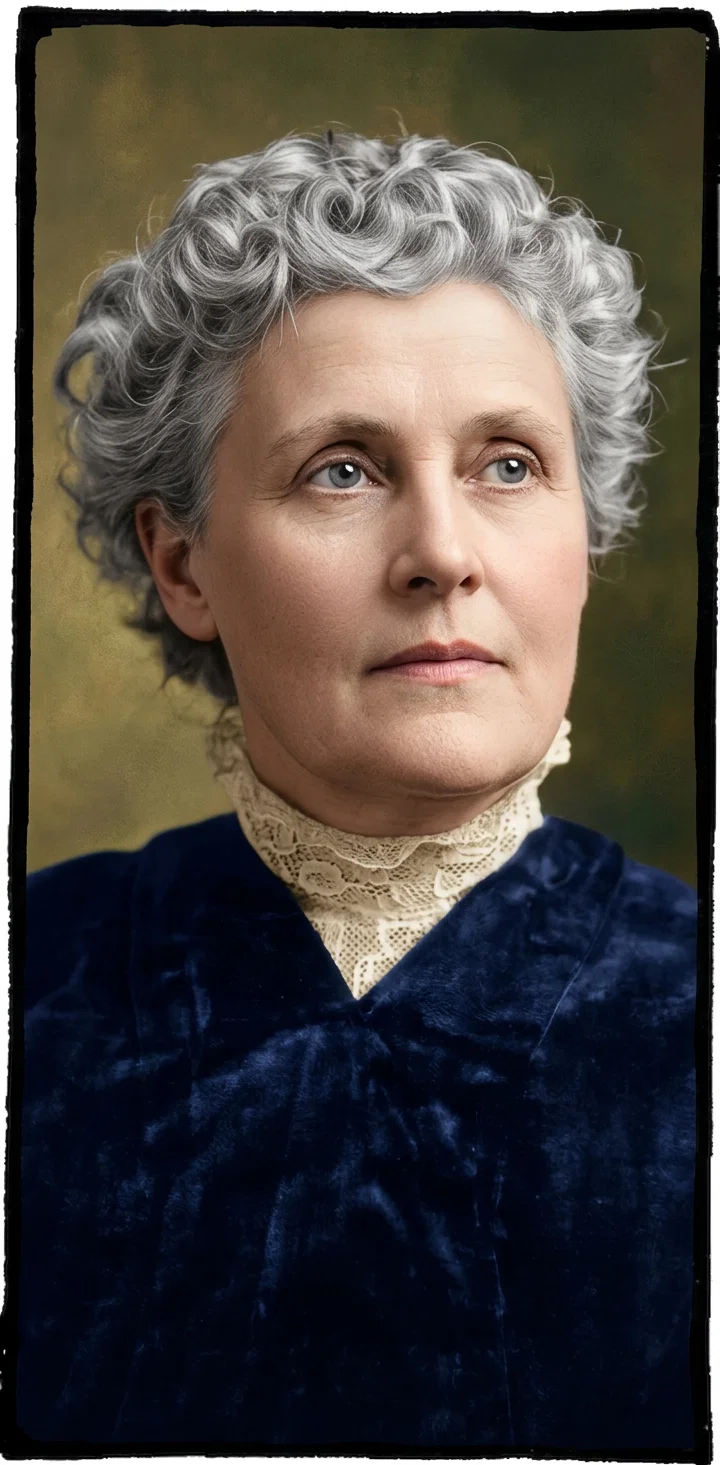
Life Sketch of Eliza H. Morton

ELIZA H. MORTON was born in North Deering, Maine, July 15, 1852. The house in which she was born still stands across the street from “The Cedars,” where she made her home from the age of nine years to the time of her death, July 31, 1916. She was the only daughter of William Morton and Hannah Phenix-Morton. Her father was a native of New Vineyard, Maine, a member of the Morton family which counts its genealogy back to the half brother of William the Conqueror.
Her parents accepted the truth when she was a child, thus she was brought up in the faith, and later joined the North Deering church, of which she was a lifelong member. Both her parents were inearly life teachers in the rural schools of Maine, and at an early age she manifested talent in this direction. At the age of sixteen she taught her first school, this being the beginning of fifteen years of teaching in the public schools, principally in Portland and its vicinity.
In 1880 she was called to take charge of the normal and commercial departments of Battle Creek College. During her three years’ work there her ideas on the teaching of geography brought her into favorable notice before the public, and resulted in the publishing of the two series of Potter Geographies written by her, and later in the well-known Morton Geographies used all over the world.
During these years she was a constant contributor to our leading periodicals. One of the pleasant memories of her life was a letter received from one of our leading physicians in which he said that an article written by her in the Youth’s Instructor was the means used by the Lord to cause him to give his life to the service of God.
From 1893 to 1910 she was secretary and treasurer of the Maine Seventh-day Adventist Conference and Tract Society. It is safe to say that during these seventeen years no single individual contributed more to the upbuilding of the work in Maine than she did by her earnest labor, her influence, and her financial aid. Her good judgment, clear views, and aggressive policy were unfailing assets. To the two hundred or more isolated members she was a friend and counselor. She was closely associated with the work of Christian education, having served as conference educational secretary for several years.
In January, 1909, she fell upon the ice near her home, from the results of which she suffered during the rest of her life.
In October, 1914, one of the very interesting features connected with the Maine Teachers’ Association Convention held in Portland, Maine, was her geographical exhibit. This exhibit occupied a whole room in the city hall, and was visited by thousands of teachers and others. It is understood that this exhibit is to be placed with the Maine Historical Society of Portland, Maine.
Among her effects is a unique and interesting scrapbook of a biographical nature. This book contains samples of sewing, drawing, painting, composition, etc., made by her at an early age. There are photographs of her during childhood and youth, also many pictures connected with her childhood days. Her first poem as published in the REVIEW AND HERALD is preserved in this scrapbook, also an autograph letter from the poet John Greenleaf Whittier. She was a member of the National Geographical Society.
Her complete published works are as follows: Two series of Potter Geographies; two series of Morton Geographies; “Chalk Illustrations;” “Geographical Spice;” “Lessons on the Continents;” “Thought; Its Origin and Power;” “Still Waters” (poems); “Star Flowers” (poems); and her last work, “Rays of Light on the Sabbath Question.”
Many of her poems have been set to music. The most notable perhaps is “The Songs My Mother Used to Sing,” which D. B. Towner, who used to travel with D. L. Moody, the evangelist, set to music for his own use.
Her last sickness covered a period of four months of great suffering. Three weeks of this time were spent at the New England Sanitarium, to which she had gone hoping that a surgical operation might give relief. Her case was found to be incurable, and she returned to her home to spend her last days amid the loving ministrations of the friends of a lifetime. She manifested no fear of death, but a perfect submission to the will of God. In all her suffering she looked forward to a time when there would “be no more pain,” and this was her choice of a text for the funeral discourse. Many seasons of earnest prayer were held for her recovery, but God, who knows best, saw fit to let her fall asleep.
Her living relatives are two cousins, William Morton, of New Vineyard, Maine, and Eliza McLain, of Farmington, Maine; and two second cousins, C. O. Morton and Clarence Morton, of Portland, Maine. After certain bequests are paid, the remainder of her property is left in the hands of eight trustees to be devoted to missionary work.
The funeral services were conducted from her late residence by Elders H. W.
Carr and E. E. Osborne. The rooms were filled to overflowing with friends and neighbors who came to pay their last respects to one they had known as a friend.
By her request the following poem, taken from “Star Flowers,” was read:—

If I Should Die

I do not care to die, for life is sweet; But death is here, An enemy forever on my track, Forever near. If I should die, I ask not for a throng To crowd around To gaze upon my face, to see me lowered Into the ground. I ask not for an epitaph of fame When I am dead, I care not for the flattering words That may be said; I would the poor that I have helped, The sick and sad, Might say with tears beside my bier, “She made me glad.” If I should die, I ask my friends To kindly speak, Forgetting all the things that grieved And made us weak; And looking on beyond the days And years to come, Think of the promise of our Lord, The Mansion-home.
Four young ladies sang her favorite hymn, “Abide with Me.” The interment was in Evergreen Cemetery, Portland, Maine.
We feel very sure that these words apply to her: “Blessed are the dead which die in the Lord from henceforth; Yea, saith the Spirit, that they may rest from their labors; and their works do follow them.”
MRS. W. O. HOWE. JENNIE R. BATES.
ELIZA H. MORTON
ELIZA H. MORTON