Seen and Heard in Cuba

7%

Review and Herald Publishing Association · Takoma Park Station, Washington, D. C. · Apr 27, 1916

FromReview and Herald, Vol. 93, No. 21.

Read the full edition

Seen and Heard in Cuba

CUBA is full of stir and business. The war has created an extra demand for cane sugar, and “sugar is king” in Cuba. In normal times the island claims the largest volume of trade per capita of any country in the New World.
We landed at Santiago, from the Jamaica steamer—Brother J. J. Ireland and I. While he went at once to the auditing work, in the mission office, I accompanied Elders F. G. Lane and A. N. Allen to various places where the work is established.
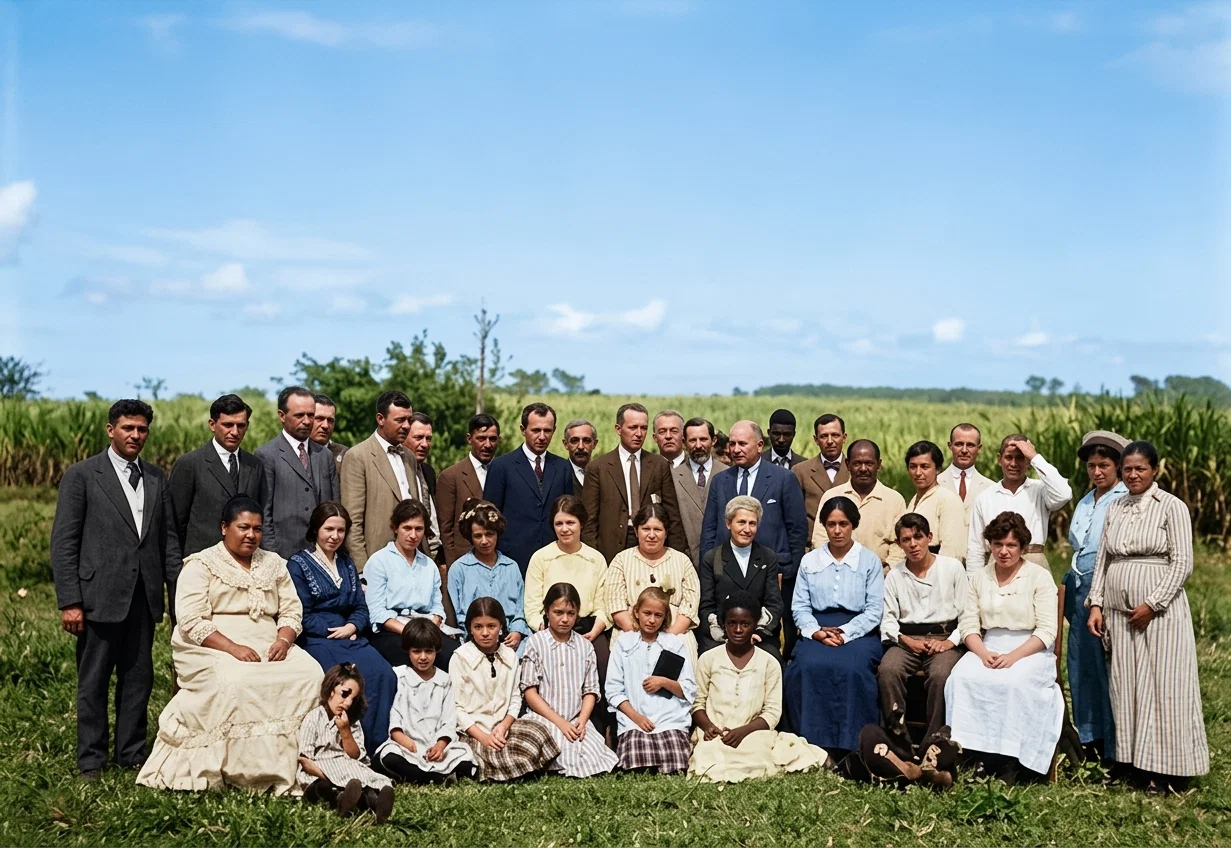
We then held a week’s workers’ meeting in the central part of the island, where a large building was kindly granted for the purpose by an American fruit company. It was a profitable time. The work is just getting a fair start in Cuba. The prospect is encouraging. There are young people in the truth who are ready to toil and struggle to get a training for service. After the short school held last year, several of these youth went into the Bible and evangelistic work, and had good experiences to report at the meeting. Those going on with the book work have been doing well. Cuba’s hope is in setting its youth into service, and our brethren are earnestly hoping to be able to hold another five-months’ workers’ school and institute this year.
You should have seen the response of the young people to the school proposition. They are hard at it now to get the ways and means. They helped us list thirty names on the blackboard, of young Sabbath keepers in Cuba who ought to be under training for the work. It was an enthusiastic young people’s meeting that we had that afternoon.
“Is there a Spanish young people’s song to close with?” I asked.
“Yes,” they said; and they sang with a will a hymn that certainly stirs the pulse,—
“Oh! jóvenes, venid, su brillante pabellón Cristo ha desplegado ante la nación A todas en sus filas os quiere recibir, Y con él a la pelea os hará salir!”
CUBAN WORKERS' MEETING
For the benefit of our English-speaking young people I give a free rendering of this first stanza and the chorus, translated by Miss Amy Robinson, who was my efficient interpreter in all the meetings:—
“O young people, come! Christ’s brilliant banner flies, His flag is now unfurled before the nation’s eyes, ‘All into the trenches!’ he calls without delay, And with him to the battle front we’ll go today! CHORUS: “Come, O come to him, enlisting without fear. Be ready for the fight, for the enemy is near. Young people, we’ll battle, battle for the right; Jesus, our mighty Captain, leads us to the fight.”
A word as to the general workers. Elder F. G. Lane, just arrived from New England, takes the superintendency, and hopes to settle in Havana. Elder A. N. Allen looks after interests in the central part of the island. Elder and Mrs. J. E. Anderson and Sister A. F. Burgos are in Havana, and I was pleased at what I saw developing in a small but encouraging way in that great city. H. S. Mould is in Santiago, with a few keeping the Sabbath, meetings being held for both English-speaking West Indians and Cuban people. A. U. Cochran is field missionary agent, and a small corps of workers are taking orders freely for the Spanish books. In response to a call from Honduras, Cuba is releasing one of its best bookmen, Brother Williams, to lead out in the book work in that country.
Elder H. C. Goodrich is working among the American settlers in the Isle of Pines. At San Claudia, west of Havana, Brother and Sister S. H. Carnahan have a country school, truly—thirty-three miles by automobile stage from the railway. When the work was going hard for them recently, a providential gift came to enable them to get adjoining land that will give them a better chance to keep the light glowing in this region.
Brother G. E. Holmes was at our meeting. He has had an industrial enterprise at Las Minas, round which a little company has grown up. Prof. A. E. Doering with his family drove over to the workers’ meeting from Manacas, where they have developed a fruitful farm. Professor Doering was formerly in the German evangelistic work in Dakota, and went to Cuba for his health. He has now regained his health. He and Sister Doering are of good courage. They rejoice over the conversion of one of their neighbors. The Cuban Mission office is temporarily at Santo Domingo. The brethren feel pleased that the office work is in the efficient hands of Brother S. E. Kellman, who has just arrived from Northern Michigan.
Thirteen years ago I landed in Santiago, Cuba, by a little schooner, from Jamaica, after nearly three days’ voyage. This time it took but eight hours by steamer. Then, as I passed through Cuba, there was not another Sabbath keeper in the island; now there are more than one hundred keeping the Sabbath in Cuba, and recently sixteen new converts have been baptized. While the numbers are few, the signs are cheering, and we see that the plant of truth in Catholic Cuba is really taking root in the soil and spreading, and the workers there ask our prayers and cooperation for a vigorous campaign. W. A. SPICER.