The locality in which the French camp-meeting was held was the center of the activities and terrible persecutions of the French Protestants, called the Huguenots, during the seventeenth century. It was known as “the desert,” or “wilderness,” of the Protestant church in France for two centuries. Those who have traveled in both countries say that this part of France bears a striking resemblance to the land of Palestine. The hills and valleys, the olive-trees and vineyards, the mountain fastnesses and caverns, make one feel that he is in the land of God’s ancient people. It was in these mountain fastnesses and caverns that the Huguenots lived, and secretly worshiped God while the worst storms of persecution were rolling over southern France.
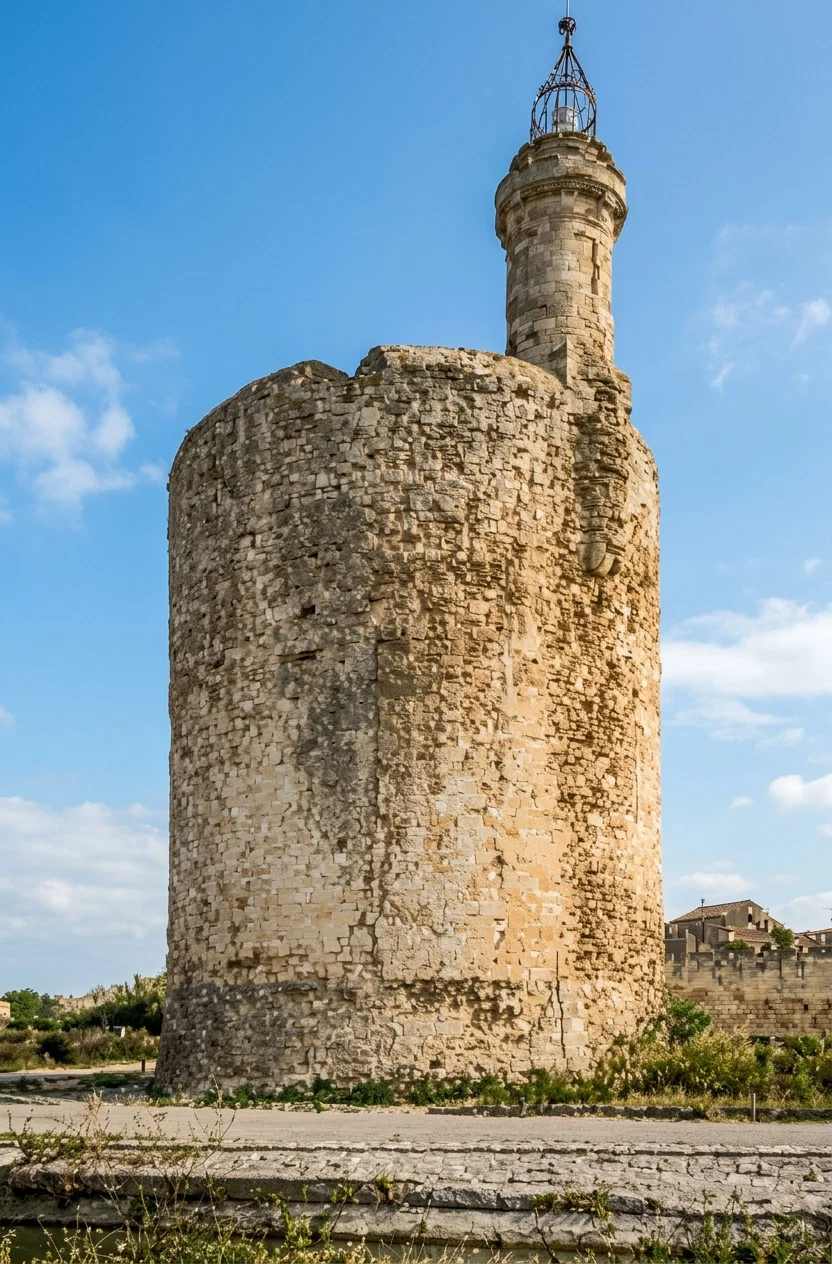
TOWER OF CONSTANCE
Not far from our camp were located some of the great caverns used for homes, churches, hospitals, and cemeteries of these devoted Christian reformers. A short distance away were the towns of Nimes, Montpellier, and Aigues-Mortes, where tens of thousands were imprisoned and executed. After the revocation of the Edict of Nantes by Louis XIV, the French army was used to exterminate these pious Christians. Detachments of soldiers were sent to the mountains and valleys to break up the meetings and waste the inhabitants. The preachers and the most influential men were hanged on the trees in the forests, the men of common rank were sent to the galley ships, the women were sent to the prisons, and the children were taken to institutions of the Catholic Church to be taught its doctrines.
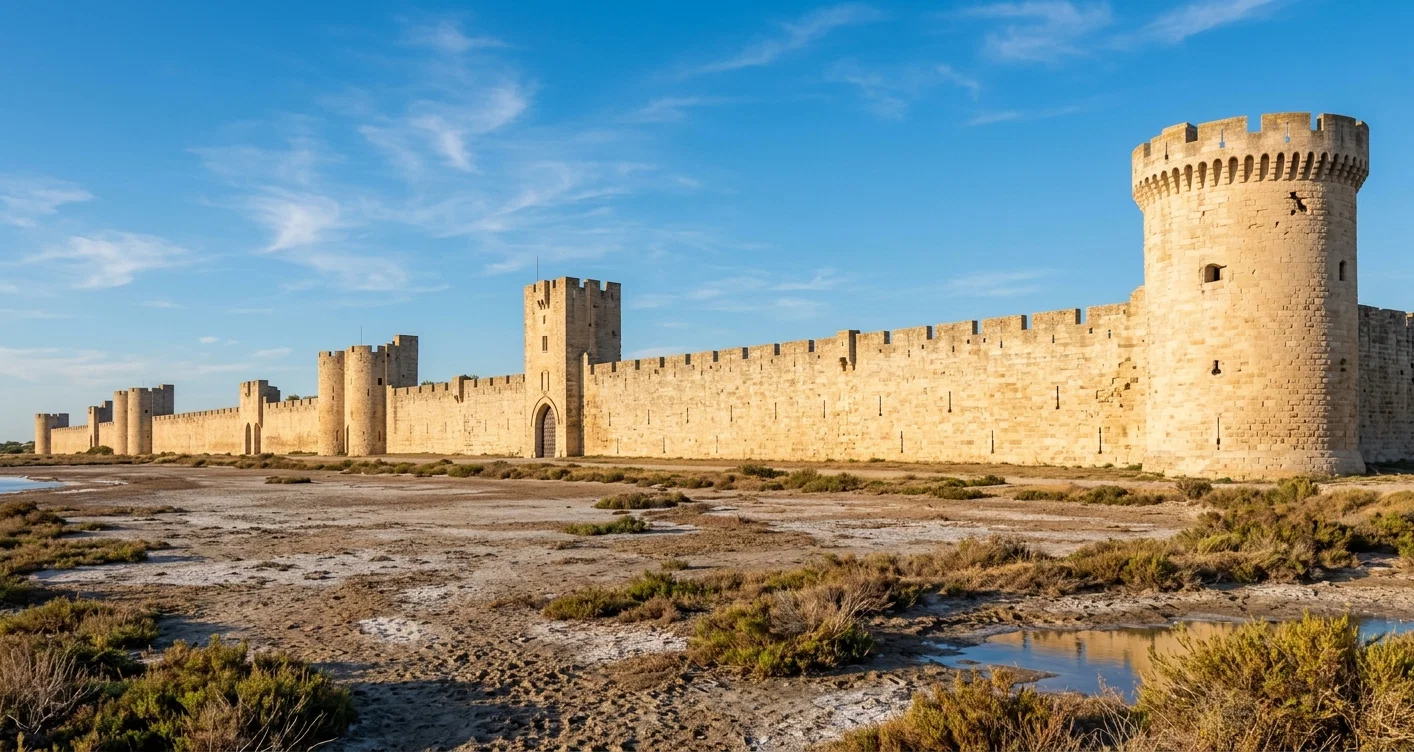
FORTRESS OF AIGUES-MORTES (DEAD WATERS)
A week’s sojourn in this locality, mingling with the descendants of those brave martyrs, and seeing some of the places of their struggles, gave a new meaning to the history of the Albigenses and Huguenots.
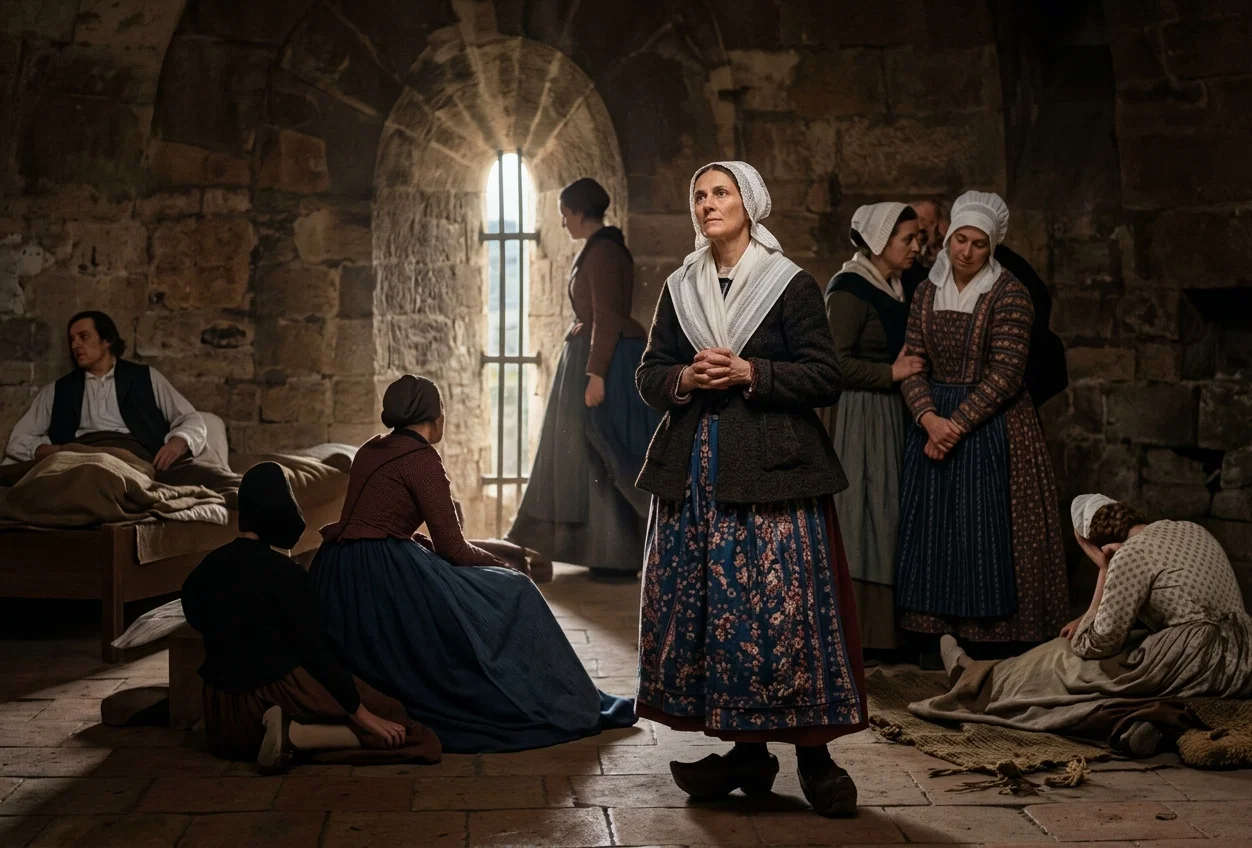
We visited the town of Aigues-Mortes to inspect the great Tour de Constance, in which so many pious Huguenot women were imprisoned. This town is located on a shallow bay or salt marsh about three miles from the Mediterranean. It was built seven or eight hundred years ago as a feudal fortress. The great massive stone walls still stand and are as perfect as when built. At one corner of this fortress stands the great Tour de Constance. It is round, and is sixty-six feet in diameter and ninety-two feet high. The wall of this tower is eighteen feet thick. The interior has two apartments, one being above the other. They are dimly lighted by long and very narrow openings in the wall. The lower apartment is the dungeon. Here the wives and daughters of Huguenot preachers and merchants and other men of prominence were imprisoned for life. The records show that Marie Durand was placed in this dungeon in 1730, when fifteen years old, and kept there until 1767, a period of thirty-seven years. The crime for which she was thus cruelly treated was that she accompanied her parents to a religious service that the government had forbidden. The names of many of these noble women were engraved on the interior of these stone walls, which held them from their friends and the privileges of life so many weary years. One who visited this dungeon near the close of these Huguenot persecutions has left this statement of what he saw:—
Words fail me to describe the horror with which we regarded a scene to which we were so unaccustomed—a frightful and affecting picture, in which the interest was heightened by disgust. We beheld a large circular apartment, deprived of air and of light, in which fourteen females still languished in misery. It was with difficulty that the prince smothered his emotion; and doubtless it was the first time that these unfortunate creatures had there witnessed compassion depicted upon a human countenance; I still seem to behold the affecting apparition. They fell at9our feet, bathed in tears, and speechless, until, emboldened by our expressions of sympathy, they recounted to us their sufferings.
It was on the ground where these loyal Huguenots suffered, bled, and died for the cause of Christ, that we held our camp-meeting, and it is here that the third angel’s message is finding a response in the hearts of sincere French men and women. At this place, where the “church in the desert” had so nobly witnessed for the Saviour, it was a peculiar pleasure to meet our French brethren and sisters, and reconsecrate our lives to the great work he is carrying forward in this last generation.
Our next meeting was at Barcelona, Spain. This was new territory to me, as I had never before been in Spain. Our meeting was not a large one, but it was one of deep interest. Nearly all our members in Spain were present. As we could remain together only five days, and as all seemed anxious to get as much as possible while together, the meetings continued with but short intermissions from morning until late at night.
HUGUENOT WOMEN IMPRISONED IN THE TOWER OF CONSTANCE
Reports of the past year’s work were rendered by the laborers. There were not many to report, nor were the results reported large. And yet the meeting was a truly encouraging one. Spain is a very difficult field, and we are but beginning our work there. The Catholic Church has for centuries held the masses of the Spanish people in subjection, ignorance, and superstition. While there is at the present time a measure of religious liberty, yet the dominating power of the church is very great. Then, too, the present illiteracy of the common people is a great barrier to the work of reform that we are endeavoring to carry forward. In some provinces only one third of the people can read and write. In the most advanced provinces not more than two thirds can read.
These conditions, and the general poverty among the common people, make our work difficult and slow. Yet our workers in Spain all seem to be of excellent courage. At the annual meeting they all planned for advancement in their different lines of work. Brethren Walter and Frank Bond will press on with their ministry. Brother Brown and his Spanish canvassers will push the canvassing work.
Sister Lola Casals will continue the city Bible work, and the brethren and sisters will do all they can in home missionary work. They have set out to make the following year the best since entering Spain. The staff of workers has recently been strengthened by the coming of Brother and Sister E. F. Forga. They have located in the city of Barcelona.
Brother Forga will continue the editing and translating work he has been doing for some years, and render helpful service to the church in Barcelona. Other strong, fearless, and earnest workers are needed in that hard and difficult field.
I was glad to meet at this gathering Elder Paul Meyer, from Lisbon, Portugal, also Brother W. E. Hancock, who was on his way to Algiers, which he is to make his field of labor. Both Elder Tieche, who has general charge of the Latin field, and Brother Edward Borle, who has charge of the publishing work, were at this meeting. This visit to Spain has given me a better understanding of the field and a deeper interest in the work and workers there.
I earnestly request our brethren and sisters who read this report to remember Spain in prayer day by day. Pray the Lord to reach the hearts of those dear people and prepare them for his coming and kingdom.