Changes in Equatorial Africa

7%

Review and Herald Publishing Association · Takoma Park Station, Washington, D. C. · Oct 9, 1913

FromReview and Herald, Vol. 90, No. 41.

Read the full edition
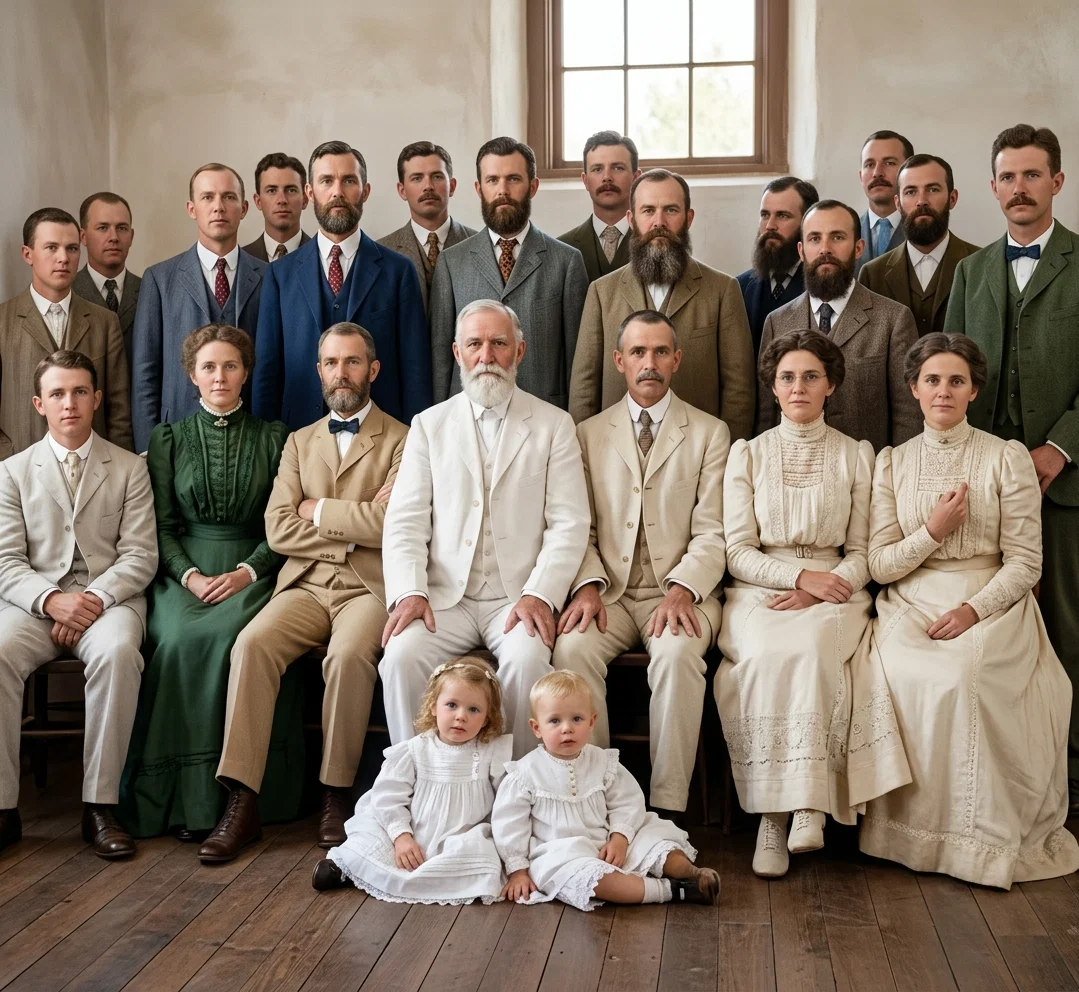
Group of missionaries in the Victoria Nyanza Missions.

Changes in Equatorial Africa

Notes on a Recent Tour of Our Missions in East Africa
The equator, Africa's highest mountain, Kilimanjaro, and her largest lake, the Victoria Nyanza, furnish the great waymarks in locating our missions in German and British East Africa. The entire east coast of the great lake, as well as the Wasekuma country from the equator to about four degrees south, composes the two Victoria Nyanza mission fields,—the British and the German. From the very outset we endeavored to select territories unoccupied by other missionary societies. This territory in Victoria Nyanza had never before been entered. The dialects had to be acquired from the natives, portions of the Bible translated, and grammars, dictionaries, and primers had to be composed.
THE FORSAKEN IDOL
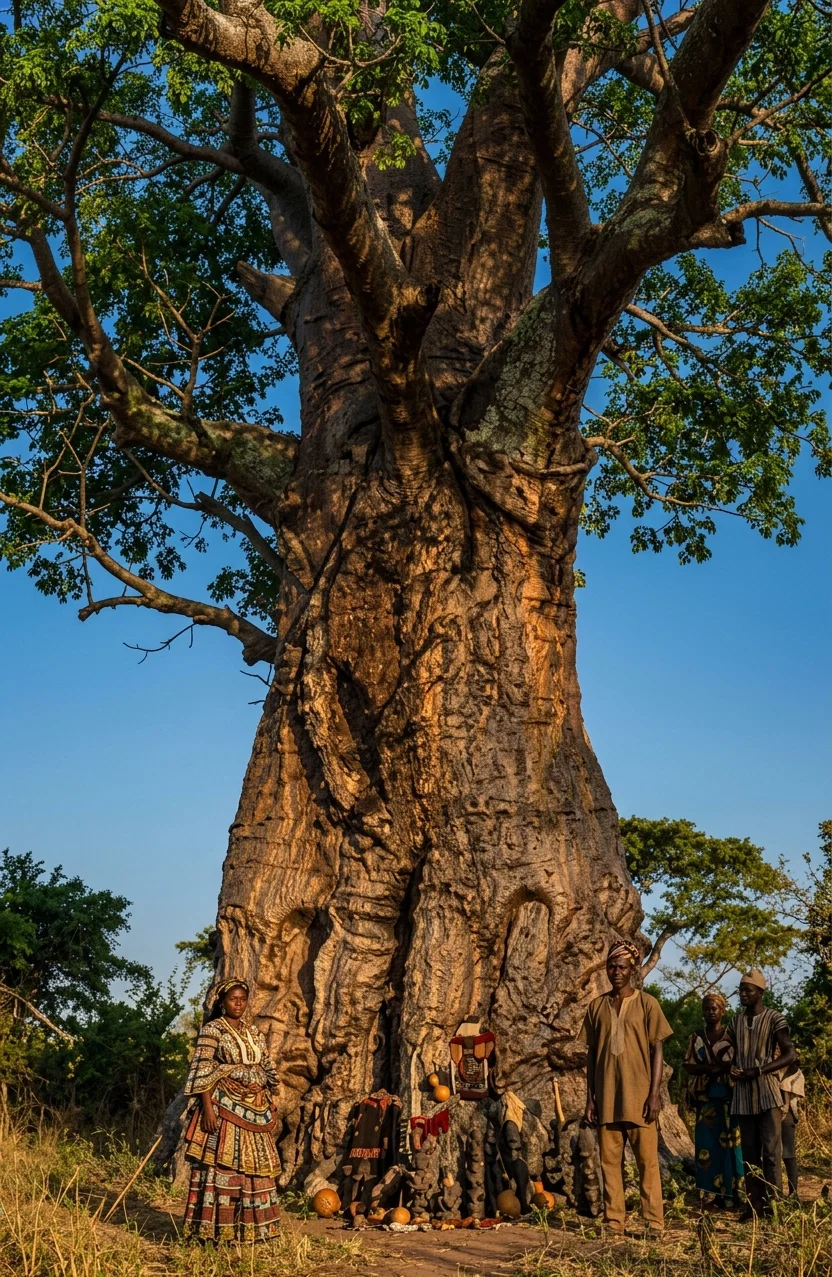
THE FORSAKEN IDOL
A tree formerly worshiped as sacred, the ground about being beaten bare by the feet of the worshipers. Now abandoned, with grass growing about it. The natives have learned better. (Near our Shangani Mission, Rhodesia).
What a change a few years have wrought in our mission work in equatorial Africa! Eight years ago we had no mission stations, no schools, no experience, no knowledge of the languages, and but small means at our command. When our missionaries first entered, German East Africa had only forty miles of railway, and it took us five days over miserable native paths to reach our station at Friedenstal. All goods had to be transported on the heads of native porters. Now the German Central African Railway will soon reach the Tanganyika and the Victoria Nyanza, and the Northern Railway passes at the foot of the Pare Mountains on to Kilimanjaro. A fine pike road, with solid iron bridges, takes us to our very door at Kihuiro. Then the natives hid themselves away in the mountain forests, fearing the inroads of the Masai, and they were also very shy of us, and but a few poor paths led to their scattered huts. Now there are good paths all over the Pare Mountains; our out-schools are seen here and there, and every hour on the road hundreds of boys and girls with their teachers were awaiting us, and chiefs and their elders came to welcome us, some bringing chickens, some lambs, and some other presents. Hundreds came to our public meetings, which, because of the great crowds, had to be held out of doors. Good interpreters were everywhere ready to translate the glad tidings. We could not only point the natives to victories in other lands or in our personal experience, but scores of their own brightest young people would stand up fearlessly before the multitudes, testifying to the power of the everlasting gospel. Where at first the heathen banished the children from their villages for embracing Christianity, we now see neater Christian villages springing up.
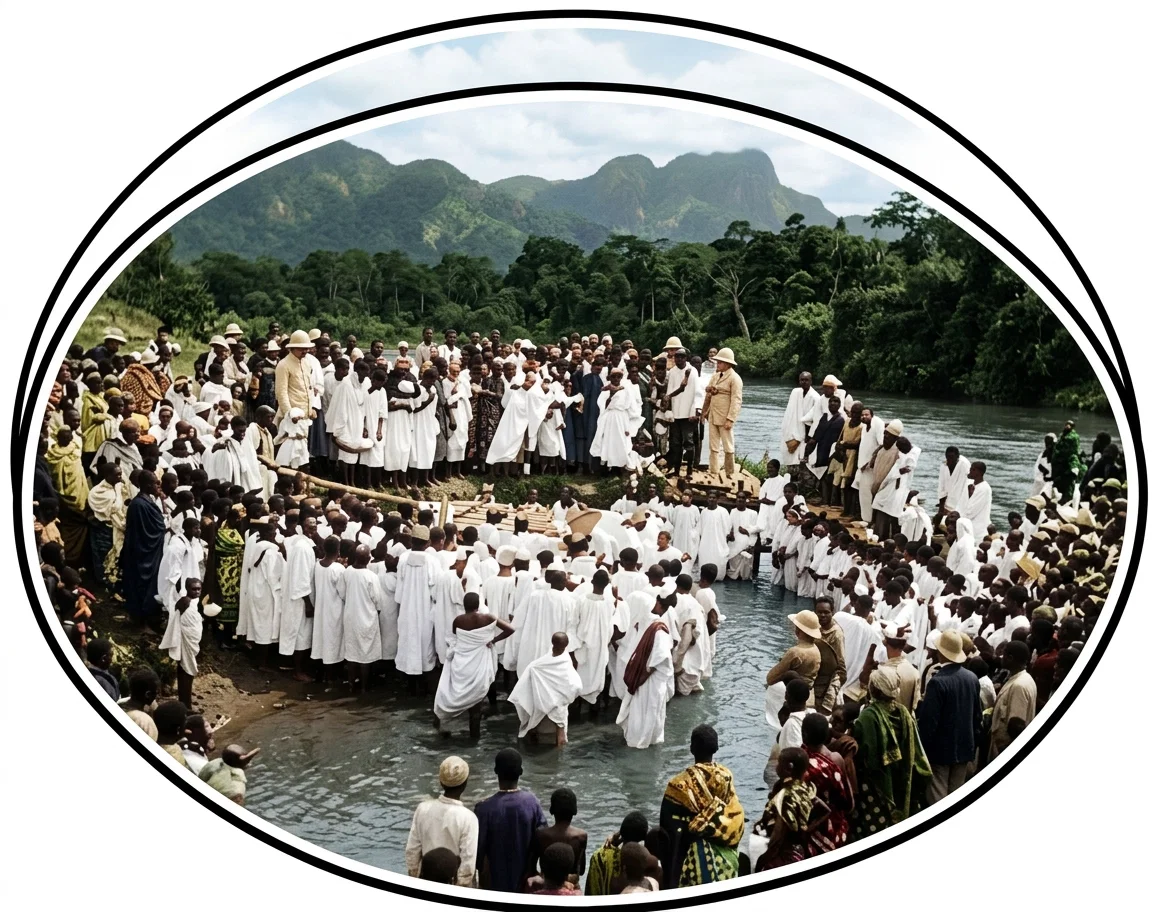
Baptism of 51 Wapare converts at Friedenstal Mission, German East Africa.
In the three fields of equatorial Africa we have now over twenty mission stations, all manned with experienced helpers. We have about twenty-five out-schools, altogether some 3,500 young people enrolled and entrusted wholly to our care. Already there are over 200 who have been converted from heathenism and baptized, and as many more have openly declared for Christ. Literature is being prepared in the different languages, and the little we have been able to get out has found a ready sale among the natives. Scores of native helpers are already holding up the hands of our European missionaries, and they not only do effective work in the schools, but some of them have given excellent evidence of being good soul-winners.
When we asked a score of the Pare teachers how many would be willing to go to the interior, every hand went up. It is true seven young missionaries have fallen on the field of honor, and severalhave had to retire on account of ill health. But like the kernel of wheat, though apparently perishing in the ground, the life laid down brings forth ten, twenty, fifty, yea, a hundredfold.
We are only beginning among the million people in this virgin territory, and what a good foundation has already been laid, in spite of heathenism and Mohammedanism! Hundreds of earnest young people gained from heathenism send thanks to our brethren and sisters in the home land for the help sent them. They daily pray for the cheerful givers to missions, and bless their money. Yea, inspired by the same love, they join us in the grand effort to enlighten the Dark Continent.
One must witness these wonderful changes with his own eyes, fully to appreciate what is being accomplished. One must sense these great opportunities on the very spot, himself hear the many intelligent testimonies of bright young converts, and then he will better understand why our blessed Saviour left even the glories of heaven to save us poor heathen; and as he sees the same love constraining the missionaries to face these trials, to become colaborers with God, even to lay down their lives, he will realize the power of the Holy Spirit to save even in the darkest of lands. L. R. CONRADI.
Hamburg, Germany.
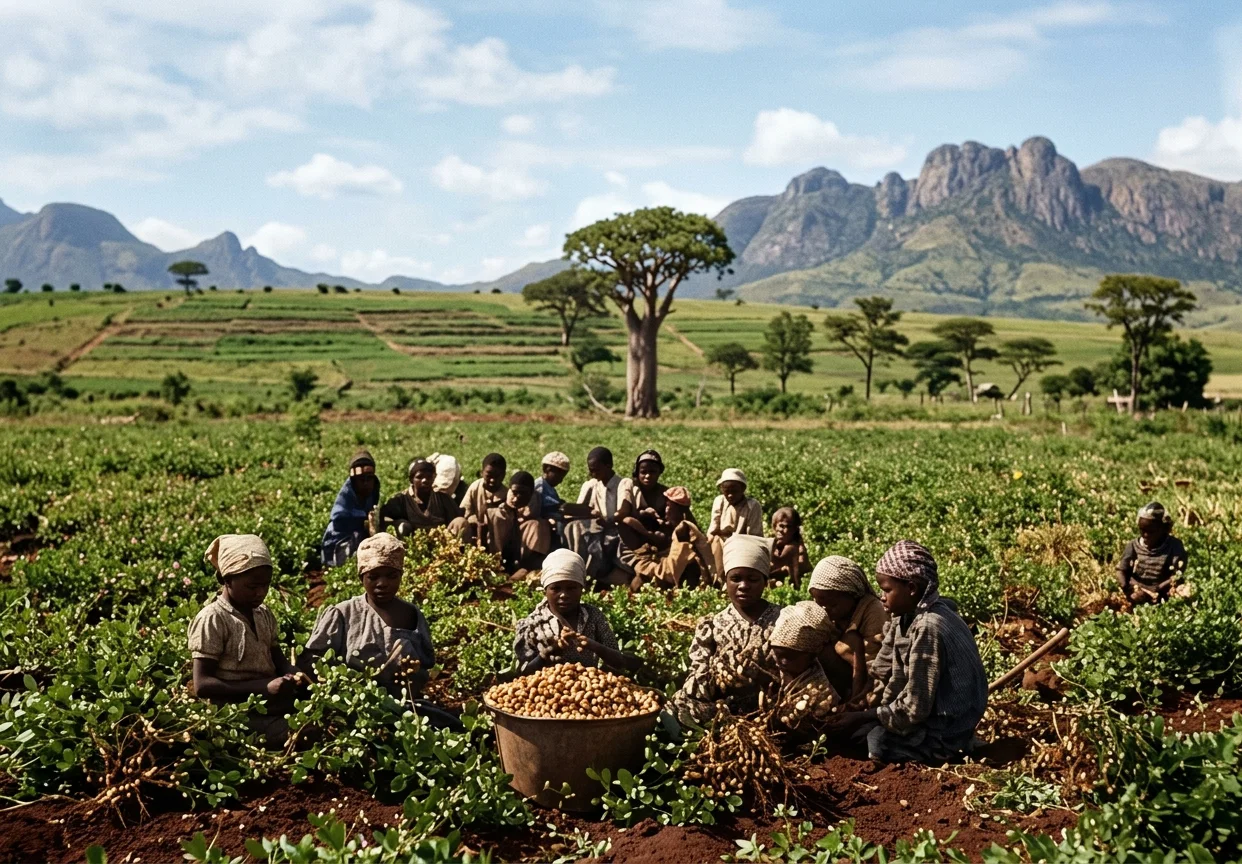
GIRLS DIGGING MONKEY-NUTS (PEANUTS)
Tsungwesi Mission, Rhodesia.
GIRLS DIGGING MONKEY-NUTS (PEANUTS) Tsungwesi Mission, Rhodesia.