MRS. G. F. JONES

8%

Review and Herald Publishing Association · Takoma Park Station, Washington, D. C. · Aug 28, 1913

FromReview and Herald, Vol. 90, No. 35.

Read the full edition

MRS. G. F. JONES

Our Mohammedan Sisters—No. 1

MRS. G. F. JONES
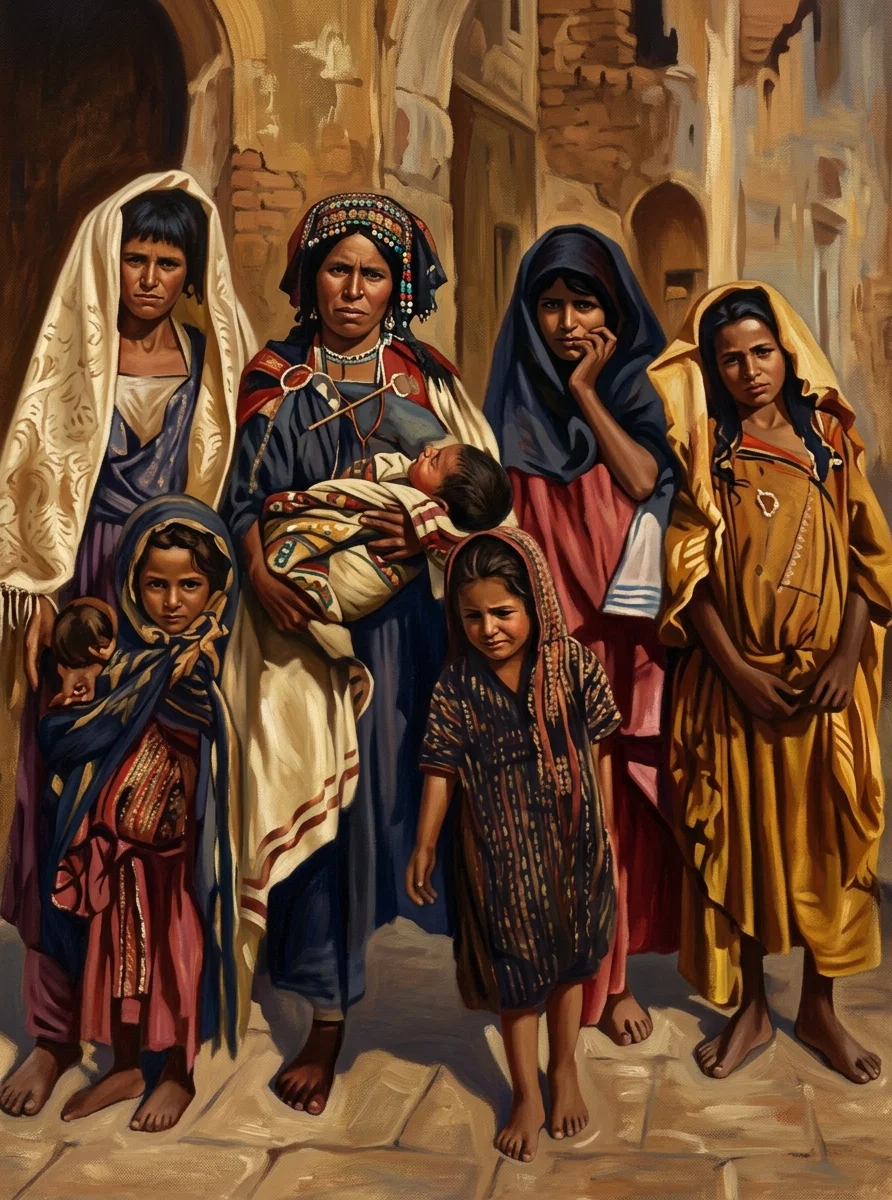
“The threshold of the house weeps for forty days when a girl is born,” is one of the Mohammedan proverbs. “Unwelcome at birth, unloved in her lifetime, without hope at her death,” or, as another puts it, “As a babe she is unwelcome; as a child, untaught; as a wife, unloved; as a mother, unhonored; in old age, uncared for; and when her miserable, dark, and dreary life is ended, she is unmourned by those she has served.” What a sad picture of a hundred million women in the world today!
MOHAMMEDAN WOMEN AND CHILDREN
When a girl is born, it brings sadness to the mother, both because it may mean divorce for herself, and because it will certainly mean a life of misery for her child such as she herself has experienced. In a few short years she must leave her mother and live a life of seclusion in her husband’s house. If she should be among the comparatively few who go to school, then at the age of ten, or at most thirteen, she must lay aside her books and be “hidden” just at the time when she is beginning to love her studies, and naturally it does not take long to forget entirely what little she may have acquired.
Many a little girl of six years of age is compelled to perform heavy household duties, and is scolded and beaten for the slightest offense, and often for none at all. At meal-time she must take the last seat and eat only what is left, but she must never complain.
Many of the children of the better class who do not have to work are allowed the greatest liberty to run the streets without restraint until the time of their betrothal or marriage, which usually takes place between the ages of ten and fifteen. Then they must don the trappings of a harem lady, and in some countries be forever after “hidden.” Although the lot of the women differs somewhat among the numerous nations and tribes where the religion of Islam prevails, those countries adjoining Christian nations being to some extent influenced by them, and there being also a difference according to social position, yet fundamentally the conditionsare the same. The evil is there, and at best is revolting and degrading to womanhood.
In Egypt the poorer classes of women have to work hard for a living, and of necessity have a certain amount of freedom, and escape from many of the sufferings of those whose lot is cast in a higher sphere. During the cotton season they labor from four o’clock in the morning till nine at night. Others are venders of fruit, vegetables, etc. Their strength and powers of endurance are marvelous.
Whether rich or poor, veiled or unveiled, in every case they are considered inferior to their husbands. They are not allowed to walk together. In some countries the wife must walk in front, so that the husband can watch her carefully; in others she must walk quite a distance behind, to show her inferiority. If he rides a donkey, she walks behind, making the donkey go; and she also carries the burdens. It would be thought scandalous to be seen side by side; nor must they sit down at meals together. It is not good form to ask a man concerning his wife’s welfare, nor does a man mention his wife under any circumstances.
The following is an instance of how they manage when help for the wife is actually needed. A villager asked a doctor to come and treat his mother. “How old is she?” the doctor inquired. “Thirty,” was the reply. “And how old are you?” “Forty.” “Then how can she be your mother?” A bystander whispered, “It is his wife, only he does not like to say so.”
The Moslem thinks it altogether beneath his dignity to address his wife, except to give orders, and he does not lower himself to answer her questions. She has no title until she has a son, when she is called “the mother of so-and-so.”
While the lot of the poor is sometimes extremely hard, yet it is infinitely preferable to being shut up within four walls from the age of ten for the rest of life, with never an opportunity to enjoy the beauties of nature. A missionary tells of a woman whom she was in the habit of visiting, who had never been outside her home since her marriage, forty years before, and who begged her missionary friend to tell her something about the flowers. Without exception, the higher the rank, the greater the seclusion, except perhaps in Palestine, where it is said the women are not shut up.