North India

10%

Review and Herald Publishing Association · Takoma Park Station, Washington, D. C. · Jul 31, 1913

FromReview and Herald, Vol. 90, No. 31.

Read the full edition
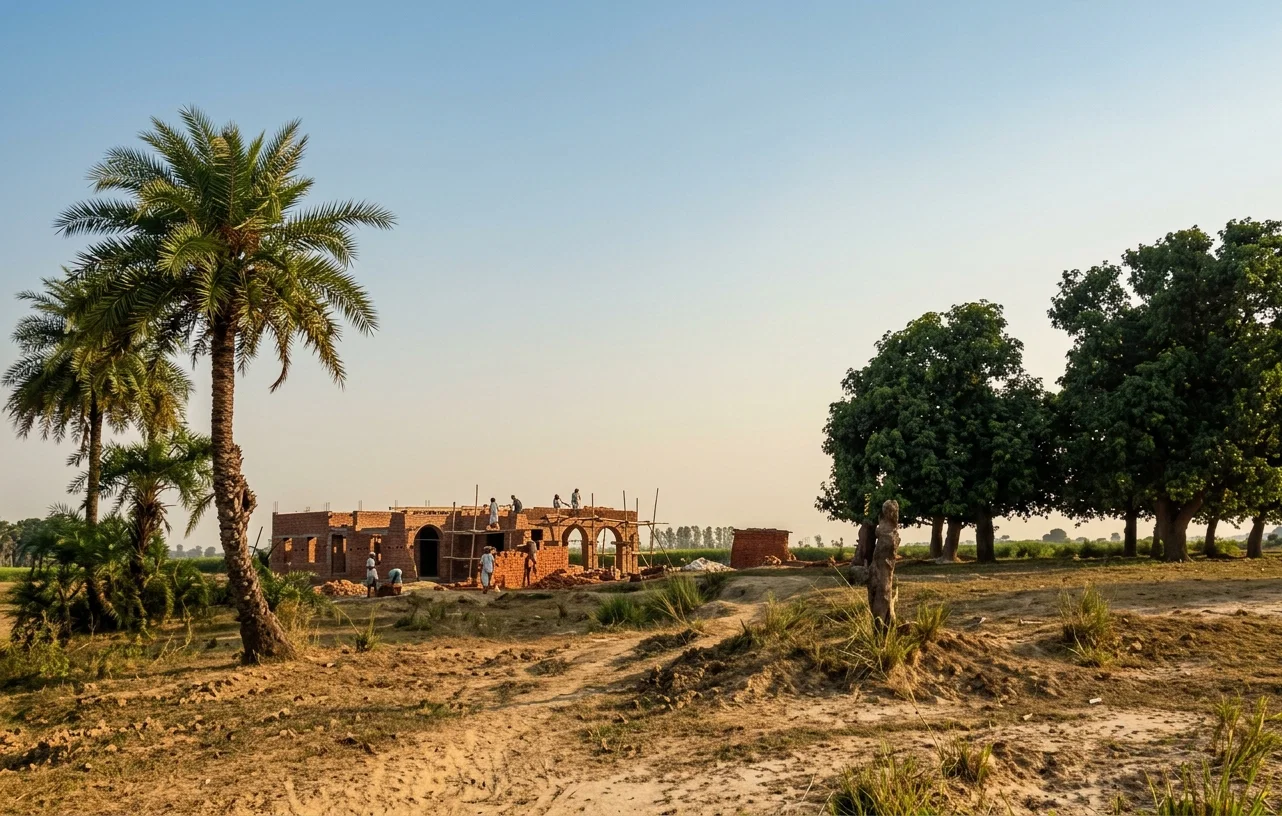
BRICK MISSION HOUSE BEING ERECTED AT NAJIBABAD, INDIA

North India

W. S. MEAD
WE have now been in India a little over a year. Most of the time has been spent in studying one of the languages, but besides the language we have studied many other things. One fact has forced itself upon our minds,—that India is on the other side of the world from the West in more senses than one. I sometimes wonder if any person ever understood India who had never been here; in fact, has any one understood it who has been here?
I have a friend, an educated Hindu, who knew I was reading a book on the Hindu religion. He remarked that if I ever came to understand it, he wanted me to explain it to him, for, though born in it and though a student of religion, he admitted that Hinduism was as yet unfathomable. Of course I was glad for the opportunity of pointing out to him that whereas Hinduism is unfathomable, the religion of Jesus, while unfathomable in its fulness, is simple enough for all to understand in order to be saved by it. Of course he knows this; but to accept it and make a break with all his friends and relatives, and probably with his means of support, is more than he can do. More than ever do I realize that nothing but a deep conviction of sin can make a man truly turn to Jesus, the only Saviour.
The language we study is called Hindustani, or more properly Urdu. It is written in the same characters as the Persian, which is precisely like shorthand written backward. Urdu goes from right to left, and the last page in the book is the beginning of the story.
Here in north India we have two languages equally dominant, Urdu and Hindi, hence, when we issue any literature we must have two separate translations made, and get it out in two different forms, or characters. Roughly speaking, the Urdu is the language of the Mohammedans in this part of India, and the Hindi that of the Hindus. We have a quarterly journal now published in both characters, and we are collecting a canvassing force to sell it.
On the main railway line from Lucknow to the northwest part of India, just two hundred and sixty-four miles from Lucknow, is a station named Najibabad. Here we have a dispensary doing good work (still in a small rented building, however), a school for Mohammedan girls, and last of all, a good brick building in the course of erection, which will be a home for the workers in this place.
If any one questions our need of this house, I wish he could see where the workers have to live now, right in the native town, absolutely surrounded by everything a native town affords. Also I wish you could see the new house, a mile from town, near a creek, with twelve mango-trees at the side door, in sight of the mountains and at times in sight of snow-capped peaks, and where the breezes will not be disease-laden. But don't imagine that then we shall have a life of perfect ease. Najibabad has some disadvantages—but not for relation now. I enclose a picture of the house partly erected. All the trees at the right are mango, and belong to us. Those at the left are date-palms.
We are glad for the privilege of having a part in the work in India. The heathenism all around is oppressive, and far more than ever before do we appreciate the blessedness and truthfulness of the gospel of Christ. And even in this dark land does the message of the third angel seem a vital truth.