Who Are the Filipinos?

7%

Review and Herald Publishing Association · Takoma Park Station, Washington, D. C. · Mar 6, 1913

FromReview and Herald, Vol. 90, No. 10.

Read the full edition

Who Are the Filipinos?

The Philippine Islands — No. 2

Who Are the Filipinos?
L. V. FINSTER
[Written in view of the special Sabbath-school offering for Korea and the Philippine Islands, March 29.]
It is a great mistake to think of the inhabitants of the Philippine Islands as one people. They are as far from being one people as are the inhabitants of Europe, India, or South America. At the outset, there are two great divisions,—the Christian (so-called) and the non-Christian tribes, or we might call them the aboriginals and the invaders. Both of these classes are subdivided on ethnological and linguistic lines, until, instead of a homogeneous people speaking one tongue, as in Japan, there are sixty-nine peoples, speaking thirty-four different languages, and many dialects in addition.
Of the non-Christian people, the dwarf Negro, or Negrito, numbers about 30,000. He has crispy hair, wide nose, thick lips, and long heels, but never attains a stature of five feet. He is a savage pure and simple. He builds no house. He sleeps under some huge tree, and if approached by any human being, will scurry away like a rabbit. Thus far all attempts to Christianize or civilize him have been unsuccessful.
The Igorots are a more formidable race of savages. They are mountain dwellers, as the Negritos are forest dwellers. The Igorot is usually a peaceable savage, as far as outsiders are concerned, but the continual tribal race feuds give him the name of head-hunter. Several hundred Igorot children are now in the government schools, and their reports are very favorable.
The Tinguianes are a very queer people, living in northern Luzon. They have no temples, but hide away their idols from public gaze in caves and ravines. They live in small huts, built high up among the branches of large trees.
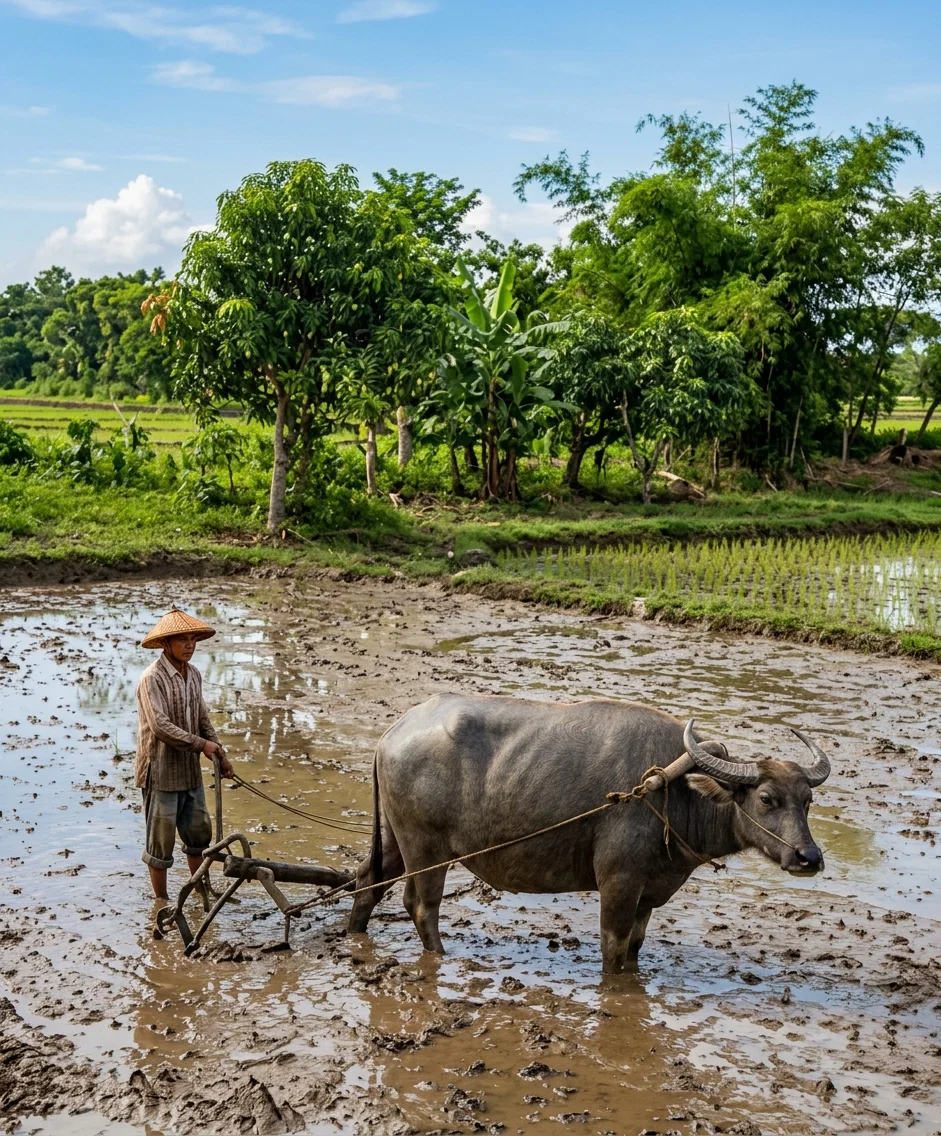
PREPARATION FOR RICE SOWING IN THE PHILIPPINE ISLANDS
• The Moro lives in the southern islands. His religion is a degraded Mohammedanism. He is a warlike man. He is taught to believe that special rewards are given to the one who dies fighting the “infidel” (meaning the Christian).
We now turn to the real Filipino, the people we shall have to do with for some time to come. There are six main divisions, as follows: the Visayans, 3,225,000; Tagalogs, 1,500,000; Ilocanos, 300,000; Bicols, 500,000; Pampangans, 335,000; and the Cagayans. They were, until the American occupation, nominally Roman Catholics. As a whole, they are bright and learn readily. With the overthrow of the Spanish rule, religious oppression ceased; and liberty and freedom took its place. Within three months from the day that Commodore Dewey captured Manila, several missionary societies laid plans to open work in the Philippines. Protestantism has made wonderful progress.
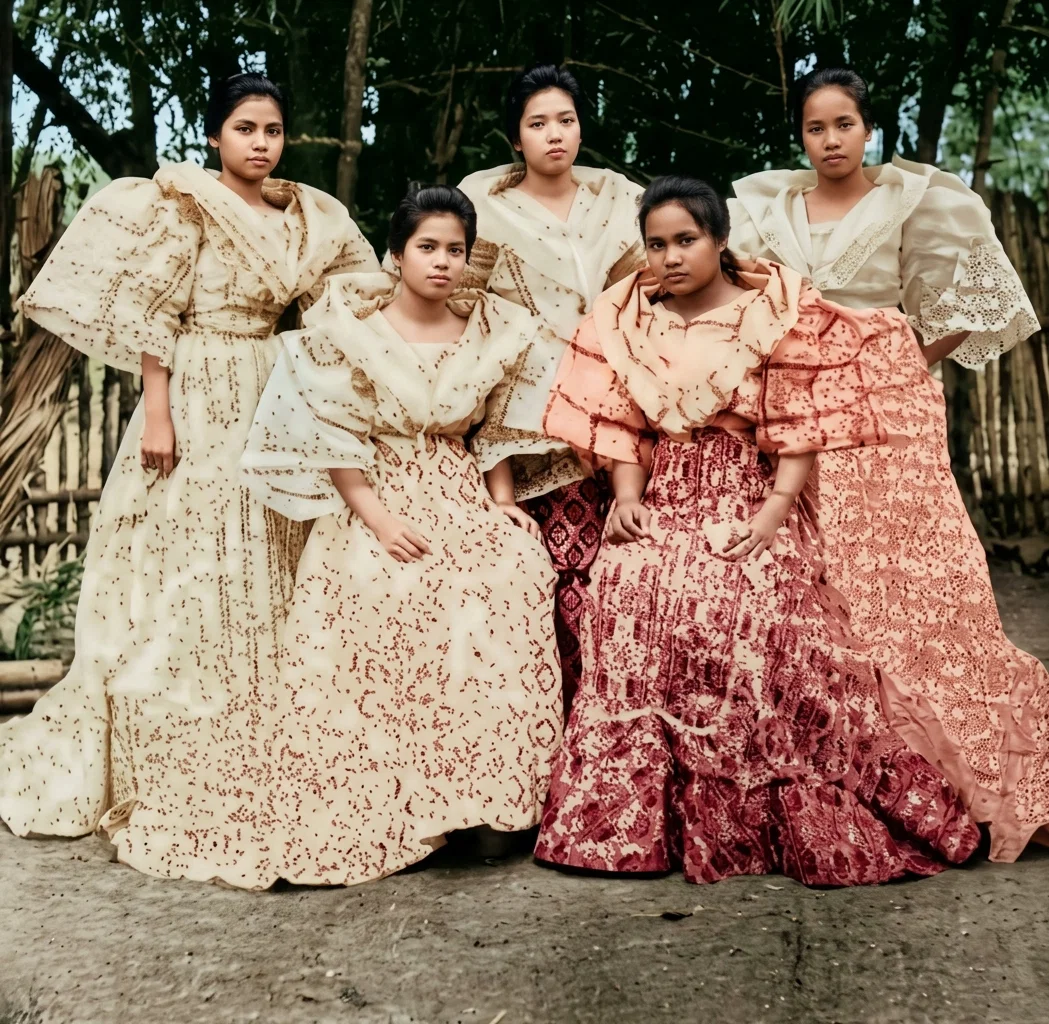
FILIPINO YOUNG LADIES OF SANTA ANA
It has taken much painstaking and hard work to get the Bible translated into all these different dialects. But to-day some portion of the Bible can be had in nearly every tongue. Thus, for the first time, the natives that have been considered Christian for three hundred years, are able to read the Bible in their own language.
The Methodist Episcopal Church was the first to send missionaries to the islands. They found ready hearers, and to-day they have training-schools, a large publishing house, hospitals, churches, and members. The Presbyterians, the Church of England, the Baptists, and the Church of Christ soon followed, and have been equally successful in making progress. Missionaries have learned the different languages and are now training many native workers, which has given a great impetus to their work, so that now the work is going by leaps and bounds. The long misrule of Spain and the church, has engendered a distrust of the Catholic religion. The opening of over 9,000 public schools has also done much to enable the people to break away from the superstitions of the past. This leaves most of the people without any faith in religion as they have been taught it, and unless Protestantism reaches them, they will soon drift into infidelity. Now is a most favorable time to work. I think I was never in any other field that had such opportunities for giving the message.