Our School in the Levant

6%

Review and Herald Publishing Association · Takoma Park Station, Washington, D.C. · Sep 5, 1912

FromReview and Herald, Vol. 89, No. 36.

Read the full edition

Our School in the Levant

A VERY interesting letter has come from Brother E. E. Frauchiger, telling of the work of the students in our Constantinople school, which illustrates the value of training our young people while in school to be successful missionaries in the field.
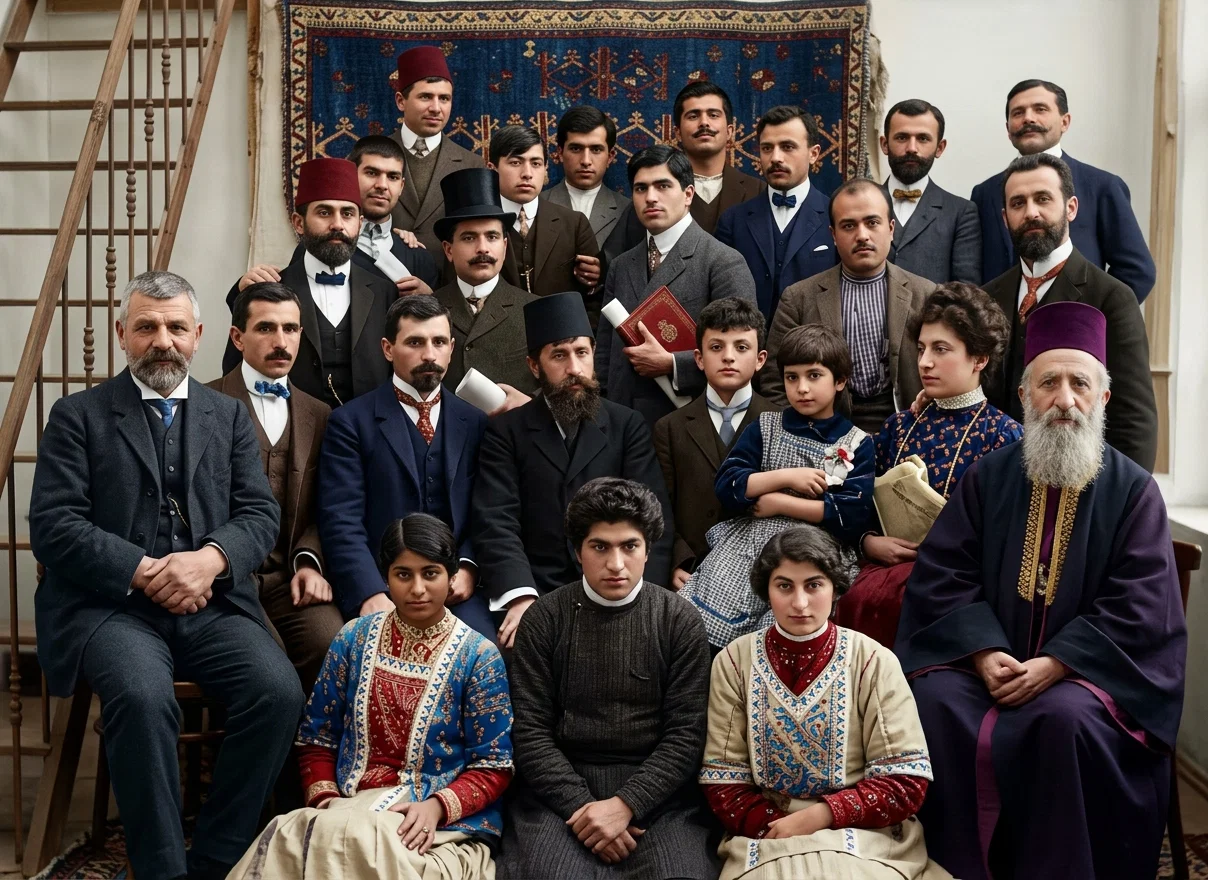
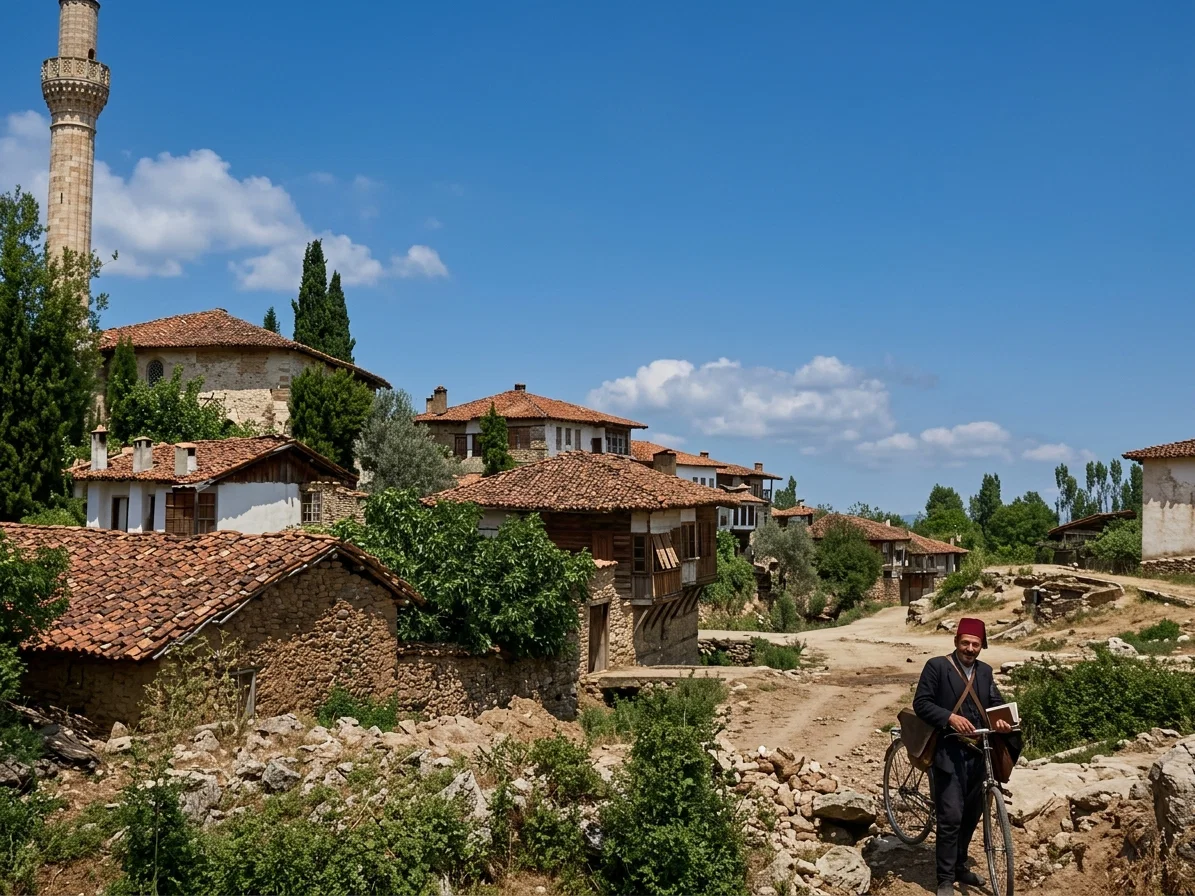
The picture below shows the class, with its teachers; the other, our first canvasser in Macedonia, who has been having excellent success among the Greeks and Turks. Last quarter his sales led all the others.
Next year the school will begin in the spring, and run through the summer, so that the teachers can devote the winter to evangelistic effort, as that is the best season of the year for this. Brother Frauchiger says:—
TEACHERS AND STUDENTS OF THE LEVANT SCHOOL
“The Levant School began its work Nov. 1, 1911, and closed on May 1. This is the first time we were able to send out so many laborers. The students have been distributed in the Levant field as follows:—
“The Armenian field, to which Brother Megerditch has gone as a colporteur. He is having good success in the cities of Marsivan, Amasia, Tokat, and Sivas.
OUR FIRST COLPORTEUR IN BÉRÉA
“The Cilician field, where Brother Anastas is acting as canvasser and Bible worker in the vilayets of Konia (Acts 14:6), which was called the district of Lycaonia in the time of the apostles. He is now on his way to Antioch, in Pisidia. He reports good results, and has found quite a number of interested persons. The Turkish tracts, which the workers were afraid to sell in Constantinople, he is selling where he now is, without fear. Already one man has accepted the truth in Akshehr, formerly called Antioch. Acts 13:14. Brother Apovian, a second canvasser, has been placed in the Cilician field, and is at present in Alexandretta. He will soon be on the way to Antioch, Syria, where the first believers in Christ were called Christians. Acts 11:26. His final destination will be Aleppo.
“The Grecian field, for which we could supply a colporteur. Brother Savvas, a Greek by birth, was ready to answer the Macedonian call, and he is doing well in Salonika.
“Central Turkish field, to which we have sent Brother Dicran, our first native colporteur, who is working in the border cities on the Black Sea, which were formerly called Bithynia, Pontus, and Paphlagonia. He has been very successful, and has found entrances for the truth. Brother Hovsep has been sent as colporteur and Bible worker to Brusa, which was the capital of the Ottoman empire before the invasion of Constantinople. It has about eight thousand inhabitants. Besides the Sabbath services, Brother Hovsep holds two other meetings each week. Also, Brother Nazikan has been placed as canvasser in the main city of the former district of Cappadocia; namely, in Kaiserie. He also reports better results than he ever had before.
“Brother Melchiori, who had rendered faithful service in Constantinople for two and one-half years, was ready to follow a call to the Italian part of the German-Swiss Conference.
“Brethren Garabed and Apcar have been appointed to do translating and secretary work. Brother Aram and Sister Araxi are helping Brother Voigt in the tract society. Sisters Miriam and Satenic are preparing to take up the school work among our churches.
“Ninety per cent of our class are engaged in direct endeavor in the field. We are glad to see that the everlasting gospel is being given in four different languages—Turkish, Armenian, Greek, and Arabic—in the region where the light shone so brightly two thousand years ago. Although the Moslems are forbidden to read Christian tracts, the laborers report that they are saying they can not refrain from reading them.
“The canvassing is the most important work that can be carried on at present. We hope that all these places where we are following the footsteps of the apostles may again be revived.
“Our students represent more or less the whole Levant field. From the east, we have one from Bagdad; from the south, one from Tarsus, the birthplace of the apostle Paul; from the west, some from Smyrna; others from the heart of Asia Minor; and some from the north of Bithynia. Our curriculum consisted of history, geography, and arithmetic, by Brother Voigt; physiology and Bible for the first year, by Dr. Pampaian; Bible for the second year, church history, and canvassing, by myself; English, by Sister Kalfa; Turkish, by Mr. Haroutunian; Armenian, by Mr. Redrossian; while Greek was given by a Greek priest.
“We are especially thankful that our students are cheerful in the Lord, and that they are successful in their labors.”