The Divorce Evil

6%

Review and Herald Publishing Association · Takoma Park Station, Washington, D. C. · Nov 30, 1911

FromReview and Herald, Vol. 88, No. 48.

Read the full edition

The Divorce Evil

The home is the nursery of the church, the safeguard of society, the bulwark of the state. Influences that serve to destroy or weaken this divine institution, will weaken in corresponding ratio every other order of human existence. Satan well knows this, and consequently in these days of mighty working on his part, no institution is so greatly the subject of his attacks as that of the home. Subtly and insidiously, he seeks by every means in his power to create between its members, particularly between the husband and wife, alienation and discord.
From the Independent, New York

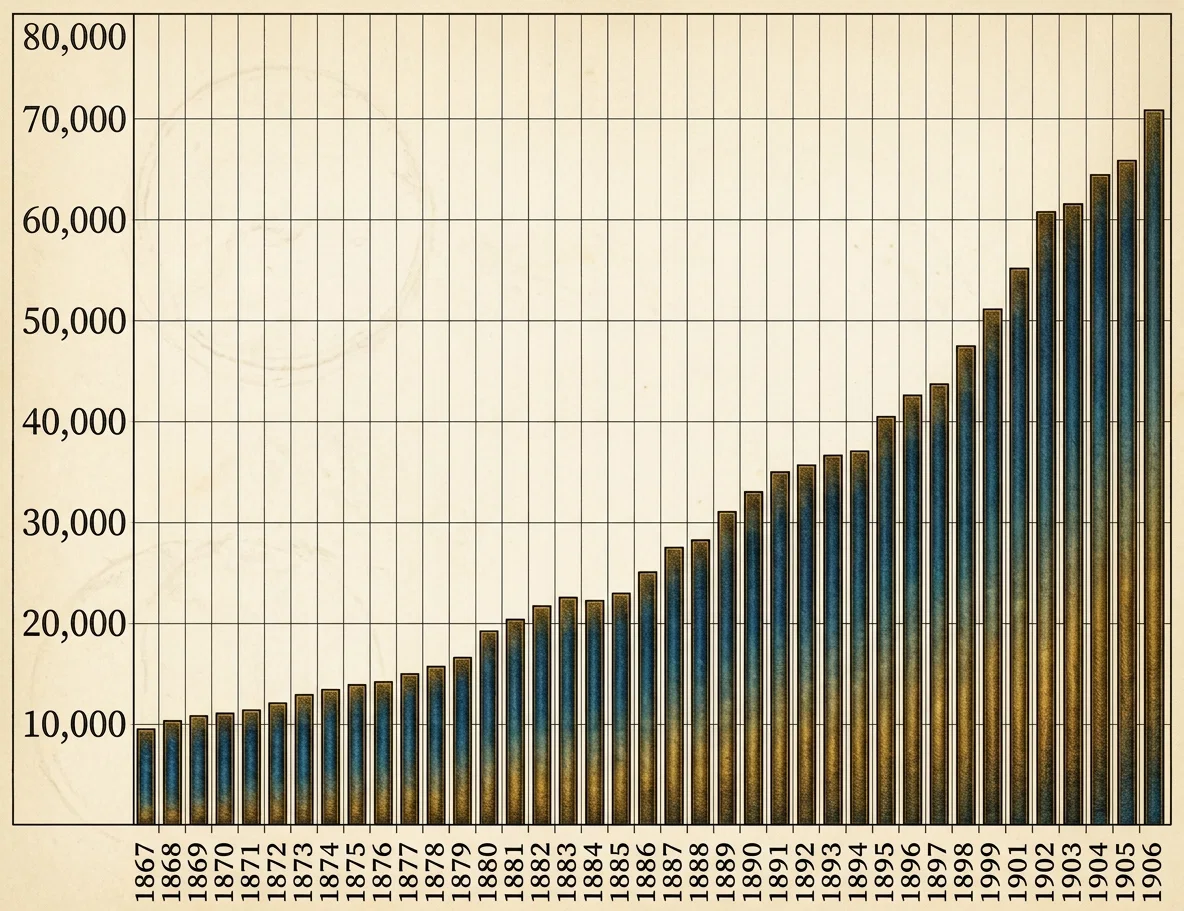
CHART SHOWING INCREASE OF DIVORCES IN THE UNITED STATES FROM 1867 TO 1906
From the Independent, New York CHART SHOWING INCREASE OF DIVORCES IN THE UNITED STATES FROM 1867 TO 1906
These days are likened to the days of Lot and Noah, when men's minds were so engrossed with the things of earth to the exclusion of God that their thoughts ran riot, their imaginations became vain, and their plans and purposes all sought to minister to selfish ends. In those days they multiplied unto themselves wives. The sacred ordinance of marriage was discounted. Passion and not love prompted the choice, and in revelry and drunkenness they shut the knowledge of God out of their understanding. The world to-day is rapidly reaching the conditions foretold by our Lord. Many are found, even among the professed believers of Christ, “without natural affection, truce-breakers.” We see on every side ruined homes, blasted reputations, tarnished characters.
Among the great evils of the present day that are demanding the serious thought of Christian men and women in every denomination, the divorce evil stands prominent. Every year has marked a rapid increase in the number of separations effected by our civil courts. The Independent for November 16, presents an article by William B. Bailey, Ph. D., assistant professor of political economy in Yale University, that is worthy of serious thought. By graphic representation, which we herewith reproduce, the great increase of divorces is shown from the year 1867 to 1906. This increase is altogether out of proportion to the increase of population. On this point Dr. Bailey says:—
The accompanying chart shows the number of divorces granted in this country per annum from 1867 to 1906. In the first year of the table there were 9,937 divorces and in the last year 72,062. During the forty years covered about 1,250,000 divorces were granted. Although it must be borne in mind that the population of the country has also increased remarkably during this period, the increase in population has not been sufficiently rapid to account for the increase in divorces. In 1870 there were 28 divorces per 1,000 population, while in 1900 there were 73. Perhaps a more accurate unit of measurement could be obtained by substituting married population for total population. On this basis the number of divorces per 100,000 married population in 1870 was 81 and in 1900 was 200.
The sin of Sodom was idleness, wine, and fulness of bread. In days of prosperity men have always forgotten God. Trial, affliction, and destitution tend to keep men's hearts humble. Of the relation of the growth of this evil to such times, we read:—
A careful study of the chart will bring out the fact that in periods of commercial depression the increase in divorces is less than in periods of prosperity. The reduction of the family income seems then to knit the family more closely together.
The great tide of emigration, in sweeping westward, carries with it unsettled conditions, a breaking down of old barriers, and in consequence we naturallyexpect an aggravation of the divorce evil in the newer sections of the country. Regarding this the article in question says:—
It can be stated in general terms that the divorce rate in this country increases as one goes westward. The rates in the North Atlantic and South Atlantic divisions in 1906 were respectively 41 and 43, while in the Western division the rate was 168. Bearing in mind that the average annual number of divorces for the five-year period of which 1900 was the median year was for the United States as a whole 200 per 100,000 married population, it may be interesting to know that in Washington the rate was 513; in Montana, 497; in Colorado, 409; while in New Jersey and New York it was 60, and in Delaware, 43.
The causes that have led to these separations have been many and varied. By far the large majority fall outside of the conditions laid down in the Scriptures; namely, the breaking of the seventh commandment, the only Scriptural reason for which a divorce may be granted. Non-support, desertion, incompatibility of temper, and scores of less trivial reasons may be assigned why this solemn ordinance is set aside and the parties released from the obligations that their solemn vows imposed.
It will not avail to protest alone against this great menace to our civilization. Back of the protest there must be a proper education given to those who enter into the marriage relationship if we are to expect better results. This is sadly lacking at the present time. In the average home, and with many professed Christians, the marriage relationship is regarded too lightly, and treated too indifferently. It is discussed as merely a business transaction. This is the education too largely given to the youth. While we may not be able to help these conditions in the great wide world, surely among Seventh-day Adventists they should not exist.
The Word of God declares that marriage is honorable. It was an ordinance sanctioned by the holy presence of the blessed Lord. It comes down from the garden of Eden as a twin institution with the Sabbath of Jehovah. It should not be regarded lightly. It should not be entered into hastily nor unadvisedly. Those contemplating it should realize that they are entering into one of the most solemn relationships of life, a relationship which will largely influence their lives for time and for eternity. When there is given to the young this exalted idea of this holy ordinance, when they are taught to regard it as the solemn, sacred institution that it is, then we need have little concern for their future.
The church of God to-day, the Seventh-day Adventist Church, should seek to hold back, in so far as lies in its power, the growing evil of family separation. We find families represented in the Seventh-day Adventist Church that are divided in religious sentiment, wives living with unbelieving husbands, husbands with wives who care naught for the service of the Lord. Let no word be spoken nor influence exerted that would lead such to disregard the solemn obligations upon which they have entered. They can not lightly regard these and be guiltless before God. Let the believing one seek to abide with the unbeliever in all peace and quietness, endeavoring by a life of meekness and gentleness and of kindly Christian deportment to win the unbeliever to God. This by the grace of his spirit may be indeed experienced.
The Word of God recognizes but one basis for the granting of a divorce. There may be instances of cruelty, accompanied by physical violence, where the wife is forced from home to preserve her life, but even such treatment does not afford grounds for divorce warranting remarriage. Some have made a mistake in marrying outside of the truth of God; but if so, let them not add to that mistake by further complicating the situation. Let them abide in the relationship in which the truth finds them, endeavoring by the grace of God to live an honest, earnest Christian life, and trusting God in his own time and in his own good way to harmonize every difference and every difficulty. Such a purpose will meet the mind of God, and will bring as a result his blessing, which maketh rich, and addeth with it no sorrow.
F. M. W.