The Home Foreign Mission Field

10%

Review and Herald Publishing Association · Takoma Park Station, Washington, D.C. · Aug 17, 1911

FromReview and Herald, Vol. 88, No. 33.

Read the full edition

The Home Foreign Mission Field

(First Reading)
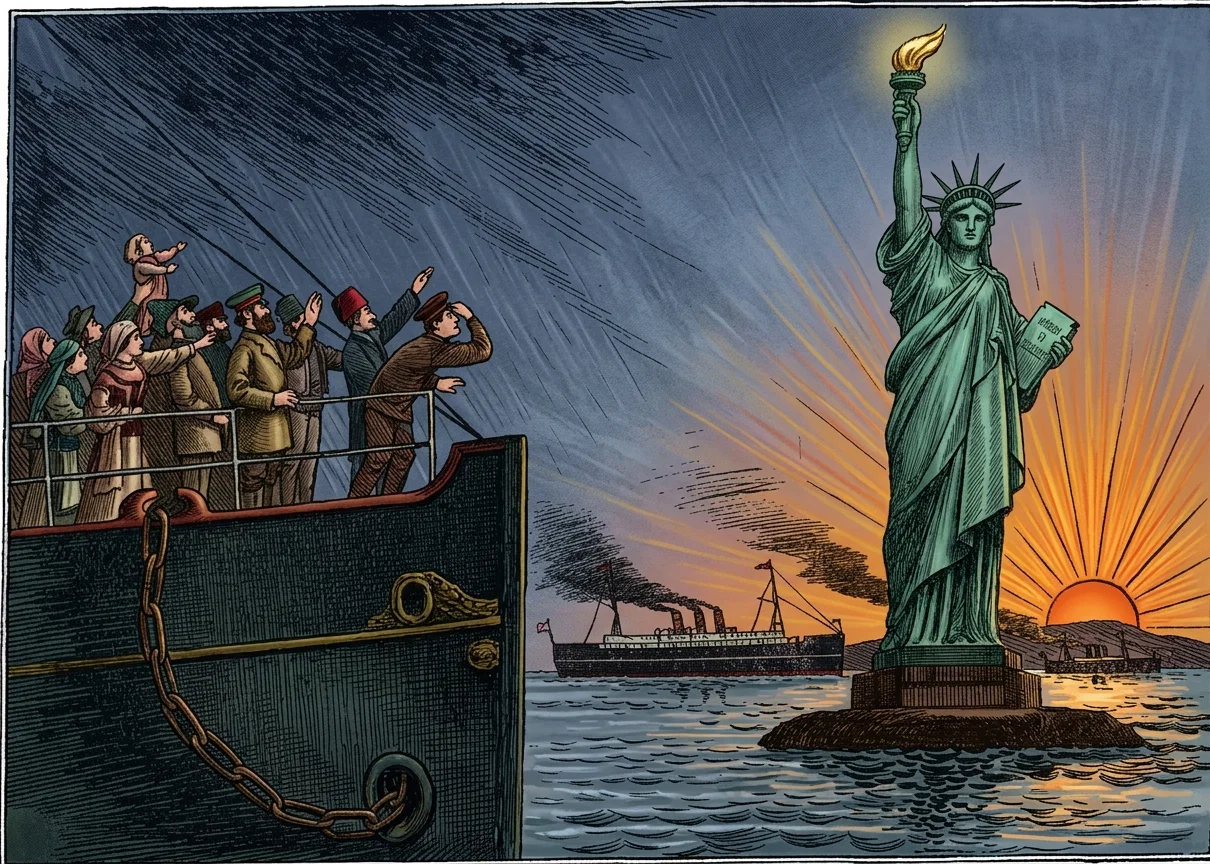
The United States of America is in many ways a unique country. Its population is largely made up of people from every nation and country in the world. According to government statistics, one third, or about 30,000,000, of our population is counted as foreigners. One hundred years ago the immigration from Europe began to trickle into this country like a tiny stream. This little stream has gradually increased until it has become a veritable flood.
THE ARRIVAL
THE ARRIVAL
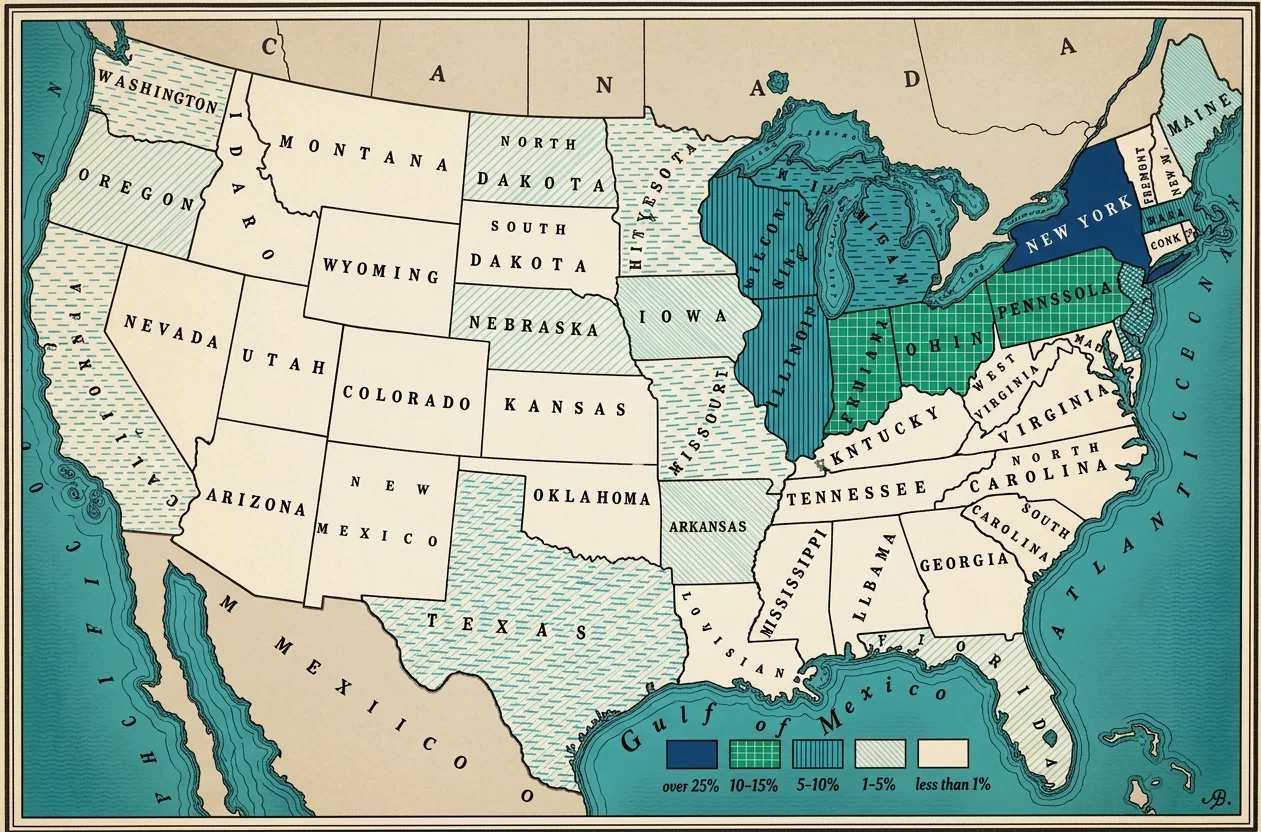
PERCENTAGE OF IMMIGRANTS GOING TO EACH STATE
During the ten years from 1821 to 1830, 143,439 immigrants landed on our shores; the next ten years, from 1831 to 1840, brought 599,125; and from 1841 to 1850 the number increased to 1,713,251; while the next decade, from 1851 to 1860, brought 2,598,214. You will note the steady increase, every following decade nearly double that of the former one. We now pass on to the ten years from 1881 to 1890, during which time 5,246,613 immigrants arrived; while the last decade, 1901 to 1910, brought the enormous total of 7,795,380. The largest number coming any one year was during 1907, when 1,285,349 souls, representing some thirty nationalities and languages, entered this country.
It is very difficult for us really to comprehend these figures. To illustrate: If you were to divide these people into groups and put them into cities by themselves, you would have an Italian city as large as Minneapolis, containing 220,000; an Austro-Hungarian city the size of Detroit, 270,000; a Jewish city as large as Providence, R. I., with 180,000; and you would have one hundred cities of from 2,000 to 22,000 people without an English-speaking person in them. This will give you a little idea of the vast multitudes of foreigners that are pouring into our country year by year. Such a situation is certainly worthy of our study and attention, and we can not close our eyes to the fact that right here is a foreign mission field of no small magnitude.
This influx of foreigners year by year, has quite transformed our country. Frank M. Goodchild, D. D., makes the following statement: "New England is foreign to-day. Not only the great cities, but the small towns as well; not only the small towns, but the hillsides; not only the hillsides, but the valley farms are peopled with men and women who have strange faces and strange ways." And we may add that it is not only New England that is thus foreignized, but the whole country; for the same conditions that exist in the East prevail also in the Middle and Western States to a large extent.
Take a look at our cities. In New York sixty-three languages are spoken. In 1906 it was stated that there were nearly 450,000 Italians, about as many as in Rome; and since then, thousands more have come. At that time, there was said to be more than 789,782 Germans, 200,000 more than the population of Hamburg was then, which, next to Berlin, is the largest city in Germany. There were also 725,000 Jews in New York City, so that New York is the capital of the Jewish world, and they are adding to their number at the rate of 50,000 a year.
But what we see in New York is repeated in Chicago, Boston, Milwaukee, and in nearly all our larger cities, whose populations are from fifty per cent to eighty-five per cent foreigners. Surely this is a condition to be considered; and as far as one can see, this tide of immigration is still on a rising scale. It is no wonder that this situation is engaging the serious attention of thoughtful men in both church and state, and it ought to engage our attention most of all, to whom is committed the special message to every nation and people.