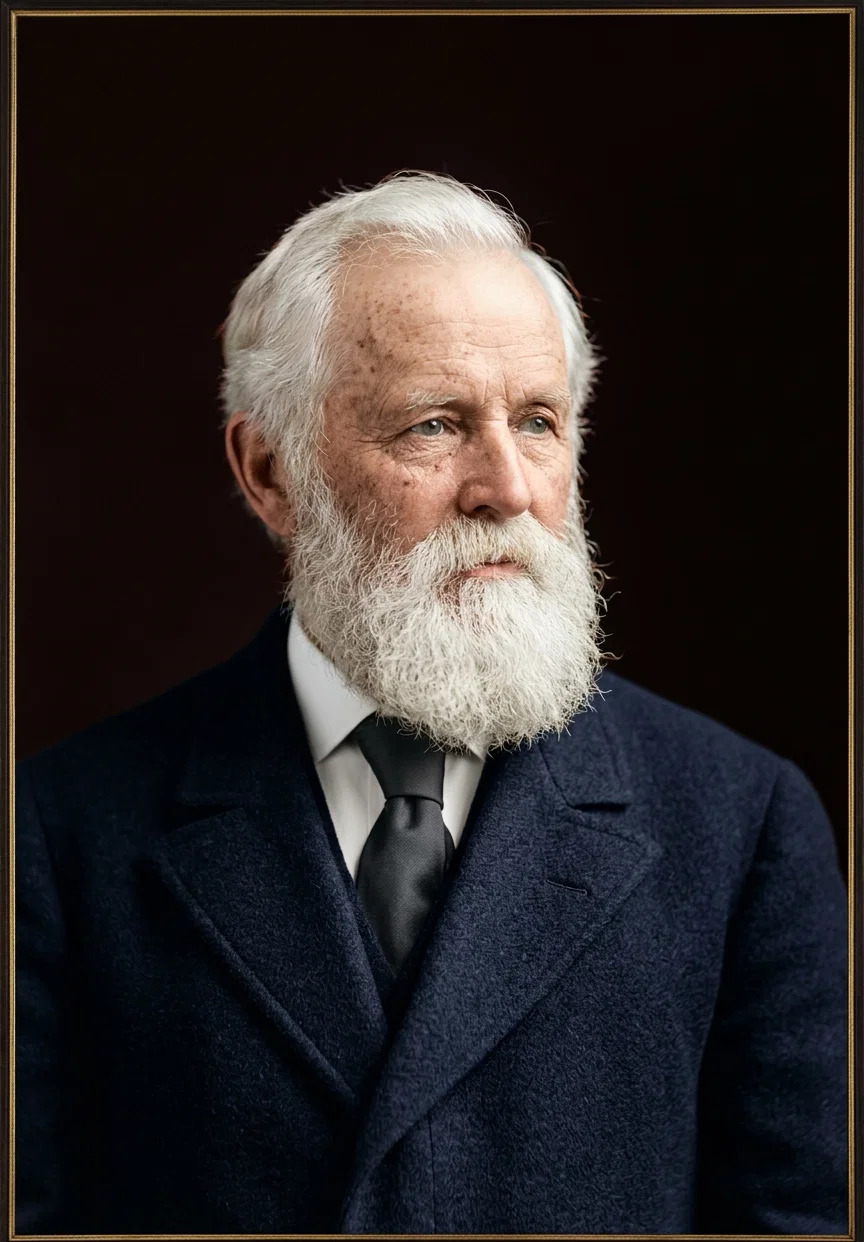
At his home in West Monroe, N. Y., on the evening of Oct. 11, 1910, occurred the death of Elder Frederick Wheeler, in the one hundredth year of his age. He was born at Acton, Mass., March 12, 1811; therefore he lacked only a few hours of being ninety-nine years and seven months old.
Elder Wheeler was married to Lydia Proctor, March 25, 1832, at Washington, N. H. Her death occurred March 12, 1886. To them were born six children, five of whom are still living,—George, Theodore, and Mrs. Mary Halliday, in New York; Nathan, in California; and Mrs. Lucy Spaulding, in New Hampshire. In addition to these he had an adopted son, Wm. Henry Anderson, with whom he spent the last years of his life. From these sprang a numerous family, consisting of twenty-five grandchildren, including the son of Brother Anderson, thirty-nine great-grandchildren, and at least four great-great-grandchildren.
Brother Wheeler's religious experience began in the Methodist Episcopal Church, and about 1840 he was ordained as a minister of that denomination. By rather a peculiar providence, in 1842, he became interested in the advent movement, under William Miller, and soon began advocating the doctrine of the immediate return of the Lord to this earth. At this time he was residing near Washington, N. H., and was among those who received the light on the Sabbath from the Seventh-day Baptists, and is supposed to have preached the first sermon in favor of the seventh-day Sabbath ever given by an Adventist minister before the passing of the time in 1844.
ELDER FREDERICK WHEELER
In the spring of 1857, he removed to the State of New York, locating first in Brookfield, Madison County; but in the fall of 1861, he went to West Monroe, settling on a farm, which has since been his home.
In his earlier Adventist experience he was evidently a man of strong faith, being frequently called to pray for the sick. He related some remarkable answers to prayer. He was a charter member of the New York Conference of Seventh-day Adventists, and sustained the relation of minister in the conference until his death.
After his advanced age prevented him from engaging in active evangelistic labor, he continued to serve his home church with acceptance, his influence and instruction being of great assistance and encouragement.
After his eyesight and his power of locomotion had become greatly impaired, he still retained the use of his mental faculties to a wonderful degree; and in the last decade of his life, some of his exhortations had the force and power of his younger days. In his ninety-fifth year he dictated a message to the conference in its annual session, which was as straightforward, clean-cut, and pointed as any he ever gave. His mind remained active and clear to the last. For some years it has been my privilege to make him frequent visits, one being less than a month before his death. These occasions were always very profitable. On one of them he expressed himself as being especially grateful for the preservation of his mental powers. As failing eyesight deprived him of the opportunity of reading, these visits seemed to afford him much comfort and enjoyment.
His strong constitution and great vitality, combined with adherence to strict temperance principles, gave him a tenacious hold on life. He literally died of old age, and breathed his last as peacefully as a child falling asleep.
A large company attended the funeral services, which were held in the M. E. church. The discourse was based on Job 5:26. S. B. WHITNEY.