East African Missions

2%

Review and Herald Publishing Association · Tacoma Park Station, Washington, D. C. · Jun 16, 1910

FromReview and Herald, Vol. 87, No. 24.

Read the full edition

East African Missions

THE East African missions, under the direction of the European Division, include our work in German East Africa, British East Africa, and Abyssinia.

South Pare Mission, German East Africa
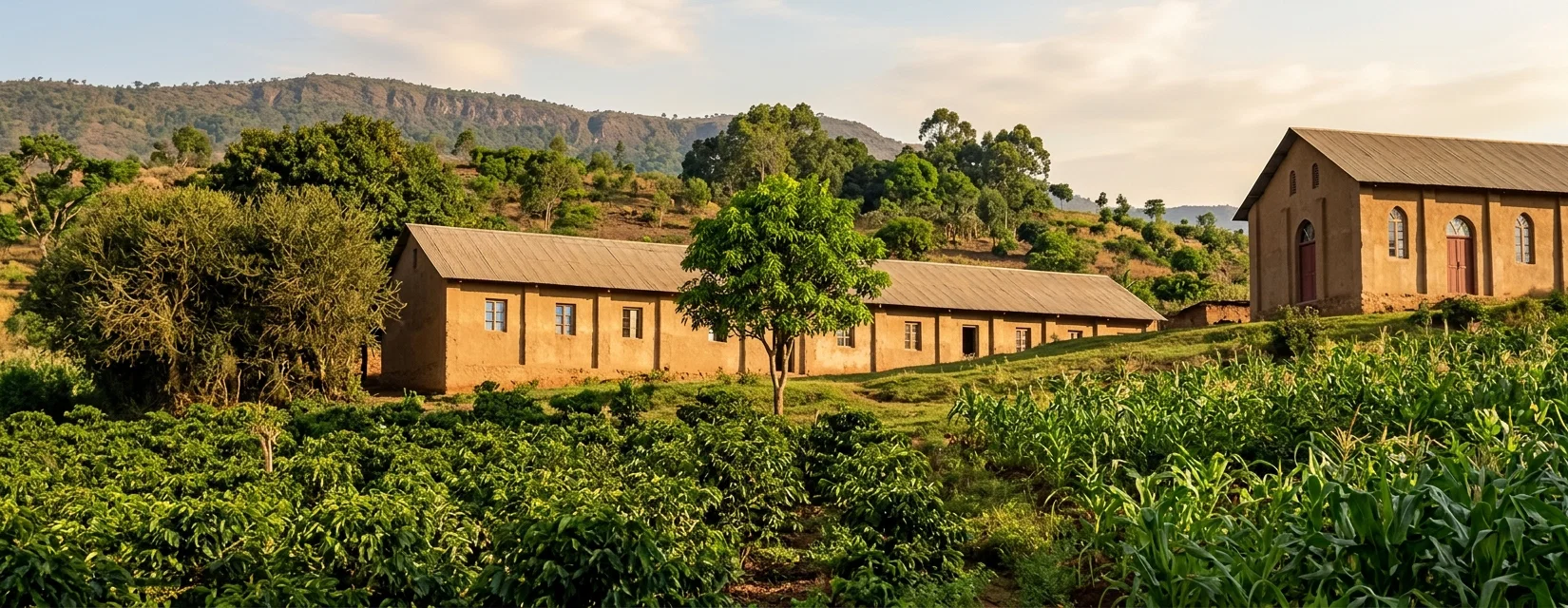
This mission is in the Pare Mountains, south of the great Kilimanjaro peak. Brother B. Ohme, director, says:—
God is teaching us how to take up the work of educating the children of the Pare people. During the year we have opened six new schools, with 350 pupils, under the instruction of baptized missionary helpers. Twenty-six new believers have been baptized.
Photo by B. Ohme  FRIEDENSTAL MISSION, GERMAN EAST AFRICA
Photo by B. Ohme FRIEDENSTAL MISSION, GERMAN EAST AFRICA

FRIEDENSTAL STATION

In March three chiefs came, saying: “We come to ask you to open a school in Kiranga, so that our children may learn. We know that the Word which is taught them is good.” We visited that place, timber was cut, and in April a school opened, with sixty-seven pupils, in charge of a chief’s son, who was baptized at Friedenstal the year before.
The influence of this school brought chiefs from the large district of Mpinshi, saying: “When are you coming to us?” I promised to go, and on reaching them a week later, to my joy and surprise I found that they had already cut down the timbers so that we could at once erect a school. The building, fourteen by twenty-six feet, cost us about fifty dollars. We dedicated the school with ninety pupils. One of our students, who had been two years at Friedenstal, was from this tribe, and volunteered as a teacher.

VUASU STATION

In June I joined Brethren M. Ponig and M. Kunze, of the Vuasu station, to assist in locating out-schools. Among the high mountains of the Mtai district we planted a school, where sixty-five pupils are now under instruction. Next we visited Ntanda, five hours from Vuasu, and pitched our tent by a village, where the chief greeted us with native hospitality, excusing himself that he could give us no more, as they had a famine in that region. After a council with the chiefs, they were ready to help establish a school, and a site was chosen where we had pitched our tent.
Leaving the brethren there, I visited the district of Mpare, where I had opportunity to preach the message to the chiefs who came to greet me. Steps were taken to start a school, and forty young people were ready to enter. Next morning, as I passed by rich fields and reached the large district of Vergama, a young chief met me, saying: “I have heard you are opening a school at Mpare; do the same here. I myself would gladly take instruction.” O, that these people may learn to honor God! On my return journey I passed Mpinshi, in the Friedenstal district, and was rejoiced at the advancement of the school. Among the villages and while about their work, the pupils are singing the songs of Zion which they have learned in their own language.

KIHURIO STATION

In July and August we sought out three further out-school locations for the Kihurio station, which we expect to occupy in 1910, if money is granted for the purpose. Returning from this trip, I was able to arrange for opening aschool in Lugulu, two and one-half hours’ distant from Friedenstal, on the border between our territory and that of the Leipzig mission. We have sixty-two boys and girls there.

GENERAL NOTES

We have three Christian villages where our converts may till the land daily, and are not compelled to witness the evil works of the heathen. The believers are increasing in wisdom, and the grace of God is with them. Our sisters give special attention to the girls, and we have a girls’ school at each mission station, where they learn to read and write, and are instructed in the Word of God.
At the close of the year we had in our three head stations thirty-two baptized natives, seven out-schools, five more in process of construction, with approximately a thousand pupils. We are eight white workers—one of whom, Brother Kotz, is in Germany on furlough—and ten native teachers. We have a Chassu song-book, a primer, and shall soon have the four Gospels, the final proofs of which Brother Kotz is to read in Europe.
At the close of the year, which had brought so many blessings, we had the grief of laying one of our number away to rest, Sister E. Drangmeister, of Kihurio. After faithfully helping her husband for a year and two months, she now sleeps in Africa, a victim of the dreadful fever. But by the little mound of earth she still witnesses to many souls of the preciousness of the truth for which she gave her life.

Victoria Nyanza Mission

This new mission is on the south-eastern shore of the great inland sea, Victoria Nyanza. Elder A. C. Enns, of the Vuasu station, was commissioned to explore for the new mission. Two stations were established, Busegwe, with forty acres of land, house and kitchen of sun-dried brick, and a school of 130 children (in charge of E. Rassler and wife), and Majita, where mud and wattle huts had been put up during the summer, while prospecting. The real opening of Majita runs over into January and February, 1910, but we must let Elder Enns tell of it here to complete the story of the beginning of this new station. Speaking of his return to the station, at the opening of 1910, he says:—
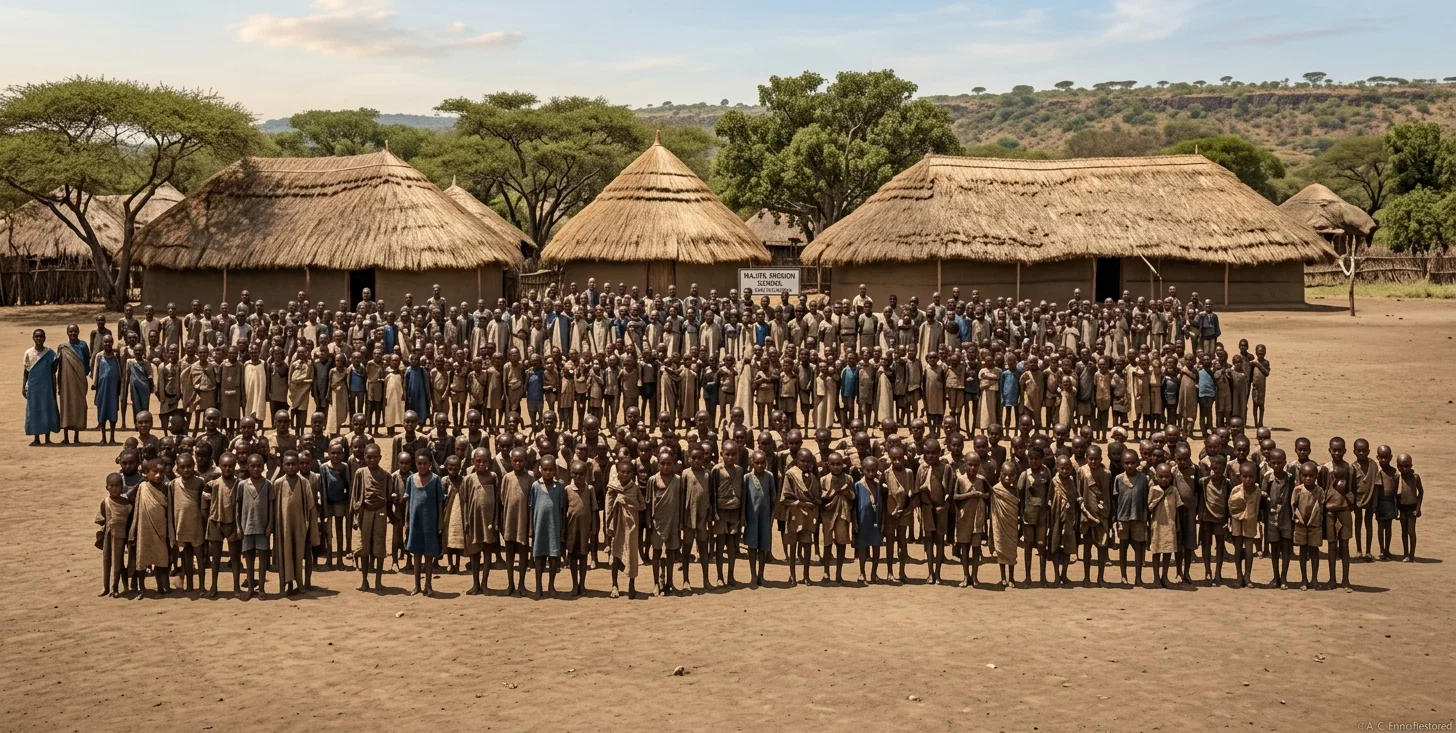
In January, Brother E. Dominick and I reached Majita. As soon as the location was settled, we set out to get plants for fruit trees, and some fast-growing trees for future wood supply, as there was not a bit of wood or brush about the place. I returned from this work with a bad attack of malaria, which kept me down five days. But in February we were able to start the school. The building is about 50 x 16 feet. It holds but 160children, sitting close together. But I was somewhat startled on the fourth day after opening the school to find that I had applications from 600 boys and 175 girls who wanted to learn. So I had my school filled, and 600 running over.

SIX HUNDRED TURNED AWAY

I photographed these, so that you can see whether you would like to have them turned out of the school, as that is the only thing I could do, promising them that we would build a school which would hold all of them as soon as we possibly could. Look at them standing in orderly columns. Would it not be glorious if these children could at last stand about the great white throne, greeting with loud hallelujahs those who have contributed to their salvation? I can assure you it was with great reluctance that I dismissed the 600 children. But even now we have to hold two sessions with those we have, and can scarcely get other necessary work accomplished. Please remember us in this new station when you pray. It costs money to build here. All lumber must be imported from British East Africa. Water conditions are poor, and I must make a cistern on the station, and build a large tank at a place where the water issues from the rock little faster than by drops. All this we must have in order to avoid sickness and death.
During 1909 we also secured a site for a third station, at Kidzo, with eighty-two acres of land, which we marked off at the corners with stone pyramids.

Kavirondo Mission, British East Africa

Our first station in British East Africa, entered in 1906, was located on Kavirondo Bay, on the eastern shore of the Victoria Nyanza, close by the German East African border. Elder A. A. Carscallen writes:—
At the opening of 1909 we had one station and four workers. Our knowledge of the language was not great. We are glad to report progress. In January work was started on a new station. In March, Brother and Sister J. J. Baker moved into the temporary buildings, and the school at the new station is growing. In March, Brother B. L. Morse joined us at the first station, giving attention to school work. This work has grown, and we have had to turn away more than a hundred boys, as we could not give them work to do. We are on a reserve where only five acres of land can be secured.

INDUSTRIAL DEVELOPMENT

We hope, however, to secure more land for industrial work, and have turned our attention to developing other industries. We have a good carpenter and blacksmith shop, and already some of our boys are becoming handy with the tools.
Four of our boys who have been with us longest have expressed a desire to become Christians, and we feel very thankful for what God is doing for these souls in darkest Africa.
We are getting a few books into the language, which will be a help to those who come from now on. We have a good Kavirondo-English dictionary, and the English-Kavirondo part is quite well along. A primer for use in the school is almost completed, and a grammar of the language is being written.

The Abyssinian Mission

Late in 1907 Brethren P. N. Lindegren and J. Persson, from Scandinavia, located in Asmara, capital of the Italian colony of Eritrea, to begin work among the Abyssinian people, entrance to Abyssinia proper not being open. They gave their attention to the study of the language. Elder L. R. Conradi, who returned from a visit to that field in December, writes:—
The year 1909 marks an important era in the development of our mission work among the Abyssinians. In October, Elder A. Grundset and family arrived at Asmara, followed the next month by Dr. F. W. Vasenius and wife, Brother V. E. Toppenberg, and the writer. Three busy weeks were spent in prayer and counsel and hard work. We sought for a location at some point where there were no other missions, but on account of the unsettled political conditions along the border the governor would consent to grant us a place only at Asmara.
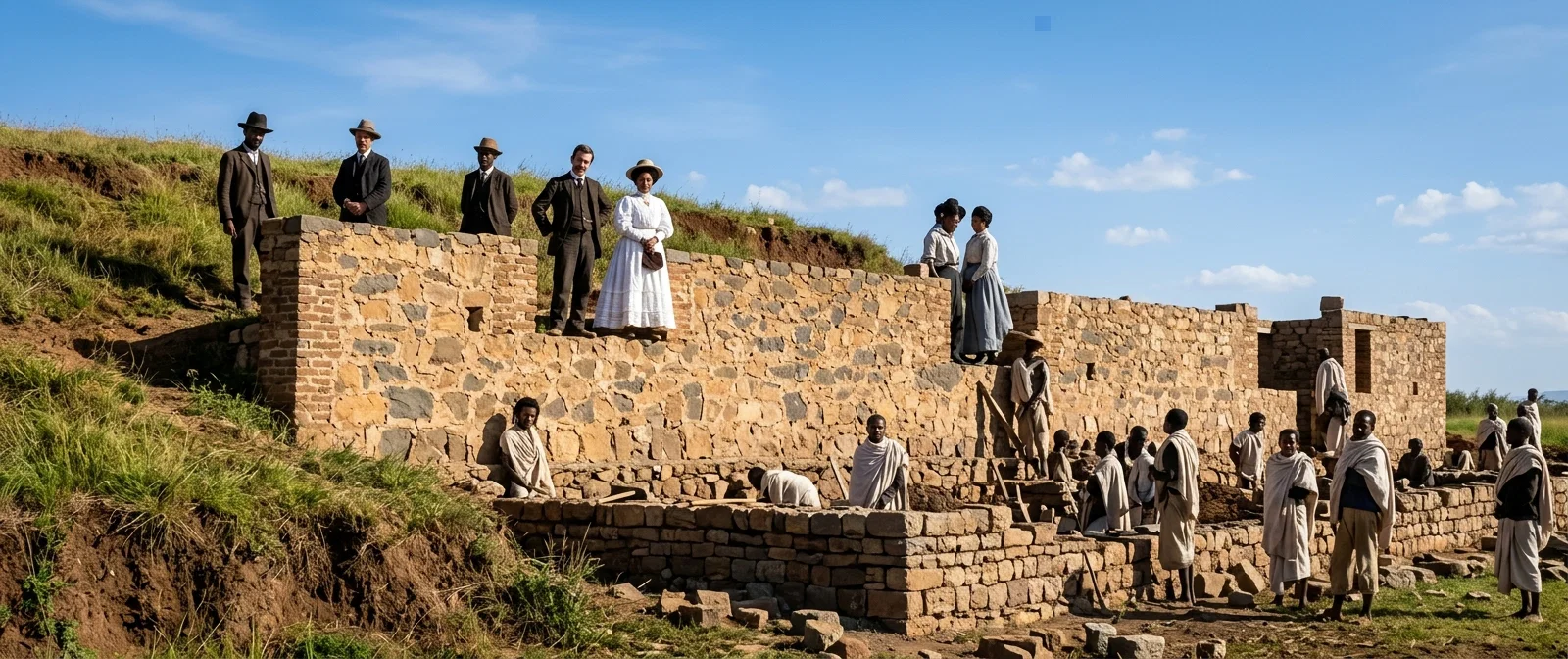
Asmara has a population of 15,000, mostly Abyssinians. The climate is excellent, the elevation being 8,000 feet. There is excellent farming land all about the town. The government reserves the land needed by the natives,allowing other portions to be taken up by Italian settlers as homesteads. We finally purchased a fine homestead of seventy-five acres, a little over a mile from town. The price was $800. We could judge of the fruitfulness of the land by the fine stack of wheat on it. There are also good water facilities. The title was transferred December 7, and we at once secured a builder and planned two stone buildings, one a dwelling-house for two families, the other having two rooms and a kitchen. A schoolhouse, of two rooms, was also planned, as well as a stable, as the mission has two mules, three oxen, etc.
We can secure Abyssinian young men who are anxious to go to school. The expense for each will be about thirty dollars a year. By the rent which the workers will pay, and returns from the harvest, we expect to realize enough money to keep about fifteen boys. As Brother Persson has a knowledge of the Tigrene and Italian, we can start the school without delay. Elder Grundset and family are studying the Tigrene, Dr. Vasenius and wife the Amharic (the leading language of Abyssinia), and Brother Toppenberg the Galla. Thus the workers are preparing to enter Abyssinia proper as soon as the way opens. We are only fifty miles distant from the border of that country.
Some of the delays in missionary life will be appreciated when I state that although two sisters arrived in October, 1908, to be married to Brethren Persson and Lindegren, the marriages could not take place until December, 1909. The licenses had to be signed by ministers, ambassadors, and counselors in Scandinavia and Rome. But all parties were only the happier when it was finally learned that the last obstacle had been overcome.
On December 4 we organized the little church at Asmara, with nine members. When I left, December 9, all were happy in the assurance that indeed the promise of the Lord had been fulfilled, and that Jesus, the chief of all missionaries, had been with us.
Photo by A. C. Enns
SIX HUNDRED CHILDREN WHO HAD TO BE REFUSED ADMITTANCE TO OUR MISSION
SCHOOL IN MAJITA, VICTORIA NYANZA
Photo by A. C. Enns SIX HUNDRED CHILDREN WHO HAD TO BE REFUSED ADMITTANCE TO OUR MISSION SCHOOL IN MAJITA, VICTORIA NYANZA
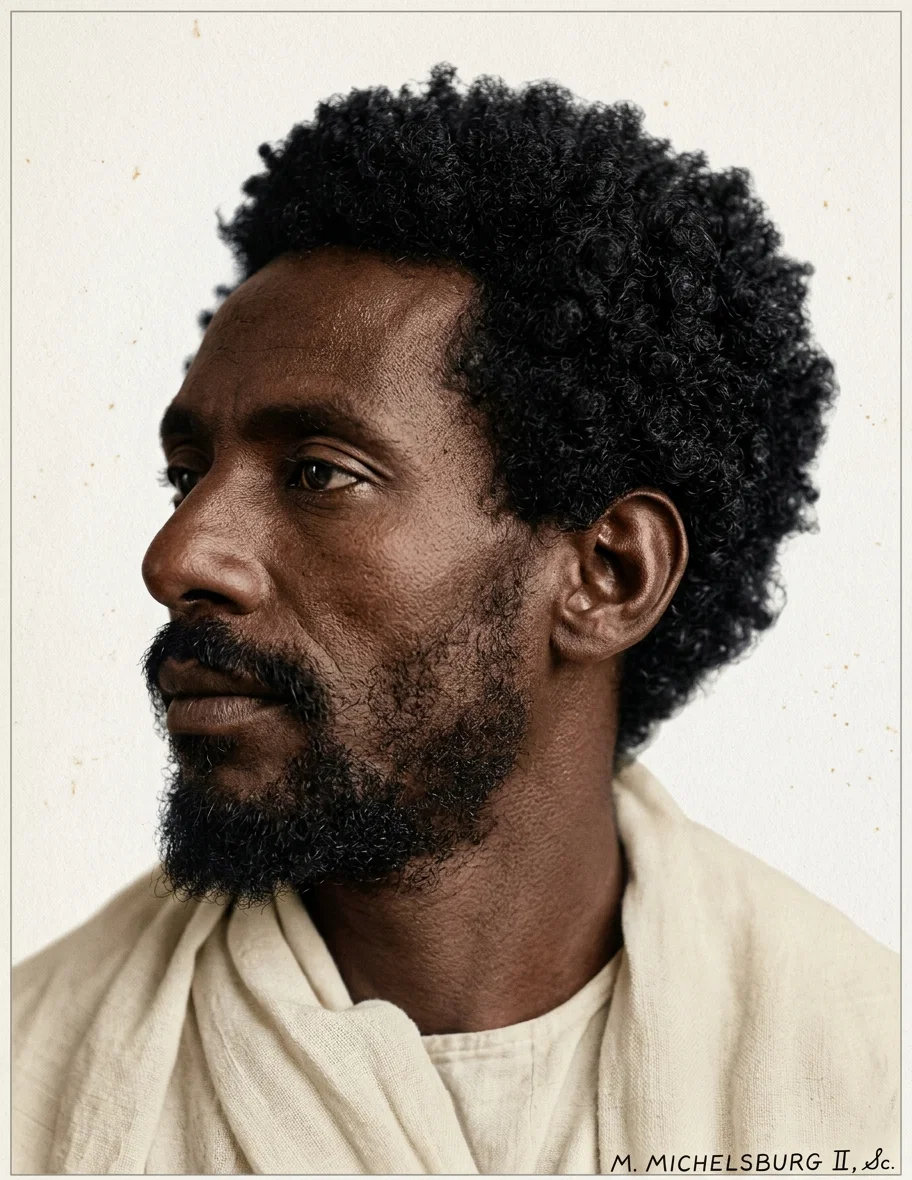
A TYPICAL ABYSSINIAN
BUILDING THE NEW ASMARA MISSION HOUSE, ABYSSINIAN STATION