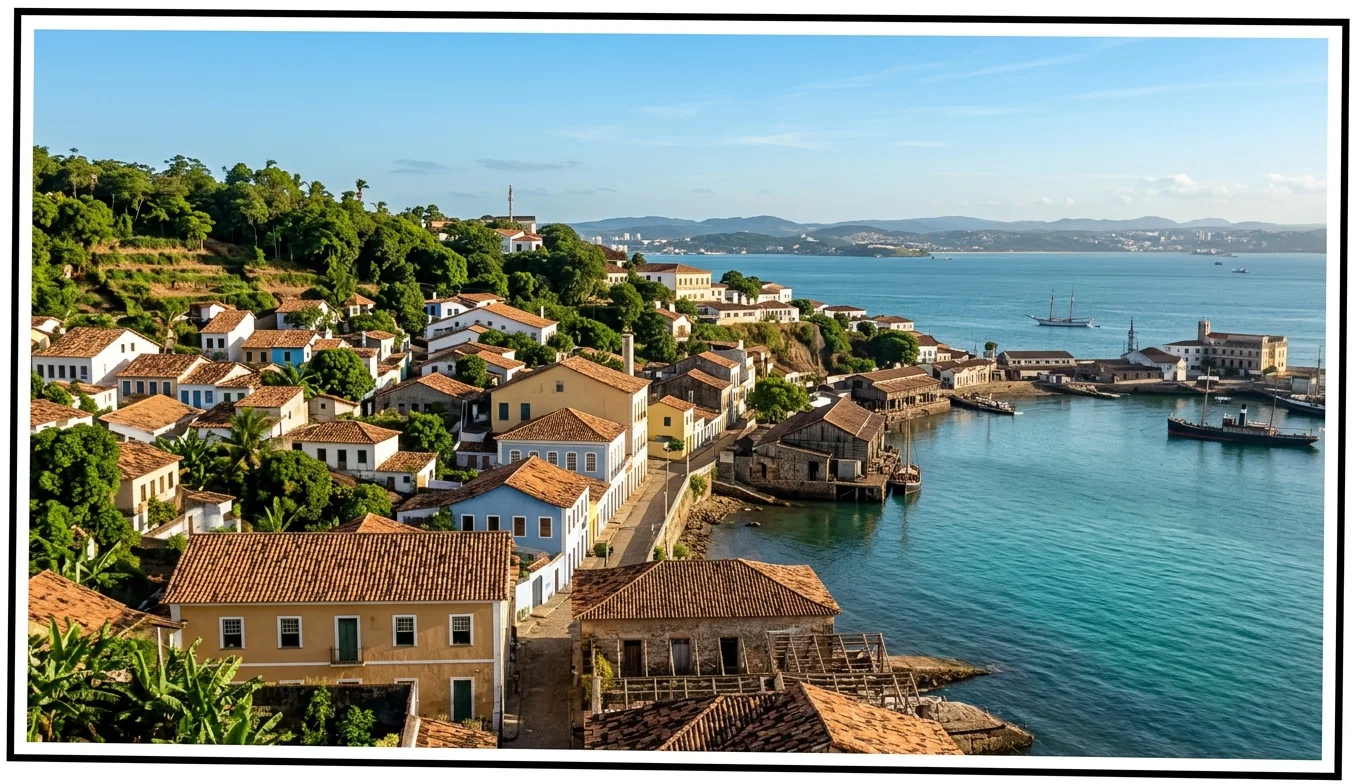
The South American Union Conference includes all South America except Colombia, Venezuela, and the Guineas, which belong to the territory of the West Indian Union Conference.
THE GENERAL FIELD
Elder J. W. Westphal, president of the union conference, writes:—
Advancement, in all parts of the field, is the word for 1909. Four laborers left our force during the year (two by illness and two by call to other fields), and twenty new workers from abroad have been added. A new impetus has been given our book work by the arrival from the United States of general agents in Peru, the River Plate, and Brazil. Eight nurses have come from North America and Europe, and are laboring in Argentina, Uruguay, and Bolivia.
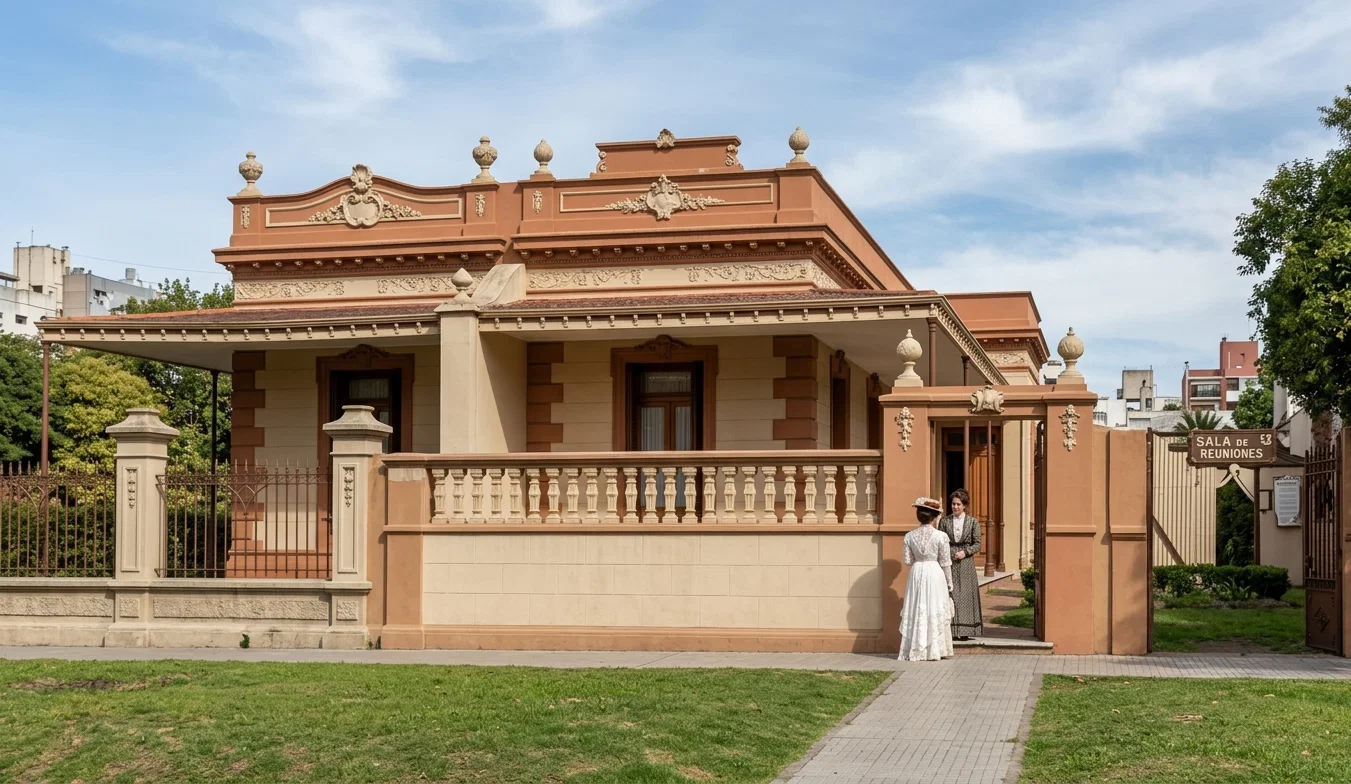
MEETING-ROOM, BUENOS AIRES; MRS. KNIGHT AND MISS HANSEN IN GATEWAY
I have this year visited Peru and Ecuador for the second time, and Bolivia for the first. The Lord's Spirit is working on hearts. Recently a young German Catholic came quite a distance to see me. Some years ago a man had remarked to him, “If any people have truth, it is the Seventh-day Adventists.” Now he came to find it.
UNION CONFERENCE INSTITUTIONS
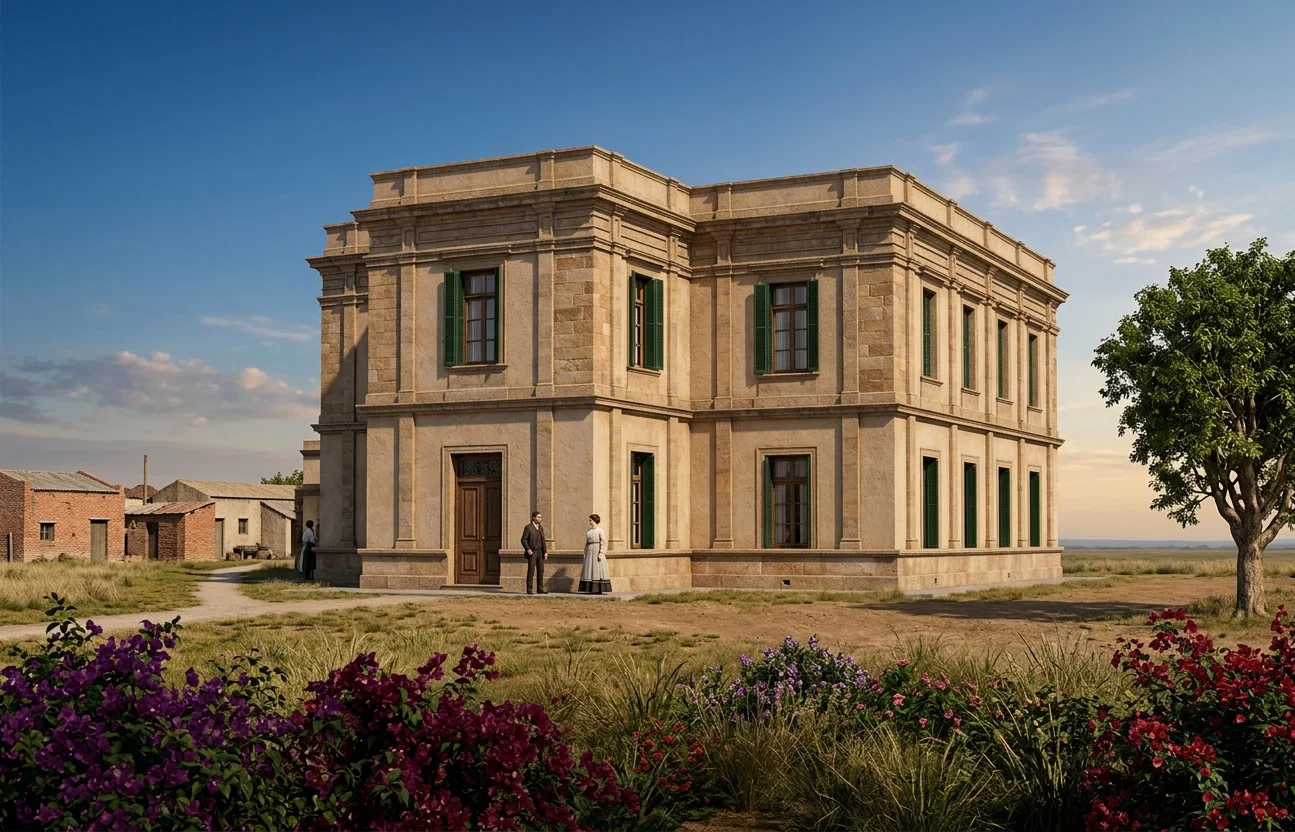
The first of our institutions in South America was the Rio de La Plata Academy, in the province of Entre Rios (“between the rivers”), thirteen miles from the city of Diamante, on the great Parana River. Elder Westphal writes:—
During the school year the lists registered 123 names, thirty more than in any previous year. Six teachers were employed, Prof. Walton C. John being in charge. Nearly a dozen of the students this year entered the canvassing work during the vacation. We are adding a larger dining-room to the school building, and increasing the recitation-room facilities. The one discouraging feature has been the disaster to our farm by the locusts and the drought.
For years Dr. R. H. Habenicht had been teaching, preaching, and practising as a physician in the region of our school. From many miles around the sick had flocked in for help, or sent for the doctor to come to them. The situation demanded a place to receive and care for them. For a part of 190849the academy building was used as a hospital, while a sanitarium building was begun near by; hence 1909 is the first year of the Rio de La Plata Sanitarium. Elder Westphal writes concerning this institution:—
As rapidly as rooms were at all available, even before doors and sometimes windows had been fitted, and with no more furnishings than beds, they were filled with patients. At one time there were thirty-three patients in the home. Although much still remains unfinished at the close of the year, and the building is still largely unfurnished, the twenty-two rooms have been fully taken possession of.
RIO DE LA PLATA ACADEMY
In charge are Drs. R. H. Habenicht and G. B. Replogle, with Miss Lillian Voris as matron and head lady nurse. A nurses' class of seven has been started. Many have been blessed spiritually as well as physically. Three weeks ago we baptized a lady, who, three months previously, had come to the place in a sad state, physically and spiritually. Spiritually her case seemed hopeless. Despair was depicted on every feature. She leaves us to return to her home with regret, but a happy, hopeful Christian woman.
Three union conference printing-houses, turning out publications in Spanish, Portuguese, and German, will be mentioned under the respective fields in which they are located.
The Argentine Conference
The Argentine Republic stretches its vast proportions from near antarctic seas to the tropics, twenty-five hundred miles from north to south. No wonder Elder I. G. Knight, president of the Argentine Conference, says:—
The most unfavorable condition that can be mentioned is the scarcity of laborers to answer calls. People who desire instruction and baptism must often be kept waiting many months before a minister can visit them. Only two ordained ministers speaking either Spanish or German, have been available for calls from the field, and one of these has full work in the great city of Buenos Aires. Our work in Argentina has scarcely left the large rivers in the eastern part. Extending back for hundreds of miles to the Andes Mountains are sections of country, even whole provinces, still untouched by us for lack of laborers to enter them. There is a settlement of German Sabbath-keepers in the pampas, or plains, six hundred miles southwest of Buenos Aires. While the official language of the conference is Spanish, the larger part of the members are Russian-Germans, and the strongest churches are of that people exclusively. These brethren are descendants of Germans, who removed from Germany to Russia some two hundred years ago because of oppression, and being granted favors by the Empress Catherine of Russia, colonized there and retained their own language. Again removing, this time to the Argentine Republic, and colonizing, almost whole communities have accepted the truth, and the financial strength of the conference lies with these German brethren.
EVANGELISTIC EXPERIENCES
Elder G. Block spent three months on tour among the churches and isolated believers in the frontier region northward, called the “Chaco,” baptizing new converts and confirming believers in the faith. Later in the year, he visited churches near the Uruguay line, baptizing thirteen in one day. On the same day, a little farther west, another baptism occurred, where Elders Westphal and Knight were visiting. The previous Sabbath three believers were baptized in Buenos Aires; shortly afterward five were baptized in the pampas, and a little before that time seven at another place. During the year fifty-five were baptized.
A GREAT CITY
The great city of Buenos Aires, with a million and a quarter of people, is a59vast field in itself for the one minister and two Bible workers there. Six have been baptized during the year. It is only necessary to open the gate of the mission and announce to one or two children that there will be a children's meeting, and in five or ten minutes the chapel room will be filled. Through the children the workers are reaching the parents. Our two visiting nurses and Bible workers have been prospered to the extent of making their work self-supporting. Very providentially, we believe, the national board of hygiene was moved to take special action authorizing our nurses to make use of hydrotherapy in their visiting work.
PUBLISHING WORK
In Florida, a suburb of Buenos Aires, is one of the union conference publishing-houses. Elder Westphal reports the removal of the Spanish paper formerly printed here to Chile, to be combined with the West Coast paper. But the Florida office has begun a monthly illustrated health journal, La Salud y Vida (Health and Life). The little church organ in Spanish, La Revista Adventista, is printed here. The printing-office sadly needs additional equipment. After the General Conference of 1909 Brother Maximo Trummer arrived to take charge of the book work, and conducted a canvassers' institute at the Camerero school, with good results. Elder N. Z. Town, of the General Conference, also joined in this work of organizing the publishing campaign, and many books are being sold.
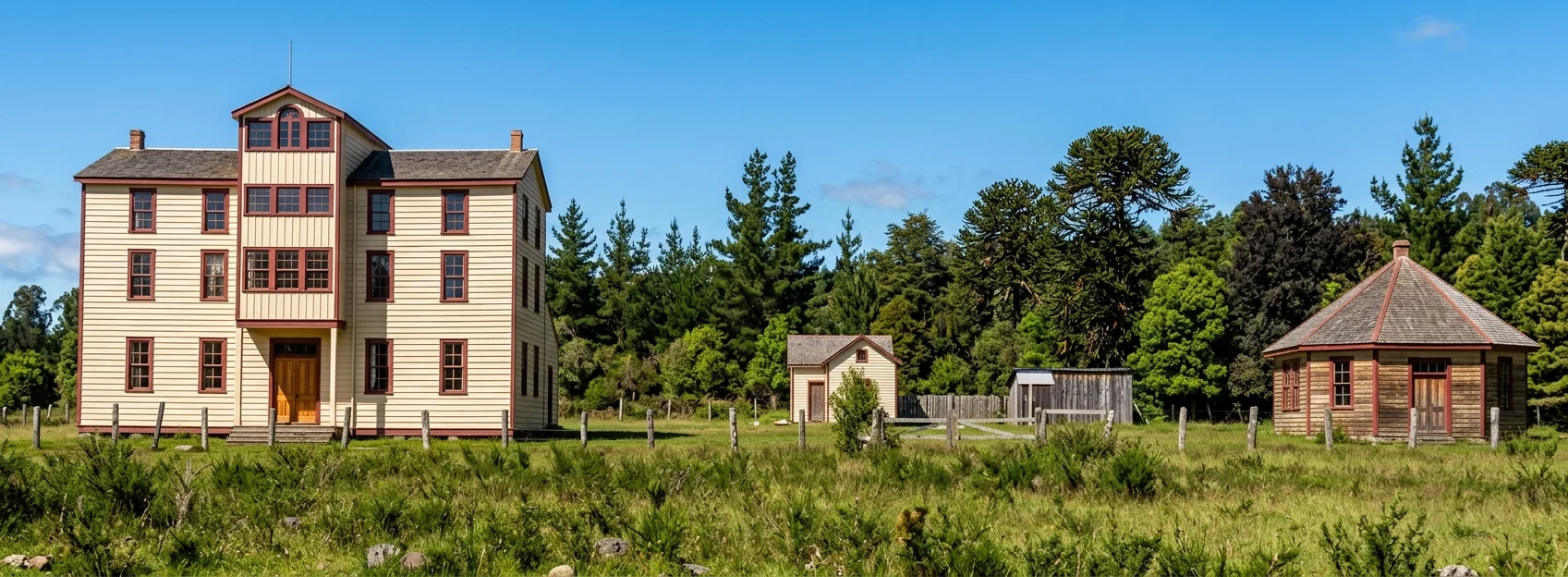
SCHOOL AT PUA, CHILE (BUILDING AT RIGHT, THE FIRST SCHOOL)
The Chile Conference
Chile's narrow coast line stretches north and south for over 2,600 miles. “There is room in Chile,” writes Elder F. H. Westphal, the president of the conference, “for teachers, nurses, doctors, preachers, and colporteurs. The Lord has blessed our efforts, and our membership during 1909 grew from 260 to 344.” He says:—
We organized this year a new church of twenty-one members in Canete. A shoemaker there accepted the truth four years ago, and remained faithful; and as a result of meetings during 1909, we baptized nineteen other souls in that out-of-the-way place. In order to reach Canete, Brother Santiago Mangold and I made a journey on foot of fourteen leagues (forty-two miles), sleeping out in the woods on the way, as the people are afraid to entertain strangers because of the many robberies. Brethren Balada and Soto report progress in the northern districts of Chile, and twenty-seven baptized.
These believers in Chile are ready to sacrifice for the cause. The treasurer of the conference, C. Krieghoff, says:—
One brother gave two thousand pesos (about seven hundred dollars) for the work, and five thousand kilos of wheat. Several during the year paid a second tithe to create an educational fund. A widow lately sent a thank-offering of fifty pesos, expressing her thankfulness in this way because the Lord helped her in dividing with the heirs and selling her land.51
THE BOOK WORK
There was a revival in the book work in Chile in 1909. Brother T. H. Davis, the general West Coast agent, reports that they have seen locally trained agents grow into successful service. He says:—
Two of our colporteurs were selling Bibles in Valparaiso, and they finally met a man who said, “You are selling the Bible and recommending it, but you do not obey its teachings.” The colporteurs asked, “How is that?” He said, “The Bible teaches that we should keep the Sabbath, and nobody keeps it.” The colporteur said, “Yes, we keep the Sabbath.” The man said, “But Sunday is not the Sabbath.” “We know that very well,” responded the colporteurs, “but we keep the Sabbath, the seventh day of the week.” Then the man exclaimed, “I am so glad, for I thought I was the only Christian in the world who was keeping the Sabbath of the Lord.”
Brother F. W. Bishop sends a message from the world's extreme:—
A year ago I was selling books in Punta Arenas, on the Strait of Magellan. That growing city is like a new world. Would that some one might settle there and live and teach the truth. In a little more than two months I sold about $250 worth of books. I found several women there who believe the Sabbath, and are trying to keep it. There are hundreds of Protestants in Punta Arenas, and an English church. The country is healthful; winters cold, but dry. I also sold books on the island of Terra del Fuego, or “Fire Island.” The country for hundreds of miles is settled by sheep owners, and these are mostly Englishmen.
A SABBATH-SCHOOL CONVENTION, PUA, CHILE
The Chile school is at Pua, in southern Chile, about ten minutes by train south of the town of Victoria. The printing-office is a few miles out of Santiago, the largest city on the western coast. Here the Senales de los Tiempos (Signs of the Times) is printed.
Peruvian Mission
Our work in Peru has not yet grown into a conference organization; but it is a stirring story that Elder A. N. Allen, superintendent, has to tell for 1909:—
Jan. 1, 1909, the Peruvian Mission office and chapel were established in new quarters, on one of the best streets of Lima, the capital of Peru. During the whole year we have conducted regular preaching services two nights each week, and two services on Sabbath. Although the laws of Peru still forbid the exercise of any religion but the Roman Catholic, we have suffered no disturbance in Lima. In April we baptized six young people.
ADVANCE COURIERS OF LIGHT
Four of these new converts have proved themselves capable and faithful52colporteurs. Before sending out these new men, they were called together, with others who had had some experience in the field, and a four-weeks' institute was held. At the end of this time all left, filled with the message and determined to give it. Only one who went forth has fallen out. The rest are still working, and are of better courage than ever. They have suffered hunger, thirst, cold, heat, peril by robbers in the desert; were threatened with death by the priests; one was thrown into prison; some were stoned; one was obliged to escape under cover for his life; and the house of one was set on fire. At another time soldiers protected the same house all night from the mob the priests had inspired to destroy Brother Espinoza.
These dear brethren have crossed the frigid heights of the Andes, at an altitude of 17,575 feet, and gone down to the tropical regions of the head waters of the great Amazon. They have walked for days over the burning desert lying between the Andes and the Pacific Ocean, packing the books on their backs, or on a little burro. We have sold over $2,250 worth of books and papers, nearly all by men who never before sold a book.
A CHEERING OUTLOOK
Wherever these men have gone, believers and friends have been made.
The word can not return void. Letters are received continually, praising God for freedom from crime, sin, evil habits. Souls have been born into the kingdom. People whom we never have seen are keeping the Sabbath, paying tithe, and sending in their offerings. From a dozen places they are calling for more instruction, and asking for baptism. This year it has not been possible for us to answer these calls, as Elder F. L. Perry, the former superintendent, was obliged by ill health to leave the field in April, and I have been held much at the headquarters in Lima. But now three new workers, with their families, have come,—O. H. Maxson, E. T. Wilson, and W. R. Pohle, the latter settling in Arequipa, in the south.
There are now twelve places in Peru where people meet together for praise, prayer, and Scripture study, each Sabbath. Several of these companies have never been visited by a minister, the believers having been raised up as the result of work done by the colporteur and the literature. Some whom we have never seen are already sending in their tithe and offerings. Two of these companies are on the shores of Lake Titicaca, 12,540 feet above the sea. The largest of these companies are all Inca Indians, nearly all speaking only the Haimara tongue. They are the fruit of the labors of an Inca brother, Manuel Camacho. He reports an attendance of twenty-five at Sabbath services. They have endured much persecution, but are holding on. They have never been visited.53
INCA INDIAN YOUTH
Ecuador Mission
Early in 1909 Elder Wm. Steele was compelled to return from Ecuador on account of his wife's health, and Elder W. W. Wheeler took up his work as superintendent of this field. The mission headquarters is at Ambato, in the mountains, reached by railway from Guayaquil, the chief seaport. In this port Elder Wheeler, on his way out, visited the one Ecuadorian Seventh-day Adventist, and thanked God for the first-fruits. Until November, Brother Navarette, of Chile, was engaged in the colporteur work in Ecuador. Elder Wheeler says:—
Some of the time I was out with Brother Navarette. It is always best for two to go together here. True, the Lord, alone, protects; but the fanatical ones are not quite so ready to do physical violence when two are together. Twice, when alone, Brother Navarette was obliged to flee, once some of the books and papers being stolen from him. That evening the people of the place made a bonfire of them in the plaza in front of the church. We have seen the New Testament burned in the streets. Twice, when together, we were obliged to put spurs to our horses. One of these times the stones fell very thick around us, but each time God protected us from any harm. Thanks be to him for his abundant mercies. We learned afterward that the priest had given special warning against us only a few days before. When we can meet the people before their minds and hearts have been specially poisoned and hardened by the priests, we find them very kind and hospitable.
Bolivian Mission
Sentenced to death for selling the Bible—that was the experience some years ago of our first Bolivian worker, a colporteur who entered the country from Chile. Only the providential intervention of a friendly lawyer saved our brother's life. But now Bolivia has declared for religious liberty, and the headquarters of our new Bolivian Mission is La Paz, the capital.
Early in 1909, Elder E. W. Thomann was in Cochabamba, laboring as preacher and colporteur, but able to work but part time, as he was still editing the paper published in Chile. While attending our 1909 General Conference at Washington, Elder Thomann was transferred to Chile, and Brother F. A. Stahl, a nurse and evangelist, was appointed to the superintendency of the field. Returning to help locate the new worker, in La Paz, Elder Thomann reports a visit, with Brother Stahl, to Cochabamba:—
Photo by F. E. Hinkley
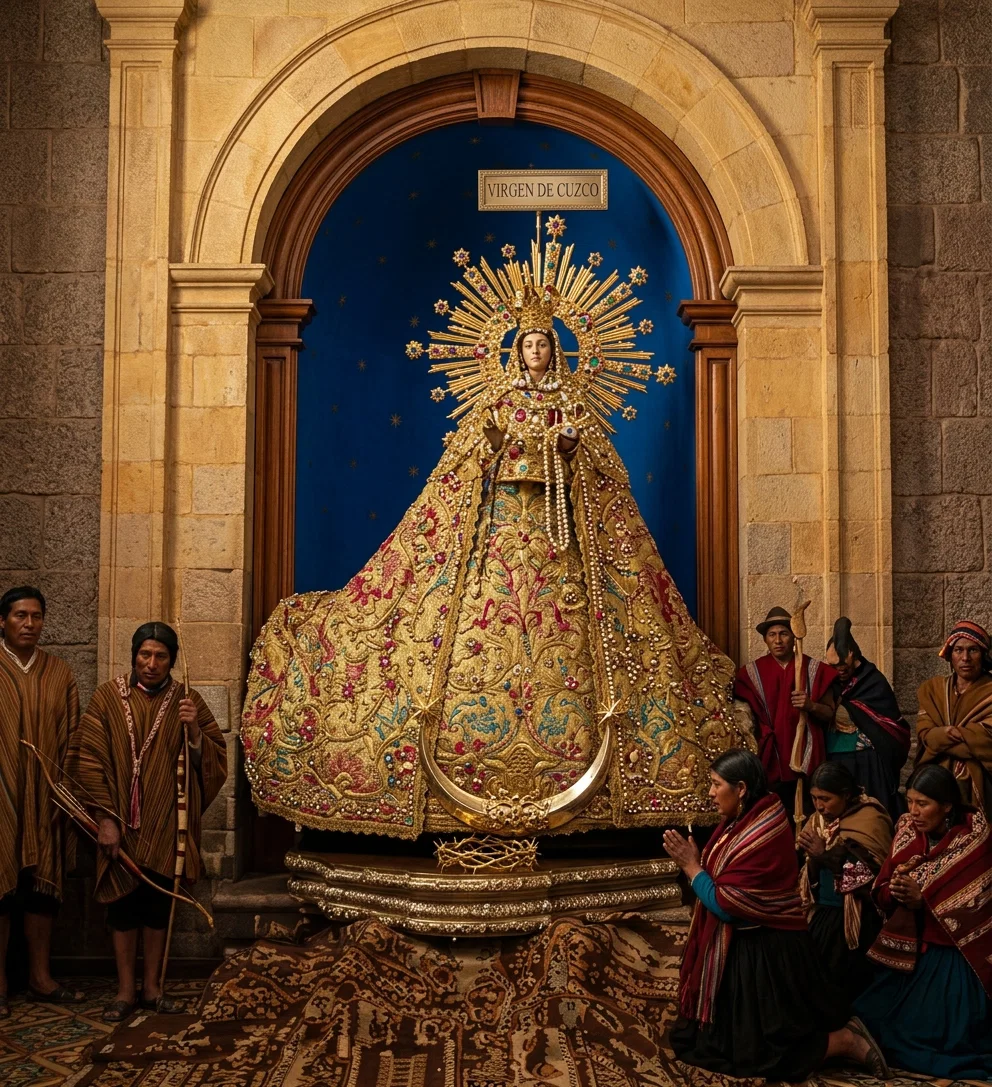
BOWING BEFORE AN IMAGE: SHRINE OF THE VIRGIN, CUZCO, PERU
We visited the believers, having several good meetings with them. One day we went over to Quillocollo to visit the believers who live there, among them the lawyer who liberated Brother Pereira eleven years ago, when he had been sentenced to death for circulating Bibles. All were made glad that Bolivia was finally getting workers who could dedicate all their time to the work there.
Brother Stahl found difficulty in securing54permission to practise as a nurse and masseur. He writes:—
One day a leading physician asked me to treat a free case at the hospital. This I did, and my patient improved. Nearly all the physicians of La Paz watched me as I worked. When I got through with the case, this physician, who has charge of such matters, told me to bring my diploma to him, and he would grant me a permit, my patient interpreting for me. So I have now a full permit. The Lord worked it all out for good.
Since then our brother has had his hands full of work, and earnestly calls for additional helpers.
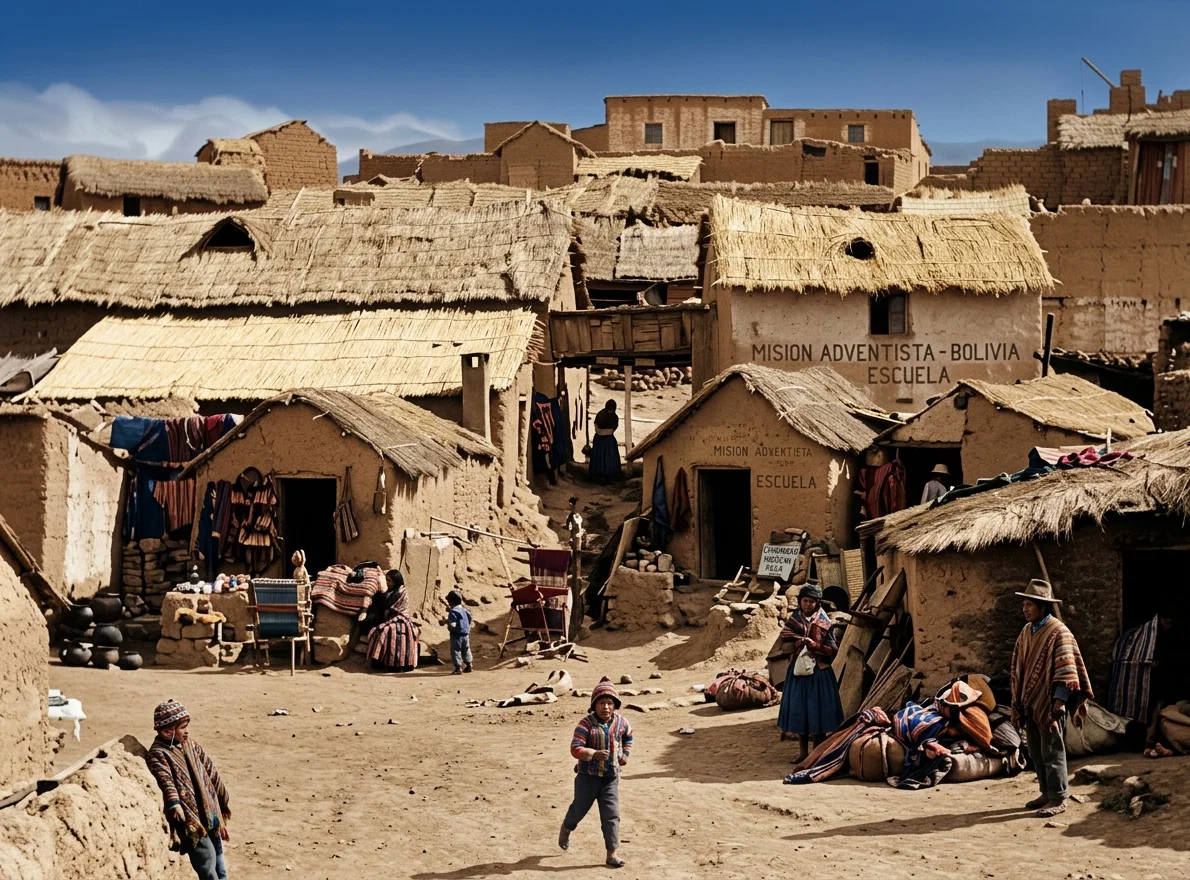
INDIAN VILLAGE, BOLIVIA
Upper Parana Mission
Paraguay, with the Argentine province of Missiones, on the Parana River, is the territory of this mission. Elder Luis Ernst is superintendent.
Of the beginning of our work in that far inland region, Elder J. W. Westphal says:—
Our work had to begin with much caution, and at times was carried on amid dangers. Later, literature was scattered and battles for freedom fought and won, and the message took deeper root in the Upper Parana soil. Nearly every year has brought with it a revolution, with the consequent hindrances. Times have been hard, gold at a premium of from one thousand to two thousand per cent, and this made the sale of literature difficult. The year 1909 has brought its share of these experiences. Nevertheless the truth is winning its way, with providences showing God's hand in the work.
Elder N. Z. Town, of our General Conference Office, who attended the annual camp-meeting in this mission, held at Villa Incarnacion, writes:—
The tent was pitched on the outskirts of the town, and the wrong-doers made it interesting for us. The trouble came from the soldiers who are stationed there. The first night they slit the curtain of the tent with a long knife. The second night, as soon as we began to sing the last hymn, they all rushed out hissing and shouting and whistling, and began to pelt the tent with stones, etc. They would retire and load up, and then charge, shouting, “Vayan de aqui los sabatistos” (Get out of here, Sabbatarians). This they did several times. Several of us were hit, but no harm was done.
The authorities then sent guards to keep order, and the unruly made their attacks upon those who were living in rooms round about. “But with all the excitement,” says Elder Town, “we had good meetings.” The superintendent of the mission reports growth in the churches, and courage among the believers.
Uruguay Mission
The republic of Uruguay is a beautiful country. Many of our brethren there are Swiss, the mission headquarters55being in Nueva Helvecia. Elder John Maas, the superintendent, reports baptisms and growth in the work. Two of the lady nurses and Bible workers sent to South America have been working in Montevideo, Uruguay's great city, and the Lord has greatly blessed them.
Rio Grande Conference, Brazil
Rio Grande is the southernmost state of Brazil, and this conference was the first to be organized in Brazil. It is a self-supporting conference, and has had a surplus to give to the union conference for needier fields. The town of Taquary, in this state, was formerly our general Brazilian headquarters; but now the printing and general offices have been removed to a more central location. Nevertheless, this conference is growing, and school work is continued at Taquary. Elder W. Ehlers was president at the close of 1909.
HARBOR OF ASUNCION, PARAGUAY, 1,000 MILES UP THE RIVER PARANA
Santa Catharina-Parana Conference, Brazil
These two states were grouped under one conference administration, with Elder Emilio Hoelzle in charge, but at the close of the year the territory was divided into two conferences. Brother Hoelzle takes Parana, while Elder C. F. Knott, who arrived in the field during the year, takes the presidency of the Santa Catharina Conference. Elder F. W. Spies, of Rio de Janeiro, reports an experience of two workers at Texeira Soares, a little town of Santa Catharina:—
They had appointed a meeting, and a congregation gathered. A desperado entered, unsheathed his facao (a sword-like knife), and with the first blow cut down the hanging lamp. A second blow he aimed at evangelist Jose Lindermann, who was conducting the service, slightly wounding him on the cheek. The brethren in the congregation had to beat a retreat in haste for that night. Now, however, there is a good company of baptized believers at this place. Only recently a large landholder sent all his people to attend the services, and on this occasion nine more were baptized.
Sao Paulo Mission, Brazil
The fine state of Sao Paulo has had the labors during the year of Elders J. C. Kroeker and H. S. Prener. A three-months' school and canvassers' institute was held at the Brazilian headquarters, in Sao Bernardo, and from this school there went out a good company of canvassers. Brother H. Tonjes, of New York, went out this year to take charge of the book work. Some interesting experiences56are mentioned by Elder Spies:—
In one small town a license of forty-five dollars was demanded for the privilege of canvassing the city for fifteen days. This is not surprising when it is stated that the chief officer was a Roman Catholic bishop. In another city of twenty thousand, no permission whatever could be secured.
A TRUTH-LOVING PRIEST
Our canvassers also meet with encouraging experiences. One day, for instance, a Roman Catholic asked one of our workers if he had been to see the priest. Our brother said he had not been there. “Well,” said the native, “go to him first.” The canvasser did so. The priest carefully examined his book, “Glorious Appearing,” and purchased one. He then wrote a good recommendation for the book, and said, “Go among my people and sell all the books you can; they are good books. And if any of your ministers ever come to this place, tell them that my house is at their disposal. They shall be my guests, and preach the gospel to my people.”
Two of our colporteurs canvassed a town, and sold some books to a certain man. A day or two later, meeting them in the street, he invited them to go to his home and hold a Bible study on the Sabbath question. Going at the time appointed, they found six families gathered, all anxious to have the truths for these times made plain to them.
North Brazil Mission
This includes all the territory north of the state of Sao Paulo, more than half the area of the United States. Elder F. W. Spies, of Rio de Janeiro, was the one ordained minister in this mission in 1909. In the city of Nicteroy, across the fine harbor from Rio de Janeiro, the believers have this year equipped a nicely located meeting-hall, and Brother Camillo Pereira, in charge, has been pressed to the limit of endurance in following up the interest. Little has yet been done in the city of Rio de Janeiro, with about a million people, though we have a church there. Rio is the fifth city in size of the New World. Of developments to the northward Elder Spies writes:—
VISITING THE CHURCHES, RIO GRANDE, BRAZIL
There are interests in the province of Bahia needing attention. For a year and a half a company at one point have been keeping the Sabbath and calling for help, never having seen a minister. Six months ago a minister was on his way to visit them, but after traveling two days by rail he was forced to return because the small steamer by which he was to journey six days farther up the San Francisco River had been laid up for repairs. In and about the city of Maceio, the capital of the state of Alagoas, we have fifteen or twenty Sabbath-keepers calling for help, with no one working there. Openings have developed during the year in many other parts, and earnest calls come for help.
THE BRAZIL PRINTING-OFFICE
This office has been better equipped during 1909 for the work that comes to it. It is located in Sao Bernardo, near the city of Sao Paulo. The office has put out in Portuguese an edition of “Christ Our Saviour,” and a new edition of “Glorious Appearing,” besides pamphlets and tracts. During the year a new periodical was added to the list, a German youth's paper, Der Jugendfreund.