Among the Zapotecan Indians of Mexico

6%

Review and Herald Publishing Association · Takoma Park Station, Washington, D. C. · Apr 14, 1910

FromReview and Herald, Vol. 87, No. 15.

Read the full edition

Among the Zapotecan Indians of Mexico

G. W. CAVINESS
It was my privilege a short time ago to visit our company of believers in Salina Cruz on the Pacific side of the Isthmus of Tehuantepec. This is the place where a company of about twenty Sabbath-keepers was raised up about two years ago by reading. I found the most of this company still faithful, although a few had given up, and some had moved to other places. Two new ones were added to the church by baptism while I was there.
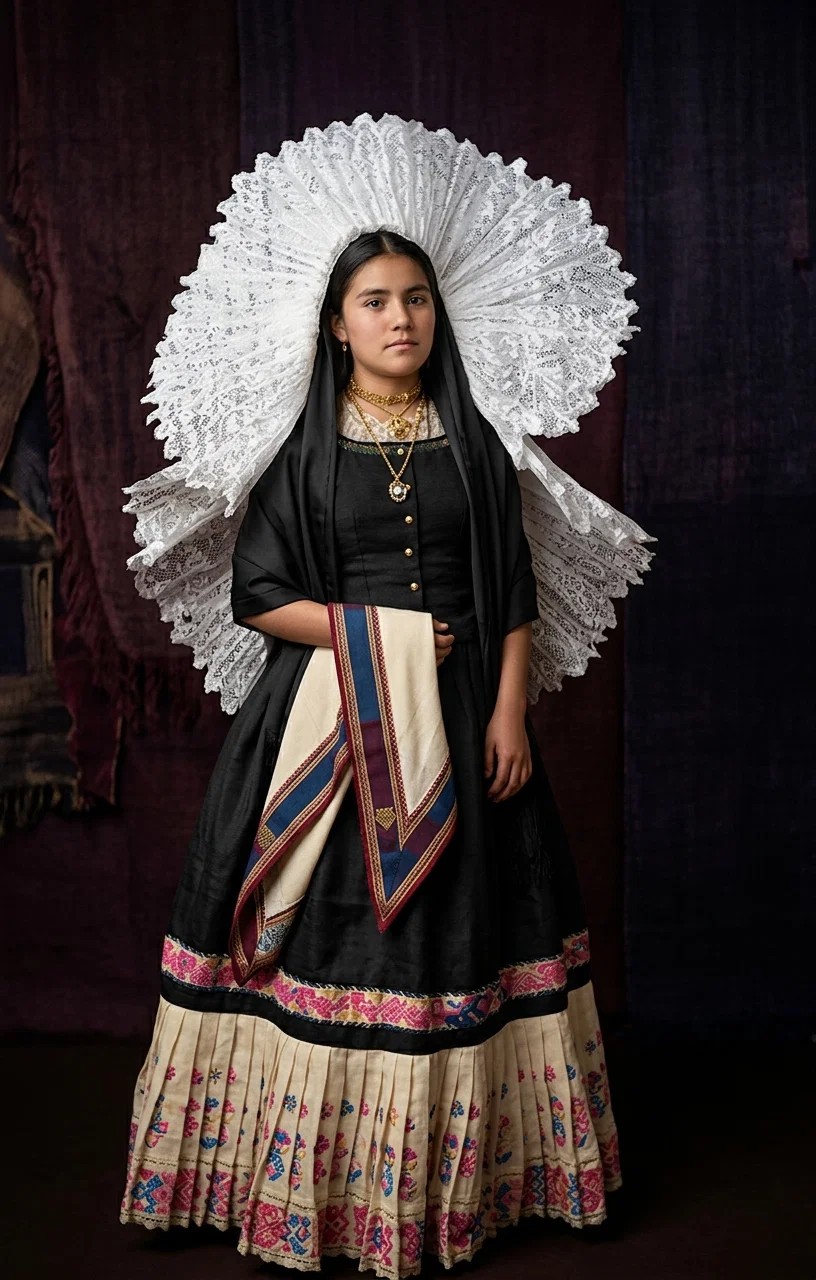
ZAPOTECAN INDIAN GIRL OF MEXICO
With the leader of this company I visited Espinal and Ixtaltepec on the Pan-American railroad, about three-hours’ ride from Salina Cruz. At the former place there are a few who are keeping the Sabbath. We held a meeting in this place, which was attended by over thirty persons, including the leading people of the village. There is an interest here which our Spanish laborer stationed at Salina Cruz will follow up.
Ixtaltepec is only about a mile and a half distant from Espinal, and here also there is a very inviting field. Several years ago a young man saw a portion of our Spanish paper, and became deeply interested. He did not know how to obtain the paper, as the part he found did not give him any clue as to the place of publication. A few years later some one sent him a copy, and he immediately subscribed, and has been a constant reader ever since, that is, for the last four years. He has also written me many times asking questions on Bible themes. I had never seen him until I met him in his father’s house. I found that he had printed the law of God by hand in large letters and had it hung up in the house. His brother said that he had been holding meetings and explaining the Bible to his relatives and friends.
We held a meeting with them, and more than sixty were present, and many stood outside at the windows listening. I never spoke to a more serious and interested-appearing company. They gave the best of attention, and seemed exceedingly friendly.
These people are Indians, and among themselves they speak the Zapotecan language. But Spanish is taught in the schools, and all business is done in Spanish. Their own language has a grammar and a very few books, but they say that only a few of them can read it. In the district of Juchitan there are about fifty thousand of these people, and in other parts of the country adjoining there are as many more. Many of them have their own little farms, and are much more independent than most of the poorer or humbler classes of Mexicans. Morally and socially they are also superior to the ordinary inhabitant of this country. They are intelligent, and religiously inclined, it seems to me. The message has made a beginning among them, and we hope to see it spread. TheBible says the last message must go to “every nation, and kindred, and tongue, and people.” Here is a tribe that must hear it.
The young man previously mentioned as well is twenty-seven years old, of good address and quite well educated. He has been offered a position as bookkeeper and assistant treasurer in the office of the government. His brother is a telegrapher at a railroad station. There are seven children, and the father and mother still live. Quite a number of uncles, with large families, live near by, and several of these attended our meeting. The young man wants us to send a laborer down to that part of the country, and it is his desire to go with him and learn the truth and how to labor. He desires to join us in giving the message to his people. Shall we not have such a laborer to send, that we may enter this field? Is not the Lord going out before us and calling us to advance?
This part of Mexico is very warm in summer, but there are several months that one accustomed to colder climates can spend down there each year without serious inconvenience.
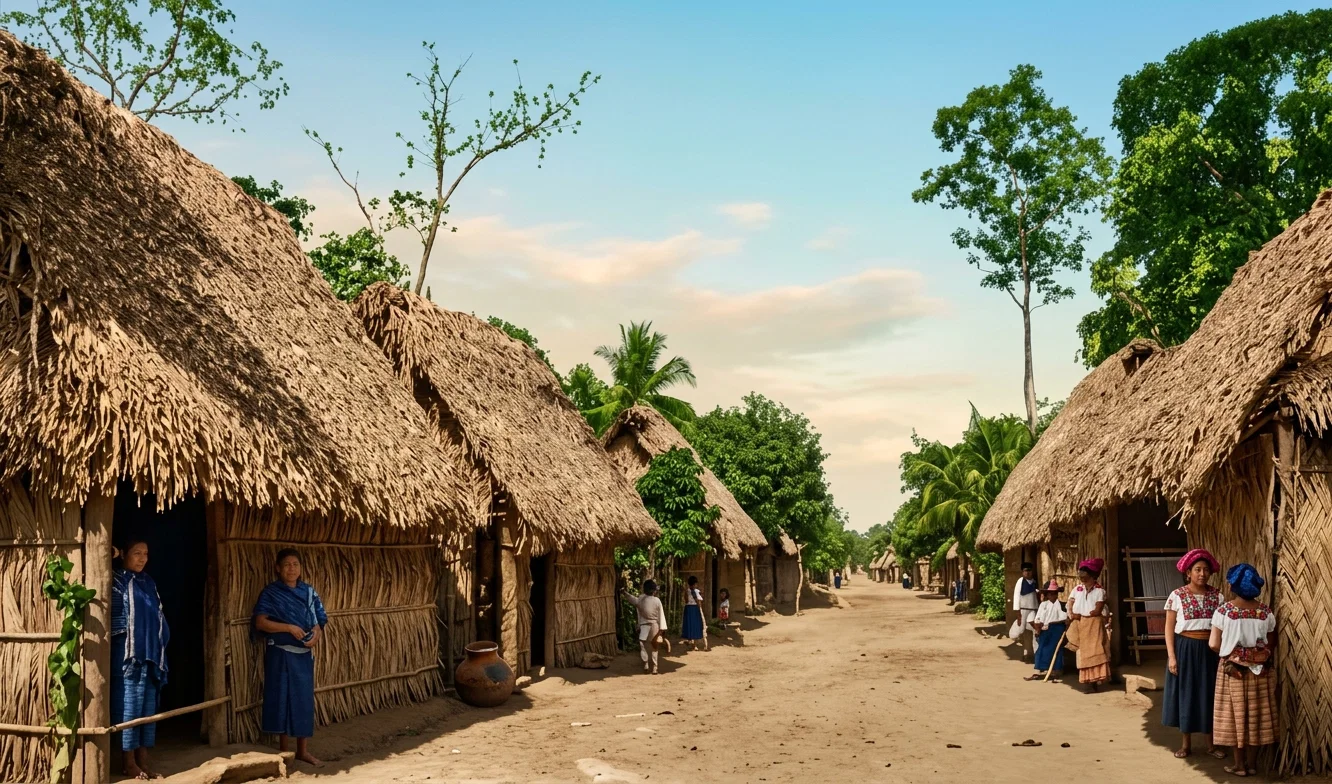
STREET IN TUXTEPEC, SOUTHERN MEXICO
Some one who understands Spanish should go to this field in October, and spend four or five months laboring for the people, and instructing this young man and also the leader of the company at Salina Cruz, so that they can carry on the work all the year round.
For the most part, these people lead simple lives. They farm with oxen, and use the big lumbering two-wheeled cart, the wheels being made of solid wood about six inches thick. The good people kindly took us to the station in one of these carts. We were about three hours in going five or six miles. I got out to walk for a change and a rest, but soon found myself so far ahead of the cart that I was compelled to wait a long time for it to catch up. As it was night and the road unknown, I did not care to venture too far, lest I might turn from the right road.
Their houses are for the most part made of small canes set very thick and plastered outside and in with mud. The wall thus formed, a steep roof is made of a framework of poles, and thatched with palm leaves. At a little distance one of these villages looks like a large number of haystacks, each about twice as long as wide. Some of the well-to-do have brick houses, with floors. I did not have to sleep on the ground here, because these people have cots and hammocks. I saw many tables, chairs, and benches made of mahogany in their huts. This wood grows in that part of the world, and is not so costly as it is when brought out to civilization.
The dress of the women in the larger villages and towns is somewhat peculiar. The waist or blouse is usually of very bright-colored material, with arms left bare. The skirt is of dark-colored cloth down to the knee, the rest is pure white. The head-dress stands out from the head a foot or more, much like the tail of a peacock.
The brethren in this field subscribed for one hundred copies of our Spanish paper to circulate among their friends and neighbors.
We need a good man who understands Spanish to be stationed at the city of Oaxaca to take the oversight of the work in the southern part of this great field. Here he can live and work during the warmer months of the year, spending the cooler season among the Indians of this tribe, instructing and training the native workers. May the Lord direct in this matter, so that the work may be carried forward in this part of the Master’s vineyard, and many of this people hear the message and be saved in the soon-coming kingdom!
Tacubaya.