This first general meeting was held at Orlow, Turkestan, Nov. 5-8, 1909, and to it I journeyed alone. The brethren there had most earnestly called for help, and I had hoped to take one worker with me, to leave in that needy field; but there was no one ready to go.
The journey is comparatively easy now, as the Russians have built, at great expense, a railroad from Orenburg to Tashkend. I left Kief Saturday night, and arrived in Tashkend the following Friday evening, after continuous traveling.
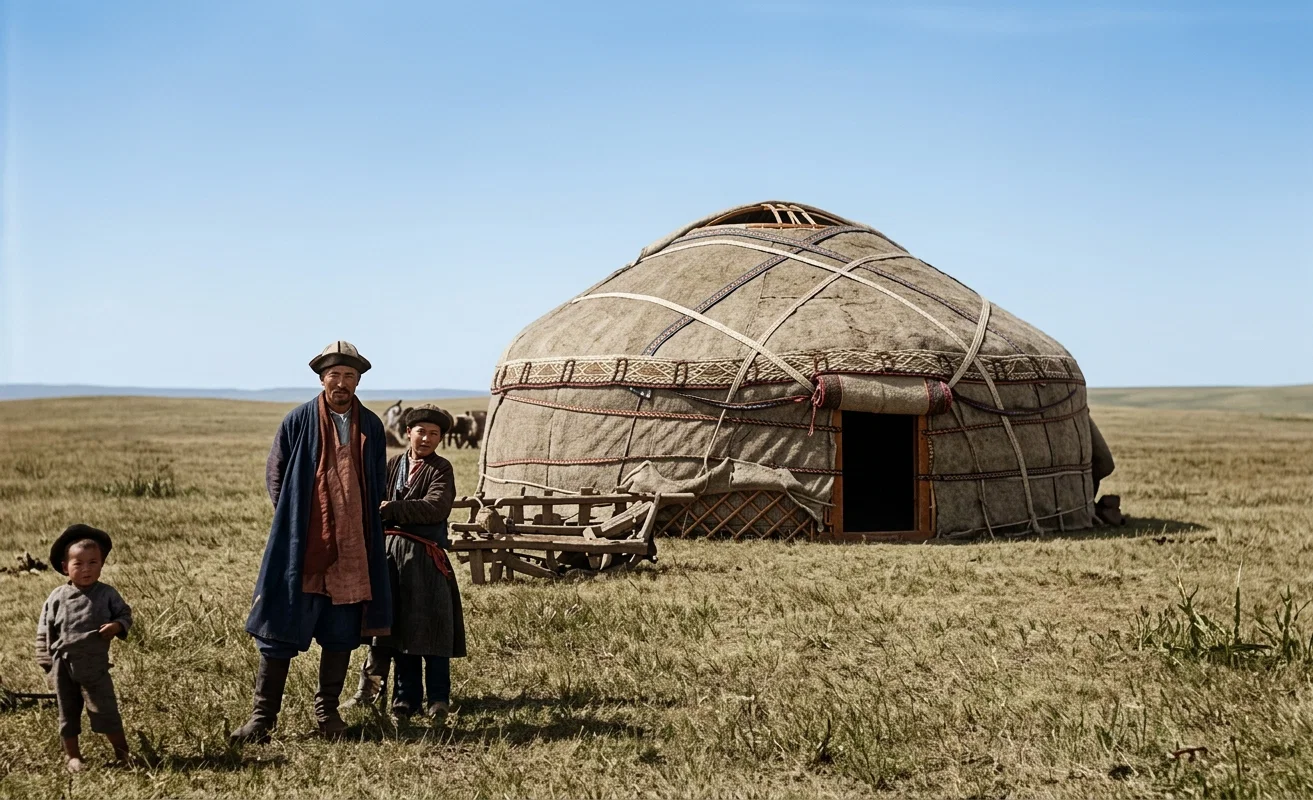
It was my first trip to Asia, and it was full of interest to me. There was no great difference in the country to mark the boundary between Europe and Asia, but the customs of the people changed almost immediately, and, instead of horses, camels were being driven. Two hours' ride brought us into the great sand desert, or the Kirghiz Steppe, more than one thousand miles long. Looking out of the car window, it seemed as if we were riding in the middle of the ocean, as the wind drives the sand into great, wave-like piles. A feeling of loneliness overcomes one, as there is so little to break the monotony—here and there a Kirghizen hut or two, and camels grazing on a sort of herb that grows in the desert. The men were clothed in furs, while the women wore very gay, thin dresses. They looked healthy and intelligent, owing partly, perhaps, to the fact that, as Mohammedans, they drink no alcohol. I thought of the time when the Lord has promised that the wilderness shall blossom as the rose; for the greater number of these people have never seen a green tree or a river.
HERE AND THERE A KIRGHIZEN HUT OR TWO
We passed through no cities or villages, nor were we troubled by new passengers coming in to find seats. At one station we saw a train filled with Sartin pilgrims on their way to Mecca.
Nearing our destination, we could see the snow-capped mountains in the distance, and were aware that we had left the desert. The scenery was rapidly changing. The inhabitants of Tashkend are mostly Sartins and Russians, numbering, in all, one hundred fifty thousand. The city itself is quite Oriental, and in the few days that I spent there, many customs of Bible times became plain to me.
Brother J. Ebel met me at the depot, and took me to his home to remain over the Sabbath, from which place we would go on together to the place of meeting. The village of Orlow lies over three hundred miles inland; and as there is no railway there, we were to travel this distance in wagons. The brethren from Orlow who were to meet us were already there, and had been waiting for us several days. Sunday morning, at daybreak, we started. We had two large covered wagons, without springs and without seats. They told us to sit right down on the bottom of the wagon, which we did, and were off. I tried sitting in every kind of way, but it was a most fearful jolting that my head could not endure; so, after about twenty-five miles of that kind of riding, I got out and filled some sacks with straw, which served as comfortable seats by day and beds at night.
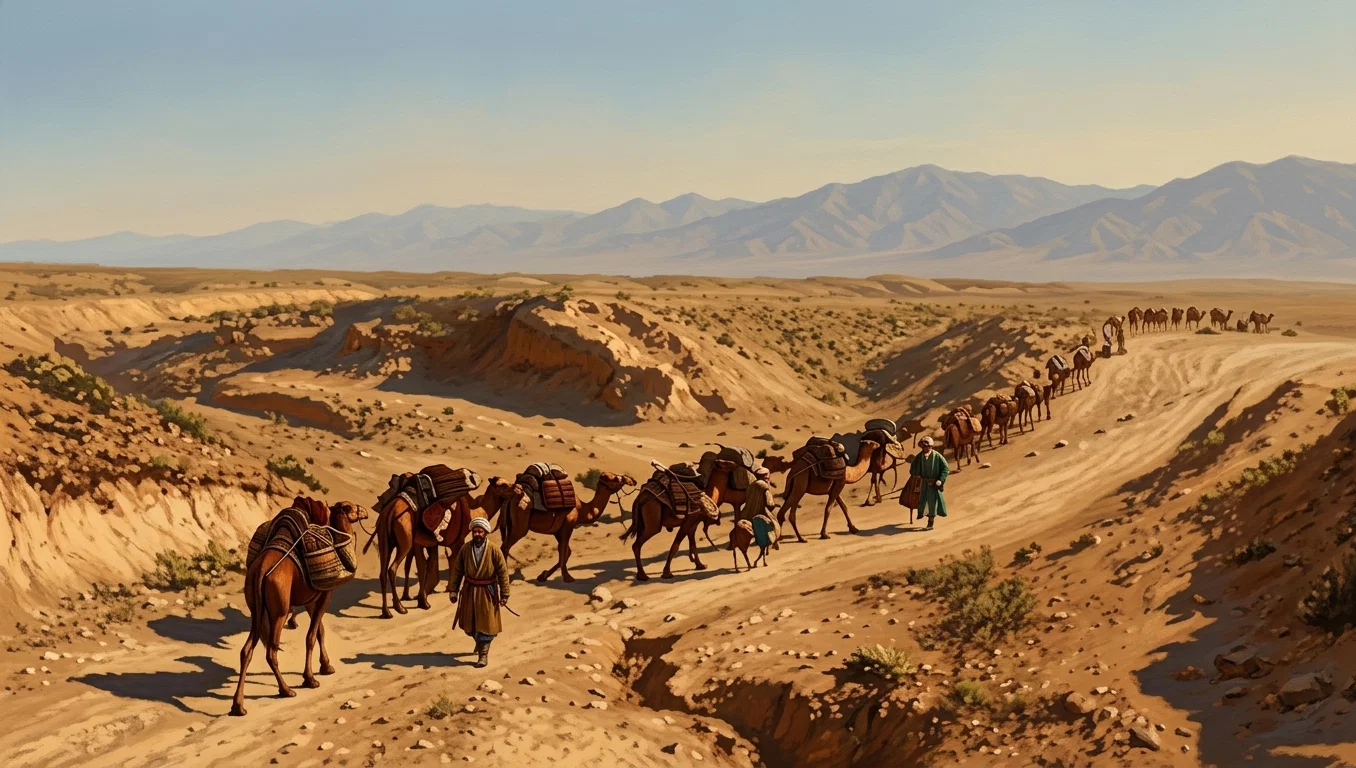
We were traveling along the great caravan road which goes from Tashkend to Semipalatinsk, a distance of about fifteen hundred miles. It is in a broad valley, with high mountains on both sides, snow-tipped even in hottest summer. The road winds in and out, and great caravans of camels and wagons are passing. Once we counted sixty-five wagons in a row, and at another time a caravan of fourteen camels, laden with articles of commerce. Each camel can carry about six hundred pounds.
In the day it was extremely hot, but during the night, cold. This valley formerly belonged to the Sartins and Kirghizens; but of late the government has been settling Russian and German emigrants there. We passed through two German, six Russian, and thirteen native villages.
Generally we stopped at Sartin inns, to rest ourselves and feed our horses. The sign for such a place was a big bundle of clover stuck up on top of the roof of the house.
We also took our morning bath at the inn, and then went into the Sartin hut to order hot water and prepare our meal. There were no chairs or tables. All sit upon rugs, which also serve as tables. The meals did not always look inviting, but we were hungry.
When we were within about sixty miles of our journey's end, we saw, a long way off, upon an elevation, a little party watching our approach. Those with us said, “See! those are brethren from Orlow, who have come to meet us.” And so it proved. They had come with their comfortable carriages; and, knowing that our provisions would be falling short, they had brought along many good things to eat, had rented the best room in a Russian inn near by, and prepared for us a bountiful meal, to which we did full justice. Their hearty greetings made us feel at home among them, and, refreshed, and thankful to God, we continued on together, over rocks and stones, through ditches and rivers, arriving in Orlow at eleven o'clock at night. In some houses lights were still burning, and the brethren pointed out to us where some of our people lived. We were brought to the pleasant home of Brother Wever, and the good beds, ready for us, looked exceedingly inviting.
Orlow is a German village, settled by Lutherans and Seventh-day Adventists. It lies upon a river, and is near the9mountains. The wide street, which leads through the center, has trees planted on either side, and also ditches are dug on both sides, through which water flows, fresh and cool. The village looks thrifty, and, although there are a few small clay houses, most of the buildings are of modern style, and have tin roofs. Behind the houses, toward the mountains, are the farms. Everything is grown by means of irrigation, but the water flows here the year round. One could see that this year the harvest had been medium only. The Sartins do most of the farm work; this is done in the most primitive manner, two stones still serving as a thrashing-machine.
The Adventists have built a meeting-house and school together. But as it is situated at one end of the village, and over the river, it is not easy of access for all, especially when the river is high.
Our people meet every Sabbath for Sabbath-school and services. During the year 1909 twenty-one new members were added to their numbers; and, as far as I could see, they are worthy members, earnest in the message.
The first Bible reading of our general meeting was held the Thursday morning after our arrival. Besides the brethren and sisters of that place, brethren were present from Aschabad, near the Persian boundary, and from Tashkend and vicinity. At this first service, held at 9 A. M., we were aware of the fact that our place of meeting would be too small. There was not even room for our own people. We at once formed the plan of erecting a tent meeting-house. The yard of the brother with whom we were stopping seemed the best place for us to locate. The scene reminded one of a swarm of bees busily at work. Two sides of the brother's house served as walls of our tent. On the opposite side we drove posts into the ground. Upon these on the one side, and upon the house on the other, we fastened a sort of scaffold. The people brought big felt blankets, straw mats, and even boards, to cover the structure. One brother brought two windows, one of which was put into the roof, and the other set in the side of our house. A pulpit was built, seats were brought from the houses, and two lamps were hung up. It really looked very nice. Then, as the nights were cold, we had to have a fire. Indeed, we felt very happy to find ourselves so comfortably situated and able to accommodate all who would come. And many not of our faith did attend, and invited us to visit them at their homes.
The meetings were conducted in the German language, Brother Ebel translating into Russian for those who could not understand. We enjoyed perfect liberty, with no police to hinder our work. We could read our resolutions, take up our collections, hold social services, without any fears of being stopped.
All this was new for our people in Turkestan, and they took a lively interest in everything that was done. Especially were they interested in the resolution concerning the school for Russia. Slips of paper were passed around for each one to subscribe how much he would give for this project. As these were returned, and the amount counted, it was found that the sum had not reached four hundred rubles. Our people were not satisfied. One brother said, “Come, brethren, we must bring that amount up to four hundred rubles.” And this they did, one giving twenty rubles more, another ten, etc. It was touching to witness their enthusiasm. One sister pledged the proceeds from a piece of land, another gave a calf, and one a lamp, which was sold at once, and the money put into the collection.
THE GREAT CARAVAN ROAD FROM TASHKEND TO SEMIPALATINSK
We also endeavored to give instruction concerning the tithing system, as not all had understood this.
Our members there begin to feel a burden for the Mohammedan nations around them. Many of our young people speak the Tirgisian, and what a pity that we have no literature in that tongue! This mission field now has sixty-eight members, one ordained minister, and two canvassers.
Some of these people have not a very clear idea of the world at large, never having seen a city or a railroad. As I was talking about the progress of the message in Europe, some one in the meeting asked where Europe is. But they understood the truths of the third angel's message, and its relation to them.
All were so pleased with the session that they voted to hold another next year in Tashkend. They also appointed a delegate to attend our Russian union meeting, to be held next spring. When he returns to tell them the story, it will also serve as a means of education.
It was with regret that we parted. Some of the brethren brought me back to Tashkend, desiring instruction in the Bible all along the way, although the dust was so thick that it seemed as if I could not speak.
This is a field rich with opportunities for the Mohammedan world. May God give our brethren grace to be light-bearers in far-off Turkestan and Persia, is my sincere hope and prayer.