A Pioneer Gone to Rest

5%

Review and Herald Publishing Association · Takoma Park Station, Washington, D. C. · Dec 23, 1909

FromReview and Herald, Vol. 86, No. 51.

Read the full edition

A Pioneer Gone to Rest

In the providence of God the great threefold advent message that is now going to all parts of the world with such marked success was first brought to public attention by a company of people who had been eminently fitted for that work by the remarkable experience under the great advent movement of 1836-44.
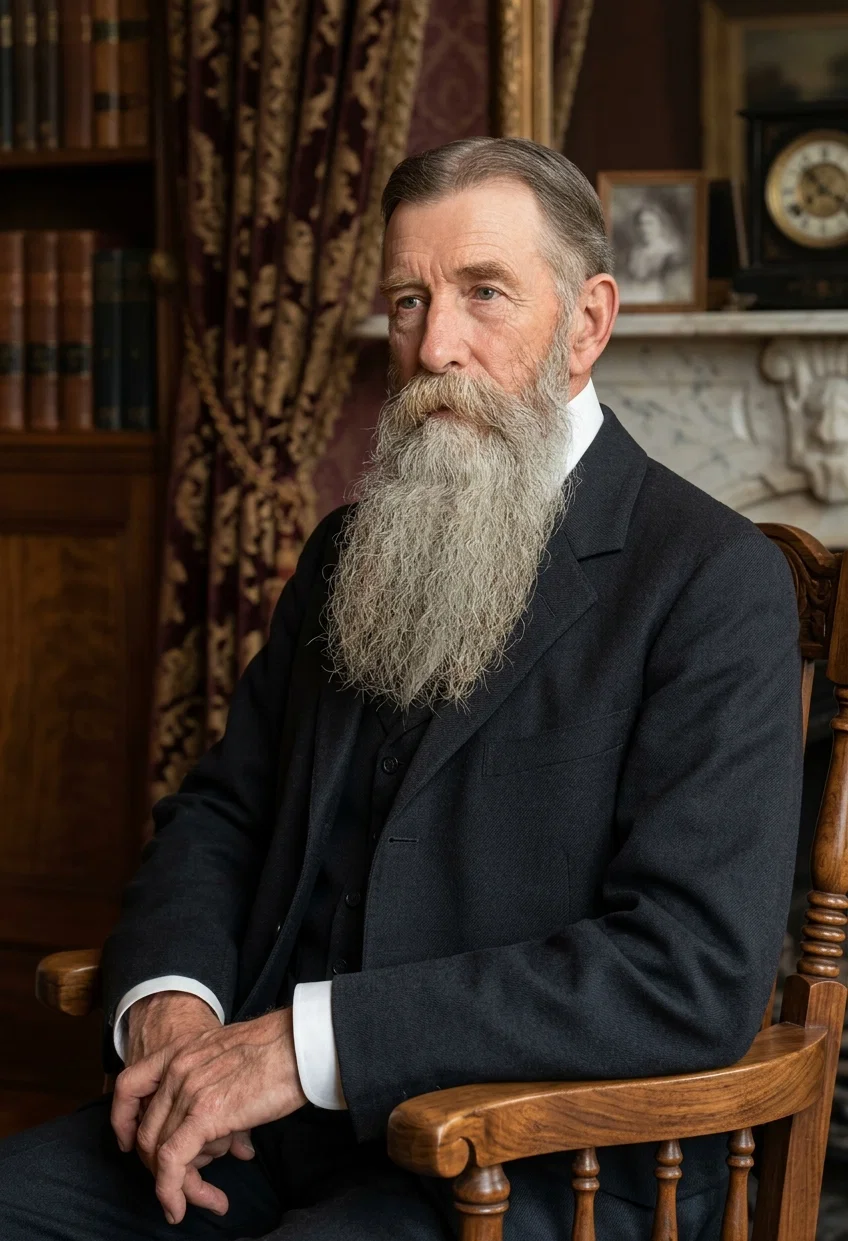
WASHINGTON MORSE
Taken Oct. 22, 1906, the 10th day of "the 7th month"
WASHINGTON MORSE Taken Oct. 22, 1906, the 10th day of "the 7th month"
As there are now only a few survivors of that company of pioneers, it seems very fitting that when one lays off the armor and goes to his last sleep, more than a mere passing mention should be made of the incident. There is much to be learned and great good to be derived by studying their lives, and especially by candid thought upon their wonderful experience under the first message.
Washington Morse, the subject of this sketch, was one of those pioneers—one who wore the “prophetic scar” for sixty-five years, but who now rests from his labors, awaiting the glad summons, “Awake and sing, ye that dwell in dust.”
Father was born in Brookfield, Vt., June 24, 1816, and died at the home of his son, G. W. Morse, DeLand, Fla., Nov. 9, 1909, at the age of 93 years, 4 months, and 15 days. Oct. 15, 1836, he was married to Miss Olive Buzzell, and together they walked life's journey for nearly sixty-five years, she dying in 1901, at Muskoka, Canada. To them were born twelve children, seven of whom are still living. At the age of fifteen years father was converted and united with the Methodist Church. Later on he became a class leader in that church, and was very active in that capacity.
Early in the rise of the great advent movement of 1836-44 father and mother accepted the expositions of prophecy as presented by William Miller and his co-laborers, and identified themselves with it. Father was more or less closely connected with those great leaders in the proclamation of the advent message, and put all his earthly possessions into that cause. With them he labored for many months with no thought or expectation of financial remuneration. Their faith was unwavering that Christ would come Oct. 22, 1844, and when that date was reached, father and mother, with many others, were gathered at the home of a Brother Cushman, at Tunbridge, Vt., to watch for the appearance of the Saviour in the clouds of heaven.
That was a most thrilling experience, and one that has been related by father many hundreds of times, very greatly to the edification of his hearers, and, we believe, to the glory of God.
With the bitter disappointment that came to them by the “passing of the time” without the realization of their hopes, our dear parents entered a cloud of deepest gloom. But they held fast their confidence in God and his Word, and believed that somehow and sometime all would be made plain. And so, when a few years later light came to them regarding the further work that God had for his people before the Saviour would come, they gladly embraced it. As they clearly saw the explanation of the strange experience through which they had passed, they praised God for it, and never afterward felt otherwise. To the end of their lives they were both unswerving, faithful believers in what is generally known as the third angel's message, with all that is signified by that term.
In the winter of 1852 Elder James White sent to father a prophetic chart with an earnest exhortation that he engage in public labor in preaching the message. As this was in harmony with what he believed to be the call of God, he started out, not only without means to defray expenses, but with no thought or prospect of financial remuneration. His first meeting was held at East Randolph, Vt. Continuing his labors in that part of the State, the Lord gave him many precious souls for his hire. In the summer of that year he was duly ordained to the gospel ministry. To the extent of his opportunities, while supporting his family of several children, he labored in that State until the autumn of 1856, when he removed with his family to Illinois, locating, temporarily, about thirty miles south of Chicago. During the winter, while laboring toearn the wherewithal to support his family, he also did what he could to spread the message, God adding the seal of approval to his work, to which there are numbers who can now testify with joy.
In the spring of 1857 father arranged with the gentleman for whom he had been working, to remove himself and family to the then Territory of Minnesota. They went in pioneer emigrant wagons, and located in Steele County. So far as information has ever been secured, there were only two other families of like faith in the Territory at that time. Ordinarily, the prospect that was then before our parents would be considered as desperately dark and discouraging. In a new and strange country, with a family of eight children—most of whom were too young to do work of any kind—absolutely no financial capital, provisions of all kinds exceedingly high in price, it is evident that they must have been wonderfully sustained by a merciful Heavenly Father. The struggles with poverty and hardship were many, and at times very severe. But the Lord blessed with health and strength and brought them all safely through.
Almost from the first of his location in that new country, father was active in presenting the glorious themes of present truth to his neighbors far and near. In fact, he traveled to many distant points in the State to hold meetings. Many, very many, were the long and weary journeys that he made on foot, with his Bible and chart, to tell the people the glad news of a soon-coming Saviour. For a number of years he was practically the only one who was publicly proclaiming the message in Minnesota. In nearly all localities where he labored, honest souls accepted the light of truth and became steadfast believers, many of whom remain to this day.
Later on other ministers—Elders Wm. S. Ingraham, J. N. Andrews, John Bostwick, and Stephen Pierce, and others—went to that field, with all of whom father labored to a considerable extent. Upon the organization of a conference in that field, father was chosen as its president, a position that he held for several years. His labors were nearly always given gratuitously, and at reasonable figures amounted to many thousands of dollars during the first ten years of his residence in Minnesota. Up to the year 1861 he received only thirty dollars from the conference as compensation for labor.
In the spring of 1862 father went as a delegate to a general gathering that convened at Battle Creek, Mich., May 18-26. That was practically the first General Conference of Seventh-day Adventists. The following year he was also a delegate to another General Conference at the same place. Those were two very interesting and important occasions, and there are now but few persons living who were delegates to those gatherings.
Although not engaged publicly in ministerial labors to any great extent subsequent to 1865, father never ceased his activity nor slackened his zeal in behalf of the cause that he loved dearer than his life. In 1874 he bore heavy burdens in the construction of the first Seventh-day Adventist church building that was erected in Minnesota. This was at Mankato.
In 1896 father and mother removed from Minnesota to Canada, so as to be near some of their children who were connected with the work in that field. Stopping for a short time with the undersigned at Toronto, they then went on to Peterborough, where a daughter, Mrs. H. I. Farnum, lived. During the eleven years—1897 to 1908—father was for most of the time quite active in the missionary canvassing work, and placed many thousands of copies of periodicals, tracts, pamphlets, and books in the homes of the people of Peterborough and its vicinity. It was really quite remarkable that a man of his age should be able to accomplish so much. The Lord greatly blessed him in his work, and watered the precious seed that he scattered. For about eight years he did a great amount of missionary correspondence, averaging some two hundred letters each year.
In July, 1908, he came to our home in Florida. As a matter of fact, one chief reason of our getting a home here was on father's account. He came with the full expectation of remaining here the rest of his natural life. This genial climate was very favorable for his health, and he greatly enjoyed it. While attending the camp-meeting at Orlando, October 21-30, he contracted a cold that resulted in peritonitis. Upon his arrival home it was evident that he could live but a few days. The ablest medical counsel of the place was employed, and all was done for him that could be suggested, but without avail so far as his recovery was concerned. He fully realized that his end was near, and so expressed himself many times, and always with an earnest desire for it to come speedily. Many times he would pray, “O Lord, come and take a poor sufferer home.” A few days before the end came, he repeated 2 Tim. 4:7, 8: “I have fought a good fight, I have finished my course, I have kept the faith: henceforth there is laid up for me a crown of righteousness, which the Lord, the righteous judge, shall give me at that day.” A day or two later he called us to his bedside, and requested that 1 Cor. 15:51-57 be read and prayers offered. The occasion was a very precious one as we talked with him of the glories of the resurrection morning, and the loved ones who would meet there. He especially requested us to tell all the children to be sure to meet him on that glad day. His hope was without a cloud, and he had no fear of death. He felt sure that he would go to sleep before morning, and requested us to kiss him “good-by.” But death did not come until several days after that, though at no time was he able to converse as he did then, and we realized that it was providential that he improved that occasion as he did. He never murmured or complained of his sufferings, although they were very severe and trying at times. Many times he expressed the deepest gratitude for the care that was being given to him by his children and the many friends and neighbors who were extremely kind.
A few hours before he passed away, he repeated Rev. 14:12: “Here are they that keep the commandments of God, and the faith of Jesus.” When asked if the Saviour was precious to him, and if he was being given his sustaining grace, he answered very emphatically, “O, yes!” Just before the end came, he reached out his hands to be taken up. His request was granted, and in a very few moments he passed to the last, long, dreamless sleep in the arms of his son, with not a struggle as he “crossed the bar.”
A goodly company of sympathizing friends and neighbors gathered on the day of the funeral. The service was conducted by Rev. U. M. Tabor, pastor of the Methodist Episcopal church (South) of DeLand, with whom father had formed a pleasant acquaintance during the summer. He gave a very appropriate and comforting discourse, taking as his text the words before quoted, 2 Tim. 4:7, 8.
And so we laid father to rest, comforted with the blessed assurance that his life is hid with Christ in God, and that we shall meet him, with many other loved ones, on the immortal shore.
G. W. MORSE, LIZZIE J. MORSE.