C. W. IRWIN

5%

Review and Herald Publishing Association · Takoma Park Station, Washington, D. C. · Oct 7, 1909

FromReview and Herald, Vol. 86, No. 40.

Read the full edition

C. W. IRWIN

Ceylon

C. W. IRWIN

AFTER a long and uneventful trip of nine days from West Australia, we reached Ceylon. As we approached the harbor, we could see the palm trees along the ridges. Soon the pilot came out and guided us in. There is no natural harbor at Colombo, but a fairly good anchorage has been provided by the construction of a good breakwater.
There are three and one-half million people in Ceylon: two and one-half million Cingalese, and nearly one million Tamils. There are a few thousands of Europeans and thirteen thousand aborigines, which would compare with the mound-builders of North America or the Druid worshipers of Great Britain. Ceylon is a little smaller than Tasmania, its area being twenty-five thousand square miles.
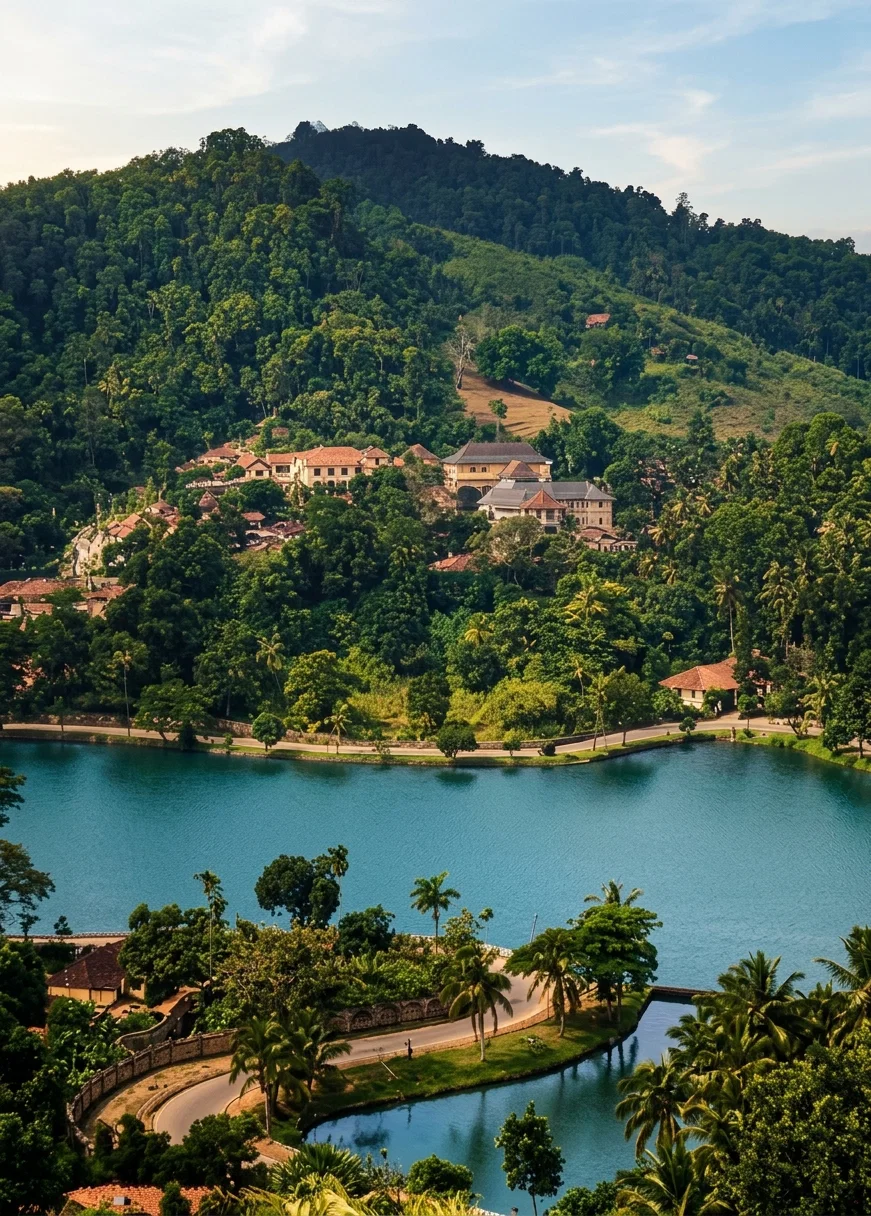
A VIEW IN KANDY, CEYLON
In Ceylon we see the palm, breadfruit, bananas, jack-fruit, etc., but we are especially interested in the people and their customs. The men are dressed in all sorts of ways, varying from a loincloth to a full European dress. The women wear a sort of blouse and skirt. They are very fond of jewelry, which consists of rings, bracelets, necklaces, earrings, nose-rings, etc. Sometimes the lobes of the ears are so distended by the weight of the earrings that one could thrust his thumb through the opening.
Again we see ears that have been pierced at frequent intervals right around the margin of the ear, and perhaps a dozen rings have been inserted. Some have pierced the side of the nostril and inserted jewels. The finger-rings, bracelets, and necklaces are quite similar to those worn by white natives in so-called civilized lands.
There are swarms of beggars in Colombo. Some of them are really pathetic cases. We were pleased to meet a group of seventy-five schoolchildren walking along the road accompanied by their teacher, who was able to speak English. Their general attitude, decency, and cleanliness of dress, and respectful manner, and the entire absence of the begging spirit were a striking testimony to the value of education for native people. As soon as we came to the parting of the ways, they all, led by their teacher, gave us a parting salutation. Their schoolhouse consists of an airy building supported by pillars, with no enclosure other than a low wall.

Buddhism in Ceylon

We saw a man clothed in a yellow robe carrying an umbrella over himself and walking with solemn mien. We were told he was a Buddhist priest. We paid a visit to the principal temple in the vicinity. It is enclosed by a white wall, and everything in and about the temple is kept in good order. Just as we approached the door we met the devout worshipers coming out. We went no farther than the threshold, as we did not want to do violence to their sense of propriety by profaning their temple by our presence. We feel that so long as they are in this condition, we should respect their convictions, although we pity their blindness.
From our position at the doorway we could see a large image of Buddha sitting in a cross-legged attitude on an elevated platform, and in front of him tapers were burning. Below the tapers were tables covered with bouquets, which evidently had been taken there for the pleasure of Buddha.
Here and there on the tables were bowls for the reception of donations to various charitable enterprises. The templefloor is paved with beautiful tiles set in nice designs, and the whole interior is beautifully finished.
Buddhism was introduced into Ceylon about 300 B. C., by a Buddhist missionary from the mainland of India. “As the monarch had become an ardent supporter of the new faith, Buddhism rapidly gained ground, and it was not long before the whole population was converted to its new tenets. In contrast to Java, where it was soon supplanted by the teachings of Mohammed, here Buddhism, though it experienced many reverses, never retrogressed permanently, and today probably numbers as many adherents on the island as ever it did.”
Ceylon contains the remains of great cities and immense temples of wonderful architecture, which, if restored, would rival the temples of any other heathen nation of antiquity. There are Mohammedan mosques and Hindu temples, which represent the religions of invaders or immigrants from India. But these are conspicuously in the minority as compared with the evidences of Buddhist worship.

A Needy Field

So far as we can determine, there is not a single representative of the third angel's message to be found in the whole island. Our observations would lead us to suppose that no Christian denomination has as yet done much for this people. It is true that some work has been done by our people, but every one of the three and a half million inhabitants must be warned of the second coming of Christ, for his commission is, “Go ye into all the world, and preach the gospel to every creature.”
Many of the objectionable traits of this people are due to the fact that they do not have the gospel of Jesus Christ. In order for them to have this message there must be messengers. When one sees with his own eyes the millions of people who are still in heathen darkness and superstition, he begins to wonder how it is possible for all these people to hear this message in this generation: but we turn to the book of Jonah and learn how one man warned a great city in a few days' time; and when we consider the promise that God will cut short his work in righteousness, and that with God all things are possible, we begin to see by the eye of faith how this work will be done in a very brief space of time. This thought cheers our hearts.

Colombo.