WAR in HEAVEN

3%

Pacific Press Publishing Association · Mountain View, California · Oct 7, 1930

FromSigns of the Times, Vol. 57, No. 39.

Read the full edition

WAR in HEAVEN

WAR in HEAVEN

GWYNNE DALRYMPLE
The first and greatest conflict ever staged was the conflict between the forces of good and evil under the leadership of Christ and Satan.
There is a fact that the Scriptures teach and all human experience demonstrates. Everywhere we may perceive two forces at work,—the force of good and the force of evil. There are the powers that build up, and the powers that tear down. In nature there is the beauty of the birds, their singing and their joyousness; but there are also hawks and vultures. And as there are sheep and horses and cattle, so there are also weasels and tigers and poisonous serpents. There are the flowers that flourish and bloom, yet they fall and decay in the bleakness of winter. Seeing the influence of life all around us, we see also the influence of death; and as we admire the powers of goodness, we at the same time must deplore the tremendous powers that vitiate and destroy.

WAR IN OUR OWN HEARTS

Even in ourselves we may observe phases of that great conflict that rages in the world. In our own hearts we may feel the rush and pressure of our desires, like the ceaseless flow and ebb of mighty tides, now surging toward the good, now surging toward the evil. The complaint of the saintly Paul, who cried out, “I find then a law, that, when I would do good, evil is present with me” (Romans 7:21), is so universal that it finds place even in a heathen soul, for Ovid laments: “Video meliora proboque; deteriora sequor,”—“The better things I see; and seeing, approve. Alas! it is the baser things I do.”
How comes it then that though God is wholly good, this world that He created is partly evil? Did sin and death and every wickedness of human hearts come from Him who is holy, who is life itself, who is of purer eyes than to behold evil?
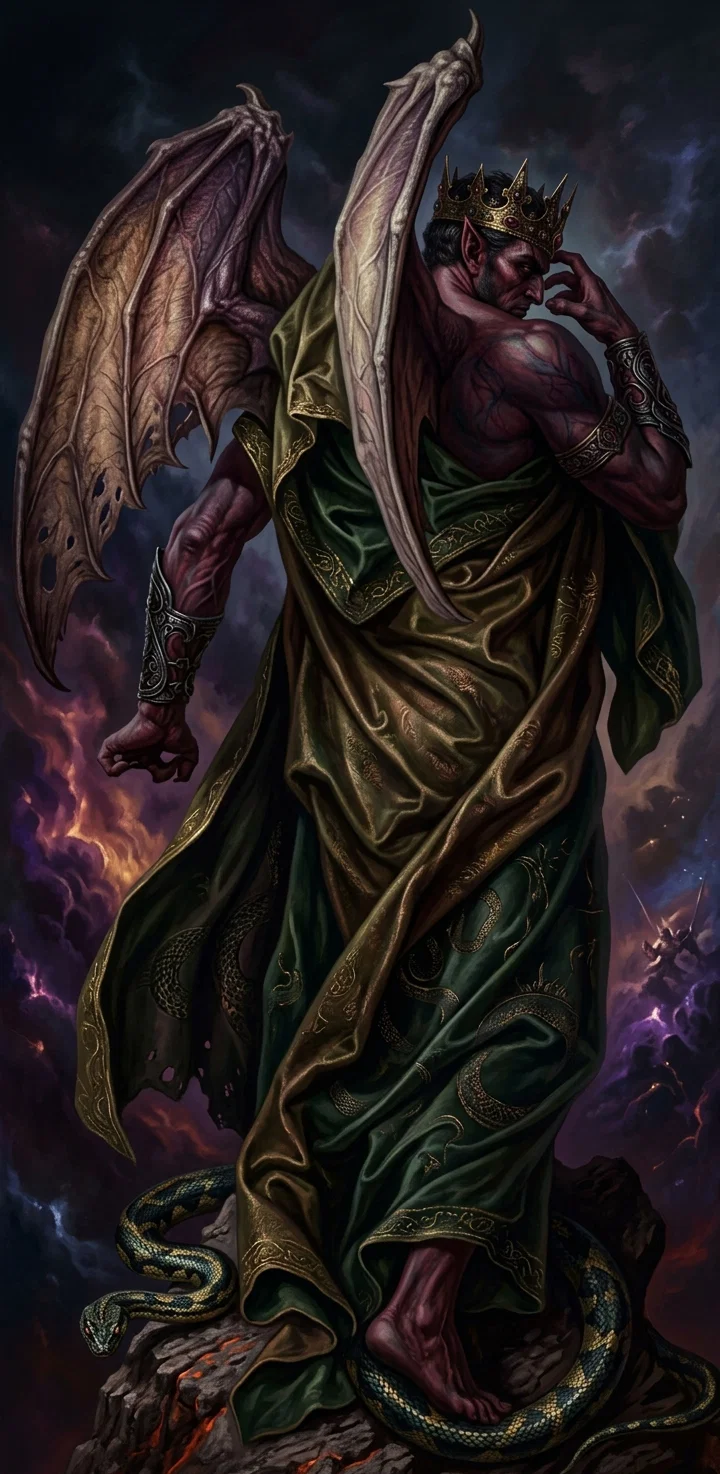
Satan, the commander in chief of the rebel forces of evil
The Scriptures go beyond the limits of human understanding in revealing to us the facts concerning this great conflict of sin and righteousness, death and life. They acknowledge its existence, so patent to us all; they go further, and explain that existence to us. They tell us of the history of evil, and its origin. “There was war,” says John, “in heaven: Michael and His angels fought against the dragon; and the dragon fought and his angels.” Revelation 12:7.

SATAN CAME FROM HEAVEN

In heaven, then, as well as on earth, the power of evil has been known. Indeed, the Scriptures teach that evil originated in heaven. In the Bible evil is said to have had both its beginning and its chief support in a being called Satan, the “adversary.” Yet Christ expressly declares that Satan came from heaven. “I beheld,” He says, “Satan as lightning fall from heaven.” Luke 10:18. This is the being generally called in the Scriptures the “devil,” from the Greek ho diabolos, meaning (the etymology may be interesting to those of us who have that human tendency to make derogatory remarks about friends, neighbors, or enemies) one who speaks evil of another; a slanderer.
That the author of sin came from heaven is expressly taught in the Old Testament as well as in the New. To the prophet Ezekiel were given a vision and a lamentation concerning one who is first described as the prince of Tyre, the greatest and most prosperous of the Mediterranean cities of antiquity. Yet in addressing the prince of Tyre, the prophet, delivering the word of the Lord, uses language that could by scarcely any hyperbole be applied to a being of this earth. Beginning with a description that might be literally applied to the ruler of a great commercial city, the prophet passes to language that could in no sense be true of any human being. The impious prince is addressed in the second and ninth verses as a mere man, in the twelfth to the nineteenth verse he is called a covering cherub; he has been in the Garden of Eden; he has been “the anointed cherub that covereth;” he has been in the holy mountain of God, and has walked up and down in the midst of the stones of fire; from the day that he was created he was perfect, until iniquity was found in him; because of this iniquity he will finally be cast from the mountain of God as profane, for his heart has been lifted up by reason of his beauty, because he has corrupted his wisdom by reason of his brightness; and never shall he be any more. (Ezekiel 28.)

WHY SATAN FELL

In similar language Isaiah, looking beyond an earthly ruler to the one ultimately responsible, addresses Satan under the title of king of Babylon. “How art thou fallen from heaven, O Lucifer, son of the morning! how art thou cut down to the ground, which didst weaken the nations. For thou hast said in thine heart, I will ascend into heaven, I will exalt my throne above the stars of God: . . . I will ascend above the heights of the clouds; I will be like the Most High.” Isaiah 14:12-14.
If the Scriptures, then, are competent at all to reveal to us this matter, we have it upon the authority of Christ that Satan fell from heaven; upon the authority of Ezekiel that in heaven he was a covering cherub in the presence of God, and that he was perfect in wisdom and beauty until iniquity was found in him; upon the authority of Isaiah that the cause for his degradation was pride and a desire to be exalted as high as God. And upon this teaching of the Scriptures we feel that we may safely rest.

ABSURD SUPERSTITIONS

During the Middle Ages absurd superstitions arose concerning this being who fell from the kingdom of God. He was the fiend; he was black, the color of sin; he was deformed, having the hoofs of an animal; he was monstrous, having horns, bat’s wings, and a forked tail; he stank of the sulphurous fumes in which he was customarily confined; he was inexpressibly powerful to torment men by suffering and death, but was thrown into convulsions of terror by the waving of a crucifix or the effusion of holy water. Of such fables no trace can be found in the pure simplicity and truthfulness of the word of God. Rather, the Scriptures represent that fallen spirit as great even in his ruin. They suggest to us Milton’s noble lines:
“He, above the rest In shape and gesture proudly eminent, Stood like a tower. His form had yet not lost All her original brightness, nor appeared Less than archangel ruined, and the excess Of glory obscured: as when the sun new risen Looks through the horizontal misty air Shorn of his beams, or, from behind the moon, In dim eclipse, disastrous twilight sheds On half the nations, and with fear of change Perplexes monarchs.”
However much rejected of Heaven for wickedness and cruelty, he yet remains the prince of the power of the air (Ephesians 2:2), quite capable of appearing as an angel of light (2 Corinthians 11:14), who dared to tempt our Saviour Himself when He was upon this earth (Matthew 4:1-11), yet could not prevail against Him (Hebrews 4:15).

A FALLEN ANGEL

The prince of the power of the air,—an angel, but fallen how low!—that is his present estate. He is shut out from that radiance in which he once dwelt; he is an alien from that glorious realm in which he once was eminent; he can no longer tread upon the mount of God; his pipes and tabrets are not heard among the choir of the seraphim; his voice adds not a single note to the majestic chant of cherubim eternally adoring the eternal God. Not for him is the changeless light of that heavenly world, which, bright and unquenchable, shines forever on. He, with those whom he has led with him into rebellion, has exchanged the exceeding glory for utter darkness (2 Peter 2:4); he has resigned the way of right for the treacherous windings of wrong.

BY NO MEANS IDLE

Yet the fallen angel and his followers are not in idleness. Their mighty energy still strives and works; and having ceased to accomplish the glory of God, they labor to annoy and pervert His subjects. When Joshua, as high priest of his nation, clothed and compassed with those infirmities that so powerfully beset our mortal nature, is shown in vision to the prophet Zechariah as standing before the judgment seat of Jehovah, it is Satan who also appears to accuse him, and to denounce the man’s already too-apparent filthiness of raiment. But the adversary is rebuked by God Himself, who will not break a bruised reed, nor quench the smoking wisp of flax. (Zechariah 3; Matthew 12:20.)
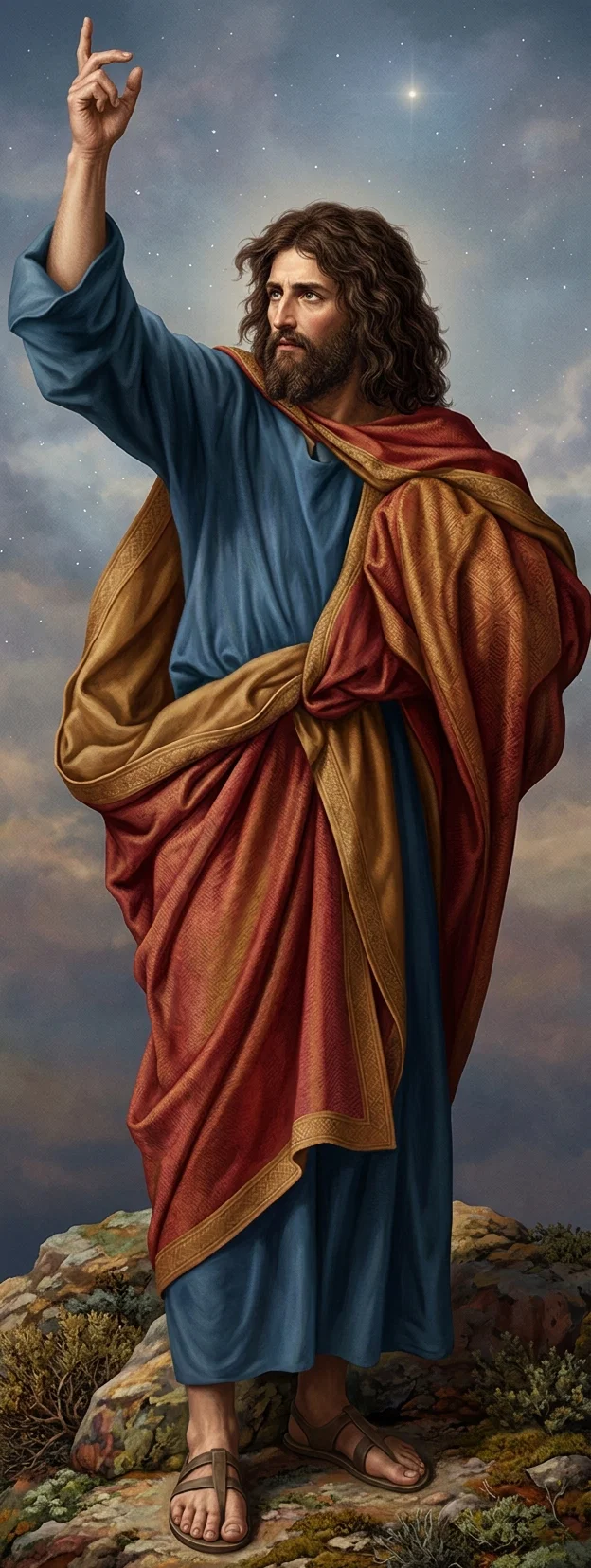
Christ, the opposing leader, in command of the righteous army
When Job, “perfect and upright, and one that feared God, and eschewed evil,” sought to fulfill his duties to his God and to his fellow men, it was Satan who rose up to accuse and pervert; and when he could not deny the goodness of the man, he attacked the purity of the motive that inspired his goodness. (Job 1:1, 9-11.)
In the New Testament, Jesus is represented as casting out devils from two men who were possessed by these evil powers; the demons spoke with audible voice to Christ, and He answered them. The whole account of the incident is told with such evident circumstantiality that to question its literalness is to question its truth. (Matthew 8:28-34.) Indeed, the instances of demon possession mentioned in the New Testament are so many that it is not possible to attempt any analysis of them here; we can merely cite a number of them, which the reader may look up for himself: Matthew 9:32, 15:22; 17:18; Mark 9:17; Luke 11:14; Mark 1:23; Acts 8:7, and others.
“We wrestle not against flesh and blood,” declares Paul, “but against principalities, against powers, against the rulers of the darkness of this world, against wicked spirits in high places.” Ephesians 6:12, margin. The conflict of a Christian is against foes unseen as well as seen. As to the manner in which these unseen foes work, we are not expressly informed by the Scriptures; and on such a subject speculation is vain. But as we recall the many manifestations of mesmerism, hypnotism, spiritualism, and telepathy, we cannot consider it incredible that the mind of a person should be influenced, in ways not wholly understood, by the mind of another, or by some spiritual force, in ways that we cannot detect.

GOD’S ARMOR OFFERED

In closing, we turn from the dark contemplation of this unholy kingdom to the bright promises of God’s word. “Wherefore take unto you,” advises the apostle, “the whole armor of God, that ye may be able to withstand in the evil day, and having done all, to stand. Stand therefore, having your loins girt about with truth, and having on the breastplate of righteousness; and your feet shod with the preparation of the gospel of peace; above all, taking the shield of faith, wherewith ye shall be able to quench all the fiery darts of the wicked.” Ephesians 6:13-16. We have nothing to fear if we are clothed with the armor of God.
For the power of Christ exceeds every power that is named, whether in earth or in heaven. Temporal adversity, spiritual temptation, threatenings of men, insinuations of devils, shall fall meaningless before the one who relies upon the righteousness of Christ, and who finds in Him wisdom, and righteousness, and sanctification, and redemption. (1 Corinthians 1:30.) “All things are yours; . . . and ye are Christ’s; and Christ is God’s.” 1 Corinthians 3:21, 23. “If God be for us, who can be against us?” Romans 8:31.