South America

8%

Seventh-day Adventist Publishing Association · Battle Creek, Mich. · Apr 29, 1902

FromReview and Herald, Vol. 79, No. 17.

Read the full edition

South America

J. W. WESTPHAL
Throughout South America the footprints of the papacy are everywhere discernible. She received this as her inheritance in the New World, and as far as any outside interference is concerned, she has been left in peaceful possession ever since. Her principles, adopted in the Old World, have been faithfully carried out in the new. The marriage relation and the Sabbath, the two institutions that have been handed down to us from Eden, the great bulwarks of society and true religion, which have been struck at in Europe in making compulsory the celibacy of the clergy, even declaring that all who were legally married were living in adultery, and separating husbands and wives under pain of the church's highest displeasure, and in the system of superior holiness in the celibate lives of the monks and nuns, and the supplanting of the Sabbath of the Lord with Sunday, have reached their logical conclusion here. There is practically no rest day among the people. Business is carried on on Sunday almost as much as on other days of the week. Whatever cessation there may be in labor is more than made up in pleasure and drinking.
Until the governments took the power of celebrating the marriage ceremony out of the hands of the clergy, who had the complete monopoly of the rite up to that time, and made it a purely civil institution, the fees charged were so exorbitant that many could not afford to be legally married. It was a common thing to charge from fifty to one hundred and seventy-five dollars for a single ceremony. As a result thousands of men and women have lived together, legally unmarried, a large number of whom live so still, nothing being thought of it. Though legal marriage is now within the reach of all, the barriers are broken down, and the institution is lightly regarded.
The marriage institution has thus been lowered. Its sacredness has been lost sight of. And it is not to be wondered at that concubinage has crept in. It is now a common, and, in a sense, honored practice. It is frequently the case that a man supports openly one, two, or more women besides his legal wife (if he has one). The records of the number of illegitimate births are astounding.
The natives of these vast regions are not agriculturists. By many agriculture, a divinely ordained blessing for man, is looked upon as lowering. The ambitions of the early Spanish explorers for gold and glory are the ruling passions of the people. The frequent wars between the several countries, and the many revolutions, are an evidence of this. Official positions are much sought after, and to exercise authority seems to be a special delight. The people are inclined to engage in business of some kind, however small; and they are sharp in trade, not infrequently at the expense of honesty.
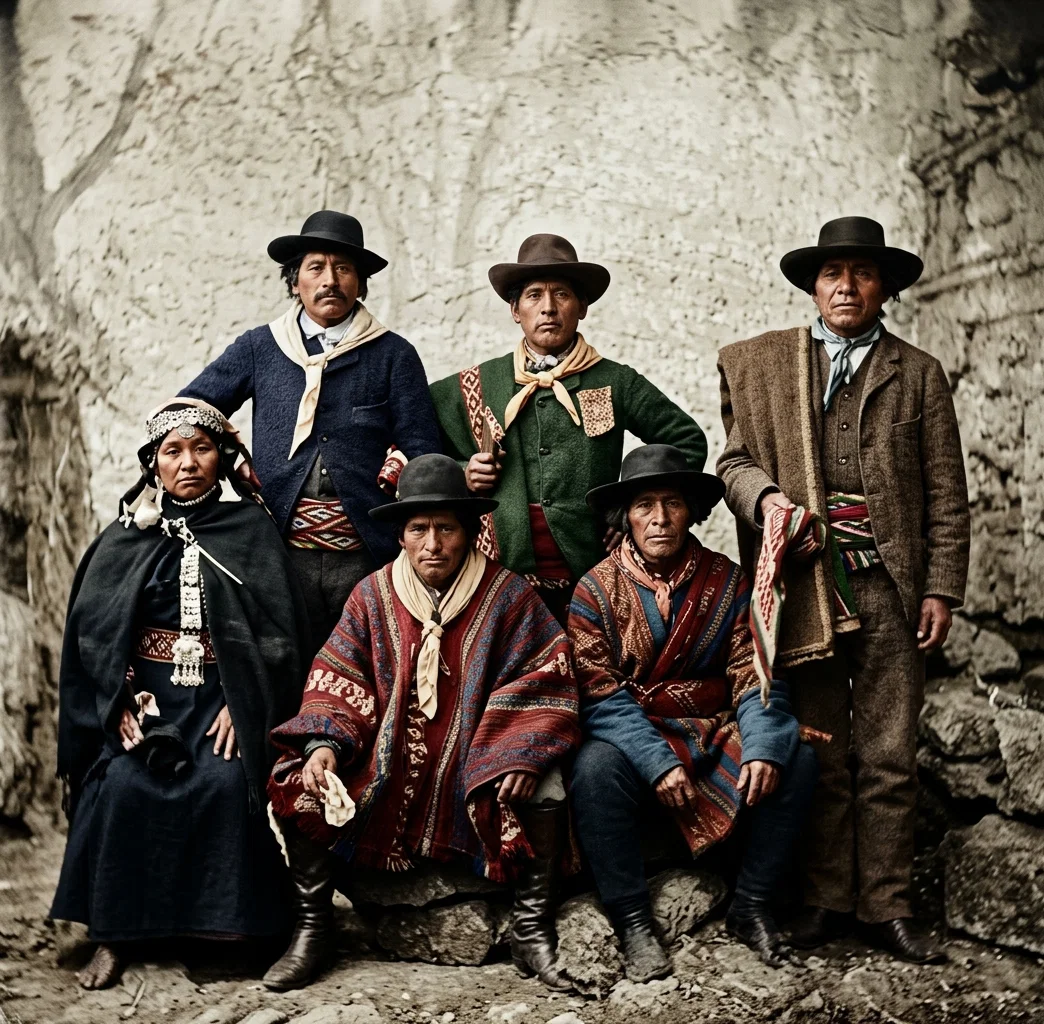
ARAUCANIAN INDIANS, CHILE
Their regard for the rights of others is not of the highest order. The following will serve as an illustration of this: Recently one of our brethren who was engaged in cattle raising, took a family into his home to look after his stock while he, with his family, attended a general meeting. On returning, he found that several calves had died. When he spoke to the servant about it, he replied, as unconcernedly as though it was the only proper and right thing to do, "Yes, but there are others here in their place. Wife and I saddled our horses and rode over the prairies searching for others to take their place." And they had just prepared their horses to make a second raid. All of this, of course, was at the expense of some other owner.
But things are not altogether bad here. One who has always lived in the States,being accustomed to the ways and conditions that obtain there, is apt to look at the worst side of everything here. But as in other parts of the world, the Spirit of God is still striving with the people, endeavoring to lead them to a higher ideal of living. The wave of freedom, civil and religious liberty started in the Reformation, and set as a beacon light to all the world in the establishment of these principles in the United States government, has reached these shores.
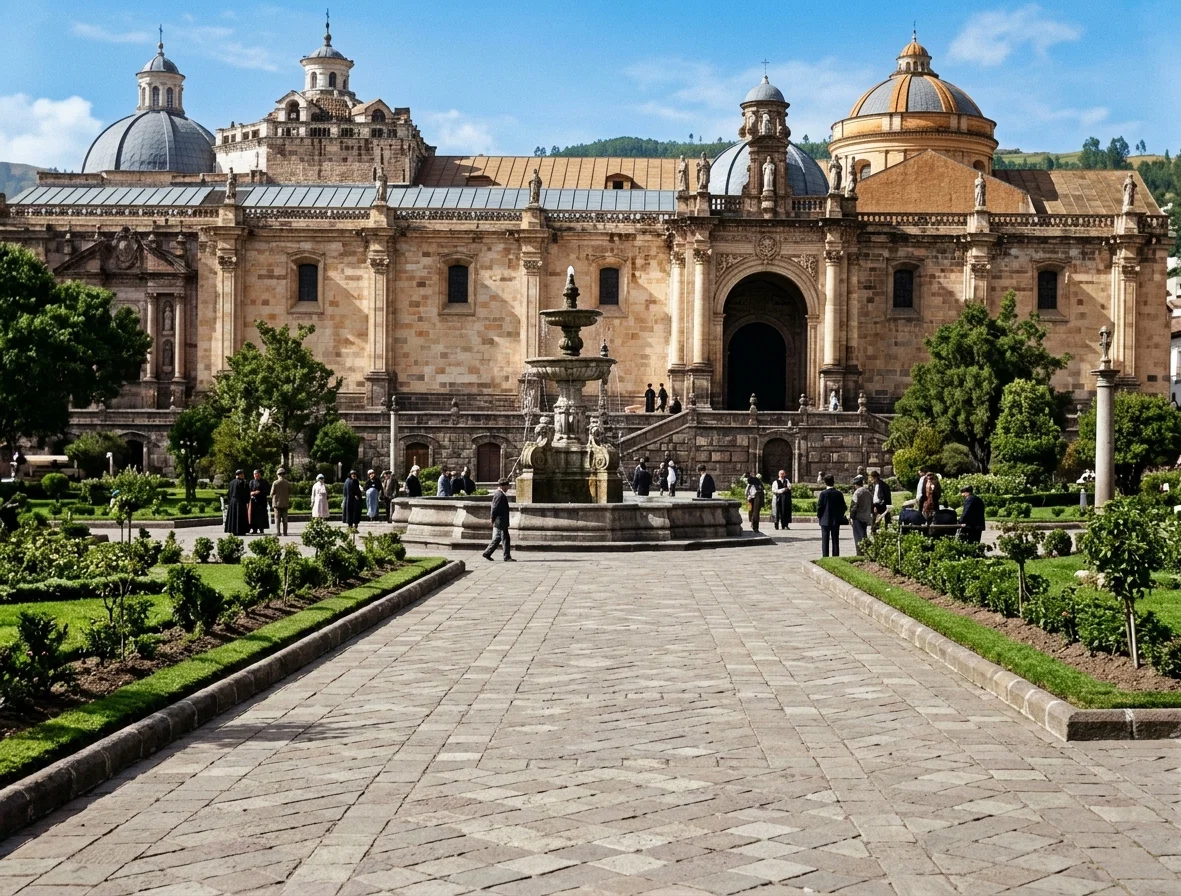
CATHEDRAL IN QUITO, ECUADOR
Where once dissenters were not tolerated, they are now bidden welcome. The medicines the papacy had so long administered to cure their ills, at last became nauseating to them. Without any missionary effort, but with the bright example of true Protestantism in civil government, as illustrated in the United States, all the South American republics have, one after the other, proclaimed liberty to their people. The gospel may be freely preached anywhere with comparatively little danger.
As the governments have opened their doors to better principles, many of the people are also opening their hearts to truth. Indeed, being republics, the recognition and acceptance of right principles indicate the sentiments of the people, and show that the Spirit of God has wrought a work upon their hearts. The field, as would be expected, is fully ripe for the gospel. There has been a general response to every missionary effort. Souls are hungering for the bread of life, longing for soul, as well as physical, liberty, and some are finding it. In the day of God many from this field will be found "purified, and made white, and tried."