A Trip in North China

5%

Review and Herald Publishing Association · Takoma Park Station, Washington, D. C. · Sep 5, 1907

FromReview and Herald, Vol. 84, No. 35.

Read the full edition

A Trip in North China

A. C. SELMON
We have just returned from a trip to Peking, Tien-tsin, and other places in the north of China, and I will endeavor to acquaint you with the situation, as far as we were able to learn it in the time we were there.
Peking is a little over six hundred miles from our work here in Honan, and two days are required to reach it by rail (the train does not run at night).
Even to one acquainted somewhat with China's war preparations, the most striking thing in the capital and large cities is the military display. We happened to be in Peking at a good time to see this at its best. May 21 the emperor went out to the Temple of Heaven, to sacrifice. This is over two miles from the palace, and the road on either side was lined with soldiers, and there were some on every housetop along the way. Greater precautions are taken now than formerly, because it has been but a few years since a bomb was thrown at the emperor's chair as he was being carried out. These soldiers are not the old-fashioned ones that were a laughing-stock, but they are well-armed and well-drilled, and for endurance will excel any army in the world, with the possible exception of Japan.
The students in all the schools are being drilled, and even the very children on the streets seem to have the fever; for they can be seen in little companies here and there, practising a drill. Not only this, but what surprised me somewhat was to see the students in the professedly Christian mission schools armed with wooden guns, and going through a regular military drill. I spoke to one of the professors about it, and he said it was required of all their students. To see the spirit manifested, made one feel that it was a travesty on Christianity to call such an institution a Christian school.
The leading denominations all have schools and colleges in some one or other of the cities of north China. They have large buildings; in fact, they are not inferior to most of the colleges in the States. The course is also quite thorough. For example, Chinese students who have been graduated from the Methodist Episcopal mission school can take post-graduate work in the University of Michigan. Practically all the schools take in the heathen, as well as believers, and some of them draw nearly half their attendance from the heathen students. Of course this can but have its influence upon the spirit of the school.
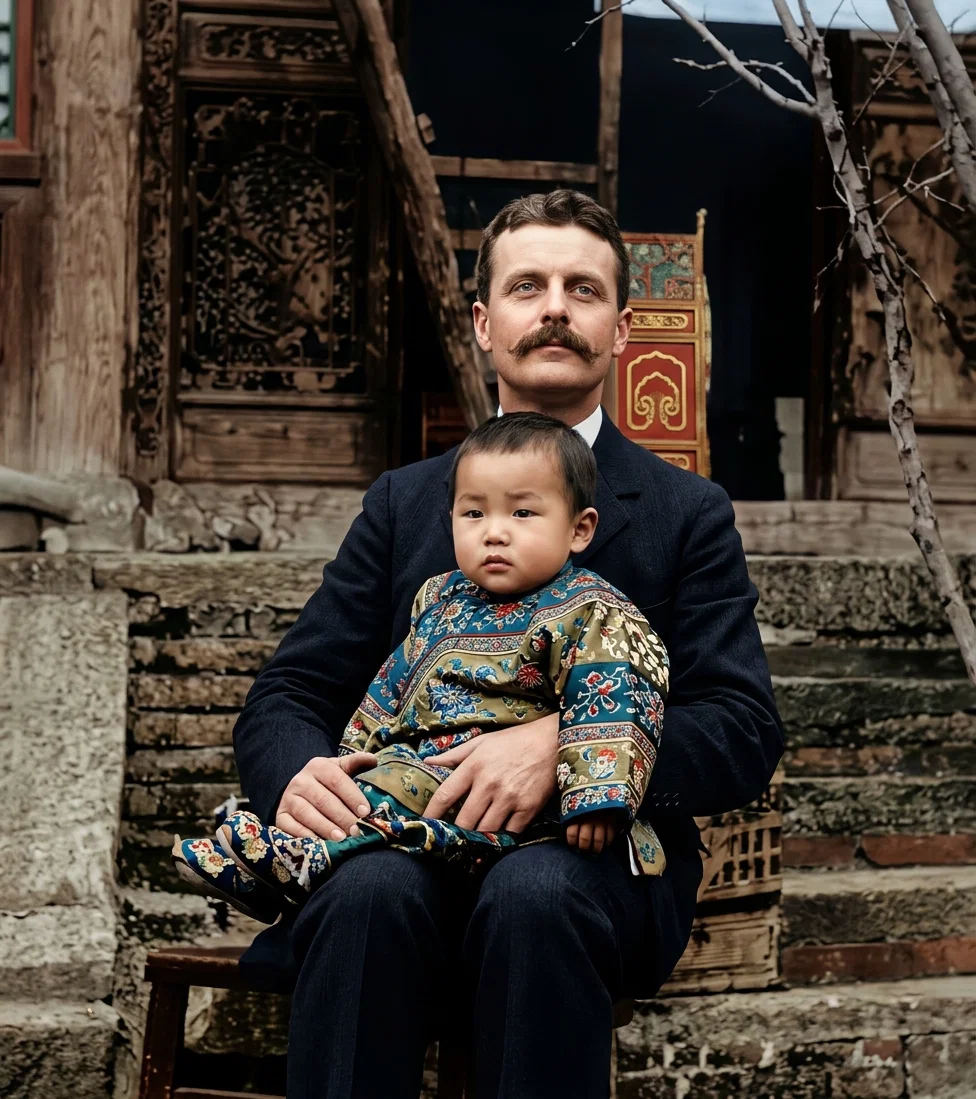
Dr. Selmon and Baby Ruth in Native Costume
To the students who are believers, some of the schools furnish room, board, and clothes. In other cases the student pays, if he feels able to do so. The Methodist school, called the Peking University, has an attendance of five hundred, and over two hundred more in the girls' school.
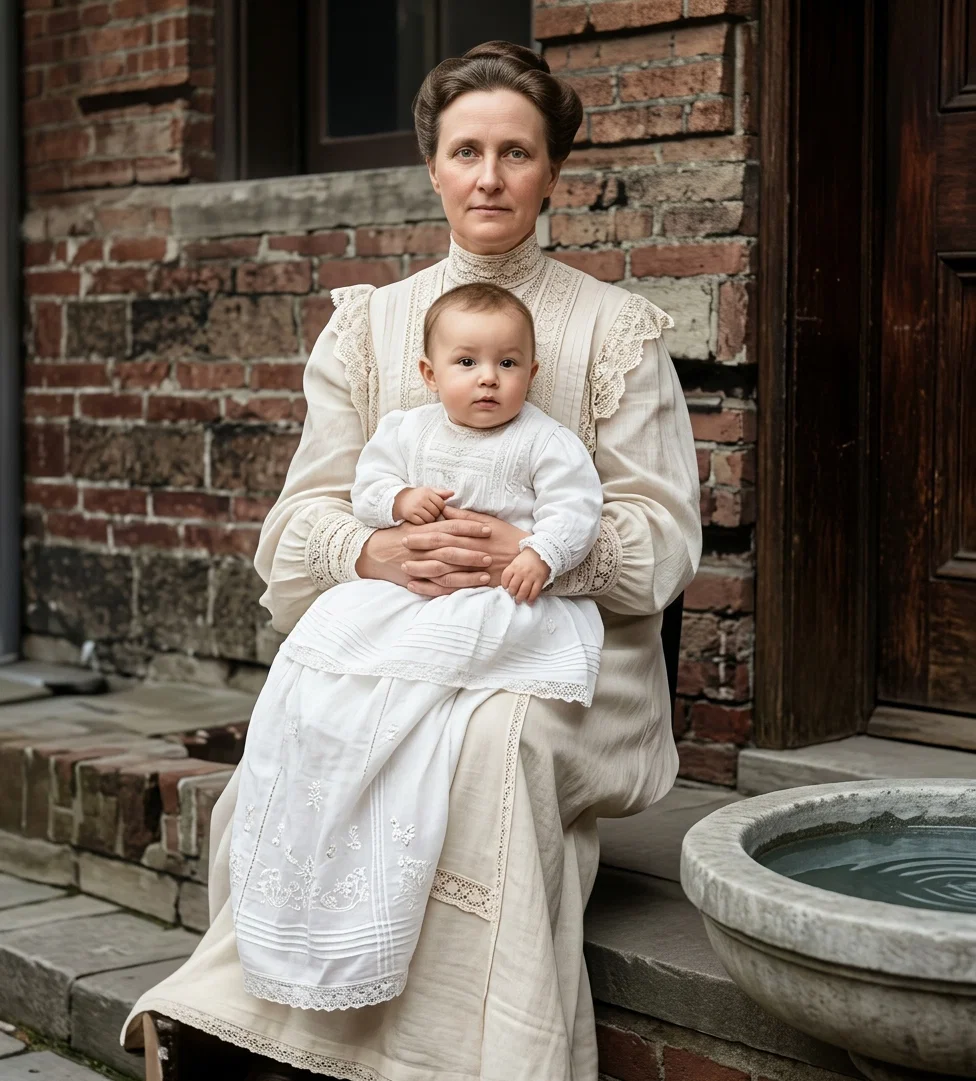
Dr. Mrs. Selmon and Baby Ruth
in American Dress
Dr. Mrs. Selmon and Baby Ruth in American Dress
The anti-foreign feeling is very strong, especially in the capital, and the people are more distrustful of the foreigners than even the people here in the interior. Mission work has been so mixed up with politics that it could not be otherwise. Medical work has been the great drawing-factor so far, but this is so no longer. The Chinese are opening up free medical dispensaries and hospitals in Peking and Tien-tsin. Men have charge of them who have secured their training at the mission medical schools or in the government medical college at Tien-tsin. The medical workers in Peking told us that this was making a marked difference in their medical work. Fewer patients are coming to them; in fact, there is coming to be a sort of competition between the mission dispensaries and the Chinese free dispensaries.
We had a long conversation with the pastor of one of the native churches in Tien-tsin. I was told that he is one of the ablest Chinese preachers in north China. He said his church was self-supporting now, and paid him a good salary. Of all the converts, not one was from the city itself. All were people who had come in from other places, and had some work or business in Tien-tsin. The country work about that city is very prosperous.
On Sunday we attended services in the native church. The congregation was made up in large part of the students from their schools, very few middle-aged men and women being present. The services were very brief, the minister preaching from the words, “I will have arise.” Luke 15:18. A marked difference between this and the ordinary congregation of Chinese converts seen in the country was that no one carried a Bible, as far as I saw. In the country every Christian carries his Bible.
All the foreigners in Peking live in palatial residences, and have numerous servants and livery. We found here that supplies, both native and foreign, were very high. This is due to the fact that the internal tax on everything entering this city is very high. Also, the region about is mountainous and sandy, and wherever there is a plot of land that might have been cultivated, it is encumbered with some kind of temple.
After looking around both in Peking and in Tien-tsin, we sought the Lord as to where the work should be first opened up. Finding that Peking was the place in which he wanted it, we remained there several days longer, and made more careful inquiries. One could not look over the situation here without being impressed that it is high time that the work was begun. I was surprised to find that this city has eight daily papers, and a great many others not issued daily. This is a strategic point. The transient population is very large. There is constantly a stream of people from all the provinces, and from Manchuria and the north. It would mean much to us to get a foothold here; for while the work for the people of the city itself might not be of any more importance than that in many other large cities, yet we would reach the whole of China by being located in the capital; and so be able to reach the people from all provinces.
At present there are four missions in Peking. These were all there before the Boxer trouble, and have very large tracts of land and buildings in the city. To secure land now is a difficult problem. It is expensive, and hard to get. The Y. M. C. A. have just succeeded in securing a place, after trying for about five months.
For us to open up the work there means that we would have to secure a piece of land at the very outset, and put up a house in which to live. It will not be possible for us to rent a place where we can carry on our work; for the native houses are all low, one-story, and unhealthful. It is doubly important for the new workers that they should have a sanitary home while studying the language and getting acclimated. So the starting of the work means an outlay of several thousand dollars gold.
I was pleased to find that we had no difficulty with the language. It is the pure Mandarin. There is a variation in the pronunciation of a few classes of characters, but these are very readily learned.
I hope that the workers who are sent out for this place will be those of good education, and also with experience in meeting people; for we shall constantly be brought into contact with the other mission workers. They are nearly all university people, and there are some sincere Christians among them. Many of them treated us well. We pray that some may get hold of this truth. There are many substantial Christians among the native converts, also. We were told of some who are working for the missions, in the school, and preaching, getting fifteen dollars a month, who have been offered three hundred dollars a month by the Chinese government. As I spoke with some of them, I was impressed that they were sincere, and were following all the light they had received. When the truth is presented, it will be sure to reap some fruit among this class.
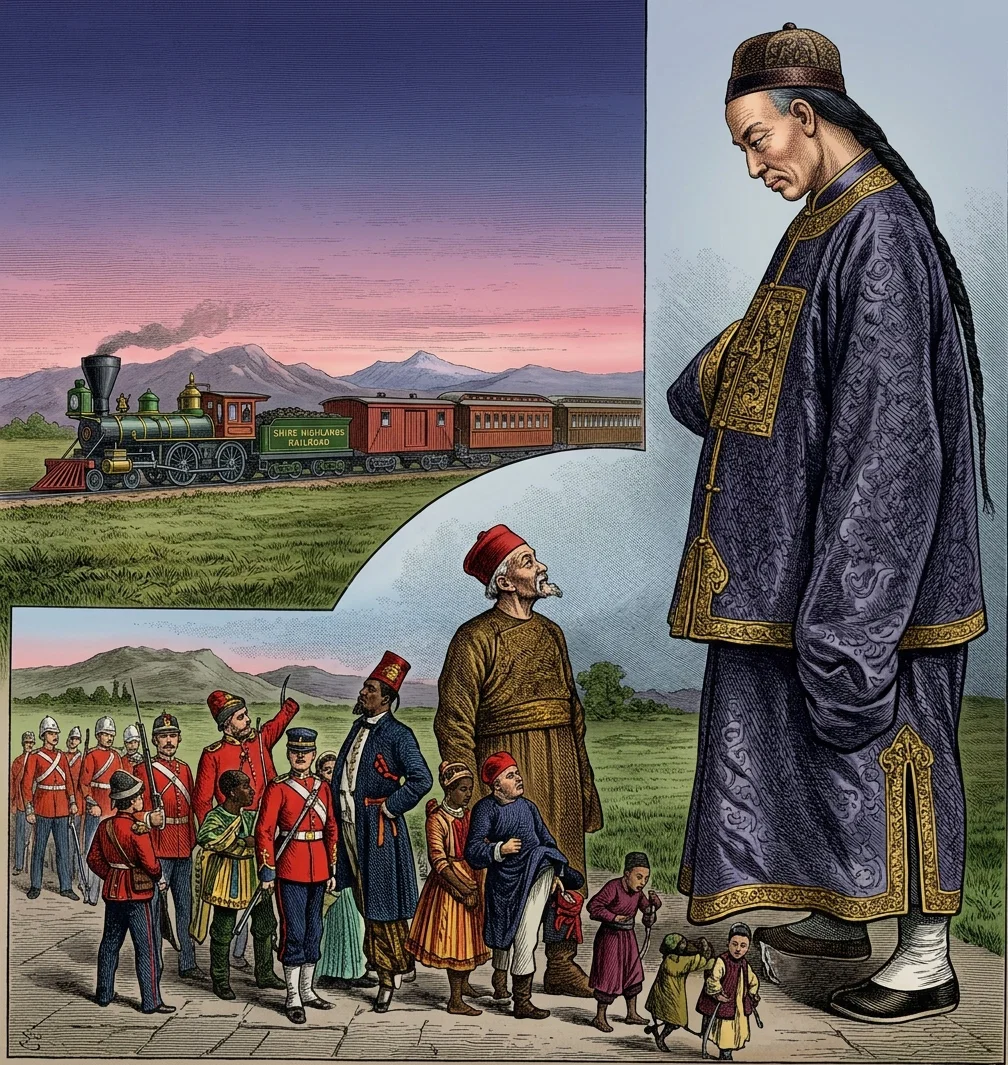
Courtesy of the Strand Magazine
THE SIZE OF CHINA IN COMPARISON WITH OTHER NATIONS
Courtesy of the Strand Magazine THE SIZE OF CHINA IN COMPARISON WITH OTHER NATIONS