Newfoundland

5%

Review and Herald Publishing Association · Takoma Park Station, Washington, D. C. · Aug 15, 1907

FromReview and Herald, Vol. 84, No. 33.

Read the full edition
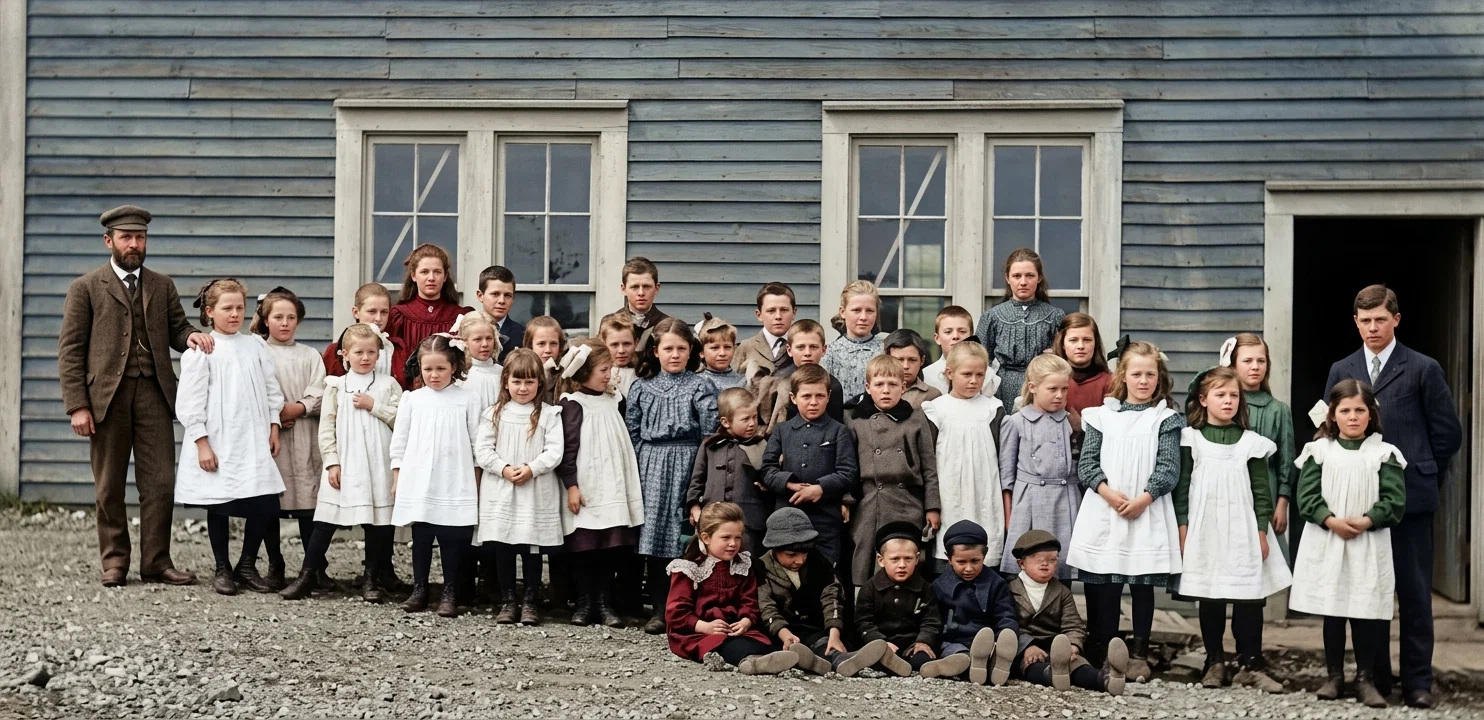
CHURCH-SCHOOL, ST. JOHN'S, NEWFOUNDLAND

Newfoundland

NEWFOUNDLAND has at last swung into line with other countries, and can now boast of having a Lord's Day Alliance of its own. In our last report it was mentioned that a secretary of the Canadian Lord's Day Alliance was on his way for the purpose of effecting such an organization for this country.
The coming of Dr. T. Albert Moore, the secretary referred to, was loudly heralded, but it can not be said that the Alliance was organized with any degree of enthusiasm; that feature was entirely lacking. Doubtless the arrival of the secretary was timed so as to enable the ministers from the outports (who had been to the Methodist General Conference and were here awaiting a steamer to take them home) to meet him, and lend their support to the movement.
The presence of some of these clergymen, for it must be said that not all of them were on hand, helped to save appearances; for, apart from the ministers themselves and the Seventh-day Adventists who were present, little more than a corporal's guard of the laity could have been found. All told, there were not more than sixty persons present, over one fourth of whom were our own people.
The day before being Sunday, Dr. Moore preached in two of the churches—in the Presbyterian in the forenoon and in one of the Methodist churches in the afternoon. The writer was present at the morning service, the congregation at which was not large. The sermon treated upon the Sabbath question. It was interesting in that all that Seventh-day Adventists claim for the Sabbath prior to the first advent of Christ was admitted, and presented in a masterly way. From that point it degenerated into a plea for the preservation of Sunday as the Lord's day, in order that the poor working man might have guaranteed to him the liberty (?) of the Sabbath. The old stereotyped arguments well known to the readers of the REVIEW were made.
After the night services, a mass-meeting was held in the British Hall, which was filled to its utmost limit. It was expected that the need of a Lord's Day Alliance in this island would be discussed by different speakers, but it had been observed that quite a number of our people were there, and the managers seemed to realize that all would not be plain sailing. So it was announced that there would be only one speaker—Secretary Moore. He had not gone far in his talk before he became conscious of the fact that some would see that religious persecution was wrapped up in this movement. He therefore made an effort to assure his audience that there was no danger in that respect. In fact, he tried to make it appear that the Alliance, and the secretaries especially, had an abundance of the milk of human kindness, and so explained that during the existence of the Alliance it had had to appear but twice in the courts against offenders. Their scheme is working charmingly. They very benevolently (?) go to alleged offenders, present their cards, and talk over matters. If the offenders are docile and promise not to offend again, all is well; but if not—then is the cloven hoof made to appear; for it is soon discovered that they carry a document showing that the civil authorities are moving in the matter, having of course been spurred on by these same benignant secretaries. No persecution in that! They are only seeing that the civil law (procured by themselves) for the preservation of the Sabbath is enforced. That is to say, they inform the civil authorities that the law is broken, and insist that the government shall do its duty;but, as aforesaid, before definite action is taken, the secretaries with Christian charity (?) hie themselves to the offender and warn him of his danger.
It must be said that not all were deceived by such palpable subterfuges. In the meantime our brethren had gone to the hall, loaded with a supply of Liberty; these were distributed as the people passed out. Copies had been sent previously to the prominent men of this city, including the members of the legislature.
The next day one of the city papers—The Evening Telegram—gave a report of the proceedings for the whole day, which occupied only about two thirds of a column. Right by the side of that, however, in parallel columns was given a report of a sermon preached by the writer the night before, which occupied a column and a quarter, and which showed the parallel between the present time and the fourth century. The week before, the same paper gave us over a column, in which was shown the true aims of the Alliance.
At the meeting when the Newfoundland Lord's Day Alliance was organized, the writer arose to speak. The chairman asked, first, if we were in favor of the resolution, second, if we wished to offer an amendment. Our reply being in the negative, and learning that we were opposed to the whole thing, he told us that we would not be allowed to speak, which decision was received with loud hand-clapping on the part of the supporters.
One could not fail to notice the utter absence of spirituality at the meeting. Not a prayer invoking the divine blessing upon the proceedings was offered, not an opening hymn sung, nor the benediction pronounced at the close. Under the circumstances these omissions were very fitting.
Before declaring the meeting closed, was the chairman, a Church of England clergyman, because of the step that had been taken, remarked: “I am almost afraid to say it, yet I must mention the fact that I believe the millennium is not far off.” This was received with another loud clapping of hands. The writer did not fail to remember that a similar belief was cherished in connection with the first Sunday law crusade.
As we write this report, there lies before us a copy of to-day's Evening Telegram, in which appears a full column of our last night's sermon upon the subject of “The Logical Working of Sunday Laws to Date.” We have also been permitted to write letters to the same paper upon this matter. So far no replies have been vouchsafed. It reminds us of Isa. 50: 10.
We are profoundly grateful to God that we have had this avenue through which to present the principles of religious liberty. We are receiving encouraging evidences that an interest is being awakened in this matter, and many are afraid that its discussion may be cut off on account of church influence. We, too, fear this. For this reason we would urge upon our friends in the States to give us the printing-press we asked for in our last report. As stated, we can then send matter to every part of the island free of postage, without let or hindrance. We believe also a liberal supply of Liberty would result in good. We feel that now, just now, is the time to strike.
God is blessing our efforts. Last night at the prayer service at the close of the preaching three persons publicly gave themselves to the Lord. One is a young girl about fifteen. She has taken her stand for the truth under great persecution, having among other things been whipped, and her Bible—her only book—taken from her. Please pray for her that she may endure unto the end.
FISHING FLEET WAITING FOR A BREEZE, ST. JOHN'S HARBOR, NEWFOUNDLAND
Religious liberty and other tracts can be used, although many Newfoundlanders do not care for American ideas. Please observe that it costs two cents an ounce for papers, and five cents for each half ounce or fraction thereof for letters.
We were never of better courage, nor enjoyed our work more thoroughly than now.
C. H. KESLAKE.