E. W. THOMAN

9%

Seventh-day Adventist Publishing Association · Battle Creek, Mich. · May 26, 1903

FromReview and Herald, Vol. 80, No. 21.

Read the full edition

E. W. THOMAN

Bolivia

E. W. THOMAN

BOLIVIA is a republican state in the western part of South America. It extends from Lat. 10° to 23° S., and Long. 57° 30′ to 70° 10′ West., touching Chile on the southwest, Peru on the northwest, Brazil on the north and east, Paraguay on the southeast, and Argentina on the south. Its area is about eight hundred thousand square miles. The population is about two million five hundred thousand. Since the war between Chile, Peru, and Bolivia, it has no sea coast or ports.
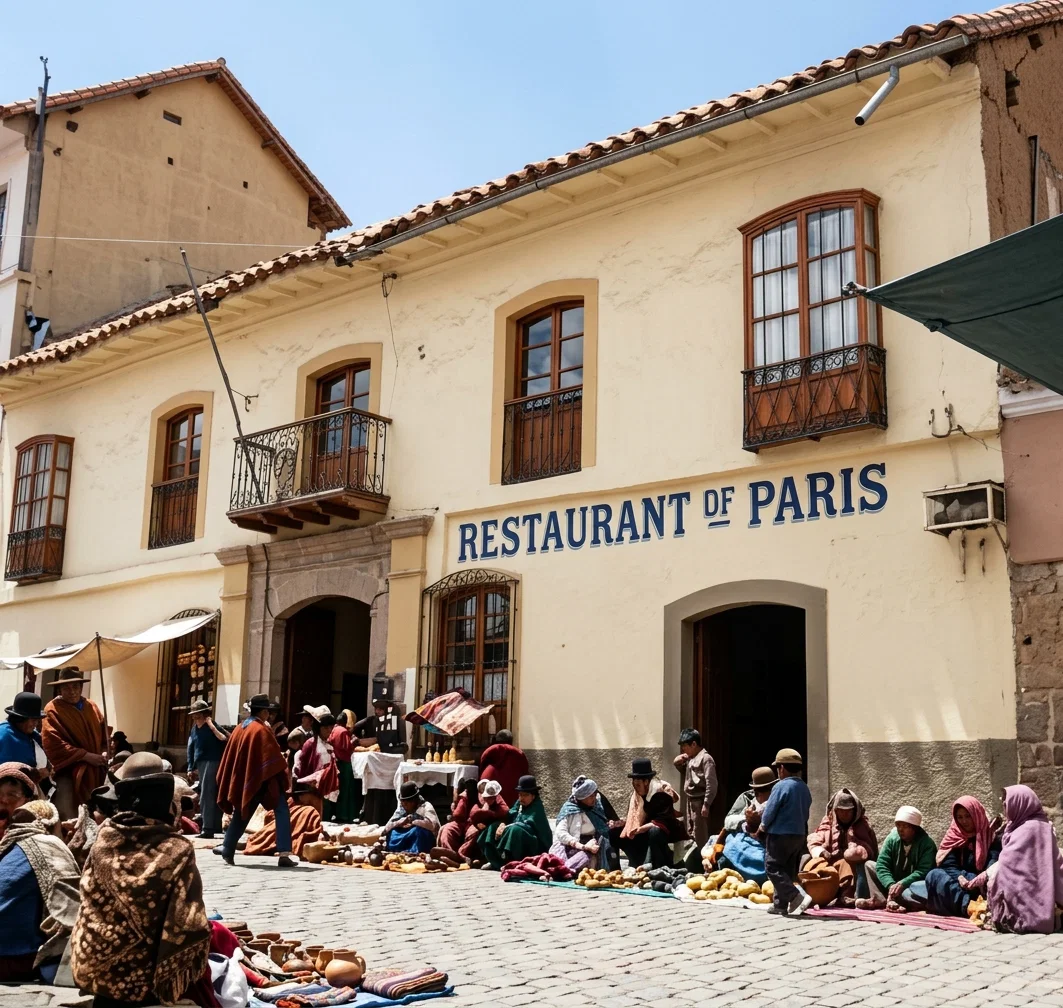
A FAIR ON LA PAZ, BOLIVIA
With regard to temperature, Bolivia, almost entirely a tropical region, may claim to embrace all the zones in the world. Each locality has its own peculiar vegetation. Even the arid brows of the Andes yield a coarse grass which forms the favorite food of the llama, alpaca, and vicuna—animals almost as independent of water as the camel. The table-land of Titicaca, which has a minimum height of 12,441 feet, produces maize, rye, barley, and wheat.
There are in Bolivia several valleys which produce many kinds of fruit and vegetables. In some places fruits are abundant and cheap. In parts of Bolivia there are immense forests, and other districts where there is pasturage for cattle, but the regions most thickly populated produce very little food for man or beast. Llamas and sheep find food nearly everywhere.
Hitherto, however, Bolivia has been remarkable mainly for its mineral productions. The silver mines of Potosi, after having, on a well-founded estimate, completed the full tale of two billion dollars, are believed to be inexhaustible; while gold, lead, tin, salt, sulphur, nitre, and copper are abundant.
The foreign trade labors under heavy disadvantages. The imports, confined to articles of the highest necessity, are principally iron, hardware, and silks; and the exports, besides the precious metals, are copper, cocoa, barks, skins, tobacco, and articles of native manufacture. The total imports amount to about $5,500,000 annually, and the exports to $4,500,000.
Being surrounded by other nations, Bolivia has, since the days of Spanish rule, remained in nearly the same condition. The authorities, mostly conservative, have done very little to provide the country with roads and other means of communication. It has no railway, except one extending from Antofagasta, its former seaport town, to Oruro, and another in construction between Lake Titicaca and La Paz. Freight is nearly all carried on llama or mule back.
In the larger cities there are persons of good education, but most of the inhabitants know very little of the sciences and arts. Perhaps 100,000 of the population can read. About 1,200,000 are Indians, and of these 300,000 are said to be savages. The mixed people number about 1,000,000, and those of pure foreign blood 300,000. Nearly one third of all the inhabitants understand the Spanish language. The remaining two thirds speak their aboriginal tongues.