MRS. J. N. ANDERSON

6%

Seventh-day Adventist Publishing Association · Battle Creek, Mich. · Nov 4, 1902

FromReview and Herald, Vol. 79, No. 44.

Read the full edition

MRS. J. N. ANDERSON

A Trip to Canton—No. 1

MRS. J. N. ANDERSON
Starting at six in the evening, the little steamer “Kong Nam,” with her burden of freight and passengers, wound her way through the narrow channel, between the many small islands, toward Canton. “You do not carry many passengers,” some one remarked, noting that the boat was supplied with only two passenger cabins. “O, yes; sometimes four or five hundred! We have several hundred on board to-night,” the mate replied.
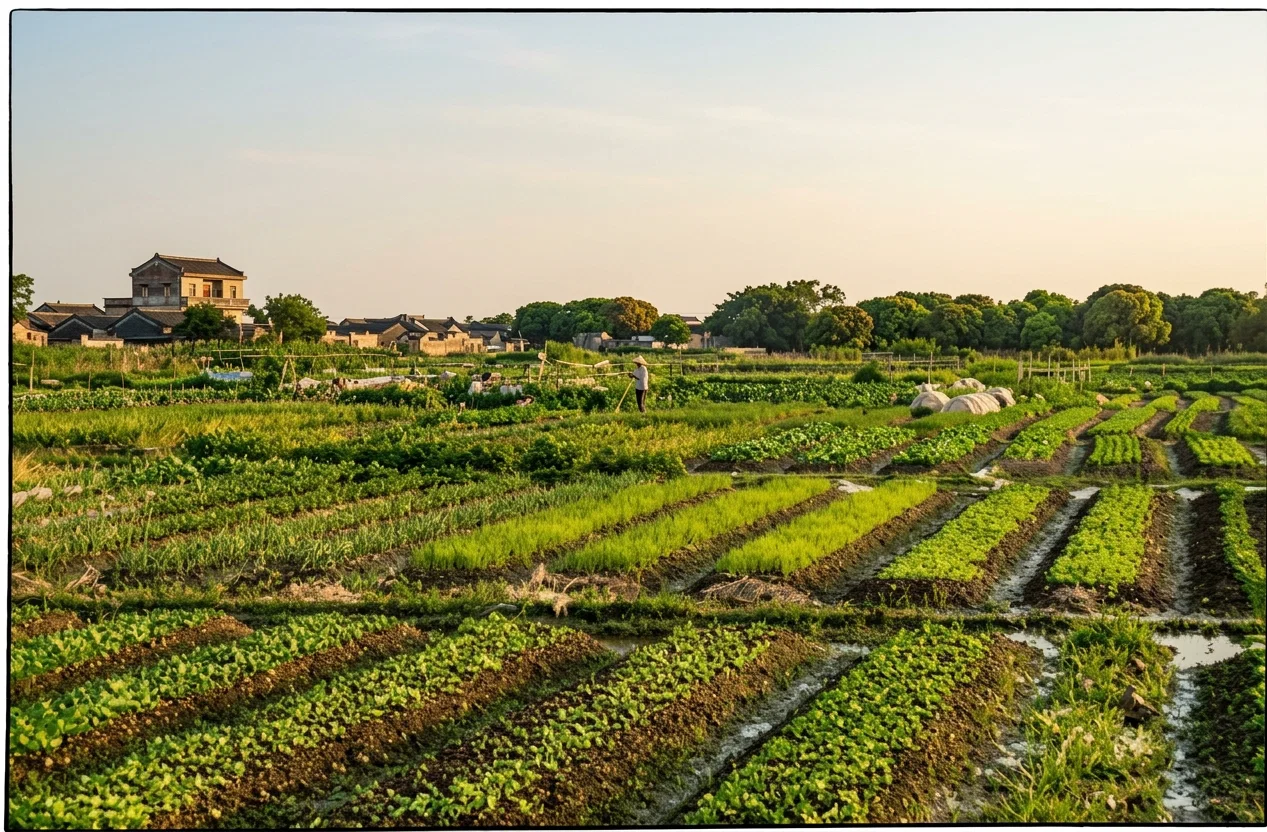
CHINESE GARDENS
CHINESE GARDENS
“Where?” I mentally queried; but later in the evening, on passing from the upper deck across the lower to the cabin, the answer came, “Anywhere;” for every inch of available space on the deck was occupied by a sleeping Celestial. Some had thoughtfully brought their pillows, consisting of hollow oblong cubes of chinaware softened by ornamental figures in national colors according to personal preference; others a bit of rush matting or an extra garment for a bed; while others slept with only a short lower garment; but each was apparently as free of care and as satisfied as when swinging through dreamland in a sling on his mother’s back.
About one hour out from Hongkong we left the salty waters of the Pacific, and entered the broadest and most northern estuary of the Canton River, on whose northern bank, about ninety miles inland, the city lies. Floods of light in red and gold, mellowed by the soft gray of coming night, streamed from the tropical sun, bathing all the landscape, while the glad sea breeze brushed briskly past.
Slowly but steadily the boat glided on,—for there was not a ripple before her bow,—past odd, barren islands rising abruptly out of the deep waters, a few miles inland, where the larger islands, low and level, are luxuriant with vegetation. The rice fields were still inundated, but the spears of coming grain could be clearly traced in drills across the flats. Groves of bananas and plantain, backed with the darker green of orange and litchi, betokened promises for days to come.
The utmost care is bestowed upon gardening in China, but nothing like farming as it is known in the Middle and Western States of the United States is thought of. The work is done by hand, with possibly the aid of a water buffalo and a very primitive plow. The farms are mere garden patches surrounding the clan villages, in which the people congregate from generation to generation. In some dense sections village touches village, separated only by their walls or a running stream. Nevertheless, each is a distinct village with its own traditional customs and shade of dialect. In other sections the villages are miles apart, with wide, unoccupied acres between them, which, to all appearances, might be just as fruitful as those now under cultivation. But tradition has bound the people to village life, and so the little dark houses are packed together, tile touching tile on the roof, till there is neither air nor sunshine to bring comfort and health to the little ones who are driven into the streets.
Night came on, and with it forgetfulness, till, early in the morning, we were awakened by a din of voices, low and guttural, high and shrill,—men, women, and children calling, scolding, chattering,—while the racket of wooden shoes and the shuffle of bare feet on the deck led us to suspect that something extraordinary had happened. Hastening preparations, we were soon on deck, relieved to find that the boat had anchored before the city of Canton, and that the confusion was occasioned by the sampan people in their competition to secure patronage of freight or passengers. Trade is much less active at Canton, and therefore the conflict for bread among its floating population is correspondingly sharper, than in former years.
“I wonder why passengers are not called early in the morning to see the native boats come out to meet the steamer. It is one of the most picturesque and interesting sights to be seen,” remarked a gentleman who has traveled extensively. And so it is. A population numbering tens of thousands, but just how many no one knows, spend their lives in these small house-boats, or sampans, and in the larger crafts and junks. Each floating home, in turn, becomes the inheritance of some child of the family. If a boy, when he is married—probably to one of his own station—here he brings his bride, who will take her post at the large oar in the rear of the boat till the day her first-born comes, bringing the first real joy into her life. A few days later, with the precious little burden on her back, she will take her place at the oar again, and pull with new vigor because of this new inspiration. If this life seems hard, remember that it is exempt from much of the drudgery and care of what is called a more perfect civilization. Generations come and go, generations that never know a settled home on solid earth.
Before us lay the shameen, or foreign settlement, occupying what was once a mud flat in the great sheet of water known as the Bak Kong, or North River, the northern fork of the mouth of the Pearl River; but which is now a verdant island, with substantial residences, constructed after European plans; and beautiful, paved streets lined with shade trees. The European population who live here must make this their world, and, therefore, no pains has been spared to make the place attractive.
Across the canal northward lies the ancient and modern city of Canton. The old city is inclosed within a wall about twenty feet thick, from twenty-five to forty feet high, and six miles in circumference; but outside this wall a city of equal size has grown up on the low plain, extending with its suburbs a distance of ten miles up and down the river. Our first view of this well-known, and yet certainly unknown, city lying before us in mysterious and ominous silence, brought to mind the words of Jesus, “Thou that killest the prophets, and stonest them that are sent unto thee.” Wretched, and poor, and blind, and naked, she wraps her tattered robes of ancient tradition and national pride about her, and declares herself in need of nothing. The metropolis of the two Kwang Provinces and residence of the viceroy, Canton has a certain governmental importance second only to Peking, and a conservatism perhaps fully equal to that of the national capital.
But of greater importance to us is the place this city has occupied in thehistory of missions.
Hither in 1807 came Dr. Morrison, then a young man. A burning zeal for Christ had led him to long for China, as yet untouched by Protestant missionaries. In order to reside in the city while studying the language, he was obliged to accept employment in a factory under English management. The study of the language was of itself a crime against the government, and the teaching of it was treason, liable to cost his tutor his life. Here silently and perseveringly he wrought, and finally produced a grammar and a lexicon of the language, besides a translation of the entire Bible, thus laying the foundation for all succeeding missionary work in the Chinese world.
Here, too, occurred the conflict over the opium question, and the war which followed, by which the name “Christian” was brought into reproach in all China, and an additional curse was heaped upon an already enslaved people. The opposition manifested is not so much hostility to Christianity as to the fan gwi (foreign devils) themselves; but it is as deep seated and abiding as the national life of China itself.
Always a storm center, Canton is today in a state of ferment; and even as I write, the city is being placarded with matter inciting to riot against the foreigners, and no one can forecast what may be the outcome. Still the angels are holding the winds that she may hear the gospel and be saved. O that she might know in this her day the things that belong to her peace!