THE TARN, FRANCE

7%

Seventh-day Adventist Publishing Association · Battle Creek, Mich. · Jan 7, 1902

FromReview and Herald, Vol. 79, No. 1.

Read the full edition

THE TARN, FRANCE.

Have you ever heard of this interesting place? If not, I am sure that what you now read concerning it will make you, ever after, interested in it. The Tarn is a department of southern France, and corresponds somewhat to the state or county in the United States. It was in and around this department where the ancient Albigenses lived, and where the Huguenots were persecuted. Though years have passed since those events occurred, there still lives in places some of the old spirit. But dwelling up in the mountains, holding little intercourse with the outer world, the customs of these people are somewhat different from the surrounding Europeans, to say nothing of Americans. When I visited the church there, I met scores of people, not children, but grown men and women, who had never seen a railroad.
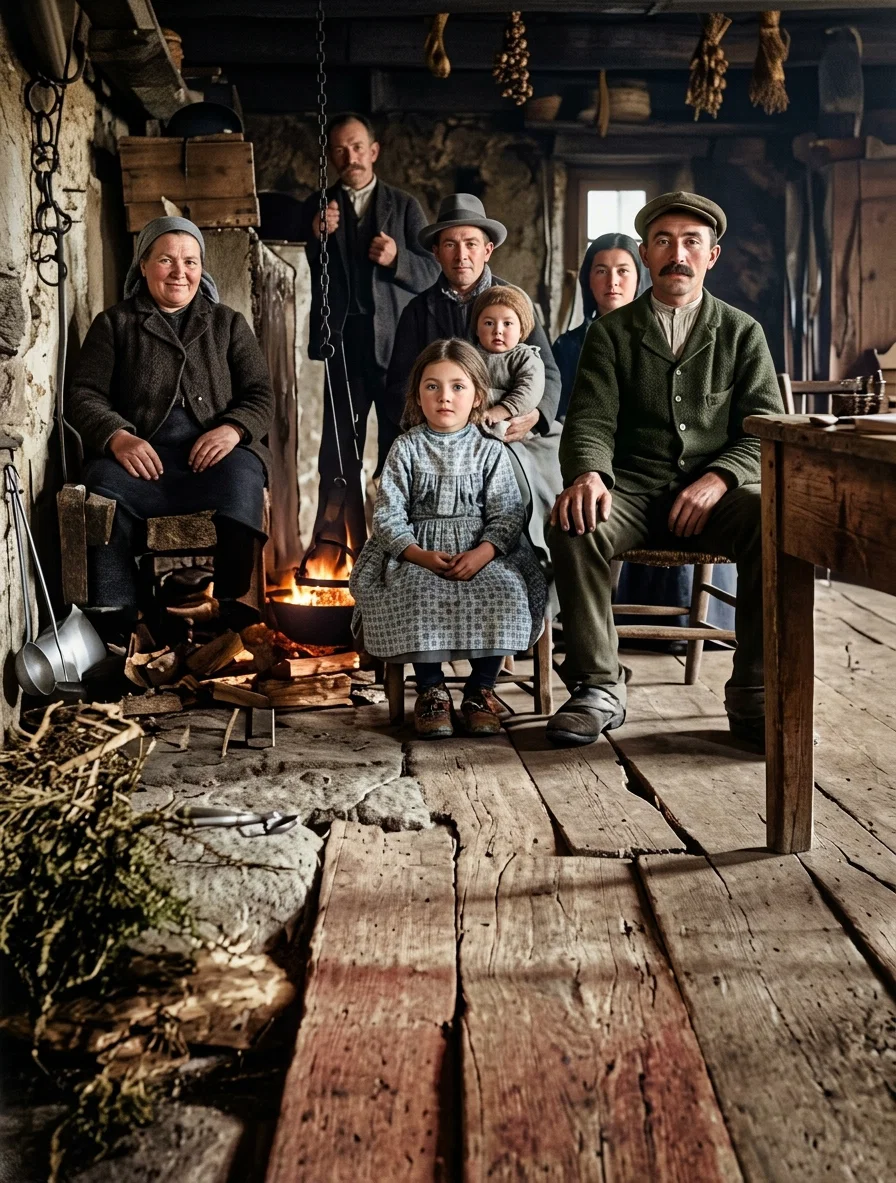
I am sure you will be interested to know how the Third Angel's Message penetrated to that place, and gave to the truth a devoted company retaining the simplicity of their fathers, and manifesting a deep devotion to the word of God. In the accompanying photograph I have given you a picture of the room, or rather the interior of the house, where we stayed; for there it is rare to find a house of more than one room. To the left in the picture you will see the great iron pot (marmite) which hangs suspended over the fire by means of an iron chain. In this great vessel everything is cooked, especially the soup, which is the much-loved dish. And their soup is soup. It is not the seasoned water of the American boarding house. In their soup, I was about to say, they place everything. But you don't mind that. After you have climbed up the steep and rugged paths to reach the house, or after you have been jolted in the stage for several hours, perhaps all day, that soup tastes good. It is probably not scientifically hygienic, but with the appetite it is hygienically disposed of.
You notice that the people have their hats on. They put their hats on just where we take them off. For example, all may be conversing, with their hats off, when the word comes that dinner is ready. Then they all put their hats on to go to the table.
NATIVES OF THE MOUNTAIN DISTRICT OF SOUTHERN FRANCE. THIS IS A VIEW OF THE ROOM WHERE OUR FIRST MEETING WAS HELD WITH THESE PEOPLE.
We left the train at Castres in southern France, and in the morning took the stage. Neither myself nor my interpreter could understand the language. It was not French; it was what they call "patois," that is, a dialect. We were stowed in under the front box with a jolly, vigorous young Catholic priest at our side. While he would talk French with us, he could talk the patois. He held conversation with the great, burly stage driver. This latter individual was shod in his great leathern boots, with a leather coat, and armed with a long, long-tailed whip, which he cracked most vigorously as he shouted out his patois to the five stage horses.
Upon the mountains and by the precipices we clattered along for four hours. Then a relay of fifteen minutes was given, only to resume our journey again for three hours. The cold of evening and the shades of night had overtaken us when we arrived at our destination. Our first service was held that very night in the room of which you have a picture, and on the Sabbath following, from far and near, from the mountains and the valleys, the brethren came to the Sabbath meeting.
And here we learned the story of how the truth reached them. When Brother J. N. Andrews was editor of Les Signes des Temps, he used to send out a great number of the papers in France, as we do in our missionary societies in America. The paper had been sent to a certain man residing in that region, and then a letter was addressed to him, asking him if he would kindly send to the office of Les Signes the names of men who he thought would be interested in these subjects. The man responded by sending in a list of names, in which list was the name of Brother Louis Carayon. At that time Brother Carayon was troubled over his spiritual condition. Surrounded by the darkness of Catholicism he longed for the knowledge of God, and for the assurance that his sins were forgiven. It was in this condition of mind that the first number of Les Signes found him. He opened the paper with the hope that he might receive some spiritual light. But on the first page his eye met this article, “What Is Our Condition After Death?” “Well,” he thought, “this can do me no good.” So he laid the paper aside.
Then came the second number, followed by the third. These also were placed aside. But one day, still troubled over his spiritual condition, so troubled that he could not work, he took up these papers. He began to read an article which exactly met his case. He read more. Then seeing the advertisements, he sent for some books, and very soon he had the truth before him. He accepted it, and began to work for others with all his might.
One night he was called to visit a sick man. He went, with his pockets full of the papers. At the bedside of the sick one, he met another man, a neighbor not very well known. With his usual zeal, in godly conversation, he offered the gentleman a copy of Les Signes. The stranger refused, saying that he knew the paper. In fact, he informed Brother Carayon that he was the person who had sent in his name to the office. But upon learning what the paper had done for Brother Carayon, he became very angry. He wrote a letter to the office, discontinued his own number, and refused absolutely to have anything more to do with the paper.
But Brother Carayon labored on. God blessed his labors, and very soon a company was raised up obedient to the truth. And the interest continues. While there, we held two meetings to which those not of our faith were invited, and the rooms were well filled. They are calling for a laborer to go there and hold meetings.
But that is just the difficulty. France is practically destitute of laborers. Those who come from America as laborers must learn the language. We have many able and bright young people, who could be trained for the work, but they have not the means, nor we either. We greatly need facilities for the training of workers. We could put twenty workers, if we had them, into places where there is now an interest.
I see many calls in the REVIEW and in our other American papers for means to be given to enterprises at home. But is it possible that our brethren do not think on these great, destitute fields over here? I notice with joy the record in the Missionary Magazine of donations to the French field. But what can fifty dollars now and then do when we need fifty times as much? I saw in the REVIEW lately a call for one thousand dollars for an enterprise in America. And now we will call: Who will give one thousand dollars toward providing the necessary facilities for the training of young people here for this great field? The Lord is coming soon, and these lands must be warned.
B. G. Wilkinson. 48 Weiberweg, Basel, Switzerland.