MODERN BABYLON SUBSTITUTES PAGANISM FOR CHRISTIANITY

3%

Seventh-day Adventist Publishing Association · Battle Creek, Michigan · Sep 11, 1900

FromReview and Herald, Vol. 77, No. 37.

Read the full edition
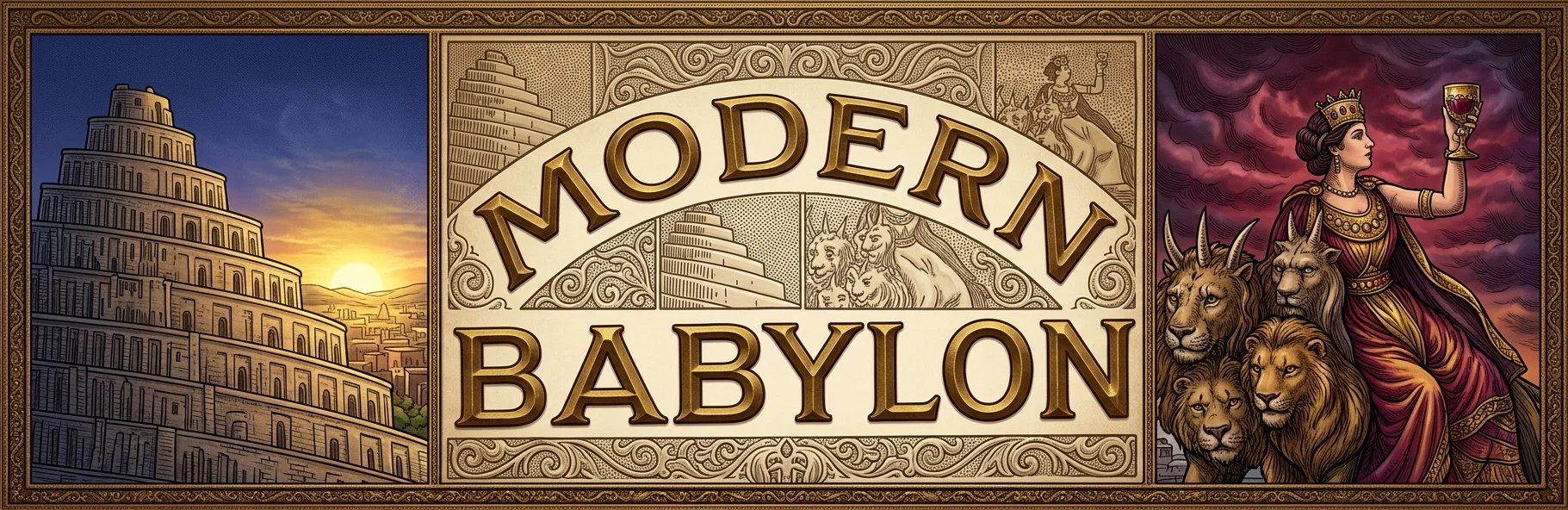
MODERN BABYLON SUBSTITUTES PAGANISM FOR CHRISTIANITY.

It should constantly be borne in mind that the book of Daniel is the book of the gospel of the kingdom, and that it is the purpose of the book to show what kingdom will stand forever, and to set forth the principles upon which this everlasting kingdom is established. And this is no less true of the prophetic portion than of that which is usually called the historical portion.
We have seen that the chief subject of the prophecy in the seventh chapter is the little horn, modern Babylon, the papacy. In the brief prophetic sketch that is given of the great world-kingdoms, the outline is made with such clearness that the time of the rise of this power is definitely determined, and the divinely drawn indictment is made up under three counts: “He shall speak great words against the Most High, and shall wear out the saints of the Most High, and shall think to change times and laws.” Dan. 7: 25.
His whole career is thus shown to be one of direct opposition against God, against the subjects of the kingdom of God, and against the law of the kingdom, “the law of the Spirit of life in Christ Jesus.”
From our last preceding study upon this subject it is evident that the intent of the papacy to change the law of the Most High involved much more than a mere change of some outward form; that it took hold upon the very foundation of the gospel. It is nothing less than Satan's chief effort to pervert the gospel of Christ so completely, by substituting a counterfeit so perfect that no merely human wisdom could ever have invented it, that the wondrous gift and sacrifice of Christ would be in vain. Only the direct inspiration of Satan, who, as Lucifer, the light-bearer, had been “upon the holy mountain of God,” could give birth to such a scheme as this, and then develop it under the outward pretense of burning zeal for the advancement of the kingdom of God in the earth.
In this study we shall look still further at the meaning of this purpose on the part of the papacy to change the law of faith into the law of works. Recognizing the papacy as the product of more than human wisdom, as the masterpiece of Satan in his long-continued warfare against the gospel of the kingdom of God, we can see in it the far-reaching purpose to nullify as far as possible all the effects of the sacrifice which he could not prevent.
It is evident that the purpose of the gospel is to deliver man and the earth from sin and the results of sin. The central thought and all the efficacy of the gospel are found in the gift of Christ to man. It is faith in the person, Jesus Christ, and the actual acceptance of him, rather than an assent to a creed, however true that creed may be, which renders the provision of the gospel of saving value to men.
These simple but fundamental principles may be stated in the exact words of the Scripture: “There shall come out of Zion the Deliverer, and shall turn away ungodliness from Jacob.” “Thou shalt call his name Jesus: for he shall save his people from their sins.” “For God so loved the world that he gave his only begotten Son, that whosoever believeth in him should not perish, but have everlasting life.”
The one thing essential, and without which the plan of the gospel could not be accomplished, was that the Son of God should be manifested in the flesh. From the time that the gospel was first preached in Eden in the promise of the seed of the woman who should bruise the serpent's head, this great fact has been kept in the foreground. In the seed promised to Abraham; in the deliverances wrought through Joseph and Moses; in the promise, “I will raise them up a Prophet from among their brethren;” in the very name of him who led the children of Israel into the promised land (the Greek form of the name of Joshua and Jesus is the same. See Heb. 4: 8 and margin); in the law that only the nearest kinsman could redeem the inheritance (see the whole book of Ruth); in the promises to David, “Of the fruit of thy body will I set upon thy throne,” and “his seed also will I make to endure forever, and his throne as the days of heaven;” in Isaiah's wonderful prophecies of Immanuel, and the Branch out of the roots of Jesse; in Zechariah's prophecy of “the man whose name is the Branch,”—in all these and in many other ways was the revelation made again and again that in human flesh was the power of salvation to be made known. Where sin abounded, in the flesh, just there must redeeming grace be made to abound. And not only so, but it must be in the very same kind of flesh in which the sin reigned that the victory over sin must be gained. Otherwise, the victory for man would not mean victory in man.
The Scripture is most explicit upon this vital feature of the gospel. “For both he that sanctifieth and they that are sanctified are all of one. . . . Since then the children are sharers in flesh and blood, he also himself in like manner partook of the same; that through death he might bring to naught him that had the power of death, that is, the devil; and might deliver all them who through fear of death were all their lifetime subject to bondage. For verily not of angels doth he take hold, but he taketh hold of the seed of Abraham. Wherefore it behoved him in all things to be made like unto his brethren, that he might be a merciful and faithful High Priest in things pertaining to God to make propitiation for the sins of the people.” Heb. 2: 11–17, R. V.
What was impossible by the law because of the weakness of sinful flesh was accomplished for man through the incarnation of that same law in sinful flesh, and thus the hope of righteousness was actually brought within his reach. “For the law of the Spirit of life in Christ Jesus hath made me free from the law of sin and death. For what the law could not do, in that it was weak through the flesh, God sending his own Son in the likeness of sinful flesh, and for sin, condemned sin in the flesh: that the righteousness of the law might be fulfilled in us, who walk not after the flesh, but after the Spirit.” Thus “the Word was made flesh and dwelt among us,” and “God was in Christ, reconciling the world unto himself,” and so divinity was clothed with humanity that “the life also of Jesus might be manifest in our mortal flesh.”
The experience of this genuine gospel is thus expressed: “I am crucified with Christ: nevertheless I live; yet not I, but Christ liveth in me: and the life which I now live in the flesh I live by the faith of the Son of God, who loved me and gave himself for me.” This is “the mystery which hath been hid from ages and from generations, but now is made manifest to his saints: to whom God would make known what is the riches of the glory of this mystery among the Gentiles; which is Christ in you, the hope of glory.”
The work of the minister of this gospel is to preach “the unsearchable riches of Christ; and to make all men see what is the fellowship of the mystery, which from the beginning of the world hath been hid in God.” And the sum of it all is “that Christ may dwell in your hearts by faith.”
The reality of this experience marks the difference between being in the flesh and in the Spirit. “So then they that are in the flesh can not please God. But ye are not in the flesh, but in the Spirit, if so be that the Spirit of God dwell in you. Now if any man have not the Spirit of Christ, he is none of his. And if Christ be in you, the body is dead because of sin; but the Spirit is life because of righteousness. But if the Spirit of him that raised up Jesus from the dead dwell in you, he that raised up Christ from the dead shall also quicken your mortal bodies by his Spirit that dwelleth in you. Therefore, brethren, we are debtors, not to the flesh, to live after the flesh. For if ye live after the flesh, ye shall die: but if ye through the Spirit do mortify the deeds of the body, ye shall live.” Rom. 8: 8–13.
All this is simply the full revelation of the gospel of the kingdom, the kingdom within, that everlasting kingdom which will continue as long as the eternal God lives. When Jesus, the Son of God, became united to this human family by birth, taking upon himself the same sinful flesh that every son and daughter of Adam bears, he revealed in his own person that mystery which had been the hope of the church in all ages.
In him all the human family conquered sin through the power of the indwelling Spirit; in him all the human family paid the penalty of sin, “because we thus judge, that one died for all, therefore all died;” in him all the human family was raised from the dead and seated on high, since he “hath raised us up together, and made us sit together in heavenly places in Christ Jesus;” but all this “is of faith, that it might be by grace.” No outward form, not even the observance of a gospel form when the observance is merely outward, can take the place of living faith. “For in Christ Jesus neither circumcision availeth anything, nor uncircumcision; but faith which worketh by love.”
Previously to the actual revelation in the flesh, of God's “eternal purpose which he purposed in Christ Jesus our Lord,” Satan's counterfeit of the gospel consisted chiefly in obscuring the truth that “the Lord our God is one Lord,” and substituting for it the falsehood that “there be lords many and gods many.” The perversion of the truth that God is revealed in everything that he has made, was the foundation of all pantheistic systems, in which it was taught that everything was God. This was paganism, open and gross idolatry.
And this system of paganism found its highest expression in all lands in the worship of the sun, and in the many and varied rites and ceremonies connected with it. The day especially devoted to the worship of the sun-god was the first day of the week, which was by the heathen very properly designated as Sunday, and has since been known as “the wild solar holiday of all pagan times.”
When the children of God anciently departed from the pure faith in the one Jehovah, they invariably fell into the idolatrous worship of their pagan neighbors; and as the inevitable consequence, they violated the true Sabbath, the seventh day of the week, and paid special honor to the day devoted to sun worship, the first day of the week, now called Sunday. Thus the observance of the true Sabbath of the Lord, the seventh day of the week, was a sign of the worship of the one true God, as opposed to the special honor placed upon Sunday, the first day of the week, the distinguishing mark of paganism.
After the incarnation of the Son of God was an accomplished fact, and by his life, death, resurrection, and ascension the truth was wrought out that “there is one God, and one mediator between God and men, the man Christ Jesus,” the “god of this world” attempted to crush out this truth by persecution. But as this simply opened the way for the power of the divine life to be perfectly revealed in the flesh, and resulted only in maintaining and spreading a pure gospel, it became necessary for Satan to changehis principle of warfare. Then out of the councils of darkness was brought forward that counterfeit of the gospel which afterward developed into the papacy, “a system of unrighteousness so set forth as to seem that system of righteousness which God has revealed for the salvation of the world,”—a system which “presents to the world a spiritual and saving apparatus for the salvation of men, and yet it neither sanctifies nor saves anyone.” This is the “mystery of iniquity,” which finds its incarnation in “the man of sin,” the pope, in opposition to “the mystery of godliness,” which finds its incarnation in him “who knew no sin.”
Both systems culminate not simply in forms of doctrine, but in a person. But while alike in outward appearance, as any counterfeit and genuine must needs be, the contrast between the two is in reality as great as that between light and darkness, between the divine and the human, the Spirit and the flesh.
But all this wideness of difference turns upon one pivotal point.
In the genuine gospel we have Immanuel, “God with us,” him “who was manifested in the flesh,” “born of a woman, born under the law, that he might redeem them which were under the law;” and sinful flesh becomes the dwelling place of divinity, the temple of the Holy Ghost. The whole creed is found in the one statement of the eunuch, “I believe that Jesus Christ is the Son of God.” This union of the divine with the human in the flesh of Jesus of Nazareth, and therefore in all flesh, is the rock upon which the true church is built, “and the gates of hell shall not prevail against it.”
In the counterfeit gospel, the perversion of the true, we have the self-styled “representative of Christ on the earth,” who “as God sitteth in the temple of God showing himself that he is God.” While assuming the titles and prerogatives that belong only to the divine Author of our salvation, he yet denies to the Christ whom he pretends to represent, that very experience which alone constitutes him the Saviour of a fallen race, the incarnation in sinful flesh.
Here is the crucial test. Here is where the counterfeit reveals itself. Here is where the divinely appointed detector will show that not the Spirit of God but the spirit of Satan is working under this mask of a pretended gospel. “Hereby know ye the Spirit of God: Every spirit that confesseth that Jesus Christ is come in the flesh [or confesses Jesus Christ as having come in the flesh, all flesh, and therefore in sinful flesh] is of God; and every spirit that confesseth not that Jesus Christ is come in the flesh is not of God; and this is that spirit of antichrist, whereof ye have heard that it should come; and even now already is it in the world.” 1 John 4: 2, 3. “For many deceivers are gone forth into the world, even they that confess not that Jesus Christ cometh in the flesh. This is the deceiver and the antichrist.” 2 John 7, R. V.
In its doctrine of the immaculate conception, which is “the Catholic belief that the Blessed Virgin was, by special privilege, preserved immaculate, that is, free from the stain of original sin, from the first moment of her conception,” the papacy denies that Jesus of Nazareth “took human nature from a corrupt source,” and asserts that “God the Son, by assuming this perfect human nature, which he took from the Blessed Virgin, was born in the flesh.”
But this separates the divine Redeemer so far from the sinful flesh in which we live that the whole human scheme of priests, saints, and the Blessed Virgin, with good works of many kinds, become necessary in order to have communion with the divine life. In other words, man is effectually cut off from the only saving power, the only real means of salvation, the divine life working in sinful flesh to give victory over sin.
Such is the terrible outcome of this counterfeit gospel. Changing the law of faith into the law of works is simply the introduction of paganism under the form of Christianity. And the natural result of this change, as shown in the last preceding study, has been to substitute, by the authority of this counterfeit church, the observance of the first day of the week, Sunday, the chief mark of paganism, for the observance of the seventh day of the week, commonly called Saturday, the true Sabbath of the Lord, the sign of his creative power, the sign of the true gospel, which really saves from sin.
Such is the work of the papacy, modern Babylon. “Come out of her, my people, that ye be not partakers of her sins, and that ye receive not of her plagues.” W. W. P.