Known by Their Fruits

4%

Pacific Press Publishing Association · Mountain View, California · Dec 5, 1916

FromSigns of the Times, December 5, 1916

Read the full edition

Known by Their Fruits

The Power of Dominant Lives in the Light of History
By George McCready Price
The strongest argument in favor of Christianity is the kind of men and women it makes. The words, “By their fruits ye shall know them,” were spoken by the Founder of this religion; and certainly the power that it has always manifested to transform the life, to regenerate the individual, is among the most conclusive evidences of its heavenly origin. Almost equally convincing are the lessons of history, in showing what the Bible and its religion have done for communities and nations.
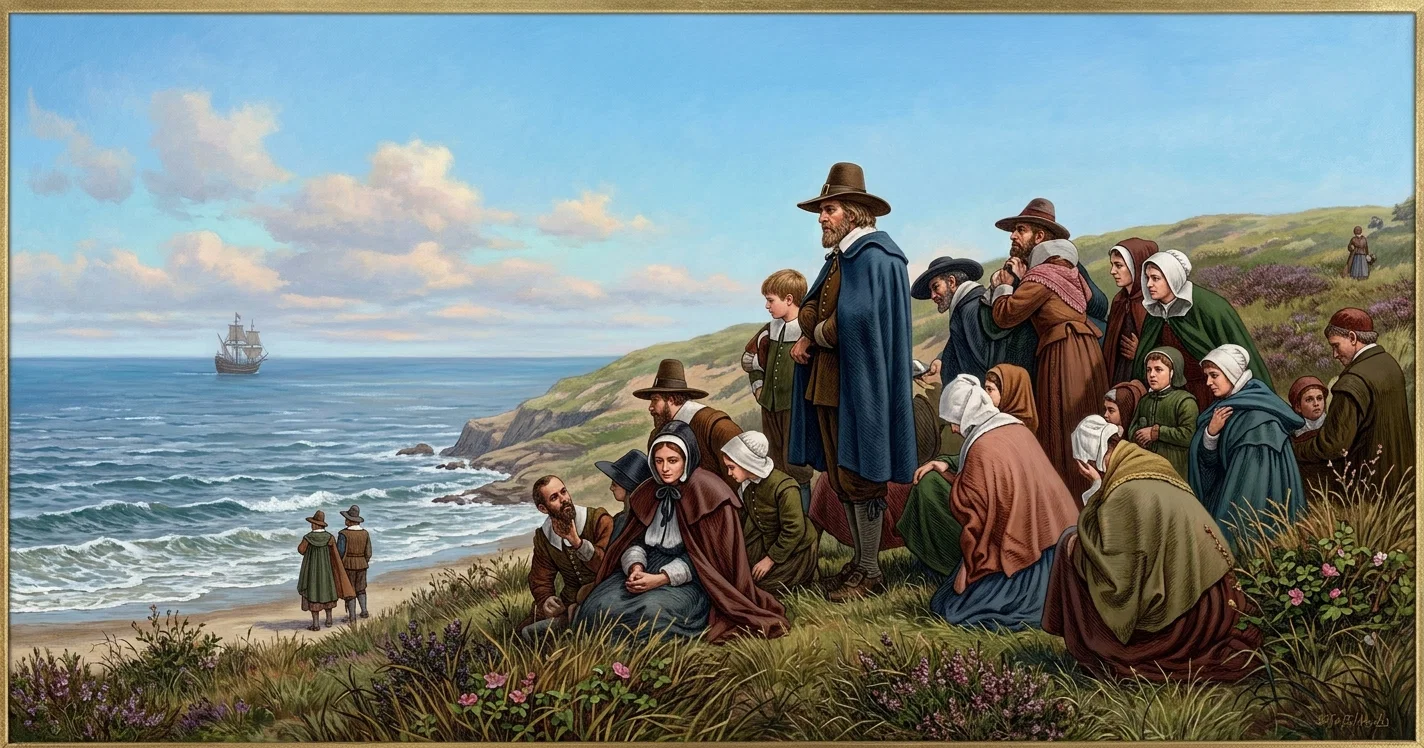
In a previous article, we spoke of the influence of the Bible on family life only a generation ago. In this, we plan to go back still further, and to study for a moment the kind of people developed under Bible teaching nearly three hundred years ago, the intellectual and spiritual fathers of all that is best in our modern American life. And we need not tarry in the granite-ribbed country where, amid desolate surroundings, the Pilgrim Fathers sought to found a state without a king, and a church without a pope. In the land whence they came, the cousins whom they left behind finally succeeded in the work which these Pilgrims had abandoned in discouragement; namely, in calling a halt to the despotism of kings and to religious intolerance.

Caricaturing the Puritans

By caricaturing their physical peculiarities, the gay courtiers of the Restoration long succeeded in making the very name of Puritan sound ridiculous. Even our modern somewhat similar age has scarcely outgrown this prejudice, fostered by profligate rascals who were not fit to be lackeys to the least of those indomitable patriots who a generation before had shaken off the tyranny of popery and the divine right of kings. These Puritans were much more than a mere fanatical sect of narrow-minded, gloomy bigots. They were Anglo-Saxon freemen whom the study of the recently emancipated Bible had awakened to value their faculties as a gift from God, and to prize individual liberty as an inalienable right of all who were made in the image of God. They had been assembled, at the call of the hour and the crisis of the nation, from the Church of England, from the extreme Separatists, from the Calvinists, from the Covenanters, yes, even from the Roman Catholics, “with a passion for liberty and righteousness such as the world has never since seen;” and it was their deep sense of personal accountability to God, born of Bible study and the inspiring culture of Christian family life, that made them what they were.

New Picture of Liberty

What care we that the Puritans prohibited Maypole dancing and horse racing? It was their high work to give to the world a new picture of liberty and justice; for when they set about to overthrow despotism, and to make a man’s life and property and conscience free from the tyranny of rulers and ecclesiastics, they avoided the mistakes that all others have made, both before and since. Others have deposed or slaughtered their tyrants. Some few, like the hysterical patriots of the French Revolution, have endeavored to break free from religious despotism. The Puritans show us the solitary example in history of a people trying their king and their ecclesiastical oppressors by due process of law, and then executing the sentence in the calm spirit of judicial equity. Blessed for all coming time are these people who thus grounded the rights and liberties of man, not in the caprice of anarchy and revolution, but in those eternal principles of morality and justice which antedate all governments and transcend all constitutions.

Cause of Their Development

Were not Pym and Hampden, Eliot and Milton, Puritans? But wherever freemen sleep securely in Canada or South Africa, in Australia or California, these names are held in highest honor. Cromwell, too, the incarnation of triumphant Puritanism, stood like a rock for religious tolerance; and it was another Puritan, Thomas Hooker, who in Connecticut gave to the world the first written constitution, a document in which free-born men laid down beforehand the strict limits of the offices to which they proposed to elect their governmental representatives.
Was it not because the Bible was made the guide of faith, the charter of liberty, the monitor of duty toward God and man, that they developed to an unprecedented degree the sturdy stuff of which heroes are made, and upon whose civil, intellectual, and industrial achievements great nations grow? They labored, and we have entered into their labors. But there is the greatest danger that our modern age will forget how we received these blessings, and assign to every cause but the right one those characteristics which we now respect and honor.
God grant that we may not soon forget those principles of the value of the individual, the eternal rights of man as preceding all organizations of society, which we have received from those “sturdy old iconoclasts,”—
“The dead but sceptered sovereigns who still rule Our spirits from their urns.”
In following still farther back through the centuries this stream of blessing, we might well pause at a point some three hundred years before the Puritans, to study the life of Wycliffe, the advance herald of the Reformation, who gave the Bible to the people of England almost two centuries before Luther, and almost a hundred years before the invention of printing. For Wycliffe was not only one of the greatest of the Reformers, but his character is of especial value as a witness to the educating, transforming power of those Scriptures which he loved.

Perpetual Miracle

But let us go back still farther, into the very midnight of the Dark Ages, and study for a moment the lives of those humble peasants in the obscure retreats of the Alps, who, though hunted for long centuries by every nation living around them, passed along undimmed from generation to generation the only treasure they had, the word of God. Let the modern socialist, the disciple of Marx and Lassalle, who can interpret the character of a people only in terms of cold economic laws, visit these peasants, shut away from the world, bound to helpless and interminable toil amid their flocks and rocky vineyards, and see how he will account for this perpetual miracle of a free, Bible-loving people turning back century after century the fierce fanatical crusades of the best troops of Italy and France. The true explanation is to be found in their own motto, “Lux lucet in tenebris” (The light shineth in darkness); for it was a power from above that shielded their lives. Their faith, too, was not one newly received. They had not of themselves originated those grand truths so different from the blind dogmas and superstitions around them. They were what their religion made them; and their religious faith was an ancient heritage from their fathers.

Went to Duty and to Death

We in modern times little dream how much we owe to these people, the first of all Europe to translate the Scriptures into the language of everyday life,—
“E’en them who kept God’s truth so pure of old, When all our fathers worshiped stocks and stones.”
But though possessing none of the comforts and conveniences of life, and though ever living under the shadow of a violent death, they did not waste their lives pitying themselves. Compelled by untiring labor to copy out by hand and in secret the precious manuscripts, verse by verse and chapter by chapter, committing large portions to memory, they were not content to hold these treasures selfishly within their own valleys.
Century after century, while the rest of Europe was bound with iron chains of superstition to the triumphal car of Rome, the Waldenses continued to send out secretly their colporteurs and their trained and educated missionaries into the surrounding countries. Barefooted, and clad in coarse, travel-stained garments like those of their Master, they made their way through the midst of their enemies, and penetrated to far distant lands. Often the messenger of truth never returned to his mountain home; he was languishing in some far-away, unknown dungeon, or his bones were whitening around some charred stake, like those ofmany whom he had left at home, lying “scattered on the Alpine mountains cold.” But churches sprang up along his path where he had scattered the vitalizing leaves from the tree of life; and in hundreds of places, influences were started that will be comprehended only when the earth “shall disclose her blood, and shall no more cover her slain.”
Truly, “by their fruits ye shall know them;” and the people of our age cannot abandon the divine lessons of the Bible without also abandoning every influence for good that has helped to make us what we are, every influence tending to hold society together, and to keep our modern world from complete disintegration through the awful process of anarchy and revolution.