The inhabitants of Bolivia are known as the most Catholic people in the world. They are in a state described in 2 Kings 17:32-34. They are regarded by the world as Christians, but most of them know no more about the true God, and Christ the Saviour, than did the Athenians who built an altar “to the unknown God.” They are what only Romanism can produce—ceremonialists, ostentatious, and fanatical ritualists. Popery has so bound them that they hardly dare think about their salvation for themselves. They look at the priest not as one “who opposeth and exalteth himself above all that is called God, or that is worshipped,” but as one who “as God sitteth in the temple of God, showing himself that he is God.”
By nature the Bolivians are a meek and long-suffering people. Were this not the case, they would not endure the tyranny of the priests as they do. True, they once cast out the Jesuits, but the other Romanist orders are still a terrible plague to these poor people. In Bolivia the so-called lower class live only to support the priest and the lawyer—another terrible plague.
Not having had many comforts, the people are satisfied with the bare necessities of life. Their food is of the cheapest that can be obtained. Meat, frozen potatoes (which they call “chuncho”), maize, barley, and some other kinds of grain, and in some places a little goat’s milk and cheese, form their principal diet. They are great lovers of “aji” (red pepper), and drink much “chicha” (a little beverage made of maize), especially on feast days. Men and women alike smoke tobacco. Another vice peculiar to the Bolivians is the use of coca, which is chewed like tobacco. The effect is nearly the same, but by long and continuous use it makes the mouth very black, and the teeth fall out or become black.
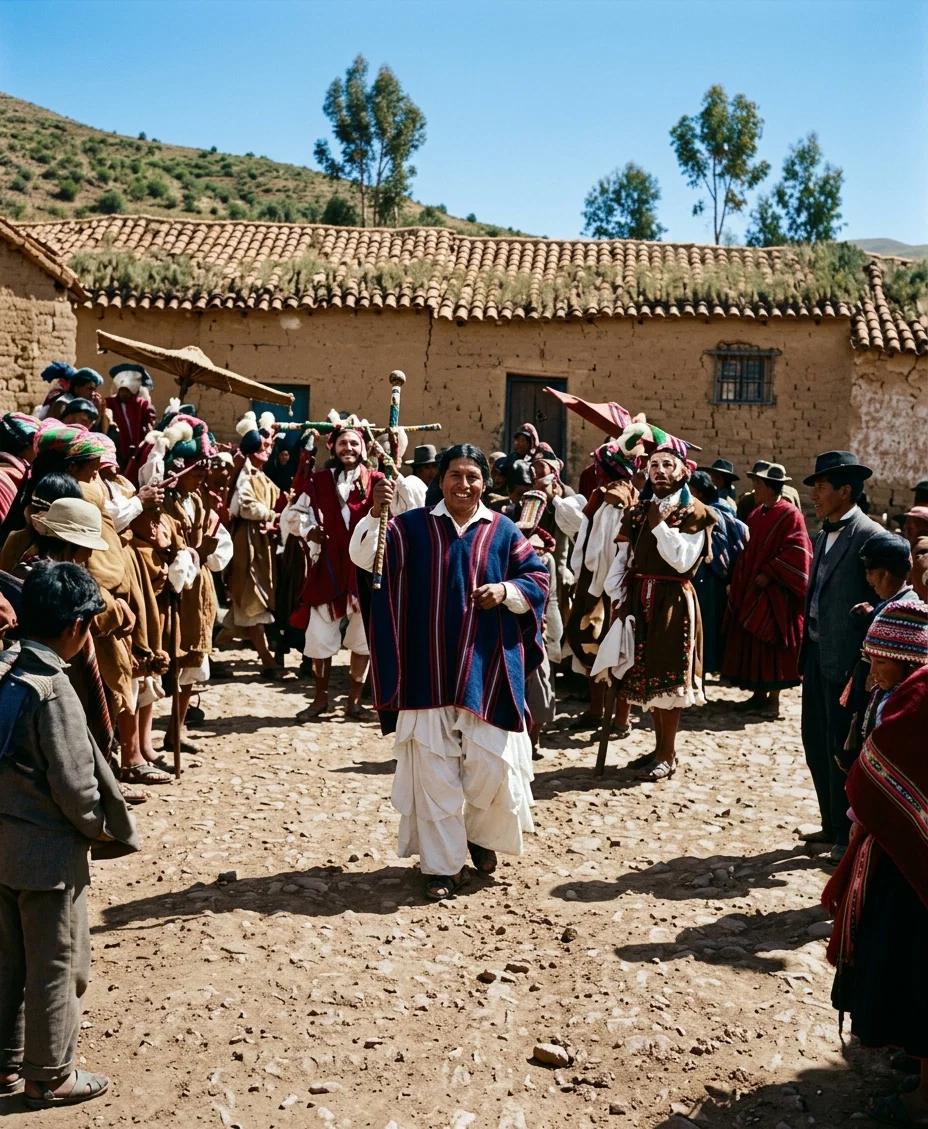
The dress of the native is peculiar, differing in various parts of the country. The cloth is home-made woolen goods. Many of them are beginning to wear sandals, and a few have shoes. The shoes of the women are of two kinds. The working class wear a low shoe with a single sole of equal thickness throughout. But those having more means use shoes with very high heels. The women’s dresses are generally short, reaching within about eight inches of the ground. On feast days they dress expensively, and appear very fantastic.
BOLIVIAN INDIANS IN GALA DRESS
The dwellings of the Indians are only huts of one room. Here they cook, eat, sleep, wash,—the latter is done but seldom. The walls of the huts are of sun-dried bricks; the roofs are of straw. The same hole in one side of the hut is generally used for door, window, and chimney. At night this opening is closed with a skin to keep out wind, rain, and cold. They make very little use of lamps or candles. Unless they are drinking, they go to bed early, and rise early. They are very lazy, however. As their needs are few, they are satisfied with little.
The Bolivians can hardly be said to have a business. They usually have very little to sell. Women with four or five pounds of potatoes will sit on the street plaster, or dust, as the case may be, all day, waiting for a customer. And so they do with other things. Many do not make five cents a day. On special market days some streets have three rows of merchant women their entire length—one in the center, and one on each side. These all sit on the ground, while the purchasers and others go between. What is sold by hundreds might be sold by twenty. They sell but little, and expect a large profit.