The Big War of Genesis Fourteen — Hammurabi’s Code — Did Moses Copy It? — Joseph in the Monuments — The Store Cities and the Famine
By A. EARL HALL, B. A.
This is the fifth of Professor Hall’s articles on the reply of archeology to present-day Biblical criticism. Previous articles have stated the position of the higher critics, and have told of their workings in theological seminaries and in the leading pulpits of the land, and how they have lowered the tone of morals by filling the world with an apparently refined infidelity disguised under the cloak of professing Christianity. He has shown how these critics have endeavored to dissect the Bible, and how they have claimed that large portions of it were pure myth and fable, having no foundation whatever in historical fact. But the discovery of the Rosetta Stone and the Behistun Rock placed keys in the hands of scholars, by means of which they were enabled to unlock a great storehouse of knowledge preserved from the ancient world in the inscriptions on tablets and monuments. And as these records of the past have been read, they show that the Bible record was true, and that the infidel teachings of the critic were foolishness. The accuracy and authenticity of the divine Book is vindicated. His article next week will tell the story of the Hittite empire as revealed in the monuments. The critics had said that no such empire ever existed, and that the Bible story of it was a fiction. EDITOR.
“If these should hold their peace, the stones would immediately cry out.” In Genesis 14, we are face to face with a bit of real war, four kings against five, and the mention of the father of the Israelites. Can we rely on the Biblical account? Why should a whole chapter be devoted to the record of such an event? Do the monuments help us here? The subject is well introduced by the first sentence of the chapter in Professor Clay’s work on the fourteenth of Genesis:
“Ever since Professor Nöldeke, who as early as 1869 declared that criticism had forever disproved the claim that Genesis 14 was historical, the chapter has proved a storm center of Biblical criticism.”—“Light on the Old Testament from Babel,” page 125.
The critics’ theory of Genesis 14 may be given as follows:
The narrative is a pure invention of a late Hebrew writer, a fanciful midrash, or a post-exilic forgery.
A military campaign of this extent was regarded as incredible.
The political situation inconsistent with fact.
The names of kings etymological inventions.
Written to magnify the military valor of Abraham, and explain the origin of Melchizedek.
No monumental evidence to show the narrative to be historical.
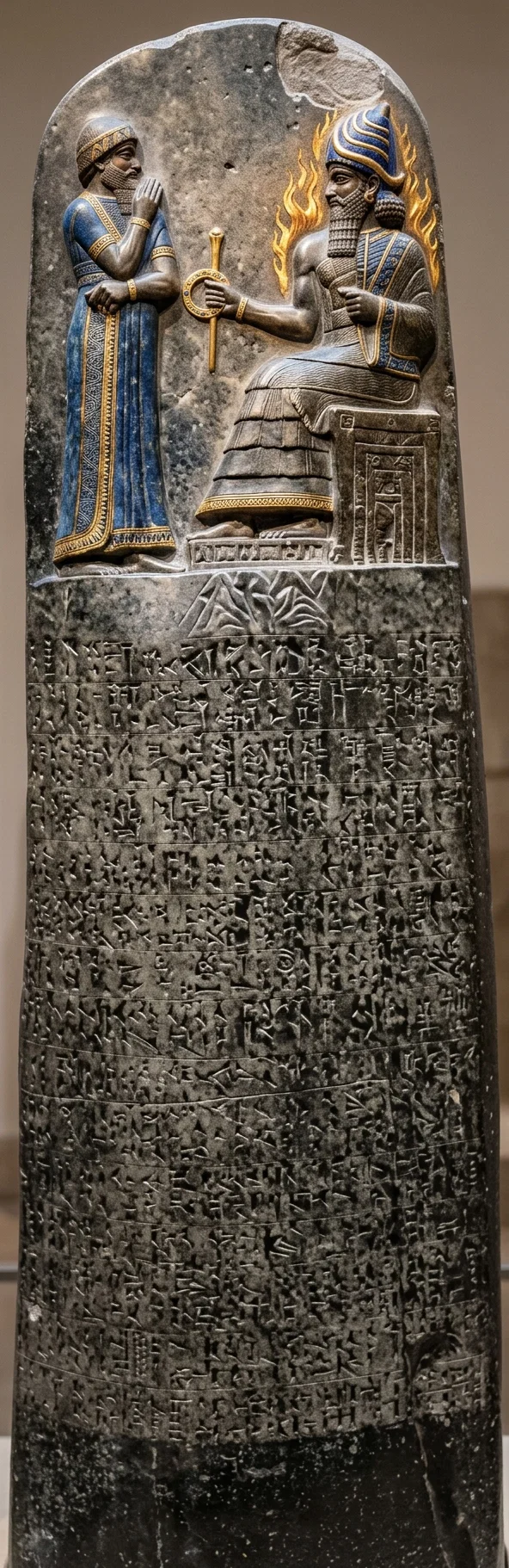
Basalt column, inscribed with the code of laws of Hammurabi, king of Babylon in the time of Abraham. The column is nearly eight feet in height and seven feet in circumference. On the upper part is a relief representing Shamash, the sun god, seated upon his throne, with his feet resting upon the mountains. Upon his head is a horned headdress of power; and in his right hand, the ring and staff emblematic of sovereignty, while from his shoulders flames of fire are represented as arising—all of which serves to demonstrate the truthfulness of the record in Genesis, chapter 14.
THE THEORY BUILT ON ASSUMPTION
It will be seen at once that the whole theory is built upon the assumption of the late date of the compilation of the Pentateuch, and that some pious Jew made up the whole story a few hundred years before Christ, and the modern critics are certain he made a number of blunders. Let us see where the critics are since the monuments and the tablets began speaking, and incidentally, the value of the Mosaic record.
“Weighing carefully the position taken by the critics in the light of what has been revealed through the decipherment of the cuneiform inscriptions, we find that the very foundations upon which the theories rest, with reference to the points that could be tested, totally disappear. The truth is that wherever any light has been thrown upon the subject through the excavations, their hypotheses have invariably been found wanting. Moreover, what remains of these theories is based upon purely speculative ground.”—A. T. Clay, “Light on the Old Testament from Babel,” page 127.
“These denials have been based upon the theory that the events here described are located in prehistoric times. But light from the East has utterly dissipated the mist.”—Price, “Monuments and the Old Testament,” page 101.
“But here again the inscriptions on the monuments of Babylonia have come to the rescue of the sacred historian, if, indeed, he were in need of rescue.”—George Frederick Wright, “Fundamentals,” volume 2, page 24.
“When we compare these revelations of the cuneiform monuments with the narrative in the fourteenth chapter of Genesis, the parallelism between them is striking. In both we find Babylon divided into more than one kingdom; in both it is under the suzerainty of Elam; in both its princes claim dominion in the distant West. . . . The king of Elam bears a name so analogous to that of the father of Eri-Aku as to suggest that they belonged to the same family, while Eri-Aku of Larsa irresistibly reminds us of Arioch of Ellasar.”—A. H. Sayce, “The Higher Criticism and the Verdict of the Monuments,” page 165.
“It will then be seen that the points in which the narrative in Genesis has been verified and illustrated by Assyriological research are more than sufficient to prove its historical character.”—Id., page 167.
THE NAMES FOUND ON THE MONUMENTS
Regarding the proper names: some of them have been found on the monuments, and the political situation demonstrated to have been very probable. A number of scholars agree in identifying Hammurabi with Amraphel, among whom we might mention A. H. Sayce, A. T. Clay, Hommel, Ira M. Price, and John Urquhart. However, there are some772who are not satisfied regarding this identification. Dr. Pinches, Professor Hommel, and Sayce agree to the translation of a tablet which mentions “Chodorlaomer.”
“It must be admitted, however, in spite of these voices of dissent, that the general view of the great Elamite lawgiver is that he is the Amraphel of the expedition that captured Lot.”—M. G. Kyle, “Deciding Voice of the Monuments,” page 202.
These names then are not “etymological inventions.”
THREE GREAT WARS
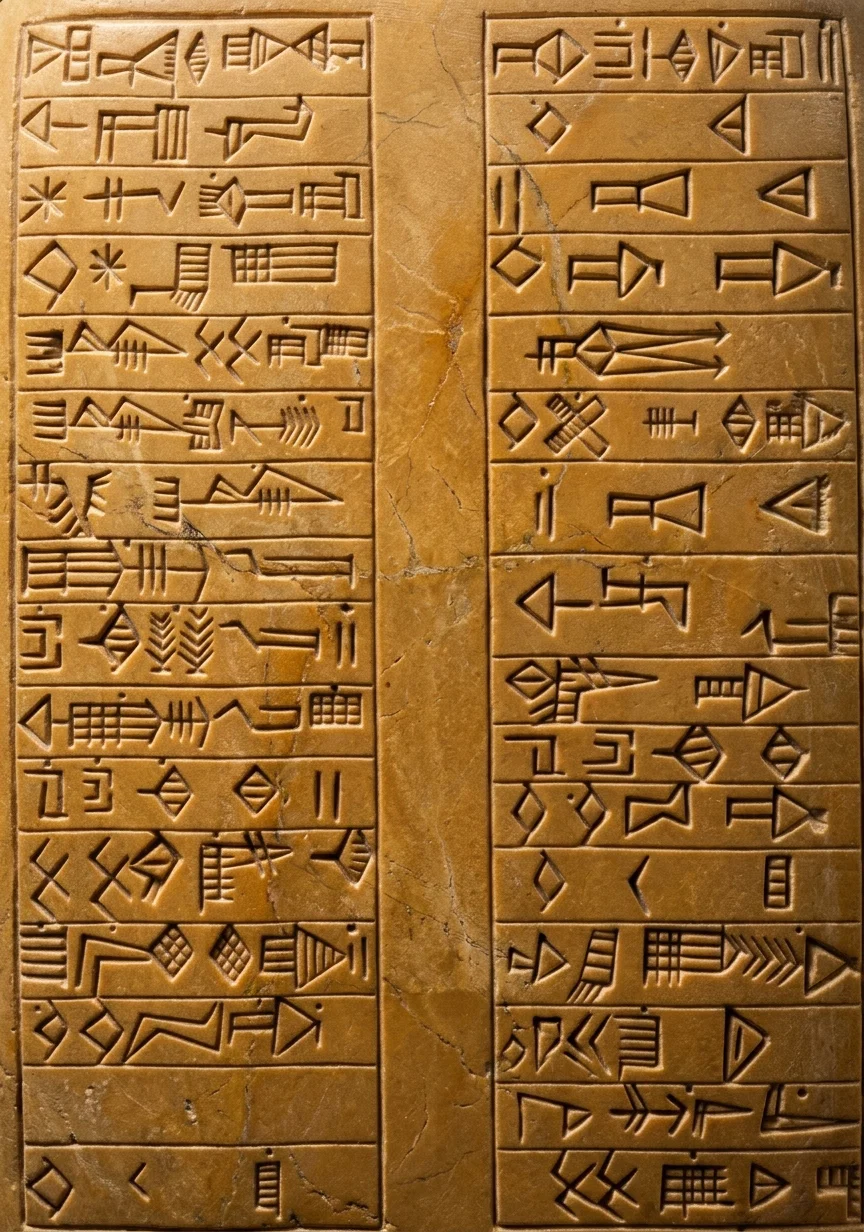
A word about the military situation. Three campaigns of an extensive nature before this time are recorded, two of which are found in almost any textbook on ancient history. About 4000 B.C., according to the chronology usually given, Lugal-Zaggisi conquered the territory from the Persian Gulf to the Mediterranean Sea. See Clay, “Light on the Old Testament,” pages 138, 139, for the original inscription and translation. This interesting monument is in the museum of the University of Pennsylvania. The other two campaigns referred to were by Sargon I and his son Naram Sin. That of Sargon reached as far west as the island of Cyprus. The reader may decide for himself whether this event could have occurred, or whether the story was made up by a late Jewish writer, as the critics claim.
DISSOLVES A CHRONOLOGICAL MUDDLE
Mention should be made of what was formerly regarded as a chronological difficulty. This record of Genesis 14 has been regarded impossible, as Abraham lived about three hundred years before Hammurabi. “The New Schaff-Herzog Encyclopedia” asserted this very plainly; but it was hardly printed when Dr. King, of the British Museum, deciphered an inscription which gave indisputable evidence that the two dynasties, heretofore considered consecutive, were contemporaneous. This “difficulty” is now removed, thanks to a scribe of about four thousand years ago, and the careful work of a present-day scribe.
In regard to a Jew in the exile period writing such a story, Clay remarks, “What accurate knowledge of early Babylonian, Elamitic, and Palestine affairs was possessed by this historian!” And after speaking of the intimate knowledge necessary, he says again, “Historians should insist that this unknown savant be canonized or immortalized.”—Clay, “Light on the Old Testament,” pages 139, 140.
From our viewpoint, Genesis 14 is a very important chapter, and the reader will pardon the lengthy discussion of it. If this chapter can be shown to be correct, there can be little question of the historical statements recorded in the books of Kings and Chronicles.
COMPLETE CODE OF LAWS 2000 B. C.
Concerning the laws of Israel—the Mosaic code—the critics formerly insisted that the period indicated by the Old Testament was far too early in the evolution of civilization for such a thing to be possible. As they claim that Deuteronomy was written in the days of Josiah, they declare that the document found at the time of the repairing of the temple was a forged one. The supposition of the critics, of course, is that the people were deceived by having a rigid code of laws imposed upon them as though it were the genuine one given by Moses. This “book of the law,” or document, was found when the temple was repaired under Josiah’s reign as recorded in 2 Kings 22.
THE CRITICS SCOFFED AT ISRAEL’S LEARNING
PORTION OF INSCRIPTION ON THE VOTIVE VASES OF LUGAL-ZAGGISI
Von Bohlen scoffed at the idea of the “undisciplined horde” of Israel possessing a knowledge of letters. Reuss says, “Now it is permitted, and with good reason, to ask whether, to the extent here presumed, they knew how to speak in Moses’ time of the art of writing among the Israelites, and of the other pertaining arts.”—Kyle, “Deciding Voice of the Monuments,” page 61.
An extensive literature has been written based upon this—to us—very slender and shaky hypothesis. But let the reader transport himself, mentally, to old Susa, the Shushan of the Scriptures, and study a monument dug out of the mounds in 1901 and 1902. In the winter, while working in the ruins, one of the laborers struck a hard substance with his pick. He continued digging, and soon had before him a large piece of rock, covered with an inscription. Other pieces were found near, and when all were put together, they made a stone about eight by six feet. This was removed with great care, and sent to the British Museum. The world soon knew what the contents of the inscription were—the code of laws of Hammurabi, the unifier and founder of the old Babylonian kingdom.
CHILDISHNESS OF THE CRITICS
Now where are the disputers? What is the next move?—They turn boldly around, and charge that Moses copied his laws from this code. We have heard of schoolboys resorting to this ruse on certain occasions, but it is very much out of place in dealing with a question of this magnitude.
“This discovery undermined the very foundation of ‘the critical hypothesis.’” But here the critic is “hoist with his own petard.” This discovery led Professor Sayce to declare that “the answer of archaeology to the theories of modern criticism is complete; the law preceded the prophets, and did not follow them.”—“Monumental Facts and Higher Critical Fancies,” page 83. Quoted in “In Defense,” page 171, Robert Anderson.
CODE OF LAWS WAS EXTENSIVE
Two hundred and forty-seven laws are legible and intact. Professor Scheil thinks that the erased columns contained thirty-five more, making the total two hundred and eighty-two. The code is a purely civil one. The laws are arranged in systematic order, and cover a wide range of cases. The two main divisions are Property and Person. These are again subdivided, until nearly every possible case arising in complex life is touched.
It is not within the scope of this article to tell about the laws. There is an extensive literature covering the whole subject. In addition to what has been said, we wish to state here that many of the relations of customs mentioned in the Old Testament—for instance, Abraham, Sarah, and Hagar—which seem strange to us, are here made most clear.
MOSES SUPERIOR TO HAMMURABI
“This code of Hammurabi, with all its information, will necessitate the rewriting of large parts of all the works that deal with the civilization which lies back of the constructive period of the history of the ancient Hebrews, and will reassure us of the superiority of the religious and spiritual elements in the Old Testament.”—Price, “Monuments and the Old Testament,” page 314. “The Hammurabi laws look rather at the external act, while the Pentateuch regards the inner thought, feelings, and desires.”—Id., page 310.
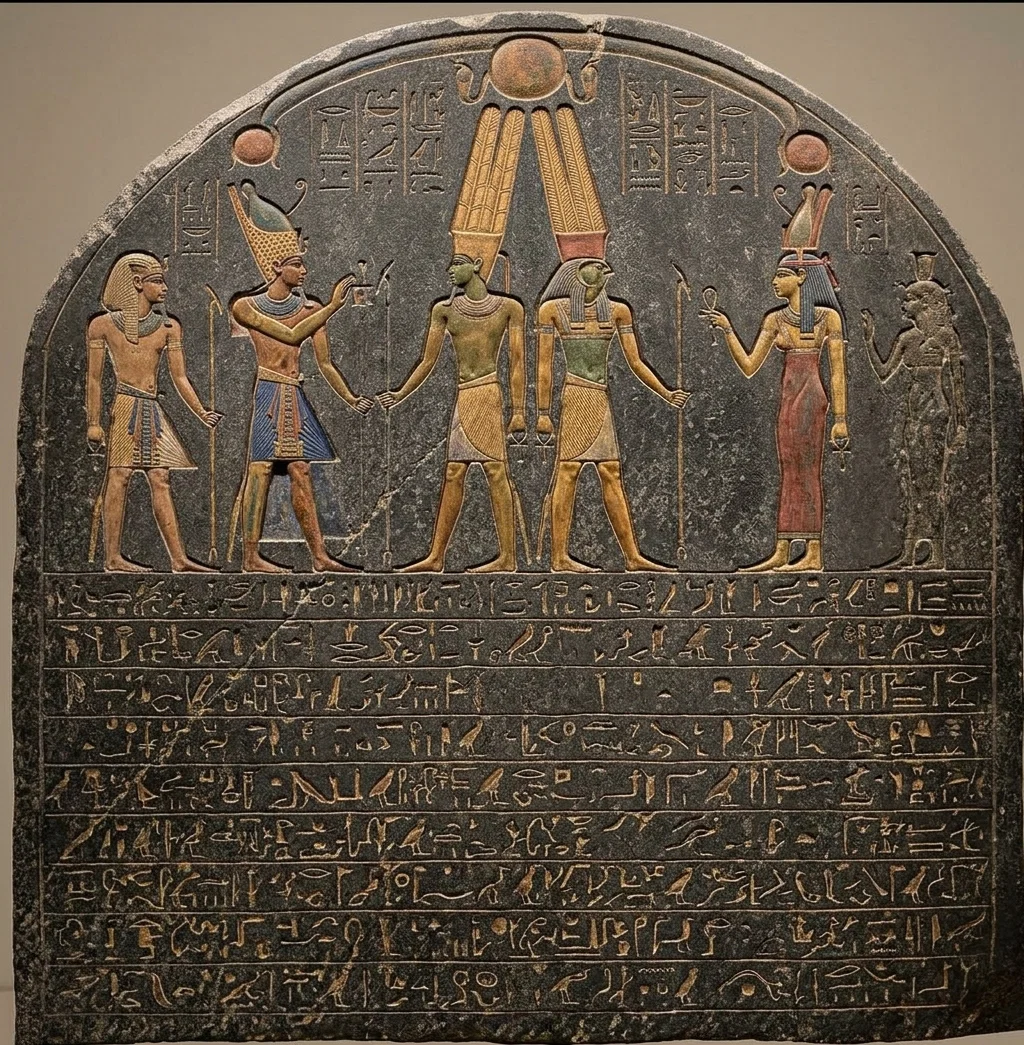
PORTION OF THE STELE OF MENEPTAH, ON WHICH ISRAEL IS MENTIONED
After a discussion of the points of similarity of the two codes, and the charge of “copying,” Clay says: “Moreover, similar customs will give rise to similar laws, as human nature is the same everywhere. . . . Between the Mosaic and the Hammurabi code there is an exceedingly wide gulf. The Hebrew also, in almost every respect, religiously and ethically, is far superior to the Babylonian. Pure and simple external conformity to the law is all that is required in the Hammurabi code. There is not . . . even a semblance, in the Babylonian, against covetousness and selfishness. ‘Thou shalt love thy neighbor as thyself,’ as well as purification and devotion to God, is the keynote of the Mosaic law. It was God’s commandment that the Israelite was required to obey. Cursed was he that fulfilled not the words of the law to do them. This especially was the spirit of the prophets. This is totally foreign to the Babylonian773code.”—Clay’s “Light on the Old Testament from Babel,” pages 282–284.
WAS JOSEPH A FICTION?
What about Joseph? Was he a sun deity? Is the story a piece of fiction? After speaking of facts of a philological nature concerning the name and the story mentioned, Price says: “The form and dress of these dreams are thoroughly Egyptian. . . . The subsequent dream of Pharaoh, with its Nile River, its kine, its grain, its sacred seven, is significantly Egyptian. Even some of the words are Egyptian. . . . This special beverage [grape juice] is noted on the monuments as one of the chief offerings, a duty of the chief butler to prepare. The chief baker was beheaded in accordance with an Egyptian custom. The most interesting fact, however, in the story is that Joseph shaved himself before appearing before the ruler, thus betraying the Egyptian origin of the story. This custom was always abhorred by Semitic peoples. The collar of gold was one of the marks of distinction among the Egyptians.”—Price, “Monuments and the Old Testament,” pages 103–105.
RECORD OF THE EGYPTIAN FAMINE
The reader is possibly looking for some statement concerning the famine, and he will not be disappointed. Brugsch, an Egyptologist of note, has found a record of one in the tomb at El-Kab of a governor named Baba. Baba tells us of a famine in the land, and his dealing out grain to his people, which had been stored in times of plenty: “When a famine arose lasting many years, I issued corn to the city each year of the famine.”774
A famine of long duration at El-Kab would have reached the adjoining lands and even the fruitful delta. The identity of Baba and Joseph is conceded by many. See Price, “Monuments and the Old Testament,” pages 107, 108.
From Kyle we gather an additional point: “If [Baba] collected corn as a friend of the harvest god.”—“Deciding Voice,” page 225.
“Famines in Egypt were rare, and a long one is a very unusual event. The last record of a seven years’ famine was in 1064–1071 A.D. A similar famine probably took place in the twelfth dynasty.” See Sayce, “Fresh Lights from the Ancient Monuments,” page 51.
THE STORE CITIES
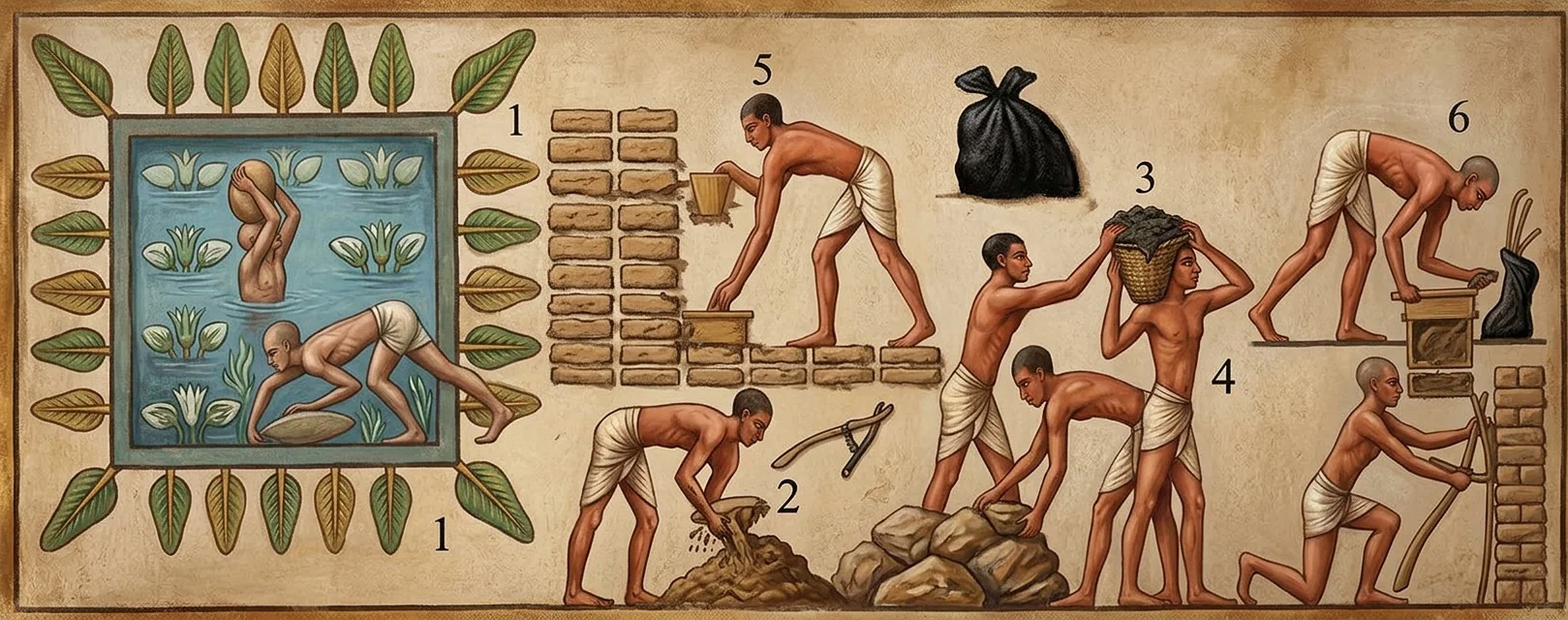
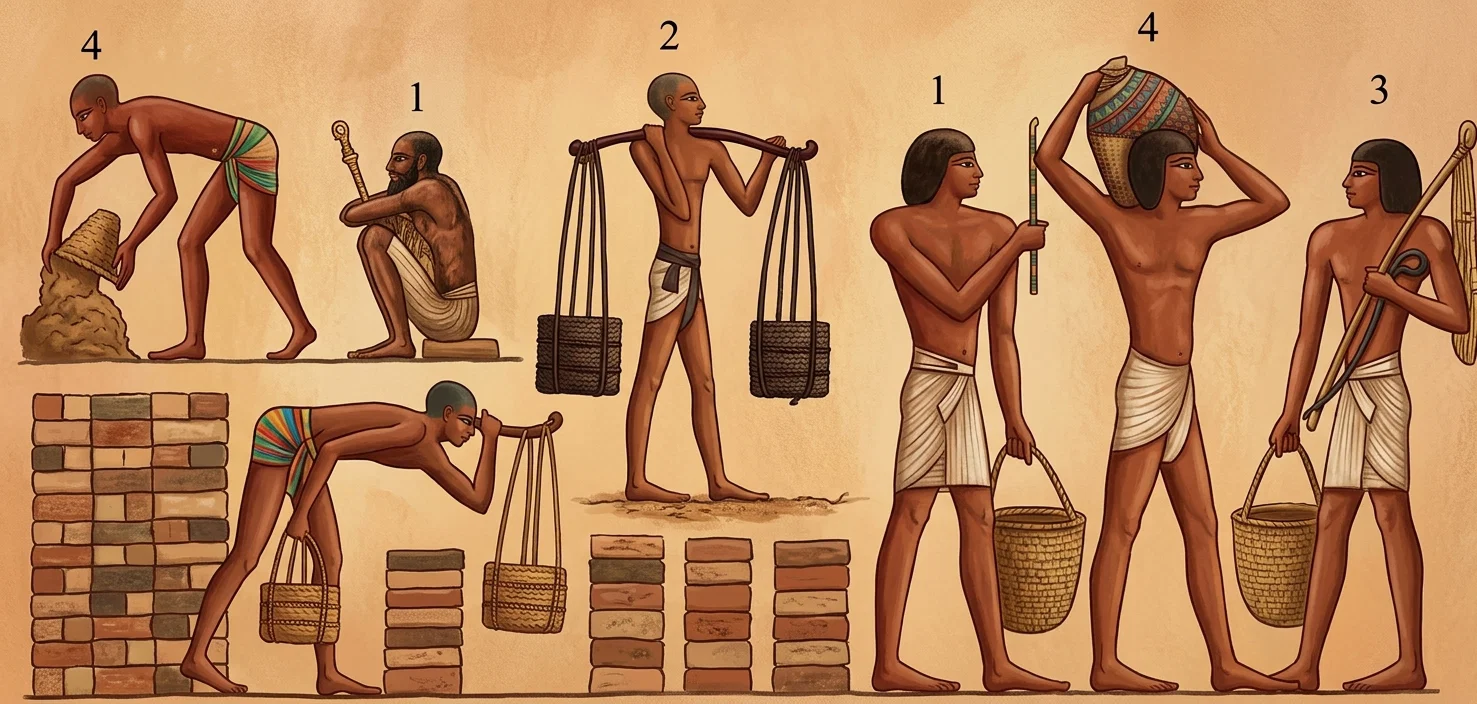
The Stele of Meneptah II, containing a mention of the people “Israel” and of the discovery and exploration of the store cities is of interest. Naville says, “The treasure chambers were well built, and some of the bricks were made with and some without straw.” It is even said, by some, that there is evidence that the tomb designed for the son of Meneptah has been found—unfinished. This is gathered from many inscriptions, and presented by Dr. Paine in the Century Magazine, September, 1889. See Price, pages 119, 120. Not all Egyptologists, however, agree with his interpretation.
As we read of work done in these ruins, our minds go to the record in the first chapter of Exodus, where we are told of the burdens imposed upon the Israelites in the making of bricks and the erecting of buildings; and to the twelfth chapter, which tells of the slaying of the first-born.
The reader is perhaps anxious to hear about the Hittites, and the letters found in Egypt not long ago. These will be presented in the next article.