A Mixture of Nationalities — The “Culture System” of Developing the Natives — What Has Been Accomplished for Them — The Failure of Buddha
By ROSS C. PORTER
Not long ago, we published an article by Elder A. G. Daniells on the same topic as this one by Elder Porter. Both of these men have personally visited the places about which they write. And as the articles, while touching some points in common, are nevertheless quite different as a whole, our readers, we are sure, will greatly appreciate this added information in regard to that interesting portion of the world. EDITOR.
SINGAPORE, lying two degrees north of the equator, is the great crossroads of the East. It is the gateway through which all commerce and travel must pass in all directions to and from all eastern ports lying north or south of the equator.
It is situated on a small island that lies at the point of the Malay peninsula. Its inhabitants are made up of a congress of nations, representing nearly all the races and types of people in the world, from the most civilized and enlightened European to the recently reclaimed head-hunter of the jungle of interior portions of the great equatorial archipelagos. They are Japanese, Chinese, Siamese, Malays, Javanese, Burmese, Sinhalese, Tamils, Sikhs, Parsis, Lascars, Malabars, Malagas, and sailors from all coasts and climes.
ALL THE RELIGIONS
All religions, from Christianity to devil worship, intermingled with all castes and all shades of complexion, unite to make Singapore one of the most cosmopolitan ports in the world, as well as one of the most important as a center from which to reach the 50,000,000 inhabitants of Malaysia and the Straits Settlements.
From Singapore, Java, with its 35,000,000 of the most enterprising native people of the East, is easily reached by comfortable Dutch steamers, the distance from Singapore to Batavia being only five hundred miles.
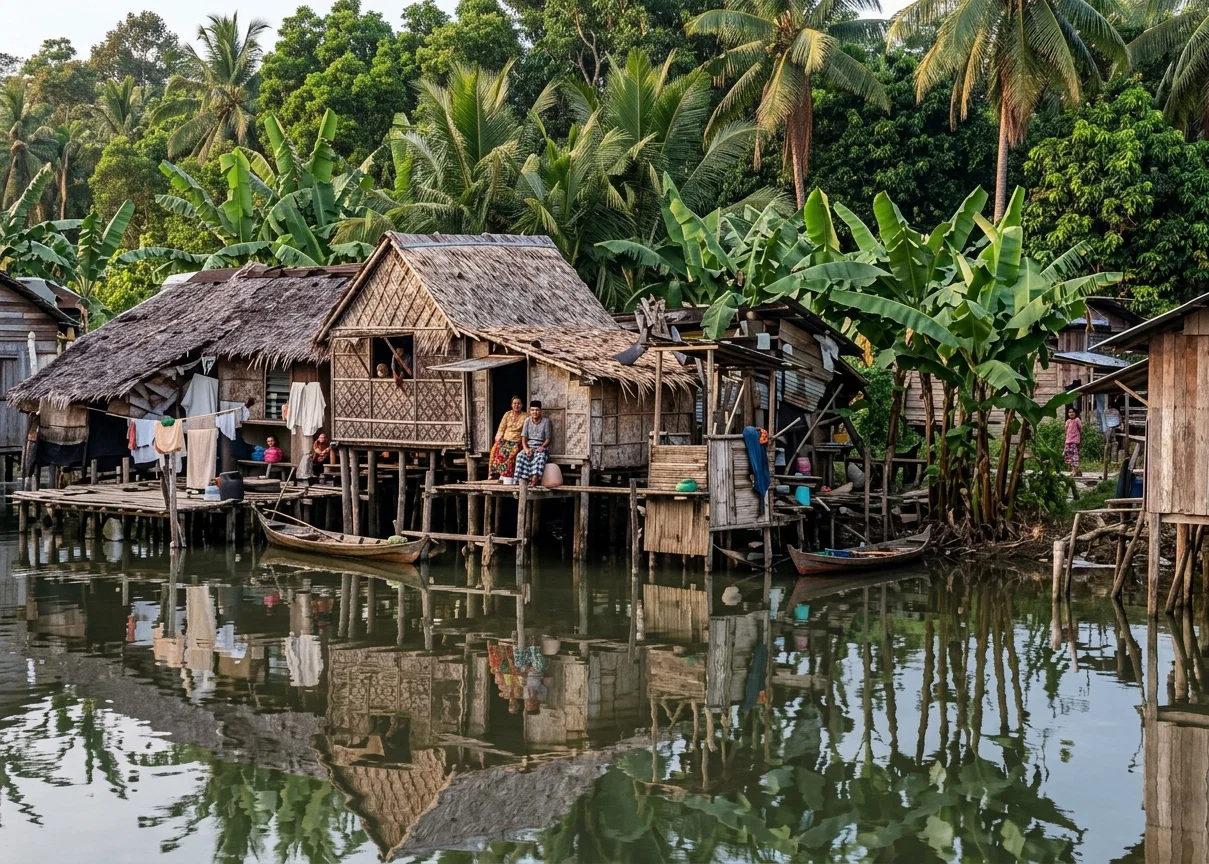
NATIVE HOUSE ON RIVER
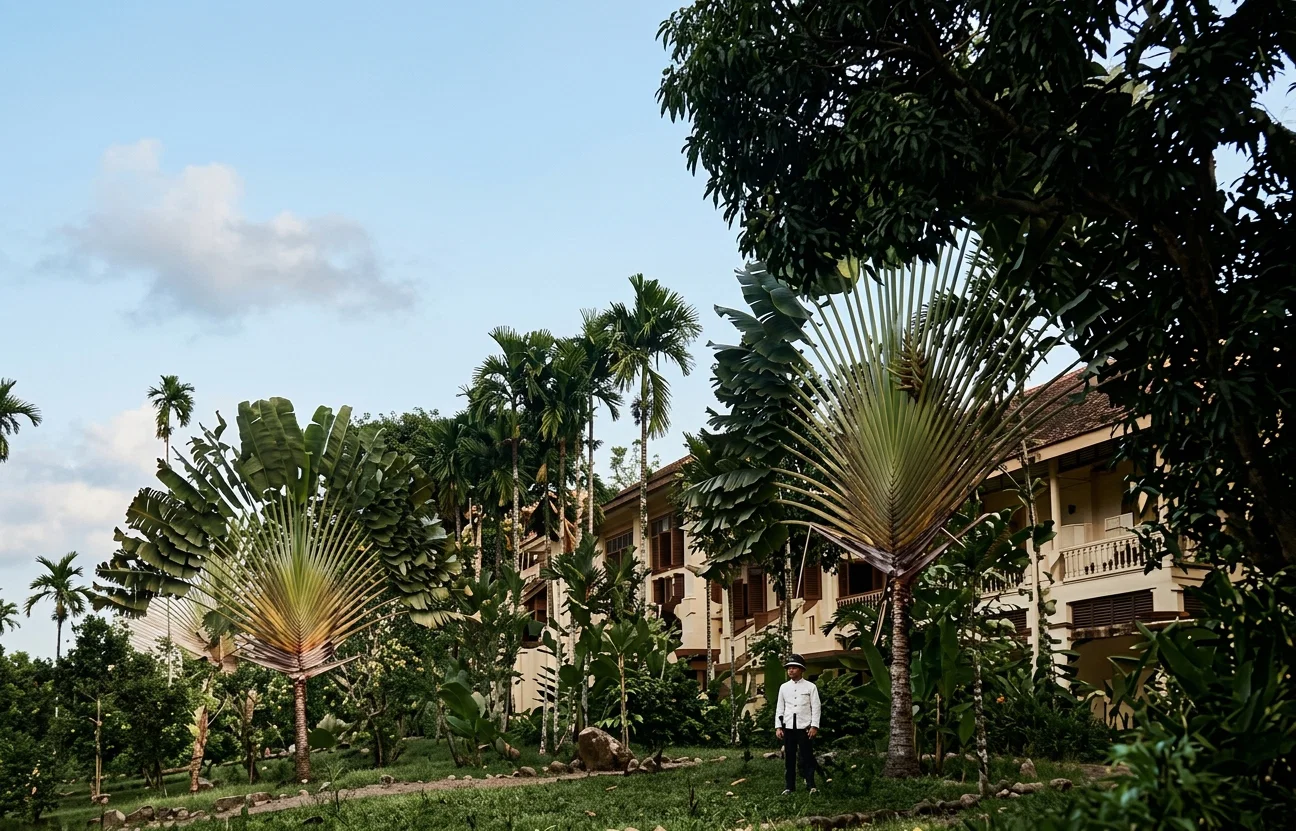
TRAVELERS’ PALMS
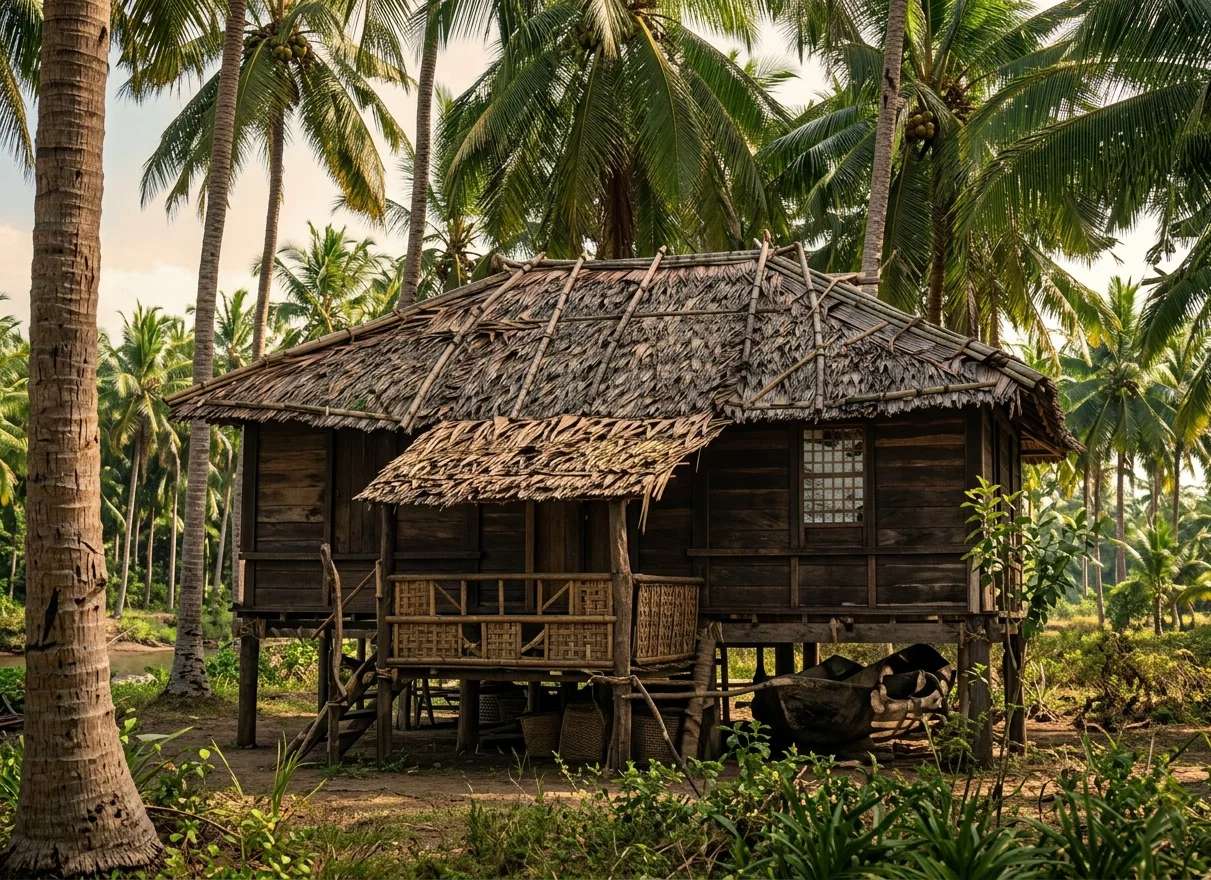
NATIVE HOUSE ON LAND
The Dutch, who were the first foreign occupants of Java, were checkmated by the English in 1811; but the island was returned to the Dutch by Sir Stamford Raffles in 1816.
Subjugating the Javanese, though they are a very peaceful race, was not an easy task. The wilder Achin race of north Sumatra has successfully resisted the attempts of the Dutch government to bring them into the same subjection to which the Javanese have been reduced; and for the present, that policy has been abandoned.
Java is 666 miles long, and from 56 to 135 miles wide. But its unsurpassed fertility, like that of the Egyptian valley of the Nile, makes it the richest garden of the East.
THE “CULTURE SYSTEM”
As colonizers, the Hollanders have proved themselves in some ways in advance of all other nations. Great Britain, with possessions circling the globe, has ever been fair and just to her colonial subjects, allowing them freedom of religion and a good degree of civil liberty.
Germany has pushed the commercial interests of her colonial possessions with a vigorous policy. The United States has, by an unselfish national policy, undertaken to develop her subjugated races in a short time into civilized, self-governing, independent states. But it has been left for Holland to develop a “culture system” through which the wild, undeveloped jungles of Java should spring into commercial life and activity unparalleled by any native people in any portion of the globe.
The “culture system” seemed unjust in its demands upon the Javanese. Many yet consider it to have been unjust. It required that the natives plant one fifth of their village lands to sugar cane, each man to give one day in seven to cultivating that crop. They were then obliged to sell the sugar cane to the mills at ridiculously low prices, fixed by the mills or the government. The government furnished the necessary money for the enterprise, which was returned to it from the profits of the business. The Holland government received as high as $5,000,000 gold during one year, while the mill owners still retained enormous profits.
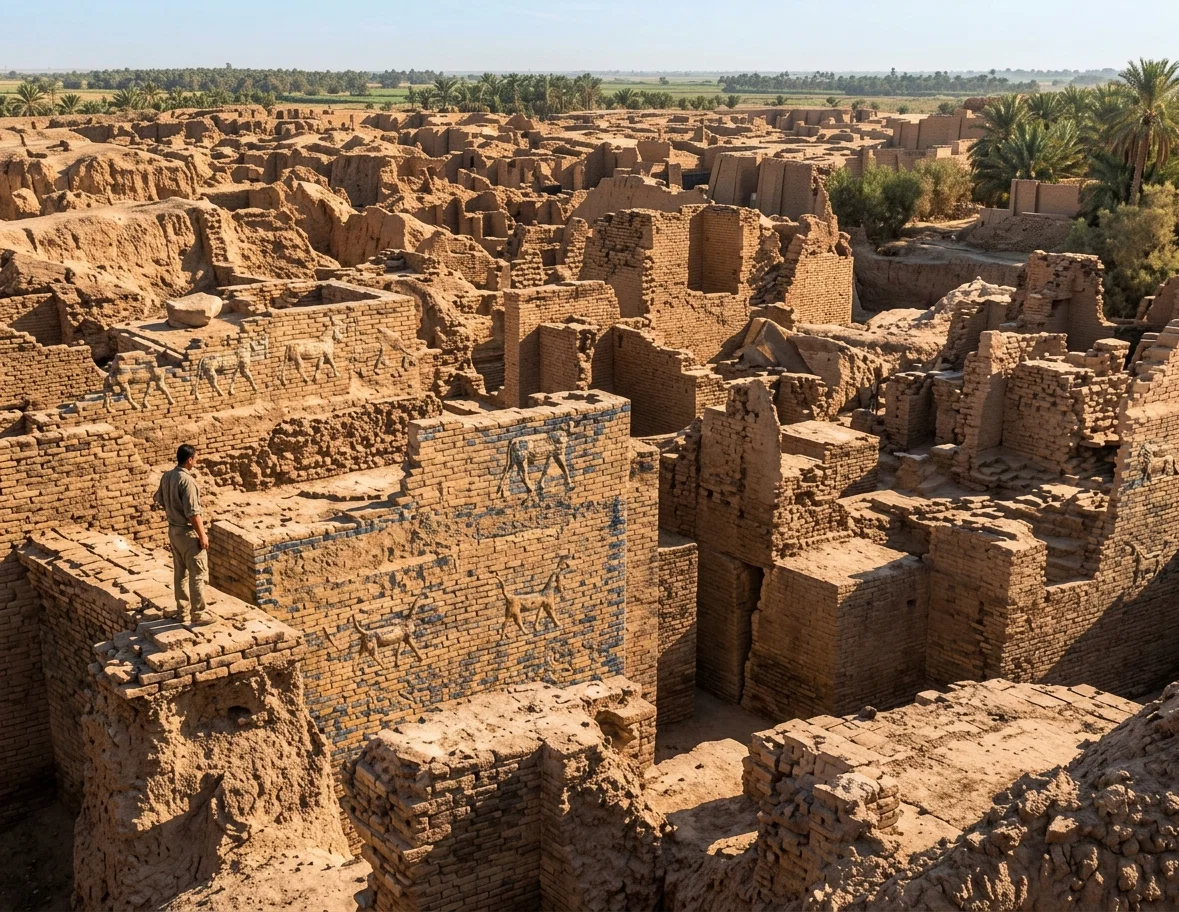
RUINS OF THE ANCIENT CITY OF BABYLON
The “culture system” at least succeeded in developing a successful industry, which has since been placed on the usual basis733of allowing natives the full value for their produce. It has in this way, in the end, enriched the Javanese farmers, and placed them in easy circumstances, and given them comfortable and in many instances luxurious farmhouses.
The same system was extended to cover tea, coffee, indigo, cinnamon, pepper, coconuts, quinine, salt works, tin mines, and other industries. Half the world’s supply of quinine now comes from Java. When these industries were fully established, the same rule was followed of allowing the natives full values for their produce. There is still a question on one point in the present system as it is operated, as the native, it is asserted, is not allowed to see his produce weighed. He must accept the weights of the purchaser.
Whatever injustice may have occurred in the inauguration of the system, and whatever injustice there may be still in its operation, Java is an illustration of its efficiency in developing the resources and industries of the country, and lifting the natives to independent life and comfort, and making of them industrious and enterprising inhabitants of one of the finest islands in the world.
In whatever ways the Holland government may have been blinded to justice by avarice, they have set a worthy example of interest in the welfare of the natives by strictly prohibiting poppy culture, although the natives are greatly addicted to opium smoking.
THE VERY GARDEN OF THE EAST
The late Alfred R. Wallace, the world renowned naturalist, after visiting Java several times, commended the “culture system” as “the only means of forcing an indolent tropical race to labor, and develop the resources and industries of the island.”
He summed up his observations with the remark that Java was “the very garden of the East, and perhaps, upon the whole, the richest, best cultivated, and the best governed island in the world.”
The state committee on government coffee plantations, which industry has failed on account of blight, says, in a report: “It cannot be denied that the intellectual status of the Javanese at the present day is very different from that during the time when the coffee monopoly was introduced. The reforms which we have introduced in the administration of justice, the education according to Western methods, and the free admission of private enterprise, have all brought about a change.”
BORO BUDUR
Boro Budur, situated in north central Java, is said to be the second largest Buddhist temple in the world. Looking down upon twelve centuries of passing generations, this huge structure, more a pyramid than a temple, stands forth as a monument of apostasy and folly. Its base platform is five hundred feet square, the first terrace walls are three hundred feet square, and the final dome is one hundred feet in height. It is covered with niches and spires from base to topmost dome.
Bas-reliefs adorn its four sides, which, if placed side by side, would extend for three miles. The four hundred thirty-six alcoves are adorned with life-sized carved statues of Buddha sitting serenely upon lotus cushions. Staircases ascend in straight lines from each of the four sides, passing under elaborately carved arches, which bear marks of once having been set with hanging doors to inclose the entrance on all sides. Above the square terraces are three circular terraces, where seventy-two more Buddhas sit in these circles of Nirvana, each facing a cupola. The final shrine is fifty feet high, and contains an unfinished statue of Buddha, and a well where ashes of priests and princes were deposited.
The reliefs portray the history of the life of Buddha and his early disciples. From the summit, one looks down upon the whole structure; and taking a view of the surroundings, the eye sweeps over finely cultivated fields, thick palm groves, and the fertile valley of Boro Budur.
THE WRECKAGE OF ITS SYSTEM
As one views the wreckage and ruin to which time has reduced this once grand structure, he is reminded of the wreck and ruin the great religious system it represents, has wrought upon the millions of heathen who worship at Buddhist shrines. The more than five hundred statues of Buddha that embellish Boro Budur, all except the one in the dome, are seated on lotus cushions. The one inside the dome is supposed to represent Buddha after death, in a state of solitude, removed from the world. Having attained the supreme end of life, he is now left to brood alone, inaccessible alike to friends and foes.
UNCOVERING BORO BUDUR
When, in 1814, British engineers reached Boro Budur, they found it covered with trees and a heap of rubbish. Two hundred coolies were required, working forty-two days, to remove the rubbish and reveal the present condition of the temple. Then followed a period when relics were removed by natives, soldiers, and tourists, which still further defaced this magnificent structure. But it still stands forth in sublime grandeur, like the pyramids of Egypt, a silent witness of the great Oriental apostasy that has degraded all heathen lands.
The advance of civilization in Christian lands is an unimpeachable testimony that Christianity has lifted the West to heights unattainable by the religious systems of the Orient. Christians are therefore indebted to their less fortunate neighbours to bear to them the enlightening and saving messages that has flooded their own lives with light and blessing.