HOW A FIJIAN REASONED

6%

Pacific Press Publishing Association · Mountain View, California · Oct 19, 1915

FromSigns of the Times, Vol. 42, No. 41.

Read the full edition

HOW A FIJIAN REASONED

He Desired a Text from the Book—How He Would Reason with the Judge
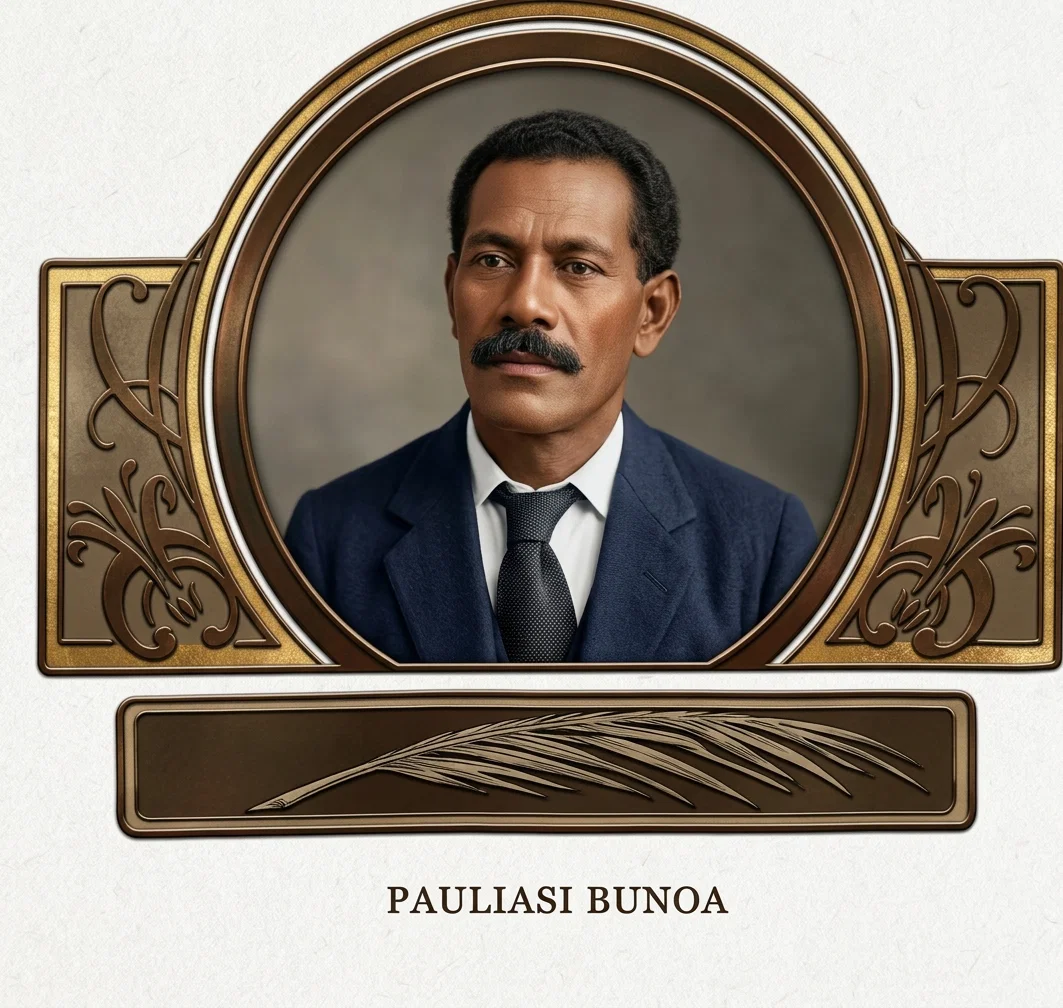
PAULIASI BUNOA, a Fijian native, for ten years a Wesleyan missionary in New Britain, but now an Adventist minister, gave a remarkably strong argument on the Sabbath question, well worth repeating.

SENT FOR THE WISE PREACHER

He had only recently accepted the Sabbath truth, and there was an unusual stir in the native village. The dark-skinned theologians had found themselves unable to solve the question. They therefore sent for nai talatala vuku—the wise preacher, the white man—to demonstrate that Pauliasi was an apostate, and utterly at fault in keeping the seventh-day Sabbath.
The white preacher came one Sunday morning, and the large congregation sat in silent expectancy for the texts proving that Sunday was ordained of God to take the place of the original Sabbath. Some of the natives, anxious to have their conscience salved, may have got some satisfaction; but many wanted definite Scripture proof, and were disappointed, for such was not given.

GIVE ME ONE TEXT

At the close of the service, the minister placed his Bible under his arm, and passed out of the church. Near the entrance, he greeted Pauliasi, the native preacher, saying: “We are sorry, Pauliasi, that after your long association with us, you have left the church we thought you loved. We hope you will return.” Pauliasi answered: “I am sorry indeed to leave the church I have loved so long. Even now, if you can give me one text from that book,” pointing to the Fijian Bible under the minister’s arm, “that tells us Sunday is the Sabbath, I will turn back, and remain with you. But you didn’t give us proof in your sermon to-day. It was only a sermon of man’s arguments. I want a text from the Book.”

HE HAD NO TEXTS

A large crowd had by this time gathered about; and the preacher, somewhat embarrassed, tried to make up for the unconvincing sermon by giving additional arguments to bolster up his case, but no texts were given. Pauliasi again and again vainly appealed for the Scripture, and then himself presented a masterly argument, which all would do well to remember.
PAULASI BUNOA
One of our native Fijian preachers
PAULASI BUNOA One of our native Fijian preachers

A JUDGMENT APPEAL

After the vapid and worn-out arguments of the minister had been given, Pauliasi, in a somewhat commanding tone, said: “Mr. ——, in the day of Judgment, you will not be the judge, neither will I; but God will be Judge. And if, in that day, I am found to be wrong in keeping the seventh day as the Sabbath, I am going to bring a charge against Jehovah, who came down upon Mt. Sinai, and wrote with His own fingers in tables of stone the Ten Commandments, the fourth of which commands us to observe the seventh day. I will bring a charge against Moses, who brought that law down from the mount, and taught it to the people. I will bring a charge against the Lord Jesus Christ, who on the mount said, ‘Think not that I am come to destroy the law, or the prophets: I am not come to destroy, but to fulfill.’ And He kept the Sabbath, and said that it was made for man. I will bring a charge against the apostle Paul, who, long after the cross, said the law is holy and just and good and spiritual. I will bring a charge against all the apostles and prophets of the New Testament.

NO EXAMPLE TO PLEAD

“Against all these I will bring my charge, if I am found to be wrong in regard to the Sabbath. And Mr. ——, if, in that day, you are found to be wrong, against whom will you bring a charge, or whose example will you plead?” There was no reply. God had given to the man of color an unanswerable argument.
J. E. F.