On the Malay Peninsula

3%

Pacific Press Publishing Association · Mountain View, California · Sep 28, 1915

FromSigns of the Times, Vol. 42, No. 38.

Read the full edition

On the Malay Peninsula

Encountering a Mutiny—What Is Embraced in Malaysia—Successful Meeting Under Difficulties
By ARTHUR G. DANIELLS
HAVING closed our labors in India, we sailed from Calcutta the tenth of February, in the steamship Kut Sang, for Singapore, the headquarters of our Malaysian mission field. Our sail across the Bay of Bengal and down the Straits of Malakka, a distance of somewhat more than sixteen hundred miles, was one of the most enjoyable of all the voyages we have ever made. The weather, the steadiness of the ship, the food, and the general service, were all that could be desired. The journey was so pleasant and restful, after a strenuous work in India, that Mrs. Daniells and I wished it might be prolonged for several weeks. But this was impossible, as only a week is required for the voyage from Calcutta to Singapore.
SAILING FOR THE ORIENT, SEPTEMBER 15, 1915
On arriving at Singapore, we found the city in a serious condition. On the fifteenth a regiment of eight hundred Indian soldiers mutinied. Without the slightest warning, they left their barracks about three o’clock in the afternoon, and began shooting the Europeans in the streets. In a short time, the whole city was filled with consternation. The loyal soldiers in the city were few; but they were quickly joined by the men in the business houses, and by very prompt, heroic efforts, prevented a general massacre of the European population.
The European women were removed from their homes to steamers lying at anchor in the harbor, and the men who did not join the fighting forces were gathered into a well protected area. The wives and children of our missionaries were taken to the steamer Nile, and our men had moved from our mission building to our church, which was located in a safe part of the city.

A MEETING UNDER DIFFICULTIES

Several weeks prior to this, we had made arrangements to hold in Singapore a general meeting of our missionaries in the Malaysian Division. The mutiny broke out only a day or two before these missionaries began to arrive from the surrounding islands. The outlook for a successful conference was not very encouraging, but we determined to make the best of the situation. The mutineers who had not been shot or captured were in hiding, and were endeavoring to get out of the city into the jungle.
We visited the military authorities, and asked for permission to take up residence in our mission compound, and to hold there the conference of our workers. They gave their consent, provided we were prepared to assume all responsibility for the results. After visiting our compound, and obtaining from the soldiers who were guarding that section of the city, information as to the situation, we decided to go forward with our conference.
The men who were housed in the church returned to the mission, the women were brought back from the steamer to which they had been taken for safety, and the missionaries who were arriving from adjacentislands were all quartered in our commodious, well ventilated mission home. All together there were twenty of us, making a large, happy family.
We had little fear of real danger, although, during the first three or four nights, we could hear shooting in different directions around us. Each night, some of the mutineers were shot, while others succeeded in making their escape from the city. Before our meeting closed, the mutiny was practically subdued. As a result of this unfortunate affair, forty-five or more Europeans were killed, two or three hundred of the mutineers were shot, and hundreds were taken prisoners. The prisoners were tried by court-martial, and the leaders were executed. It was all a sad tragedy for Singapore.
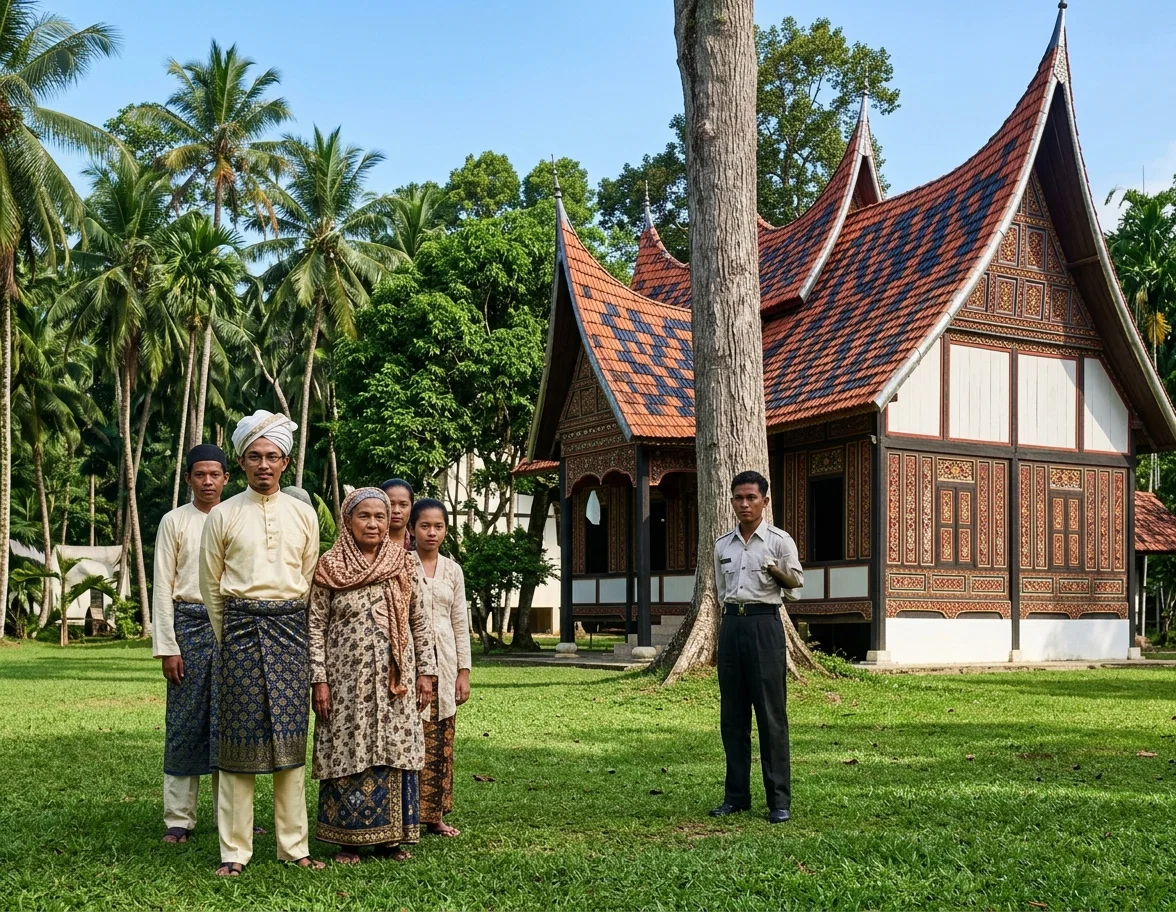
PASTOR F. A. DETAMORE AND FAMILY
He is the superintendent of our work in the Malaysian mission field.
PASTOR F. A. DETAMORE AND FAMILY He is the superintendent of our work in the Malaysian mission field.

THE MALAYSIAN MISSION TERRITORY

The Malaysian mission field embraces the Malay peninsula, the Dutch East Indies, including Dutch New Guinea, and British North Borneo. The Malay peninsula is a long, narrow strip of land lying south of Burma and Siam, between the China Sea and the Straits of Malakka. A small portion of the peninsula is British territory, called the “Straits Settlements” because it is made up of detached blocks of land along the Straits of Malakka. In the early days, these were the principal European settlements on the peninsula. These settlements are composed of —
1. The island of Singapore, at the extreme south end of the peninsula.
2. Malakka, a strip of land on the west coast of the peninsula, about 100 miles north of Singapore.
3. The Dindings, a piece of the mainland, and a number of islands 350 miles north of Singapore.
4. The island of Penang, and Province Wellesley, a strip of territory opposite Penang on the mainland, 480 miles north of Singapore.
The remaining territory of the Malay peninsula is divided into nine states, all under British protection. Four of these states have united under a federation, and are known as the Federated Malay States. By special arrangement, Great Britain administers the affairs of these states. The other five states are separate and independent. They have placed themselves under British protection; but each administers its own state affairs, with the advice of British counselors.

FIFTY MILLION AND MANY RACES

The population of this mission field is at least 50,000,000, representing many races, languages, and religions, and a great variety of conditions, from the highest degree of culture and civilization among the British and the Dutch, to the barbarism of the wild tribes of Borneo, whose achievements are reckoned by the number of human heads they can gather. While these conditions make the task of the missionary exceedingly difficult, our workers are all of good courage, and are greatly attached to their fields.
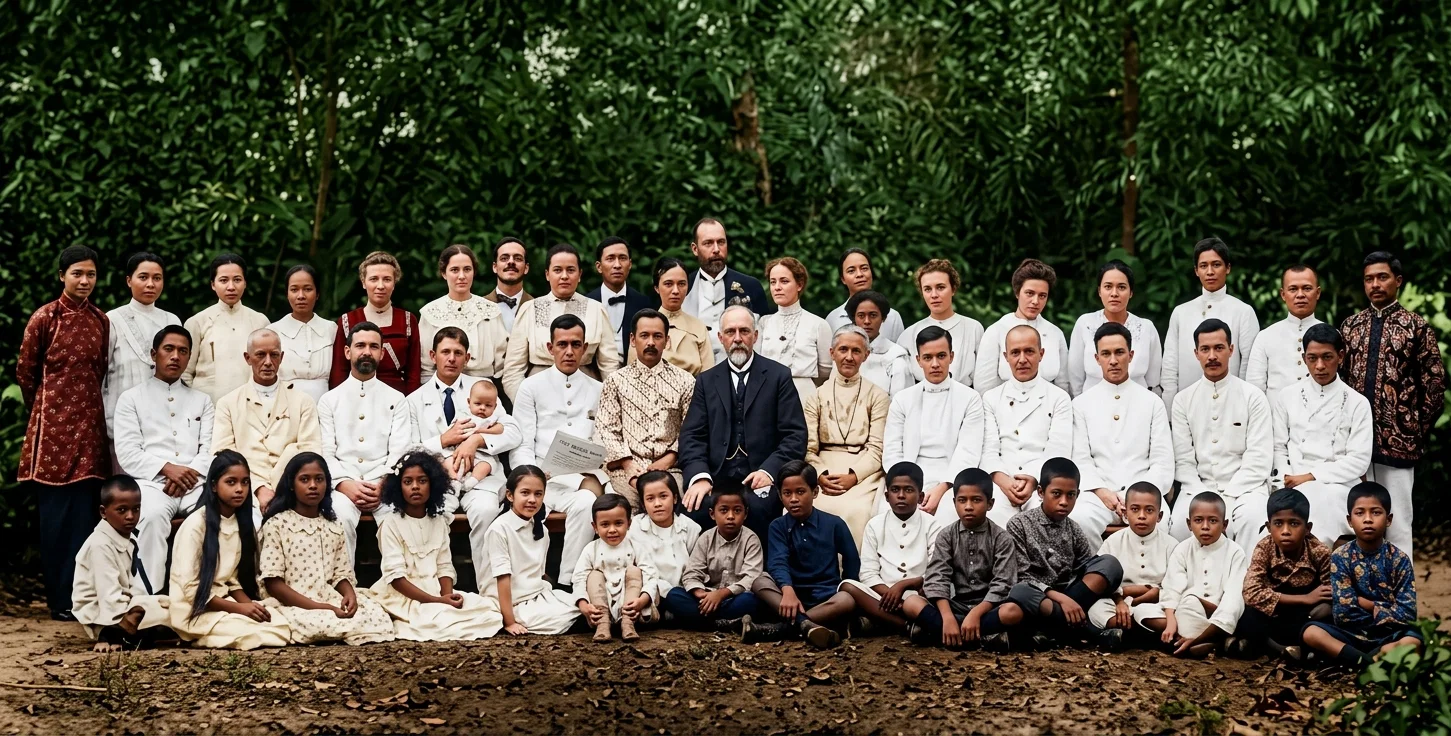
GROUP OF WORKERS AND RELIEVERS AT THE MALAYSIAN MISSION
GENERAL MEETING, 1915
GROUP OF WORKERS AND RELIEVERS AT THE MALAYSIAN MISSION GENERAL MEETING, 1915
In the organization of the Malaysian mission field, we have created six division missions,—the Straits Settlements, the Federated Malay States, Sumatra, West Java, East Java, and British North Borneo. The remainder of the territory in the Malay peninsula and the Dutch East Indies is practically unentered, and is under the watch-care of the Malaysian general committee. This mission field is beset with many difficulties. It extends over a vast sea area, and lies along both sides of the equator. The climate is always warm, with but little change of temperature throughout the year. Yet it is not so trying as the plains of India and Burma and parts of China, farther north.

EASY OF ACCESS

As the races, the state of civilization, the resources, and the religious conditions are so different in the various divisions of this field, we shall find it more interesting and profitable to study these as we find them in each division.
The great progress that has been made in steamship and railway transportation during the last fifty years makes it comparatively easy to visit all parts of this interesting section of the world, while the work of the printing press places at the traveler’s command a large fund of information regarding everything of interest and value.