The Sealed Book Opened—A Great Awakening—A Message Rejected, and the Result—Another Call Sounded
By DANIEL H. KRESS, M. D.
“This gospel of the kingdom shall be preached in all the world for a witness unto all nations; and then shall the end come.” Matt. 24:14. This was the reply of Jesus to the inquiry on the part of the disciples, “What shall be the sign of the coming, and of the end of the world?”
THE SEALED BOOK OPENED
For over a century, we have been living in what is termed “the time of the end.” The beginning of the time of the end, according to Dan. 12:4, was to be marked by an extraordinary revival and reformation, which, in the providence of God, was to continue and spread until it reached the uttermost parts of the earth. The book that the prophet Daniel was commanded to “seal” (Dan. 12:4), was to be opened.
The movement that followed the opening of this book is vividly brought out in the tenth chapter of Revelation, by a mighty angel coming from heaven, having “in his hand a little book open.” “His right foot” was “upon the sea, and his left foot on the earth,” indicating that the gospel was then to be carried to the islands of the sea and to all lands. And he “sware by Him that liveth forever and ever, . . . that there should be time no longer.” Verse 6. This prophecy brings us not merely to the time of the end, but to the close of probation, when “the mystery of God should be finished.” Verse 7.
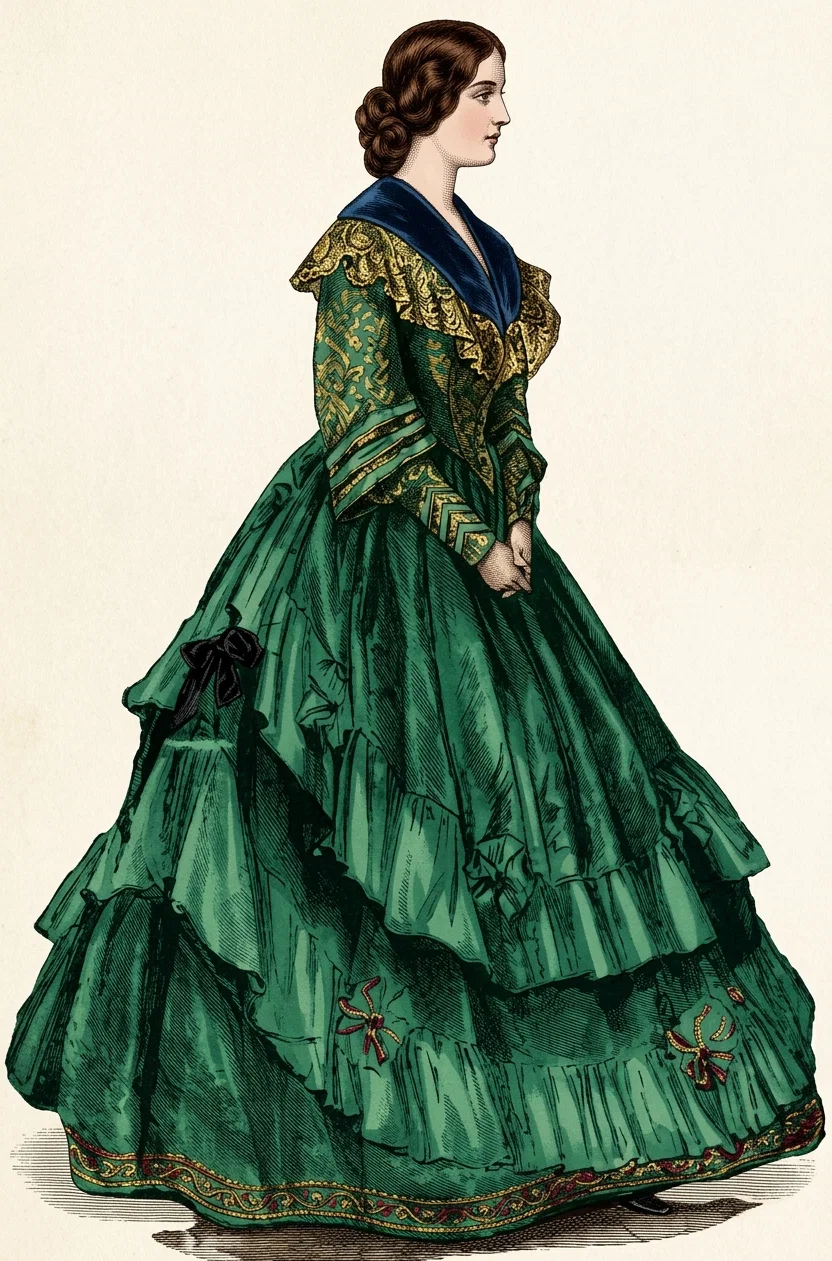
THE FASHION
It may be of interest to note how the prophecy of Dan. 12:4 met its fulfillment. The year that marks the beginning of the period known as “the time of the end” is 1798. This was the end of the one thousand two hundred and sixty years of unprecedented moral and spiritual darkness.
Referring to the spiritual revival that began in 1798, D. L. Leonard, D. D., in his work entitled “The Story of Oberlin,” says: “These seasons of refreshing, which first made their appearance in 1798, were of frequent occurrence for two decades throughout the Eastern and Middle States. In 1825-1835 they were well-nigh continuous, and extended to the West and South. In 1826-1830, some hundred thousand converts joined the leading denominations, sixty thousand of whom were young men. It is estimated that in five months following February 1, 1831, as many as fifteen hundred towns were profoundly stirred by the Spirit of God, and as many more were spiritually aroused in a good degree, with more than fifty thousand renewed in heart and life, over three hundred of them in the colleges. In 1800-1830, not far from one million one hundred thousand were added to four churches, thus increasing the Congregational membership twofold, the Baptist threefold, the Presbyterian fourfold, and the Methodist sevenfold.”
BEGINNING TIME OF MISSIONS
“This,” he adds, “was the beginning time of missions at home and abroad.” “With thousands, reaching the destitute and perishing with the bread of life, came to be a ruling passion.”
The American Board; the American Home Missionary Society; the American Sunday School Union, which voted the famous project to “open a Sunday school in every practicable place within two years;” the American Bible Society, whose aim it was to supply every family in the land with a copy of the Scriptures; the American Tract Society; and other similar evangelizing agencies, almost miraculously sprang into existence during this period.
Organizations were formed to aid young men to enter the ministry. Theological seminaries rapidly increased in numbers. Religious literature felt the same grand impulse forward and upward. Tract and Sunday school societies and private publishing houses began to furnish religious tracts and books for the millions. It was at this time that the religious newspaper began its career.
OXCART AND STAGECOACH TOO SLOW
To aid in the work of speedily carrying the gospel to all the world, the oxcart, the stagecoach, and the canal speedily gave place to more rapid transit,—the steamboat, the locomotive, the telephone, the telegraph, etc. It was “the day of God’s preparation.”
Satan was not inactive. He did his utmost to confuse minds. The “Lo here” and “Lo there” was everywhere heard. Probably never did so many sects and isms arise in so brief a space of time. The movement inaugurated by Joseph Smith, which led to the organization of the “Church of Jesus Christ of Latter-day Saints,” had its origin at this time. The Rochester rappings, or modern spiritualism, also sprang into being.
Amid the multitude of voices was heard a voice proclaiming: “Fear God, and give glory to Him; for the hour of His Judgment is
come: and worship Him that made heaven, and earth, and the sea, and the fountains of waters.” From the prophetic pages, William Miller and his associates produced evidences that in the year
1844 the great Judgment day would begin. This he believed to be the second coming of Christ in the clouds of heaven, the purification of the earth by fire, and the destruction of the wicked. This message was attended by a power that carried conviction to thousands of hearts. Some ministers of all the various denominations began its proclamation. The opposition that began within the churches resulted in the withdrawal of fifty thousand members from these organizations during the summer of 1844.
A GREAT DISAPPOINTMENT
The predicted time came and passed. The disappointment was bitter, and for a time inexplicable. The withdrawal of this large number of the most spiritual from these churches left the churches almost destitute of the Spirit of God.
At this point, the attention of Capt. Joseph Bates, who had been a firm believer in Miller’s message, was directed to the eleventh verse of the tenth chapter of Revelation, “Thou must prophesy again before many peoples, and nations, and tongues, and kings.” “Can it be possible,” he asked, “that we have in some way made a mistake in the event that was to take place at the close of this long prophetic period of Dan. 8:14 and 9:25?” From the expression, “Thou must prophesy again,” it appeared so. He now began to study more closely what was meant by “the hour of God’s Judgment.” He found that the Investigative Judgment must precede the second coming of Christ; for when He comes, His reward is with Him. He does not come to judge, but to give rewards. Rev. 22:11, 12.
Captain Bates found that the cleansing mentioned in Dan. 8:14, upon which this message was based, was not the cleansing of this world by fire, as had been supposed, but it was a work of investigation or judgment which was to precede the second advent of Christ, and take place in the heavenly sanctuary. The books were to be opened in heaven, and each record in these books was to be investigated. “The Judgment was set, and the books were opened.” Dan. 7:9, 10.
THE REFORM
In the study of the heavenly sanctuary, “there was seen in His temple the ark.” The ark contained the Ten Commandments, the fourth of which was ignorantly violated by almost the entire Christian world. The commandment reads, “The seventh day is the Sabbath of the Lord thy God;” but nearly all the world was keeping sacred the first day. Captain Bates also found, in Daniel 7, that a power was to arise which would think to change God’s law; and Sunday, a heathen festival day, was to be proclaimed a Christian institution, to supplant the Sabbath of the Lord. He now understood clearly the significance of the words, “Thou must prophesy again before many peoples, and nations, and tongues, and kings.” He wrote the first pamphlet calling attention to the true Sabbath.584
At this point, Sabbath reform became associated with the proclamation of the Judgment hour. The remarkable spiritual revivals that followed the opening of the sealed book of Daniel at the time of the end, were associated with various educational reforms.
EDUCATIONAL REFORMS
To the Bible was given its proper place in the system of education. It was woven into the entire fabric of education. It was not regarded as a book among books, but as the book among books.
Manual labor was considered an essential part of education, and from three to four hours of such labor daily for each student was demanded. Each one learned some useful occupation.
Women, who before were not thought worth educating, were gradually placed on a plane with men, and the same educational opportunities were granted them.
Church schools, for the benefit of the children, were started.
The widows, the orphans, and the poor received care.
TEMPERANCE AND DRESS REFORM
This period also marked the beginning of a great temperance and health reform wave. Among Christians, abstinence from tobacco, tea, coffee, condiments, and all unwholesome foods and drinks, was urged and strictly enforced.
Simplicity and neatness of dress was demanded of all. At Oberlin College, a covenant was drawn up, to which all were expected to subscribe, in which it was agreed that, in order “that we may have time and health for the Lord’s service, we will eat only plain and wholesome food, renouncing all bad habits, and especially smoking and chewing tobacco, unless it is necessary as a medicine, and deny ourselves all strong and unnecessary drinks, even tea and coffee, as far as practicable.”
Evangelist Finney, who held the position of president of Oberlin College, “with boundless energy and perseverance,” we are informed, “pushed these reforms.” For several years, vegetarianism found quite general acceptance among both residents and students, not only at Oberlin, but at other colleges; and “the habitual use of tea,” we are told, “was on more than one occasion made a matter of church discipline.”
FIRST TEMPERANCE SOCIETIES
At this period, temperance societies had their origin. These at first forbade the use of spirituous liquors only, wine being permissible if used in moderation. As far as I am able to learn, Capt. Joseph Bates was the organizer of the first teetotal temperance society in America. This society was formed in 1827, at Fairhaven, Massachusetts. Here originated the name of “teetotalers.” Captain Bates abandoned the use of all alcoholic beverages, and later gave up the use of tobacco, tea, coffee, meats, and all other unwholesome foods, including condiments.
Thus it will be seen that Capt. Joseph Bates we are indebted for the light on the Sabbath, and for the reforms that have accompanied the messages of Revelation 14, and that are to prepare a people for the second coming of Christ.
THE BACKWARD DRIFT
The rejection of the message borne by William Miller led to a loss of spiritual life and power in the churches and colleges, and this gradually resulted in the renouncing of the reforms as well. One by one, the important reforms were abandoned. Manual labor was replaced by the gymnasium. The Bible was relegated to a secondary place in educational institutions, and church schools were abandoned.
At Oberlin, when “some of the students ventured to ask for a taste of pork, mutton, or their equivalent, an emphatic negative was at first returned.” The executive committee, however, was finally compelled to permit flesh foods to be served to the students.
In time, tea and coffee also began to be used; and still later, the use of tobacco insidiously crept in. This colony no longer differed from the world about them. That which took place at Oberlin, also occurred in Williams College, Hudson College, Lane Seminary, and other educational institutions. The reformation that followed the spiritual awakening in the time of the end, dropped out as the spiritual life waned. In other words, the decline in spirituality resulted in carelessness pertaining to bodily habits.
“COME OUT OF HER, MY PEOPLE”
Little was said in the church, after this, in regard to dress reform and food reform. Sin was no longer rebuked in its members.
Just before the coming of Christ and the end of the world, the angel of God announces the fall of Babylon; and the call comes to the loyal within her walls, “Come out of her, My people, that ye be not partakers of her sins.” Rev. 18:4. In the time when the Christian church was founded, the call came to the faithful everywhere to come out and be separate. Jesus said: “Other sheep I have, which are not of this fold: them also I must bring, and they shall hear My voice; and there shall be one fold, and one Shepherd.” John 10:16. This took place at the first advent of Christ. So just before His second coming, there is to be a calling together of the faithful scattered throughout the various churches and organizations, and again there is to be but “one fold, and one Shepherd.” To them the words are spoken, “Fear not, little flock; for it is your Father’s good pleasure to give you the kingdom.” Luke 12:32.