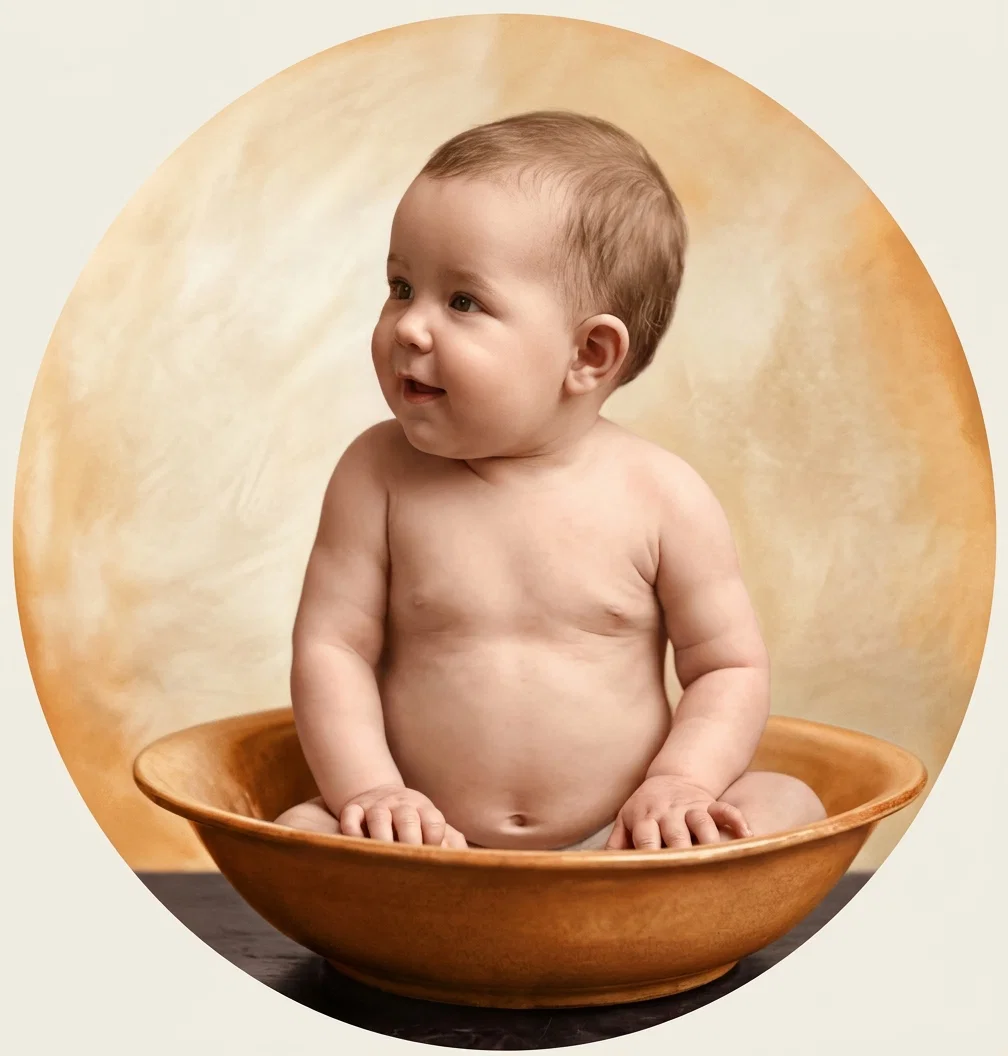
The Results of Improper Feeding — Suggestions About Proper Nourishing
By Lauretta Kress, M. D.
IMPROPER feeding is the most active cause of infantile disease. A great deal of suffering and many premature deaths result from digestive derangements.
How many puny children, with shrunken, wasted frames, would quickly become happy, healthy, and well-nourished, if fed according to their requirements! There is rarely any lack of food, for mothers are only too willing to provide for their little ones. It is for want of food which they can digest and assimilate that so many suffer.
Regularity of Feeding
The pernicious habit of cramming something into the child's mouth every time it is opened, is responsible for endless mischief. Regularity is a necessity in infant feeding, and the frequency of the meals must be determined by the physical condition of the child.
Few children cry from hunger. Pain resulting from overfeeding is a much more likely cause; and a little warm water internally, or a warm application to the stomach externally, will usually give speedy relief. Whatever is done, more food must not be crowded into the stomach merely to hush the child's voice. Many a voice has been forever hushed in this way.
Natural Nourishment
The best food for babies is undoubtedly mothers' milk. Whenever possible, infants should be nursed for ten or twelve months. Children who have inherited good constitutions do not require more than five meals — four in the daytime, and one at night — in each twenty-four hours, except during the first two months of infant life. Between the fourth and the eighth month, the interval should be prolonged to five hours; and at the end of the first year, only three meals a day need be provided, the child being allowed to sleep soundly all night.
To break a child of night nursing, a little warm water may be administered in the bottle in place of the customary milk. The baby will drink freely and then drop off to sleep again.
Feeble or premature children must be fed rather more frequently than those of sounder constitutions, and they require extra care.
Comforters Condemned
Never allow an infant to sleep at the breast or with a feeding bottle in its mouth. Let it stop eating as soon as its hunger is appeased. Science rightly condemns the baby “comforters,” so commonly employed, because they cause a waste of saliva, and tend to cause posterior nasal growths. Nor is it advisable to give sugar teats or sweets to soothe a crying child. Some mothers administer sugar and water the first few days of life, but this is often responsible for disturbances. Herb teas are unnecessary and often harmful. Plain water is by far the best drink for young children.
Artificial Nourishment
When the mother is unable to suckle her child, so that artificial feeding becomes a necessity, cow's milk, properly sterilized and diluted, is the best substitute. Since it is difficult to keep the nipples and tubes of feeding bottles clean and free from germs, it is much better to teach the baby to eat from a spoon. Although more of the mother's time is taken up by this method, the results justify its expenditure.
At the third or fourth month, zwieback (twice baked bread) finely grated or powdered, or pulverized granose flakes, may be added to the milk. Both of these products are much more easily digested than the majority of so-called “infant foods.” The addition of something of this character prevents the formation of curds.
The present is an age of commercial fraud. Notwithstanding the stringent laws against food adulteration, this nefarious practice is on the increase. During the summer months, milk is very subject to the addition of flavoring matter and preservatives. Hand-fed infants, dependent as they are upon milk and milk preparations for subsistence, are the chief sufferers. Milk unpasteurized is quite unsafe, and should never be used.
The Weaning Process
The proper time for weaning is from the tenth to the twelfth month, the change of diet being made gradually. When the child reaches the age of nine months, commence to substitute occasionally simple soups, crushed granose or zwieback, and ripe or stewed fruits, for the regular meal. Adopting this plan, when the infant is twelve months old, nursing may altogether cease.
Very gradually additional articles may be introduced into the daily bill of fare; but meats, cheese, coarse vegetables, tea, coffee, condiments, spices, pastry, rich puddings, and all other substances difficult of digestion, must be studiously avoided.
Value of Ripe Fruit
Nearly all children crave fruit, and this is perfectly natural. Ripe fruit and all kinds of fruit juices may be provided abundantly, for they are well adapted to the digestive organs of the young. When fruits are eaten, milk should be temporarily discarded. The scraped pulp of raw apples or pears, ripe peaches, and in fact any of the semitropical fruit products, may be eaten at the regular mealtime; for the fruit furnishes just the material needed for the plump little bodies so characteristic of early childhood.