Some Remarkable Old Men—Were Broken Down in Middle Life—How They Became Strong and Lived Long and Happily
By D. H. Kress, M. D.
Farmers expect their calves and colts to live their allotted period, and they are seldom disappointed. Why should not man live out the full measure of his days?
Premature deaths are preventable. By exercising more care in the selection of their food and drink, it is possible for men and women to live nobler, more serviceable, and longer lives than they do.
Best Material and Best Results
The automobile dealer takes great pains in describing to a prospective buyer the superiority of the machine he sells, calling special attention to the material used in its construction. Machines made of inferior material wear out prematurely. It is so with man. He is composed of what he eats. Longer and better service should be expected from a body in which the very choicest building material was employed, than from one that was built up of inferior food and drink. A poor machine, if it has good care, may last longer than one that is better but is used recklessly.
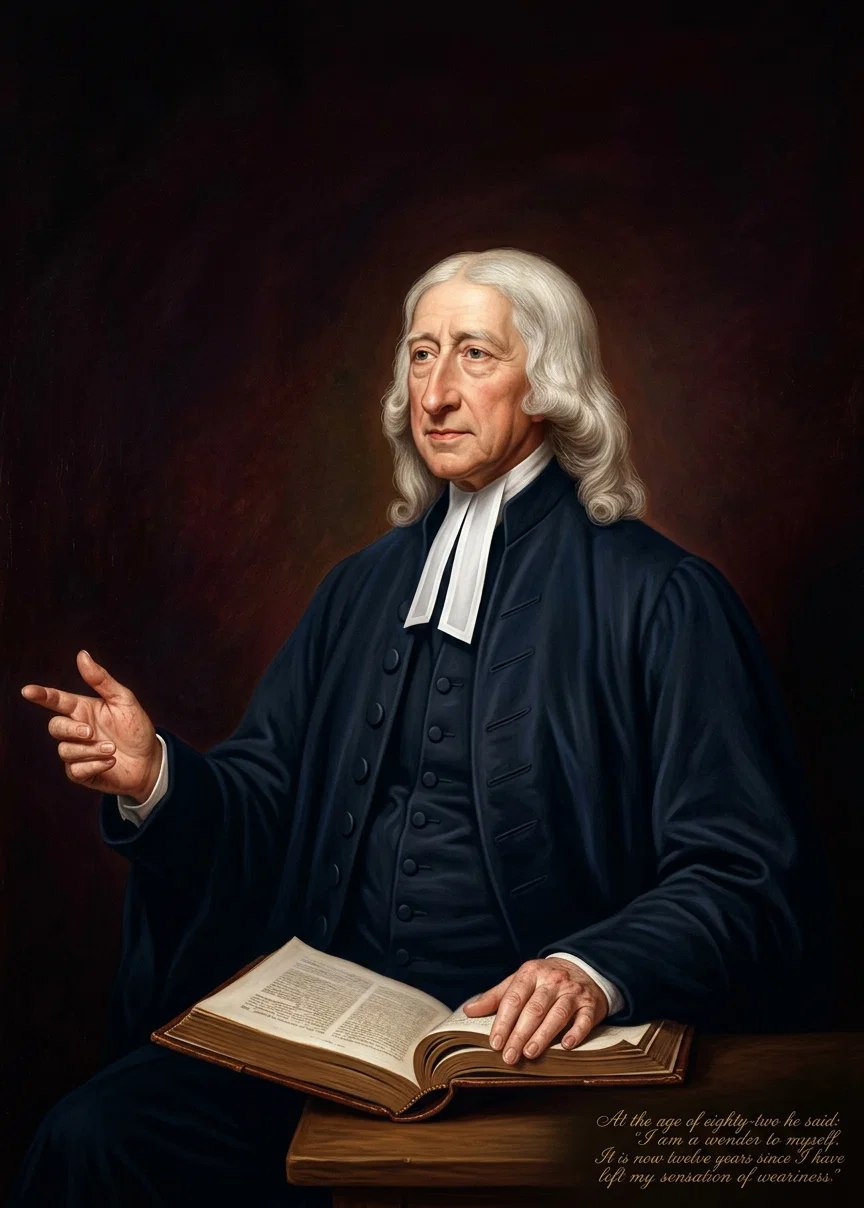
JOHN WESLEY
Many a man who has inherited a robust constitution dies early in life, because of intemperate habits in eating or drinking; while another who has been less fortunate in heredity, by greater carefulness lives to an advanced age.
The Robust Man in Gravest Danger
The robust who say, “Nothing hurts me,” are the ones who as a rule die early in life. Oliver Wendell Holmes said, “One of the necessary requisites for attaining to a good old age, is to be rejected for life insurance by a first-class company.”
I have observed that many of those who in the past have been blessed with a useful old age, were at some time in life, owing to a physical breakdown, compelled to make reforms in their habits of life.
Louis Cornaro, an Italian nobleman who at the age of forty found it necessary to consult his physician, and received little hope of living more than a year or two, made changes so radical in his diet that his friends predicted he would die of starvation, but he managed to outlive them all. He lived to the advanced age of one hundred years, during the latter part of which time he was kept free from pain or sickness, with all his senses continued perfect.
At the age of eighty-six he said: “I now find myself sound and hearty at the age of eighty-six, forty-six years beyond the time I expected, and during this long respite all my senses have continued perfect. What is still more, my brain is clearer now than it ever was. Nor do any of my powers abate as I advance in life. I expect to die without any pain or sickness.”
The Real Joy of Life in Old Age
At the age of ninety-five he wrote: “I really never knew, until I grew old, that this world was so beautiful; for in my younger years I was debauched by irregularities, and therefore could not perceive and enjoy, as I do now, its beauties. O, truly happy life, which, over and above all these favors conferred on me, has so improved and perfected my body that now I have a better relish for plain bread than formerly I had for the most exquisite dainties!”
Edison Follows the Plan
It was the story of Cornaro that impressed and influenced the great grandfather of Mr. Thomas A. Edison, and led him to live in the same simple manner; and as a result, he attained to the age of one hundred two years. His son, who followed the same teaching, lived to the age of one hundred three. Seven sons were born to him, who all adopted Cornaro’s plan, and all seven lived to be more than ninety years of age. One of them, Samuel, the father of Thomas Edison, lived to the age of ninety-four, and then passed away in a natural way, without pain or illness. Thomas Edison ascribes his splendid health and usefulness at the age of sixty-five to the abstemious habits of his ancestors, which he himself in a measure espoused.
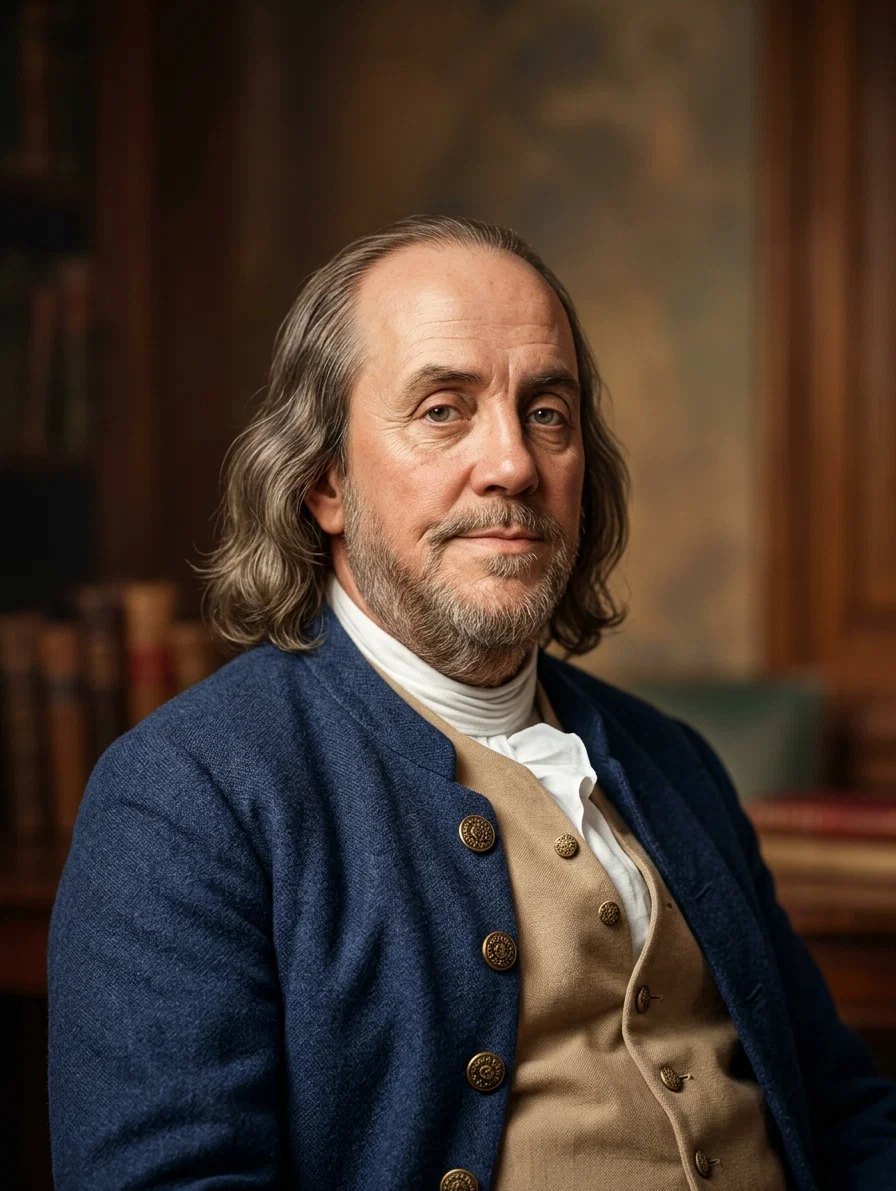
Europe as well as America has been filled with the fame of Franklin the philosopher. Early in life he adopted a fleshless diet, and chose to drink water. Thus he says, “I made the greater progress from that greater clearness of head and apprehension which generally attend temperance in eating and drinking.” Aside from temperance, there were other virtues that he aimed to weave into his character, among which were order, frugality, moderation, cleanliness, tranquillity, humility, etc.
As he neared his eightieth year of life, in writing of himself he said: “It may be well my posterity should be informed that to this little artifice, with the blessing of God, their ancestor owes the constant felicity of his life down to his seventy-ninth year, in which this is written. What reverses may attend the remainder is in the hand of Providence; but if they arrive, the reflection on past happiness enjoyed ought to help his bearing them with more resignation. To temperance he ascribes his long continued health, and what is still left to him of a good constitution.”
Well and Strong at Eighty-Two
In the fragrant and useful life of John Wesley, we have another illustration of the reward that is held in store for those who espouse the truly temperate life.
Although Wesley inherited a weakly constitution, at the age of eighty-one he was able to say, “To-day I entered my eighty-second year, and find myself just as strong to labor and as fit for exercise of body and mind as I was forty years ago.” A year later he said: “I am a wonder to myself. It is now twelve years since I have felt any sensation of weariness.” In writing of his early life, he says: “From ten to thirteen or fourteen I had little but bread to eat, and not a great plenty of that. I believe that this was so far from hurting me that it laid the foundation of lasting health. When I grew up, I chose to eat sparingly and drink water.”
BENJAMIN FRANKLIN
In the year 1747, in writing to the bishop of London, he said: “Thanks be to God, since the time I gave up the use of flesh meat and wine, I have been delivered from all physical ills.”
Dyspeptic at Forty, Strong at Eighty
Isaac Pitman, the inventor of the system of stenography, when nearing his eightieth year, wrote: “Forty years ago, dyspepsia was carrying me to the grave. Doctors advised meat three times a day, and also wine. On these I grew worse. I then avoided meat and wine, and gradually recovered my digestive powers. These forty years have been spent in arduous labor in connection with shorthand and editorial duties. I was at my desk fourteen hours daily, summer and winter, from six in the morning to ten at night.”
Intellectual Marvel at Ninety
Daniel, the Hebrew captive, at the age of ninety, instead of being an object of charity,286was at his best intellectually. As prime minister of the Medo-Persian empire, he did his work so accurately and well that even his enemies had to confess, “We shall not find any occasion against this Daniel, except we find it against him concerning the law of his God.”
When but a youth, he was brought a captive to Babylon; and when commanded to sit at the king’s table, “Daniel purposed in his heart that he would not defile himself with the portion of the king’s meat, nor with the wine which he drank.” He requested that he might have “pulse to eat, and water to drink.”
Daniel’s simple diet, combined with his unfailing trust in God, enabled him to attain to this advanced age with an intellect unimpaired.
In order to fulfill to Israel the promise, “I will put none of the diseases upon thee, which I have brought upon the Egyptians,” and to enable them to live long and well, God withheld from them their Egyptian foods and drinks, and instead gave them manna to eat, and water to drink. He was unable to do for them what He desired, because of a failure on their part to cooperate with Him.
Simple living, high thinking, and long life are intimately associated.