Its Power in the Home—What Is Lost Where Obedience Is Lacking—Some Uncomfortable Examples of Disobedience
By Mary Alice Hare Loper, M.S.
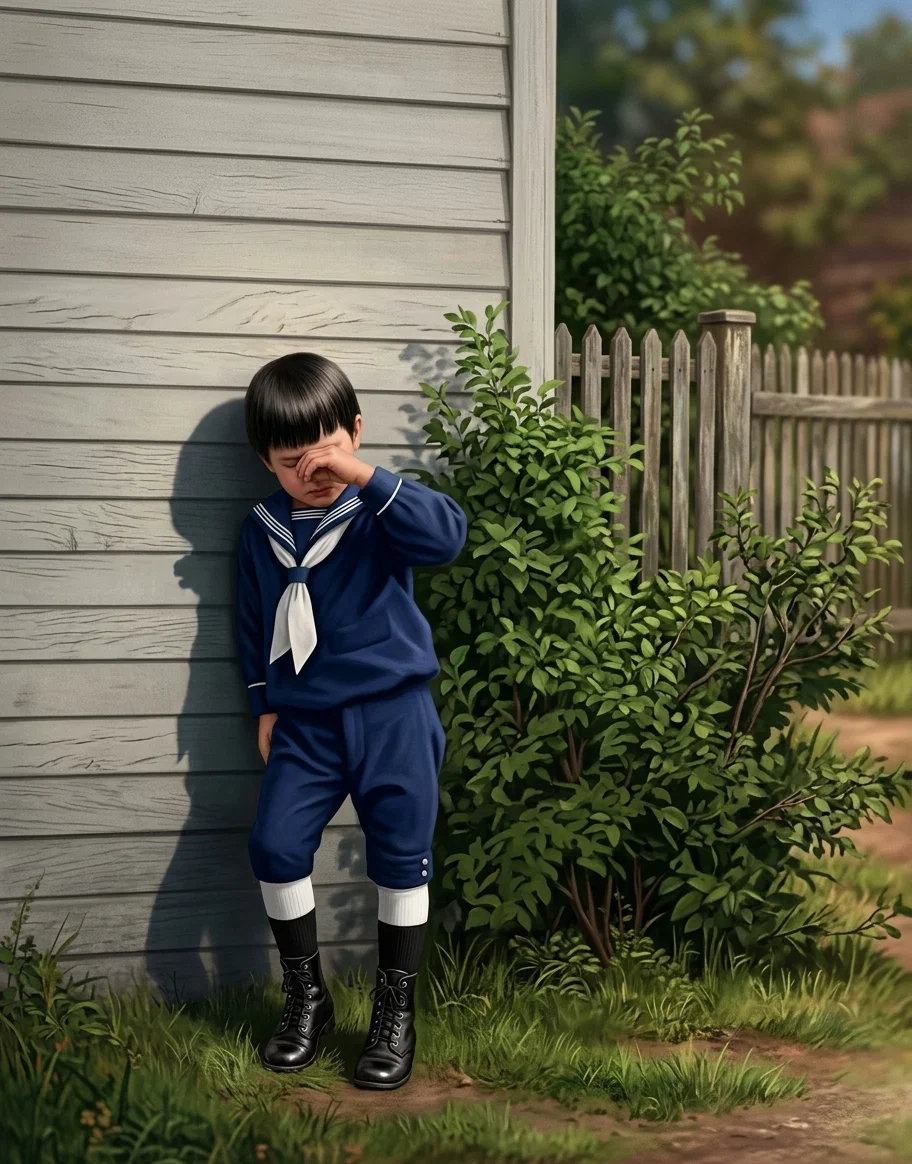
“Pick up the chalk, Harry,” said the teacher. Harry stooped as if to obey, but slyly dropped the chalk through a knot hole in the floor. “Why did you do so?” inquired the teacher. “Because I wanted to,” said Harry. “But that is not the way a little boy should do.” “O, go off and die!” said Harry defiantly.
The pupil reveals the methods of his parents . The child away from home is the epitome of all his former training. Disobedience and disrespect are rife in our world to-day, are visible on every hand.
“The child who is not trained to deny self, becomes unhappy as soon as he cannot have his own way.”
DISOBEDIENCE A PERIL
Disobedience to parents is given, in 2 Timothy 3, as a characteristic of the “last days,” and also as a cause of the perilous times upon which we have already entered. The restlessness and discontent abroad in our world to-day are largely the result of wrong training in childhood.
Loving obedience in the home is that in which the happiness of the whole world centers. The all-wise Creator so arranges the circumstances surrounding every soul in this world, that from infancy one must learn to control self in order to be truly happy. Happiness is that which every heart desires; but unlike Rome on her seven hills, all roads do not lead to it. On the contrary, just one road leads to happiness, and that is the King’s highway of obedience, the way of self-denial. It is said of Christ Himself, “Yet learned He obedience by the things which He suffered.”
HOW WE INCREASE OUR HAPPINESS
The only really happy children in the world are those who day by day learn the divine principle of increasing their own happiness by making others happy. A soul never cultivates his liberality except through giving. One never increases his own happiness except by adding to the happiness of some one else. And the child who is taught to practice this blessed principle in the home, will practice it wherever he may be.
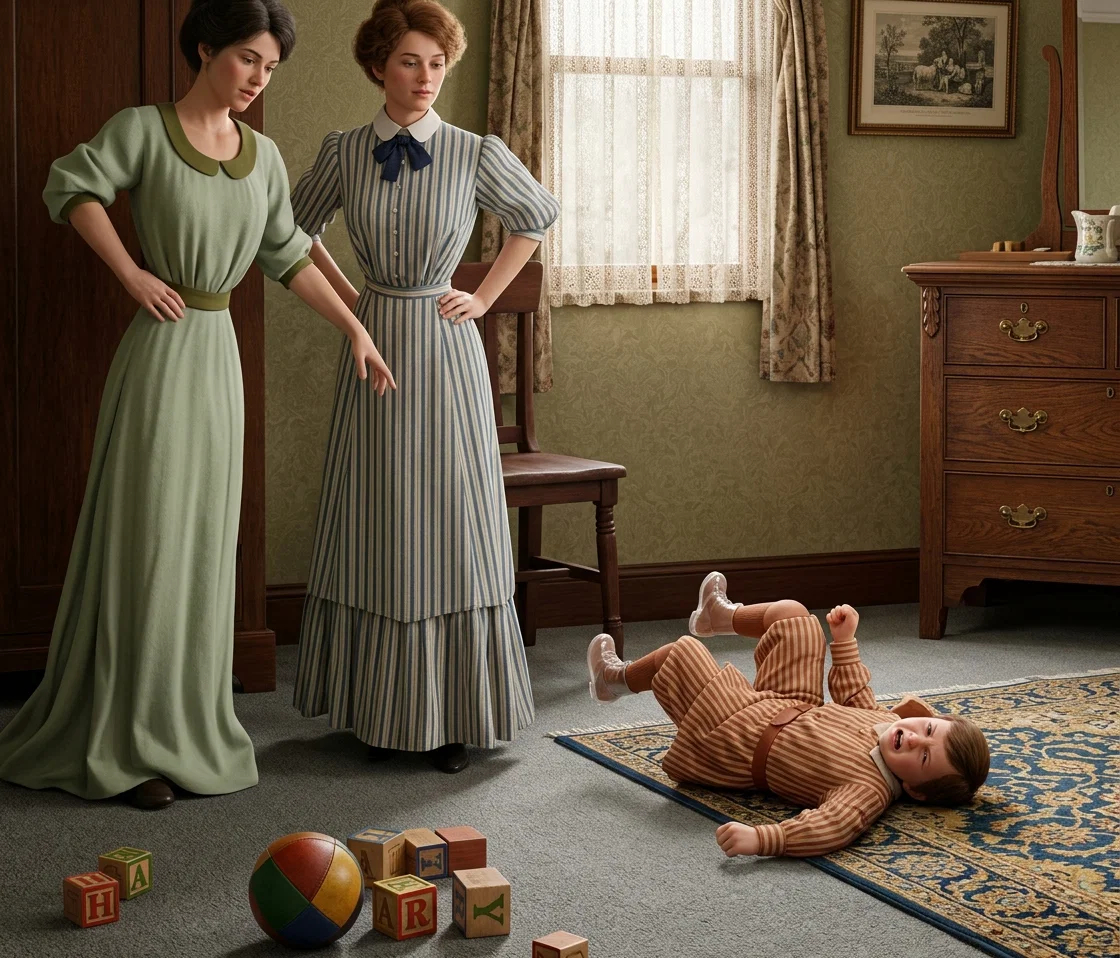
It is the divine plan that children shall be obedient, and thus be truly happy. Parents should cooperate with this plan, and not cater to the whims of children, and become slaves to their caprices. The child who is not trained to deny self, becomes unhappy as soon as he cannot have his own way. He soon learns whether or not he can manage his parents; and when he makes the discovery that he can do so by being persistent in his endeavors, he does not hesitate to use up a vast amount of energy in his efforts. He may even bump his head on the wall in order to conquer his parents; or he may perform the feat of holding his breath until his fond parents are willing to concede to anything if he will only resume his normal breathing—which, of course, he always does.
Some parents become accustomed to anticipate volcanic outbreaks of domestic infelicity at any time, and so they are careful to keep on the alert to preserve peace as long as possible by complying with the demands made, no matter how unreasonable they may be.
The child who is humored and petted is unhappy, because he is always selfish; and if anything occurs that does not suit his fancy, he is usually ready to let the fact be known, and sometimes the revelation comes at a very inopportune time.
FREDDIE REJECTS THE EGG
Years ago, I had occasion to take a meal in the home of a physician in the middle West. The family circle included a wee boy, who sat next his father during the repast. All went well, so far as my memory serves me, until the father placed an egg upon his son’s plate. The son evidently disapproved of the measure, for before his paternal host realized what was transpiring, Freddie had succeeded in getting his spoon squarely under the egg, and giving it a decisive toss back of his shoulder and onto the floor. From the agility with which the feat was accomplished, it seemed that Freddie had practiced; for his performance was a decided success. It was quite an embarrassing moment for the older spectators, but Freddie was victorious.
Little children are sincere. They behave in company just as they behave at other times. And the child who disobeys is not to blame. The responsibility rests with the parents. But a child can no more gain happiness in this world through disobedience, than he can gain the bliss of heaven in the same way.
SYMPATHY NEEDED AT HOME
Babies smile when parents smile. Children mind when parents lovingly mean what they say. Children have little sorrows of their own, and they should receive sympathy from their parents, just as parents receive sympathy from their heavenly Father. Woe be to that child who must go from home to receive the sympathy which it is the duty of his parents to bestow. When a child’s interests are not centered in his home, they are not centered anywhere. He restlessly goes from place to place, which does not cultivate love for his parents or respect for any one else.
The loving and obedient child is taught to center his interests in his home, to esteem it as the dearest spot on earth. He is assured that his presence there brings sunshine, and that his absence causes a shadow to hover over the canopy of life. He has due reverence for gray hairs, and obeys his parents through love. This is God’s plan, and it always brings happiness.
THE CHILD AND THE TOPIC
It does not add to a child’s happiness to make him the chief topic of conversation when in company. A child realizes the situation much earlier than fond parents may think he does; but when he deliberately says, “Mother, tell them about me,” it is high time to introduce a new subject.
The spoiled child means the spoiled man or woman. There are grown-ups who continue to act just like spoiled babies, and all because they were deprived of a kindergarten and primary course in obedience, which is much more important than a university course later on; for obedience claims every promise of the Bible, while many a Christian youth buries his hope of heaven because of some of the wrong university influences.302
JOINS THE DISAGREEABLE CLUB
The child who does not learn self-control, is likely to be a member of the Disagreeable Club when he grows up. He finds that the world does not cater to his wishes as his parents did, and he has worn a frown so much that his face looks sour, his disposition is fermented, and adverse criticism of others is a chief theme with him. He does not advocate the rights of any one but himself, for he failed during childhood to experience the blessing which lies hidden in the smaller piece of cake, the uncomfortable chair, the less desirable task.
Years may bring to an individual the realization that his parents made a grave mistake in not teaching him to give up his purely selfish wishes for the sake of the happiness of others; but it is too late to remedy this mistake, and the individual himself is powerless to obliterate the results from his character. The forgiveness of sin is instantaneous; but the overcoming of sinful tendencies is the work of a lifetime. And O, how much easier it is to submit cheerfully to God’s will, when one has learned loving submission to his parents in infancy and childhood! One whose faith in his parents has never been shaken, finds it much easier to have implicit faith in his heavenly Father.
“Honor thy father and thy mother: that thy days may be long upon the land which the Lord thy God giveth thee.” This is Heaven’s perfect rule of happiness. It can never be improved. It can never be outlived. The truly obedient child is he who is an honor to his parents from life’s dawn till its close. God rules in love. Parents should do likewise.