The Blessing and Joy That He Brought—How the Sleeping Dead Will Soon Hear His Voice
The Great Reunion Just Ahead
By Ella Iden
TWILIGHT gathered. The shadows lengthened across the landscape, and wrapped the hills in peace and quiet. Shadows were gathering, too, in the little home at Bethany,—the shadows of sorrow; for Lazarus lay at the point of death. Martha, at the bedside of her brother, watched with intense anxiety as he grew weaker. O, if the Master would only come! Mary was listening intently to catch the sound of a familiar step on the threshold, and from time to time she went to the door to peer into the night. But they waited in vain. The Saviour did not come, and the shadows deepened.
He Seemed Unconcerned
Jesus had received the message telling of the illness of His loved friend, but He had gone about His work apparently unconcerned and unmoved by the sad news. The disciples wondered at His seeming indifference. At length, after some days, the Saviour and His companions journeyed toward the little home in Bethany.
On the way, Jesus said to His disciples, “Our friend Lazarus sleepeth; but I go, that I may awake him out of sleep.” At these gentle words, they realized that their Master had not forgotten His friends in their trouble, and that His heart was full of sympathy and tenderness for them in this hour of need; but the disciples did not understand that Jesus was speaking of the death of Lazarus, until He told them plainly, “Lazarus is dead.”
“The Brother Shall Rise Again”
Lazarus, Come Forth
When the little company reached Bethany, and drew near the home of Mary and Martha, Jesus sent word of His arrival. Martha received the news, and unobserved by the mourners, she slipped quietly out. When she caught sight of the Saviour, her sad face brightened; and hastening toward Him, she saw that He wore the same expression of love and tenderness as in time past. Though Lazarus was dead, she still hoped that the Master might do something to relieve their sorrow. “Lord,” she said, “if Thou hadst been here, my brother had not died.” Looking into her tear-stained face, Jesus answered comfortingly, “Thy brother shall rise again.” She replied, “I know that he shall rise again in the resurrection at the last day.” This was her one hope amid the darkness of her sorrow—the hope of the resurrection morning.
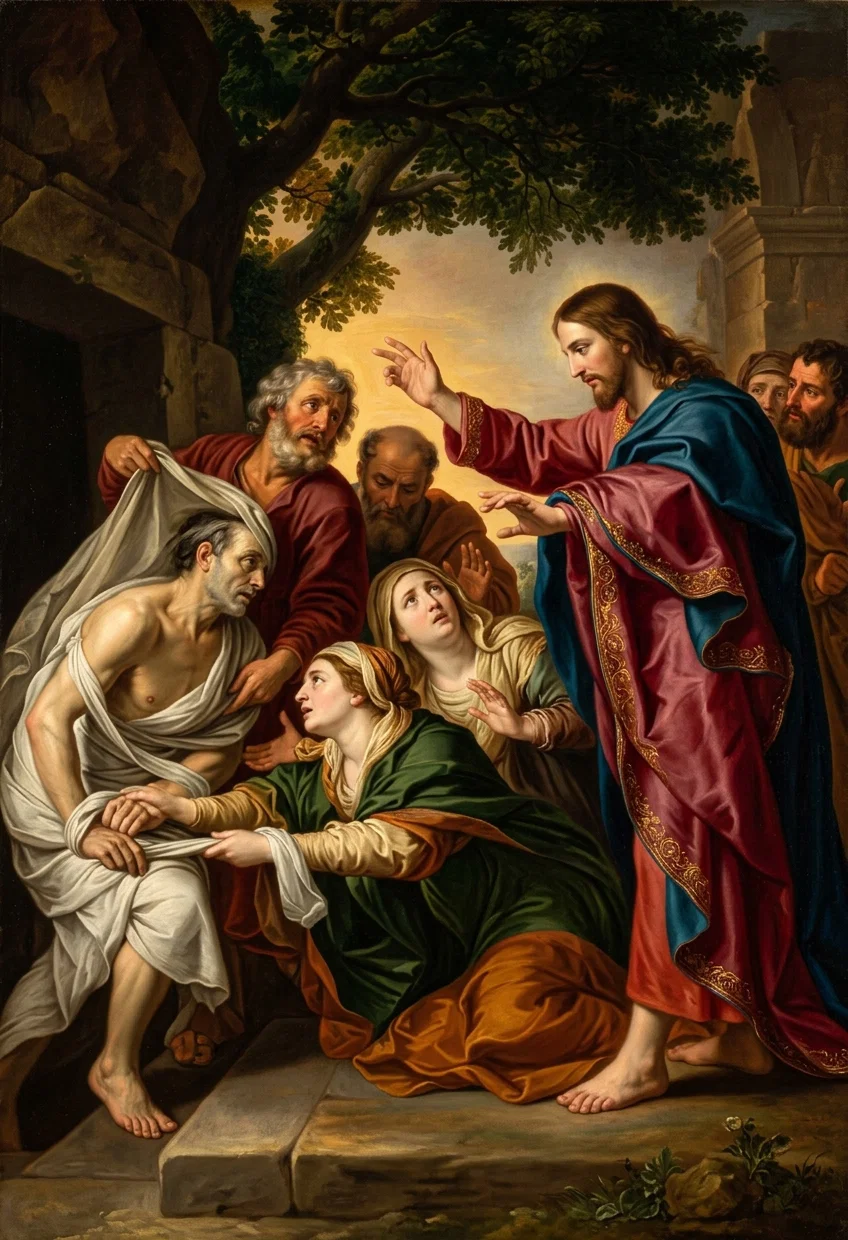
Presently Mary also was informed of her Lord’s desire to see her, and she too left the house to seek Jesus. Thinking that she was going to the grave of Lazarus to weep, the mourners followed her, and soon a large company had gathered at the entrance to the tomb. It was a cave in a huge rock, with a stone at its mouth.
“Lazarus, Come Forth”
Now the time had come for the great Life-giver to manifest His power. He commanded that the stone be rolled away from the grave. Then, standing at the opening, He called clearly, “Lazarus, come forth.” The strength and sweetness of that familiar voice, which had so often brought joy to the peaceful home at Bethany, penetrated to the ears of the sleeper, and awakened him to new life and vigor. The chains of death could no longer hold him, and he came forth well and strong.
Then what a time of thanksgiving and rejoicing! The dead alive again, home ties united, sunshine for shadow, the oil of joy for the spirit of mourning! And all because the Saviour came that day!
Asleep Till the Life-Giver Comes
Christ referred to the death of Lazarus as a sleep; and such is death often called in the Bible. It is a state of unconsciousness, of peace and quiet. Our friends and loved ones who have fallen asleep in Jesus are resting sweetly, wrapped in dreamless slumber while awaiting the voice of the great Life-giver in the resurrection morning. If they had gone before us to their reward in glory, there would be no need of a resurrection, for they would already be enjoying the bliss of heaven.
The resurrection of Lazarus is a pledge of the great awakening that will take place at our Saviour’s coming. On that day, those who sleep in the dust of the earth shall hear His voice, and shall come forth; not with the diseased bodies with which they went down in death, but clothed in light and beauty.
Lazarus, though raised from the dead, was still subject to death; but those whom the Saviour awakes at His appearing, will be freed forever from the power of the grave. He who said, “I am the resurrection, and the life,” has conquered death, and through that victory, has made it possible for His children also to be conquerors and to live eternally.
Since His coming will work such wondrous transformation, and bring such joy, is it strange that His people should long for that time, when they shall see their Lord and Saviour? Can the Christian do aught but rejoice that only a little way in the future is the glad reunion?
“The mossy old graves where the pilgrims sleep
Shall be opened as wide as before,
And the millions that sleep in the mighty deep
Shall live on the earth once more.”