A DEEPENING CONVICTION

4%

Pacific Press Publishing Association · Mountain View, California · Jun 1, 1915

FromSigns of the Times, Vol. 42, No. 22.

Read the full edition

A DEEPENING CONVICTION

Prominent Men of Many Persuasions Earnestly Proclaim the Doctrine—The Events of the Time Compel Serious Reflection
By Lee S. Wheeler
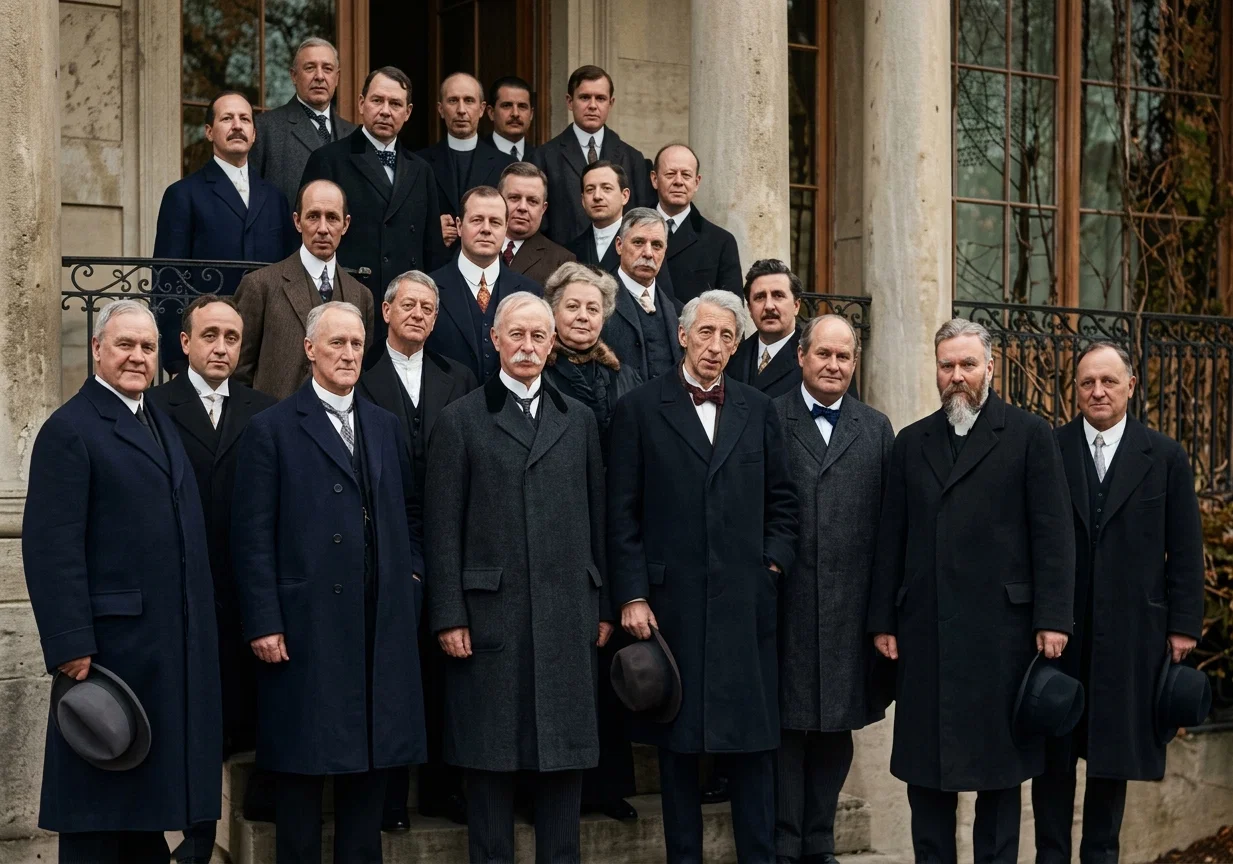
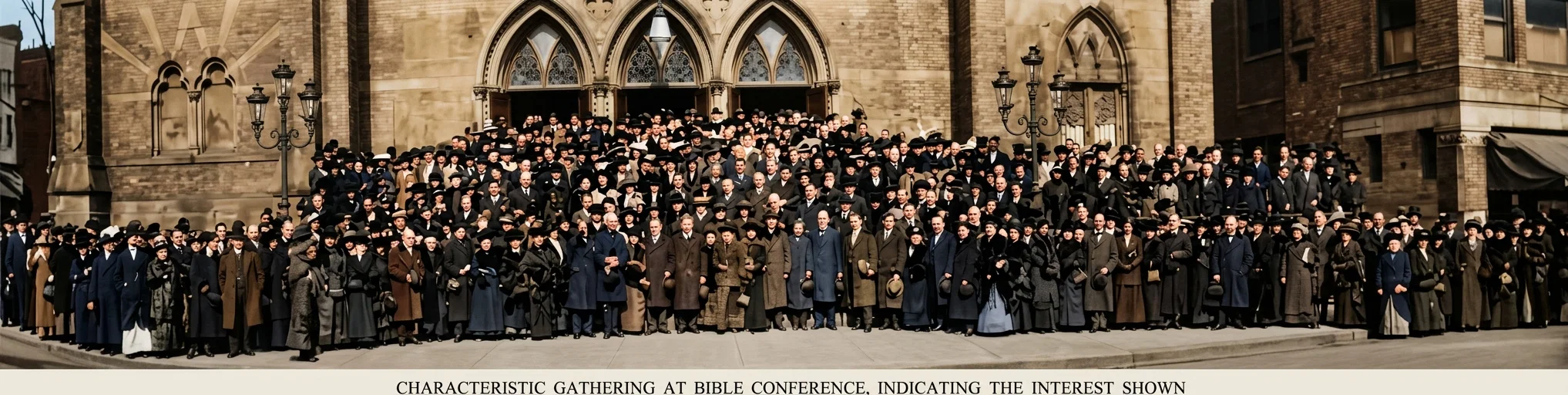
Prominent in One of the Bible Conferences
That there is a new and mighty awakening over all the earth upon the subject of Christ’s second coming, is everywhere in evidence. A wave of religious influence, carrying with it a spirit of revival and missionary evangelism, which has been rising for years, is moving over the nations. Sermons which show that ministers and people are agitated by the signs of the times, are becoming more frequent. The leading papers in all parts of the land are disposed to publish the views of Christian people upon these subjects, especially since the world has passed under the dark cloud of the present European war.

“What This Fearful Portent?”

As said the editor of the Springfield Republican: “Writers who can tell a stupefied world what this fearful portent means, who can throw light on the great fundamental problems of the race, and give some hint as to its destiny, will have an attentive and even anxious hearing.”
Prominent editorials upon “Armageddon” and similar subjects, often giving prominence to the words of the Scriptures, frequently appear in the world’s most popular journals. All this is most significant.

Nearing a “World’s Crisis”

On March 21, the Atlanta papers published a sermon by Dr. J. Wilbur Chapman, then conducting a great revival in that city, quoting him as follows upon the subject of Christ’s second coming : “We must be nearing a world’s crisis. I would suggest that all Christian people give themselves most diligently to the study of prophecy. I have not the slightest question but that we are approaching the last days. Great events, the like of which the world has never known, ought to make us very cautious, and ought to impel us to turn away from frivolity and sin, and seek in every way to please Him, lest we be ashamed at His coming.”
In Philadelphia, the North American, the Inquirer, and other great dailies, devoted whole pages to the sermon of the evangelist William A. Sunday, preached to scores of thousands of people who crowded the big Tabernacle. The great auditorium is said to have been surcharged, on that occasion, with unusual power; and the vivid description of the coming of Christ in the clouds, brought a multitude of more than six hundred “sobbing, fainting, staggering humanity down the aisles” to acknowledge the coming King.
We are not advocating Mr. Sunday’s methods. Neither do we condemn him for casting out devils in his own way. But we do say that there is a great shaking in the world. “Can ye not discern the signs of the times?” Matt. 16:3.

The Moody Advent Movement

As the moving of events brings the coming of Christ more within the range of human vision, we think we discern that the great spiritual awakening begun among the churches nearly a generation ago by the evangelist D. L. Moody, is shaping itselfto the advent, and assuming the character of a distinguished proclamation. And though we question some of the theology that has attached itself to the movement, we are willing to recognize in it “the voice of the day of the Lord,” which “hasteth greatly.” Zeph. 1:14.
From the beginning of his work, Mr. Moody had a clear pre-millennial conception of the gospel; and as he preached the love of God to a world of sinners, he pointed to Christ’s second coming as the “blessed hope” of the church.

The Devil Opposed to It

“To my mind,” said the evangelist, “this precious doctrine—for such I must call it—of the return of the Lord to this earth, is taught in the New Testament, as clearly as any other doctrine in it; yet I was in the church fifteen or sixteen years before I ever heard a sermon on it. . . . The devil does not want us to see this truth; for nothing would wake up the church so much. The moment a man takes hold of the truth that Jesus Christ is coming back again to receive His followers to Himself, this world loses its hold on him. Gas stocks, and water stocks, and stocks in banks and railroads, are of much less consequence to him then. His heart is free, and he looks for the blessed appearing of his Lord, who, at His coming, will take him into His blessed kingdom.”—“The Second Coming of Christ,” by D. L. Moody, pages 6, 7.
Had the churches that were swept by the revivals of Mr. Moody received the Spirit which rested upon him, there is little doubt but that a great spiritual falling away might have been arrested. But though the great religious bodies as such never appropriated the ministration of the Holy Spirit, or accepted the light of the second coming, it nevertheless found a response in the hearts of thousands of persons in the churches, and many earnest and gifted leaders arose to aid the movement. Evangelists like Major Whittle, Henry Varley, and John MacNeil, and some of the popular ministers, like Spurgeon, Talmage, Dr. Bonar, Dr. Pentecost, and Dr. A. J. Gordon, who shared Mr. Moody’s views of the pre-millennial advent of our Lord, lent their influence to the work of the revivalist, both in England and in America.

Prophetic Aspect Appears

As early as 1878, the Moody movement began to develop a distinctively prophetic phase, when a “prophetic conference” was called, which met in Dr. Tyng’s church, New York City. The addresses were published in full by the New York Tribune, which issued an extra of 50,000 copies to supply the demand.
The effect of this conference was very great in awakening anew the interest in themes of prophecy, and promoting their discussion in religious papers and other publications among the church circles of the English-speaking world.
In 1886, another such conference was called in connection with Mr. Moody’s work, which met in Farwell Hall, Chicago. The Inter-Ocean on this occasion published the addresses verbatim. After this, “prophetic conferences” became a recognized feature of the movement.
In 1901, Boston was visited, and the conference was held in the Baptist church of which the esteemed Dr. Gordon was pastor. Northfield, the home of Mr. Moody, has long been notable for its Bible school, and its annual gatherings of celebrated evangelists and religious teachers; and this, with various other Bible schools for the free training of Christian workers, has been a powerful means of not only unifying the work, but also expanding its development as a great inter-denominational movement. Therefore the churches, while not occupying such advanced spiritual ground, nevertheless favor its teachings, as they are benefited by its influence.

Significant Advancement

The past year was remarkable for the number of “prophetic conferences” held by this organization. The first and largest was in connection with the Moody Bible Institute, Chicago. The other principal ones were at Washington, D. C., Minneapolis, St. Louis, Los Angeles, and Montrose. These were attended by many leading ministers of the Presbyterian, Congregational, Baptist, Methodist, and Lutheran churches, and the principal theme of discussion was the second coming of Christ.
This no doubt accounts in part for the pronounced expression given upon this subject throughout the evangelistic field during the campaigns of this year.