DREAMS OF WORLD EMPIRE

3%

Pacific Press Publishing Association · Mountain View, California · Jun 22, 1915

FromSigns of the Times, Vol. 42, No. 25.

Read the full edition

DREAMS OF WORLD EMPIRE

Mighty Emperors and Kings Who Have Sought to Unite the World—Four Were Permitted to Do It—The Prophet Foretells the Futility of All Other Attempts at World Dominion
By JEAN VUILLEUMIER
This is the third and concluding study of Mr. Vuilleumier on the prophecy of the second chapter of the book of Daniel. In the previous articles, he has presented what the prophet foresaw. He has shown that the four great world empires of Babylon, Medo-Persia, Greece, and Rome were seen in the prophet’s vision. The prophet furthermore saw that when Rome should arise, she would be the last of the world-wide kingdoms. She was to be broken into numerous smaller kingdoms, and these were to continue until Christ should come in person to overthrow all and establish His everlasting reign. Many mighty men have conspired and worked to unite Europe into one world-embracing empire. This article devotes itself to some of these colossal attempts. Without question, Satan has exerted all his rebellious powers to overthrow God’s prophetic utterance; but for fourteen centuries and more, the divided state of Europe has stood as a mighty monument to God’s foreknowledge.
In the next issue, Mr. Vuilleumier will have the first of his articles on the prophecy of the seventh chapter of Daniel. These will be followed by articles on the eighth chapter, as well as on other interesting portions of this prophetic book. EDITOR.
THE dream of reconstituting the Roman Empire has ever haunted the imagination and shaped the policy of the nations of the Old World, and it does so still. The frightful war now waging in Europe has brought vividly to the attention of thinkers the great fact, predicted in the prophecy, that the kingdoms of Europe should try to “cleave one to another”—that is, to dominate one another, to absorb one another into a great universal empire. Can it be said truthfully that there is nothing but rhetoric in the German phrase, Deutschland über alles, and in the English national strain, “Rule Britannia, Britannia rules the waves,” and that America herself would not be allured, if her chance should come, into a world empire?

ROBUST KINGS AND DOMINION

A recent article in La Gazette de Lausanne, Switzerland, from Prof. Ed. Rossier, brings out this fact so clearly that it sounds like a comment on the prophecy: “Modern history is marked by a few prodigious attempts on the part of robust kings and nations, to enlarge their power and enforce their superiority upon the continent.
“In the first place, it is Charles V. The imperial title is to him only a justification. He takes his power from the invincible Spanish infantry, from the industries of Flanders, and from the mines of the New World. But haunted by the idea of unity and empire, he uses all his hereditary resources for the glittering project of universal domination; and as he claims the honor, he accepts the duties. He wars against the Mussulman and the Christian, occupies Rome and makes Paris tremble, punishes the Protestants of Germany, bars the way to the Turks in Hungary, and chases the Barbarians to their distant coast. For a few years he triumphs.
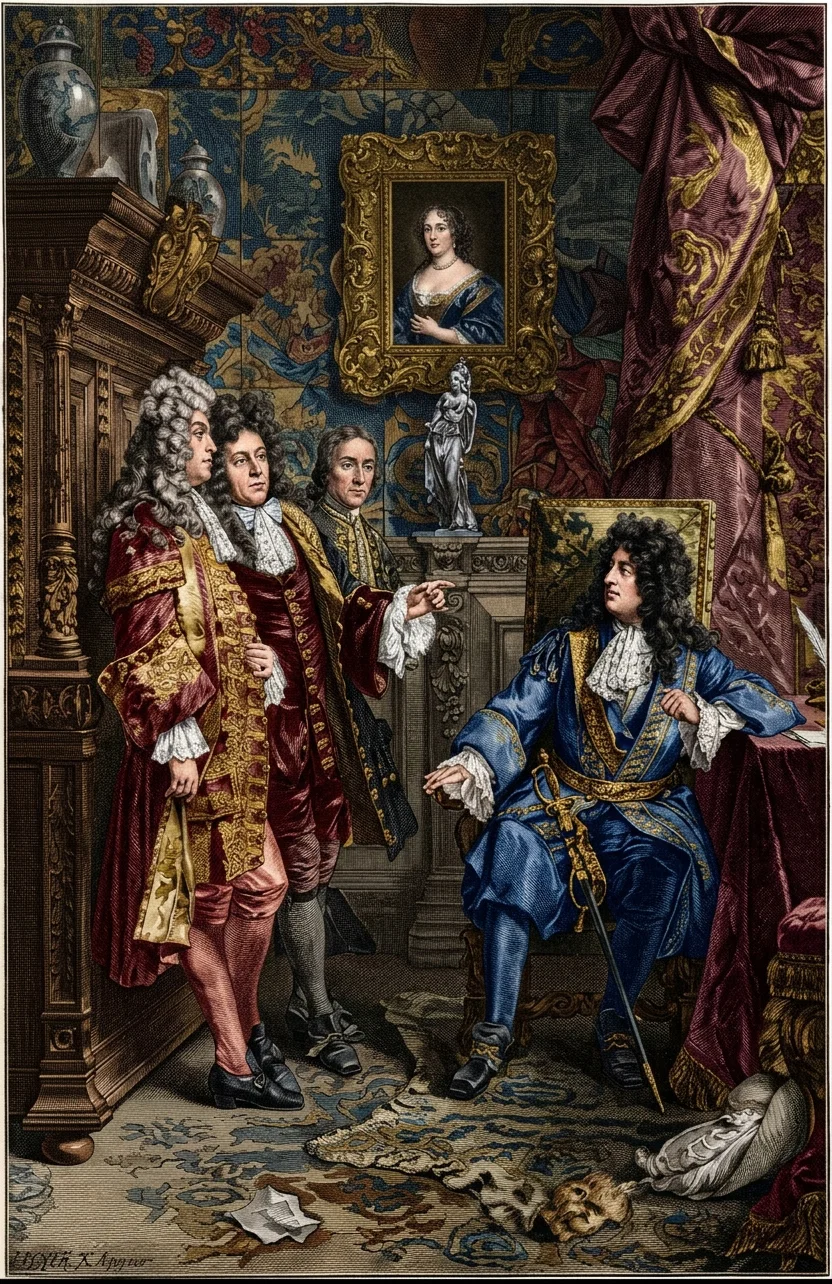
“Later on, it is Louis XIV. He applies a dynastic policy which, vitiated by flattery, deformed by pride, degenerates into a vast scheme of domination. With the admirable resources of France reorganized by ministers of talent, he fights on sea and land, imposes his will on coalitions, bullies the nations, rises above the kings.”

NAPOLEON’S MIGHTY AMBITION

“Napoleon, heir of the Revolution, is asked to secure for France new boundaries which the Convention and the Directory have traced. But while he destroys the armies of the kings, and passes through the old capitals, always accompanied by victory, he also allows himself to be carried away by the great dream. Farther and still farther he stretches the limits of his empire, creates thrones for his brothers and war comrades, imposes unequal treaties on the old nations which he still tolerates. And then—everything is quiet for a time. . . . “Will not the historians of the future also discern in our time one of these vast undertakings? . . . How is it that the mystic idea of the power and sovereignty of the romantic kaiser has combined with the laborious reasoning of venerable intellectuals, with the bellicose aspirations of haughty officers, with the greed of manufacturers, merchants, or shipbuilders, and that all this has been adopted by the nation as a sort of rule of life or sacred gospel, so that the whole of Germany has become a compact element, a powerful instrument for peace or war? . . . Far from me to look at the enemies of the German Empire as lambs without rancor or stain.”
LOUIS XIV CONSULTING HIS MINISTERS

UNIVERSAL JEALOUSIES AND RIVALS

And the writer refers to French ambitions toward a colonial empire; to English alarm at the German commercial and naval rivalry, and her desire to humiliate her rival effectually; to Russia’s well-known longings for universal domination, of which Joseph de Maistre said, “Le désir russe est infini.”
Is that all? Are those all the guilty ones? In an article on “Italy and the War,” the same writer expresses the opinion that Italy is not entirely free from this mania for space and fame. Just now the opportunity before Italy—Italia irredenta—seems unique, and the whole nation is frantic for war. [This article was written just before Italy plunged into the war. EDITOR.]
“Forgetful of her weakness, not minding the danger, the nation calls upon the government to satisfy its desire for grandeur. She is intoxicated by hopes and remembrances of the past. In the darkest periods of the Middle Ages, the Roman mob, starved and feverish, cheered its public orators, and imagined she saw the senate and the people enthroned again upon the seven hills and dictating laws to the sovereigns of Europe. And is not the past surviving to-day? Is not the great tradition of yore the surest bond of unity between the various nations of modern Italy? What a joy, what a commotion, at the first ray of glory! What an enthusiasm at the time of the campaign in Libya! Not in vain a nation lives in the midst of magnificent ruins and descends from a people which tamed the kings.”

SELFISH, DESPOTIC MAN

In other words, we are here facing one of the clearest features of human nature. Man is naturally selfish and despotic. And this character shows itself in the life of all nations whenever and wherever it finds an opportunity. The God who rules the nations permitted four of them to extend their crushing rule over the rest of mankind. He predicted that they should. But in the same prophecy, He decreed that that should be the limit. The fourth world empire, the Roman power, was to be divided, never to be reconsolidated. This inflexible, unchanging word has stood in the way of all empire builders for the last fifteen hundred years. In turn, all their schemes have tumbled to the ground. God has spoken; and to-day as ever, the Word reads with thunderous distinctness. “They shall not cleave one to another, even as iron doth not mingle with clay,” for “the kingdom [of Europe] shall be [and shall remain to the end] partly strong, and partly broken.”
Indeed, when the solemn hour strikes for the fifth kingdom—the kingdom of righteousness and peace—to be established, it finds the world still in its divided condition.
“And in the days of those kings shall the God of heaven set up a kingdom which shall never be destroyed, nor shall the sovereignty thereof be left to another people; but it shall break in pieces and consume all these kingdoms, and it shall stand forever. Forasmuch as thou sawest that a stone was cut out of the mountain without hands, and that it brake in pieces the iron, the brass, the clay, the silver, and the gold; the great God hath made known to the king what shall come to pass hereafter: and the dream is certain, and the interpretation thereof sure.”

TWO THOUSAND YEARS OF FULFILLMENTS

Over two thousand years of striking fulfillments ought to be a sufficient warrant of the truthfulness of this final prediction, which contains a definite answer—and O, how consoling!—to the question of Nebuchadnezzar of so long ago, and which the present generation is repeating with breathless anxiety: “What shall come to pass hereafter?” “What is this world coming to?”

THE STONE CUT OUT WITHOUT HANDS

The stone “cut out without hands,” which strikes the image and dashes it to pieces, is Jesus Christ, the Saviour of the world, and the King of kings. David says of Him that He shall break the nations “with a rod of iron,” and “dash them in pieces like a potter’s vessel.” Ps. 2:9. And the revelator saw in vision that when “the kingdom of the world is become the kingdom of our Lord, and of His Christ,” who is to “reign forever and ever,” then “there was a great earthquake, such as was not since there were men upon the earth,” so that “the cities of the nations fell,” “and every island fled away, and the mountains were not found.” Rev. 11:15; 16:18-20.

A NEW EARTH IS OFFERED

But to His people, to the church of all ages, is offered in possession “new heavens and a new earth, wherein dwelleth righteousness.” 2 Peter 3:13. “They shall inherit the earth,” said Jesus of the meek, in His Sermon on the Mount. Matt. 5:5. And many years before, Isaiah described the “singing,” the “gladness,” and the “everlasting joy,” of the “ransomed of Jehovah,” when they see the desert “blossom as the rose,” and “the glory of Lebanon” and “the excellency of Carmel and Sharon” adorn the earth made new. He tells us that “the wolf shall dwell with the lamb, and the leopard shall lie down with the kid”; “their young ones shall lie down together; and the lion shall eat straw like the ox.”

BLIND AND DEAF TO SEE AND HEAR

But this is not all. “Then the eyes of the blind shall be opened, and the ears of the deaf shall be unstopped. Then shall the lame man leap as a hart, and the tongue of the dumb shall sing.” “They shall not hurt nor destroy in all My holy mountain, saith Jehovah.” Isa. 11:6, 7; 35:1-9; 65:17-25.
This is what the world is coming to. History in hand, we can, with Daniel, and even better than he, exclaim that “the dream is certain, and the interpretation thereof sure.”
No longer doubt then, dear reader, seeing that God has given you such powerful reasons to believe. Accept with joy the good news herein proclaimed, thank God for such a beautiful prospect, and enlist without delay under the banner of the King of righteousness, who is also the Prince of peace and the Friend of sinners, the One who says to all, “Come unto Me, . . . and I will give you rest.”