The Gospel and the Law

3%

Pacific Press Publishing Association · Mountain View, California · Jan 5, 1915

FromSigns of the Times, Vol. 42, No. 1.

Read the full edition

The Gospel and the Law

How Long the Law Has Existed — The Relation They Sustain to Each Other — The Mirror That Shows the Defects
By JOHN E. FULTON.
In the beginning, there was no sin. Man was placed in a beautiful garden, where all was love and peace. Nothing was wanting that could minister to his joy, and all that was required on his part was perfect obedience to God’s law.
How sad that this happy state did not continue! Sin, which is a monster, entered that lovely garden, and brought woe, unhappiness, and death. “Sin,” says the apostle John, “is the transgression of the law.” 1 John 3:4. And “the way of the transgressors” of the law “is hard.” Prov. 13:15. How hard has been the lot of sinners from the day our first parents transgressed to the present time!

The Law Before Sin

Sin has a hoary head. It is of great age. But before sin, God’s law must have existed. Paul says that “where no law is, there is no transgression.” Rom. 4:15. But there was transgression in the beginning, so there must have been law. “Sin is not imputed [or reckoned] where there is no law.” Rom. 5:13.
Of Cain God said, “Sin lieth at the door.” He was said to have sinned; so there was a law to be transgressed, for “sin is the transgression of the law.” What law did Cain break?—God’s law. In what particular did he break God’s law?—He broke the law which says, “Thou shalt not kill,” for he murdered his brother Abel. The law, then, was in existence from the beginning.

The Remedy for Sin

But no sooner did sin enter than God set forth the gospel plan to save man from the pit into which sin had cast him. God loved us from the beginning. He loved us “with an everlasting love.” Jer. 31:3. Christ is the “Lamb slain from the foundation of the world.” That means His death availed for sinners in every age, from the beginning of the world. While He did not actually die back there, He gave Himself then, and was promised as a Saviour.
Early, therefore, in the world’s history, the gospel was preached. The Bible tells us the gospel was preached to Abraham. Gal. 3:8. The promised seed proclaimed to Abraham was Christ. Verse 16. But the first mention of the promised seed was not to Abraham, but to Adam and Eve, when it was said, “I will put enmity between thee and the woman, and between thy seed and her seed; it shall bruise thy head, and thou shalt bruise his heel.” Gen. 3:15. The seed of the woman that was finally to bruise the serpent’s head, was Christ. Rom. 16:20. This promise of Christ was the preaching of the gospel to Adam and Eve, and through them to their posterity.
The introduction of the gospel was therefore at an early date in the history of mankind. It was preached to Abraham, as we have seen, and also proclaimed to the Israelites. Heb. 4:2.
The ceremonial law given to Israel was the gospel in type and shadow. Later the gospel was preached in its fullness by Christ. There has therefore never been an age when the gospel was not proclaimed. As God’s love is everlasting, so is His gospel, the loving news, an everlasting gospel. Rev. 14:6.

The Law of God

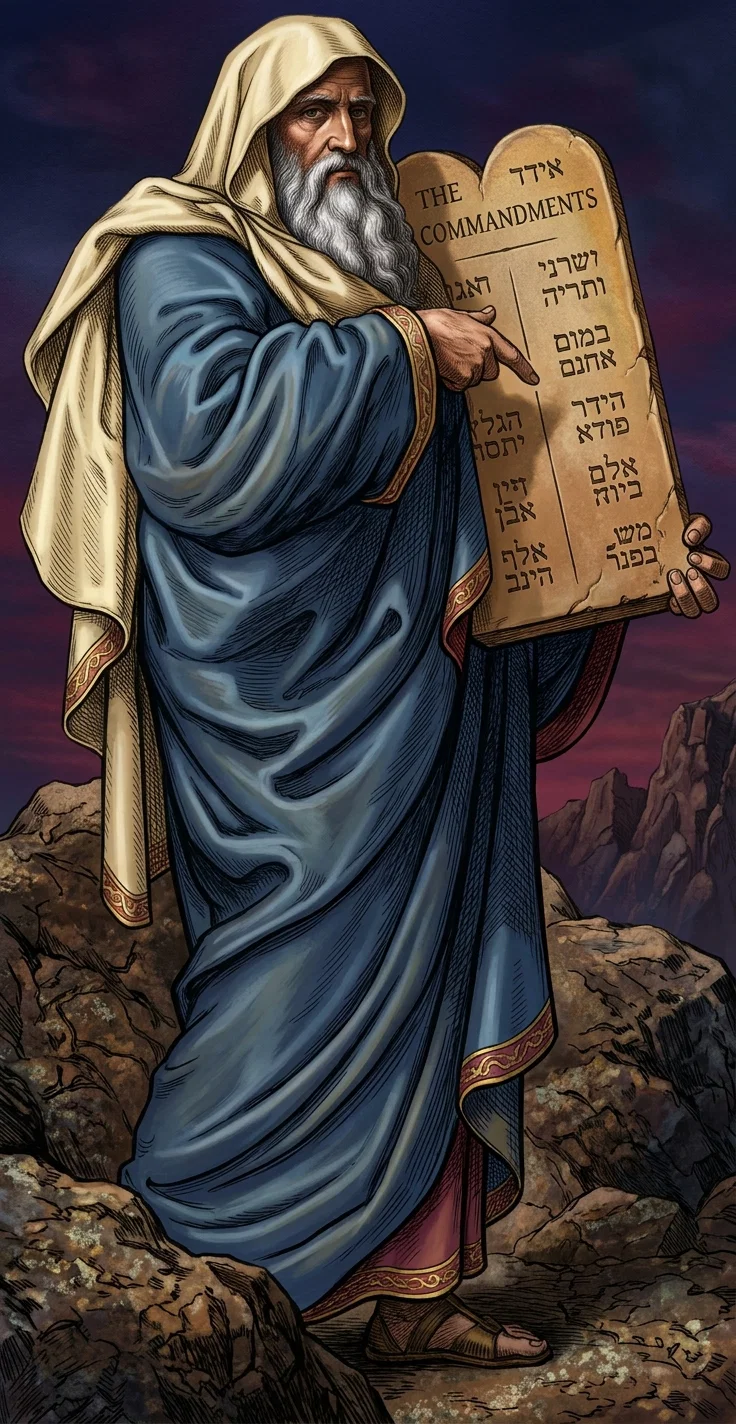
God’s law is eternal and unchangeable. For instance, to worship idols, to steal, or to kill, has ever been and ever must remain a sin. Why?—Because God’s law, which is eternal in its character, forbids idolatry, theft, and murder. Such principles can not be altered; for God’s law is a transcript of His character, and His character must ever remain the same. “All His commandments are sure. They stand fast forever and ever.” Ps. 111:7, 8. “Every one of Thy righteous judgments endureth forever.” Ps. 119:160.
Do not be confused about that law of ceremonies given to Israel, which was indeed abolished. The types and shadows met in Christ, the Antitype and Substance, and were no longer binding; but the law which points out sin, can never pass away. “Think not that I am come to destroy the law, or the prophets: I am not come to destroy, but to fulfill.” Matt. 5:17. “And it is easier for heaven and earth to pass, than one tittle of the law to fail.” Luke 16:17.

The Law and the Gospel

There is no lack of harmony between the law and the gospel. What is the office of the law? “The law entered, that the offense might abound. But where sin abounded, grace [or the gospel] did much more abound.” Rom. 5:20. The law is to point out sin. “By the law is the knowledge of sin.” Rom. 3:20.
The law is compared to a mirror into which we look. As in a mirror we seek to see any blemish upon the face, so the great mirror, God’s law, reveals the blemishes of character. Now just as the mirror is not to remove the blemish, but the water and the soap are to do that, so the law of God, the mirror, is not to take away the sin, but the precious blood of Christ revealed in the gospel is to do so. And just as the mirror and the water are perfectly related the one to the other, so are the law and the gospel. We do not destroy the mirror because it will not cleanse the face. Neither do we abolish the law because it does not cleanse the sinner, for it was never ordained to such a purpose.
The purpose served by the mirror is to testify to an untarnished face when the soap and the water have been fully applied. Just as the mirror tells us the face is soiled before the water is used, just as surely does it show a clean face when the water has been successfully applied. And so the law of God, which points out sin when sin is present, witnesses to a clean character when the blood has been applied. To this end is the scripture which says: “By the law is the knowledge of sin. But now the righteousness of God without the law is manifested, being witnessed by the law and the prophets.” Rom. 3:20, 21. To make it simpler, let us paraphrase Paul’s statement thus: “The law gives us the knowledge of what sin is. But a sinless character is obtained apart from the law, through faith in Christ; and when it is obtained, the law points out the sinless character.”

Justification by Faith

Justification by faith is the great gospel message. Man is a sinner by nature. Sin came to the race through Adam; and all, in every nation, are sinners. Now as by another came our sins, so by another comes our righteousness. Rom. 5:12, 19. Since we can not do good in our own strength, righteousness must come as a gift. Verse 16. Sin came through Adam; the free gift, through Jesus Christ.
Our part in the great transaction is to believe, to accept. “Being justified by faith, we have peace with God through our Lord Jesus Christ.” Verse 1. We are to confess our sins; and when we do this, He cleanses us from all unrighteousness.
But He does not leave us without a garment when He takes away our filthy rags of sin. As the prodigal son, when he came to his father and confessed his sin, immediately received the best robe, so when we return to God, confessing our sins, He forgives, and places upon us the blessed robe of Christ’s righteousness.
Christ is the way, the truth, and the life; and we receive Him by faith, simple faith. Now comes Paul’s question: “Do we then make void the law through faith? God forbid: yea, we establish the law.” Rom. 3:31. God’s law, therefore, and faith in Christ—the gospel—go hand in hand.
The fall of man with its terrible consequences establishes the binding claims of God’s law. If the law could be changed, it would have been changed before Adam and Eve left Eden. But the curse fell upon Adam and his posterity; and the blight and mildew of sin must follow everywhere, because God’s law which had been transgressed could not be set aside—could not be abolished. If the abolition of God’s law is so light a matter as some suppose, how easy to set it aside in the beginning, while there were but two beings on earth, and before sin passed upon the race!
Again the death of Christ establishes the law. Why did Christ die? He came as a substitute for man. He died in man’s stead. The law was broken, and that is sin. The wages of sin is death. The broken law demanded death, and so Christ died that we might live. He died to satisfy the claims of the law. But if the law could be so easily set aside or abolished, why need Christ die?
The death of Christ indicates the unchangeableness of the law. “My covenant will I not break, nor alter the thing that is gone out of My lips.” Ps. 89:34. Law is the foundation of government, and the fundamental law can not be broken. Human law is sometimes altered because imperfect, but God’s law is perfect. Ps. 19:7. It is therefore unchangeable.

Jesus Loved the Law

Of Jesus it is prophesied that He loved the law. Ps. 40:8. He kept it while hereon earth. John 15:10. He died to satisfy its demands, for our sins were upon Him. We are not saved by the law; we are not saved by our endeavors to keep the law or by our works. We are saved by faith. But remember, faith works. Gal. 5:6. Faith is not dead. And while we are not saved by our works but by faith, the man who is saved works the works of faith. He then keeps the law not in order to be saved, but he is saved so as to be able to keep the law.
Of the last people upon earth the Scripture says, “Here is the patience of the saints: here are they that keep the commandments of God, and the faith of Jesus.” Rev. 14:12. And the last blessing found in the Bible is the following: “Blessed are they that do His commandments, that they may have right to the tree of life, and may enter in through the gates into the city.” Rev. 22:14.
Man lost Eden through doubt of God’s word, and disobedience; but faith in God’s word, and obedience, are the necessary passport to the pearly gates of Eden restored.