Spirit of Freedom Struggling for Supremacy—Confucianism and Religious Liberty—“China for the Chinese”
By Francis E. Stafford
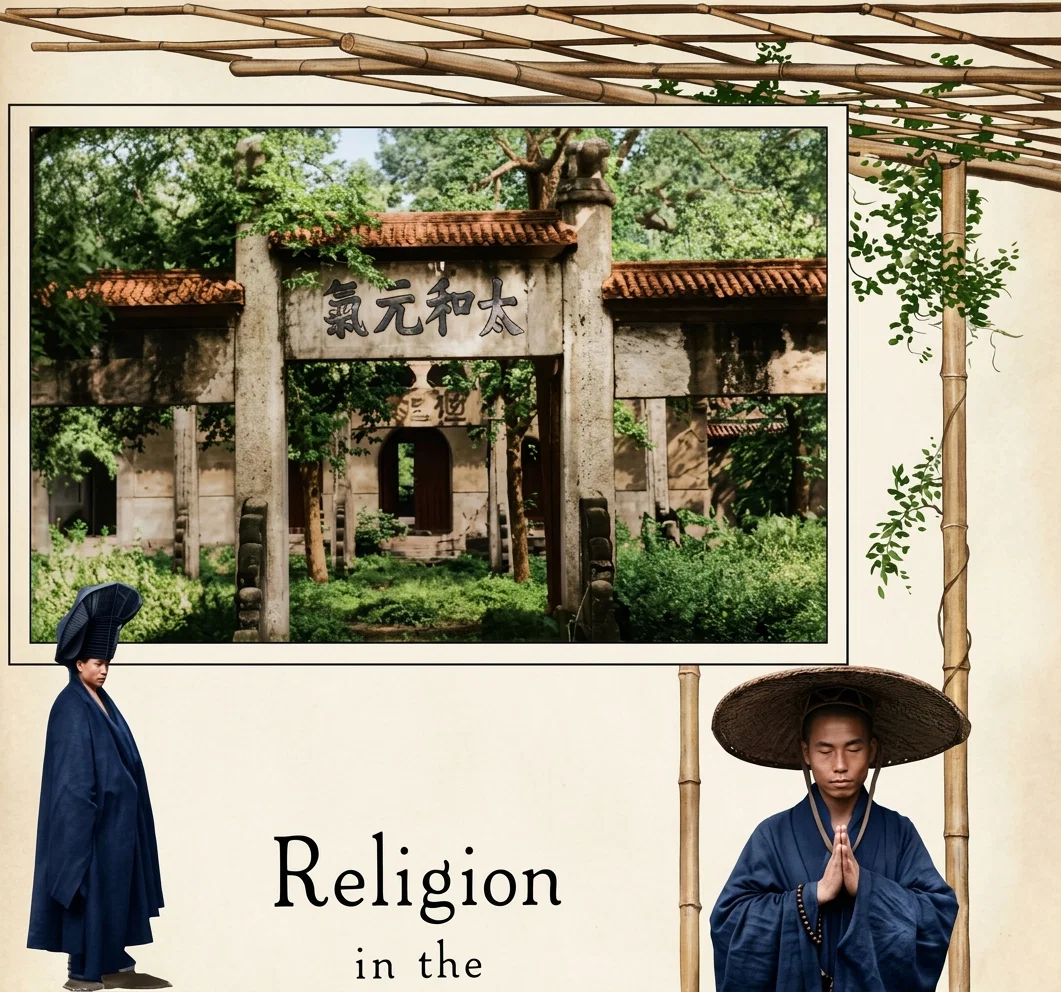
Religion in the
In two preceding articles, Elder Stafford has told of the mighty transformations in China, and the suddenness with which the old dynasty was overthrown and the new republic set up. In his articles this week and next, he will give more particular attention to the religious controversies and changes that are involved in the revolution. The next article is especially valuable because of the information it conveys regarding the confederating of both the heathen and nominal Christian religious organizations. That men who have gone as missionaries to China, would so lower their standards as to attempt to put Confucius on the same foundation with Christ, is both sad and significant. There is in these days much that has the name of Christianity, which the Master would not own.
Editor.
In Dan. 4:25 we read that “the Most High ruleth in the kingdom of men, and giveth it to whomsoever He will.” Two years ago, I had occasion to quote these words with reference to China. I stated then, and firmly believe now, that God took China away from the rule of the Manchus, and restored it to the Chinese people. And for what purpose? Was it merely that China might develop into a great and glorious nation, and her people all live in peace and prosperity?—No. Laudable and good as that ambition is, we know that the real reason why the Lord interfered in the government of China at that time was to open the way for the people of China to hear the preaching of the gospel of the kingdom in this generation, and give them a chance to prepare for the end of the world and our Saviour’s return. With 400,000,000 people to warn, and only a handful of God’s servants to do it, time was too short to complete the work under the old regime of superstition and despotism.
The Country Opened for a Great Purpose
And so the world looked on with wondering eyes while the Lord did a marvelous work in the Orient. The mighty giant of the Pacific, which for centuries had slumbered in ignorance and darkness, suddenly stirs, and behold, in a moment, as it were, stands erect. Her fetters fall at her feet; and with hands lifted to heaven, imploring the aid of the Almighty, she steps forth, and in one day takes her place in the great sisterhood of nations which to-day are proclaiming from every side of the globe the word “Liberty.”
We see the country open to foreign trade, and seeking the aid of foreign capital and the advice of foreign statesmen. We hear the sound of the hammer, and the tramp of thousands of workmen as they seek with feverish haste to link up the four corners of the nation with bands of steel railroads. We see great projects launched to tame the rivers, and open highways of travel to every isolated hamlet. We see telegraph and telephone wires spinning a mighty web over the face of the country, and reaching clear up into Tibet.
What does it mean? Listen: A dispatch yesterday from away on the border line of the clouds, from what has been called the top of the earth, that place which until a few months ago has been a hidden country, where no white man was allowed to set foot, and from the mountain chasms of which few travelers ever returned, says, “No less than 2,000 families in the Dawa district [Tibet] have recently notified the missionaries of their desire for Christian teaching.”
Spirit of Freedom in the Whole Orient
The Orient is open to the gospel. From the shores of Siberia on the north, down through Japan, Korea, China, Siam, the Straits Settlements, to the Philippines in the south, there is no place where the gospel messenger who puts his trust in the Almighty can not go; and in most of these places, the people are seeking for light, and imploring for aid.
Now is the time to work in this field. Now, while the angels of God are holding back the winds of strife and destruction until the servants of God are sealed in their foreheads, let us put in the sickle and reap on Asia’s shore that which is indeed white for the harvest. Now, while the war clouds are gathering, about to break with devastating, blinding fury upon the fair lands of Europe; while the kings of the earth are beating their plowshares into swords, and preparing for the last great Armageddon; now, while America is groaning under the strain of mighty combines of capital, labor organizations, and ecclesiastical federations,—now is the time to give attention to the great unworked fields of the Orient.
Laborers, you who may find your home fields closed before you, when you can no longer work where you are, turn your eyes to the mighty Orient; and may the Lord give you wings to fly swiftly to this part of the world, to answer the heart calls that are going up from thousands for light and salvation, before it is forever too late.
The present opportunity will not last long. Already we see the forces at work that will eventually close the doors on this side of the world, and lead the Asiatic nations to join in the last great battle of the day of the Lord God Almighty.
We wish to add a few words now about the forces that are working in China.
Confucianists Try to Hold Their Power
Before the new government had been fairly started, before the president had been elected, or the Chinese republic had been recognized by the nations of the world, we find in the dispatches from Peking a statement which said that the senate had a long and heated debate as to whether Confucianism should be made the state religion of China.
Now Confucianism is not a religion, and never was claimed to be before now. It is a system of moral ethics, and as such has undoubtedly done as much as any other man-made system of ethics toward the welfare of the human race; but centuries of adoration and subjection to this system by the Chinese race, have shrouded it in a kind of glorified halo, so that it has come to be regarded as nearly sacred as anything that the Chinese call by that name.
When the embryo of the new government was still in the making, several of the leading spirits believed that in order to make a strong government, a state religion must be adopted. What to adopt was the next question. It was argued that Christianity was believed by very few, and was unsuited to the majority. Buddhism, while having a large following, was in disfavor, as it is13regarded as a foreign religion, having been introduced from India. Taoism, on account of the character of its priests and adherents, has fallen into such disrepute that it was rejected with disgust. There was nothing left but Confucianism; and this had many points of favor, not the least of which was that it was distinctly Chinese.
The Struggle for Religious Liberty
The fact that the above dispatch stated there was a long and heated debate shows that many among those in power at Peking were enlightened enough to see the dangers of adopting a state religion, and vigorously fought it. The debate was not so much on what to adopt, as there seemed to be a feeling that Confucianism was the only thing if they were to have a state religion; but there was a strong sentiment in favor of religious liberty.
Vice-President Li Yuan-hung said, “I believe that the moral teachings of Confucius, and the virtues which he held so high, should be taught to students in our public schools; but I do not believe that it would be wise to make Confucianism or any other religion a state religion of China.”
Antiforeignism
When it became known that the subject was under discussion in Peking, a new situation developed at once among the people of China. Prominent Confucianists everywhere took up the campaign. Confucian societies were organized at all important centers, and soon produced a large following. Many of the literati of China who had never before expressed any opinion on religious matters, being merely passive elements, under the influence of this great movement soon became zealous Confucianists. Not a few who had made nominal profession of other religions were also induced to join the movement. At a celebration of Confucius’ birthday held at Canton, it is said that four graduates of the Canton Christian college sang Confucian hymns, which were set to music from the Methodist hymn book.
China for the Chinese
The speeches of these leaders, and the literature circulated by their societies, are extremely radical in character. They breathe of the “China for the Chinese” spirit, and have actually stirred up antiforeign sentiment of a violent character in certain districts. We quote from one of their publications:
“Why do the foreigners say that Confucianism is not a religion? Can there be any doubt that Confucianism has been for China exactly what the Anglican Church is for England, in spite of the great number of Catholics living in Ireland and Scotland, and what the Presbyterian Church is under President Wilson for America, in spite of the innumerable other shadings of Christianity existing in that country? The question is clear. If Confucianism fulfills the function which the Anglican and the Presbyterian Church fulfill in England and America, no honest observer can deny that Confucianism is the one of the religions of China.”
“But unfortunately, it is true that there are only very few honest observers [this means foreigners] in China, and most people say Confucianism is not a religion, because it does not fit the definition of religion which they have brought from home. This procedure of judging a thing after a measure which does not suit the thing, is a fault of thinking which the Occident, in spite of its youth, ought sometime openly to recognize as a fault—as the most childish fault a thinking being can commit. [Not much left for the unfortunate Occidental after this.] How can even missionaries [here they are bolder, and say right out whom they are talking about] who find special delight in such cheap spiritual fireworks, believe that such a fragile construction will last? Do they not realize that one day the public opinion of Europe and America will force the governments of the Occident to put an end to the missionary campaign in the Orient, if that campaign is carried on with means which are condemned in Europe and America?”
This campaign culminated in the sending of a long petition to Peking, strongly urging the government to adopt Confucianism as a state religion, and stating that “under no circumstances could they acquiesce in the article of the constitution giving the people freedom as to religion.”