The Unemployed and the Voice of Discontent—Will These Conditions Be Improved? What Will Be the Solution of Our Social Problems?
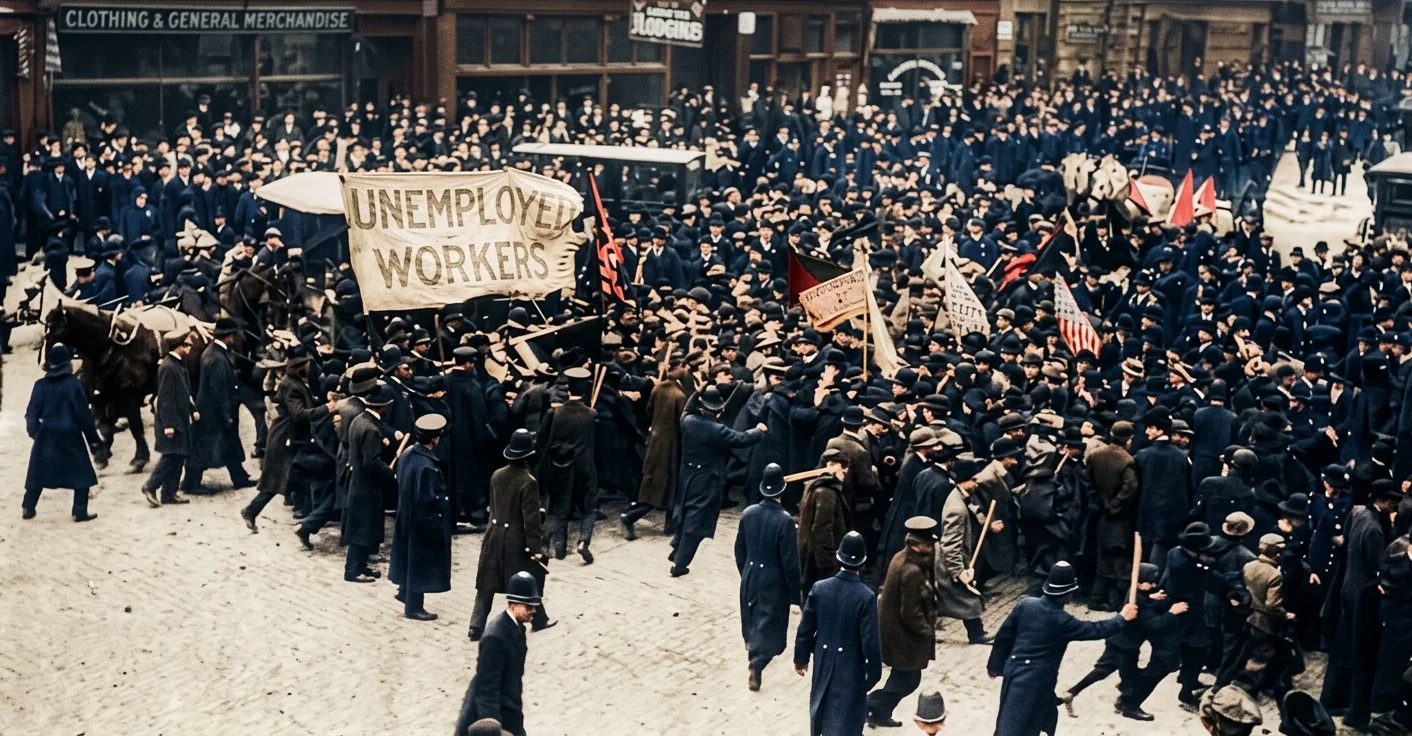
THE problem of the unemployed has been increasing in perplexity. Last winter it reached acute and violent conditions in quite unprecedented proportions. But this winter the problem has returned greater and more distressing than ever. Governors of states are calling councils to consider it. The central government at Washington is giving it attention. Ex-president Roosevelt has proposed to stump the United States in the interest of the unemployed.
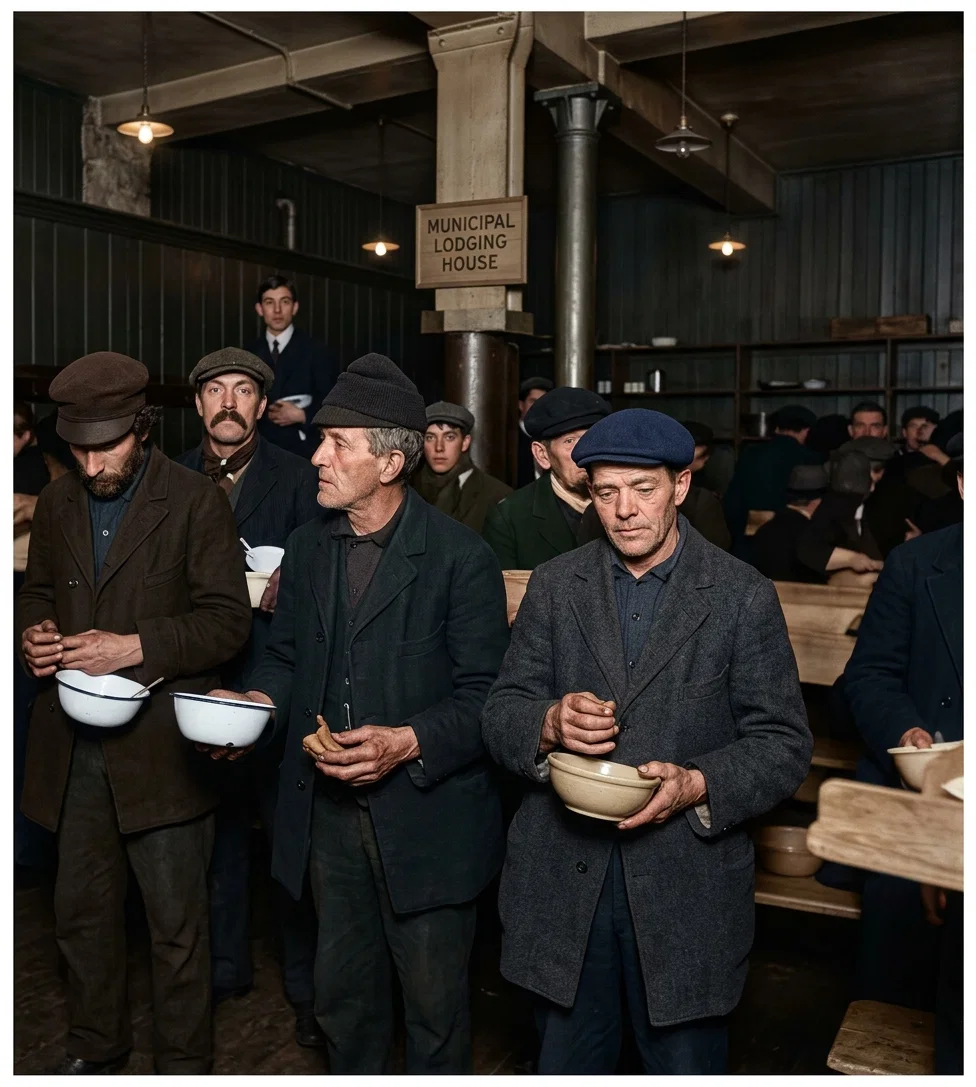
The North American Civic League for Immigrants, through its legislative committee, said as early as December 12 that “there are already ominous signs that unemployment this winter is far greater than last. If it is not proved by trade records, it is attested by municipal lodging house superintendents and mission managers. Already the municipal lodging house in New York is taxed to its capacity. . . . It is no time to preach the salutary influence of a firm belief that the world goes well. The first north windstorm of the winter is insistently sounding a different note. Thousands of men without work, without homes, are turned loose on communities. In full possession of abilities, of decent manhood and womanhood, they are nevertheless helpless. There is no work. They have no money and no home. Are they to look to jails and charities for shelter and aid, and to these only? What is the reason for their situation, what the real nature of their need?”
“The divine Book . . . foretells the fact that violence would characterize the last days.”
It is estimated that New York alone has half a million men out of employment. Hundreds of men in different sections of the country are roaming about asking for work and begging for bread. It will not do to throw this situation aside with a wave of the hand and the remark that “they are nothing but tramps.” If you will take the pains to mingle among them, you will find many of these men refined, educated, and industrious. They are willing to work if they could find something to do. But this generation has educated millions of men into the habit of working under the direction of some one else; and when they are thrown out of employment, they are in a pitiable, even hopeless condition. They know not which way to turn or what to do.
But to state facts of this kind, will not relieve the distress; and to say that such conditions ought not to exist in a so-called Christian land, will not cure the social malady. These conditions are here, and are becoming more aggravated and chronic month by month. There may be a little relief in the summer, only to have the recurrence of the problem of unemployment in more distressing forms the following winter. We have well-nigh reached the breaking point in this country.
Conditions similar to these existed in the Old World. England, just previous to this great European war, was floundering about in a hopeless effort to weather the storm of unemployment. Parliament was seeking to enact laws and devise ways and means to dispel the discontent that was within her borders through a lack of bread and clothing. In like manner Germany, and practically all the other nations of the continent, and of the far East as well, were grappling with similar situations. There was distress and discontentment everywhere.
When Europe’s war came, it burst forth like an explosion. People were not expecting it. Yet if they had been studying the conditions closely, they would have seen that just such a thing might be expected in view of the conditions that prevailed.
THE WAR SEEMED A RELIEF
Rulers, without much question, have found the war that is now in progress to be in some respects a relief from the perplexities and the distresses that preceded it; and many individuals are expressing the hope that immediately following the war, there will be a great change for the better. But we must not allow our hopes to becloud our judgment, and especially must we guard against setting aside the prophecies that speak so plainly concerning the conditions that will prevail throughout the world until the end of time. It may seem pleasant to us to think of matters being greatly improved after this war; but we will find, instead, that bitterness and hatreds have been created that will quickly make conditions far worse than they have ever been before. And in view of the constantly increasing discontent in this country, our nation may not hope to escape a social storm.
There is a possibility of a brief interval of prosperity, particularly in the nations that have remained neutral during this war; but that prosperity will be suddenly broken if it comes at all. There are deep-seated principles of immorality and selfishness working in the world with an unprecedented intensity, and these things that are working are bound to produce their results.
God’s word has compared the days in which we live to the146days of Noah; and of that time the record in the Bible says: “The end of all flesh is come before Me; for the earth is filled with violence through them; and, behold, I will destroy them with the earth.” Gen. 6:13. And, “As it was in the days of Noe, so shall it be also in the days of the Son of man.” Luke 17:26.
THE VIOLENCE IN NOAH’S DAY
In Noah’s time, the inspired history informs us, the earth was “filled with violence.” And if there is any one thing that marks the days in which we live, more strongly than anything else, it is the violence that prevails to so large an extent. The war that is now raging in Europe is simply the expression of the violence that men had been storing up in their hearts.
The one paramount factor in creating sentiments of violence is the controversy between the capitalist and the laborer. Upon this topic the apostle Paul has said to us: “But know this, that in the last days grievous times shall come. For men shall be lovers of self, lovers of money.” 2 Tim. 3: 1, 2. In other words, men will be selfish and greedy for gain; and this selfishness and greed will be so marked, and so colossal in its proportions, that it will create perils in the last days.
This greed and love of self is not confined to the men of wealth by any means, for the disposition of those who are unsuccessful in the race for money and pleasure is in most cases the same as that of the ones who succeed. The disappointment through failure creates bitterness. Oftentimes the failure of the unsuccessful one is charged to some trickery or fraud on the part of those who have succeeded in seizing the wealth and who are reveling in luxuries and wantonness. This breeds the bitterest and the most deep-seated discontent. Hence we see that the divine Book not only foretells the fact that the spirit of violence would characterize the last days, but it also shows us what will be one of the leading causes that underlie it.
JUSTICE IS LACKING
The sentiment is strengthening every day, that the privileged classes are increasing in power, and that there is no justice for any one unless he is able to command it with money. And as affirmed by a lord chancellor of England, “There is nothing which will so dissociate men, which will drive nations to madness so quickly, as the belief that the justice of the country is not honestly and impartially administered.”
Not only is the stress of industrial wars in this nation a menace to the lives and the holdings of wealthy men, but a cataclysm of revolution is threatened that will strike every part of society; for once the violent forces are turned loose, the man of modest means who has honestly acquired every dollar he possesses, is liable to become the target of the excitable mobs, whose movements are directed rather by flighty sentiment than by reason and judgment.
Every nation has her contending elements. Solidity and union in society can be found in no country. And while this has always been true to a limited extent, there have never been presented such conditions and such social dangers as to-day. And where so many influences are working, and all at cross-purposes with one another, it is evident that this seed sowing will produce a harvest of anarchy and violence the like of which the world has never seen.
WILL A REVOLUTION PURIFY?
Some have suggested that these conditions betoken a great revolution that will purify the world. But a revolution of purification could never come out of this murky sea of discontent and strife; for not only is society broken up into these warring factions, but there is such a prevalence of immorality and criminality that the only result that could come from the breaking loose of these forces would be the absolute chaos of anarchy itself.
“Are They to Look to Jails and Charity for Shelter and Aid?”
God is not the author of the distressing, perplexing conditions that are in the world; but through His prophetic word, He is seeking to impress upon every heart that the situation to-day demands something very unusual. Furthermore, this Word of inspired prophecy shows us that the thing that will bring an everlasting end to the reign of sin is the second coming of Christ, and the event cannot long be delayed.
While we may have a brief time of apparent peace, and little periods of prosperity, yet the prevalence of violence, bred by the conditions through which the world is passing, will become worse and worse until the climax is finally reached. “So Christ was once offered to bear the sins of many; and unto them that look for Him shall He appear the second time without sin unto salvation.” Heb. 9:28.