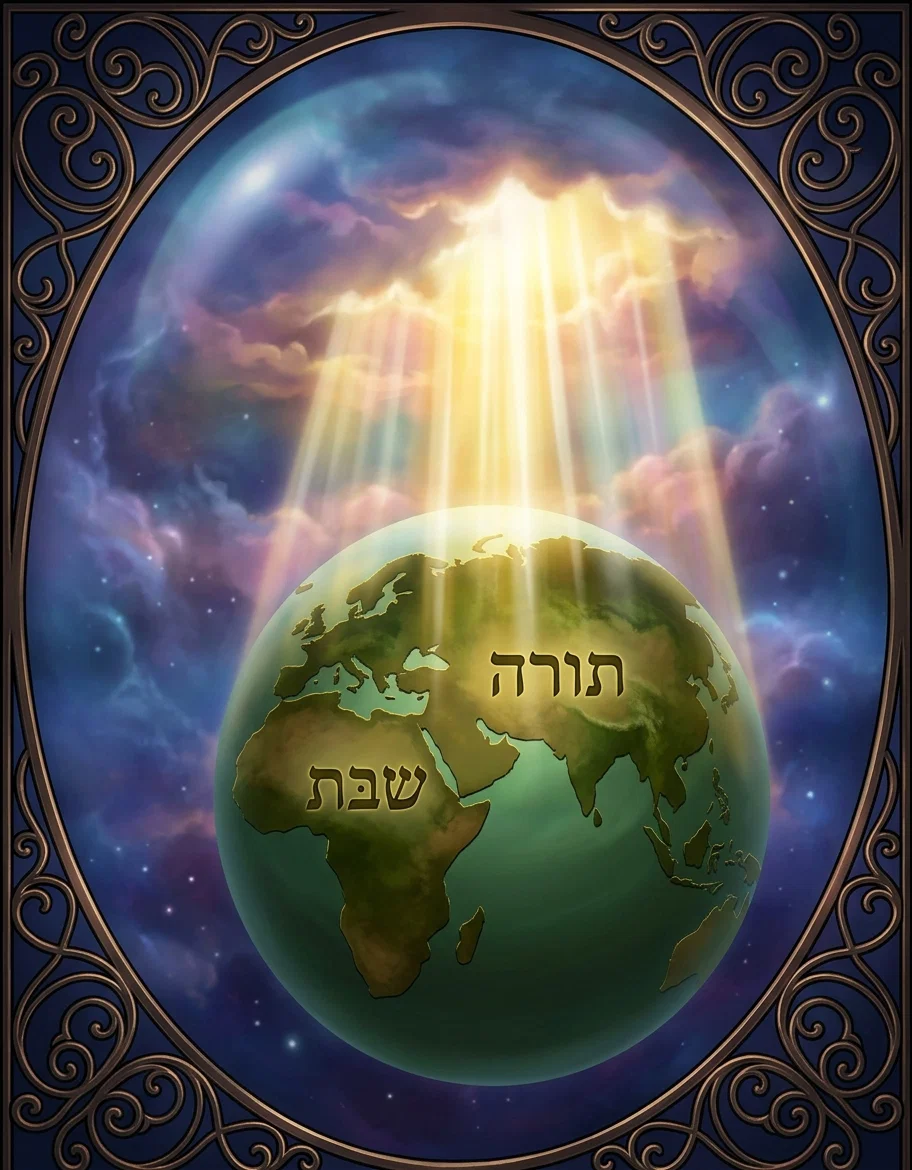
THE ORIGINAL SABBATH

2%

Pacific Press Publishing Association · Mountain View, California · Mar 16, 1915

FromSigns of the Times, Vol. 42, No. 11.

Read the full edition

THE ORIGINAL SABBATH

What Does the Word Mean?—When Was the Sabbath Instituted?—Which Was It?—How Was It Made, and for Whom?
The Sabbath is God’s great memorial of His creative work. It was instituted at the close of creation week, in commemoration of that marvelous act which originated the world and man. Gen. 2:1-3.
The commandment reads: “Remember the Sabbath day, to keep it holy. Six days shalt thou labor, and do all thy work: but the seventh day is the Sabbath of the Lord thy God: in it thou shalt not do any work, thou, nor thy son, nor thy daughter, thy manservant, nor thy maidservant, nor thy cattle, nor thy stranger that is within thy gates: for in six days the Lord made heaven and earth, the sea, and all that in them is, and rested the seventh day: wherefore the Lord blessed the Sabbath day, and hallowed it.” Ex. 20:8-11.
By way of introduction, we will raise the following questions:
1. What is the meaning of the word “Sabbath”?
2. When was the Sabbath instituted?
3. Which day was originally made the Sabbath?
4. How was it made?
5. For whom was it made?
These questions, properly considered and fairly answered, should give us intelligent information as to God’s purpose in making the Sabbath. Let us now consider the questions in their order.

THE MEANING OF THE WORD

1. What is the meaning of the word “Sabbath”? It comes from the Hebrew word Shabbath. It is defined by Gesenius as “rest, cessation.” Webster defines it “the day of rest”; Young, “cessation”; Liddell and Scott, “Sabbaton, Sabbath, rest; (2) a week.”
From these definitions, it is plain that the word “Sabbath” means primarily rest, secondarily week. Gesenius defines Shabbath, Sabbath, “cessation.” It therefore is a cessation, or rest. Since rest implies previous labor performed, it stands related to some work from which there was a cessation, or rest.

WHEN WAS IT INSTITUTED?

2. When was the Sabbath instituted? In order to learn when the Sabbath was instituted, we must find out when the first work was performed, after which there was a cessation, or rest. Such a time is found by going back to creation. “In the beginning God created the heaven and the earth.” Gen. 1:1. “And the earth was without form, and void; and darkness was upon the face of the deep. And the Spirit of God moved upon the face of the waters.” Verse 2. Then follows the record of creation. Here was a work performed, after which a cessation, or rest, followed. Hence the Sabbath, or “rest day,” was instituted at creation. Gen. 2:1-3.

WHICH WAS THE DAY?

3. Which day was originally made the Sabbath? It was certainly the day when the rest, or cessation, occurred. Which day was that? “And on the seventh day God ended His work which He had made.” The first chapter of Genesis enumerates six days of labor performed in the work of creation. God did not have a cessation before He labored, for the text says He “ended His work” and rested. The “rest” day, or Sabbath day, was the day following the six days of creation. Which day was that? “And He rested on the seventh day from all His work which He had made.” The seventh day in what succession or period?—The seventh day of the week, unquestionably. The period of seven days is here given, and no other period is mentioned. The seventh day was therefore the last day of the week.
Again, the Sabbath commandment given in the law from Sinai says, “The seventh day is the Sabbath of the Lord thy God.” Ex. 20:10. This text leaves no question as to which day was the Sabbath. The time of its institution is also given: “For in six days the Lord made heaven and earth, the sea, and all that in them is, and rested the seventh day: wherefore the Lord blessed the Sabbath day, and hallowed it.” Verse 11. These statements are from Him who made the Sabbath, and gave the law of the Sabbath from Sinai. The authority of the testimony is unimpeachable.

HOW WAS THE SABBATH MADE?

4. How was it made? Since “Sabbath” means rest, “Sabbath day” means rest day. By what act was it instituted a rest day? It must be the Lord’s rest, as related to the Lord’s work. This question is definitely answered in the following texts: “Thus the heavens and the earth were finished, and all the host of them. And on the seventh day God ended His work which He had made; and He rested on the seventh day from all His work which He had made.” Gen. 2:1, 2. “In six days the Lord made heaven and earth, and on the seventh day He rested, and was refreshed.” Ex. 31:17. “And God blessed the seventh day, and sanctified it: because that in it He had rested from all His work which God created and made.” Gen. 2:3.
Unquestionably these texts teach that it was the Lord’s work and the Lord’s rest that instituted the Sabbath day, and constituted it the Sabbath, or rest, of the Lord. This work and rest were performed at the time of creation. The work and rest of God are the underlying facts upon which the institution of the Sabbath is based. The Sabbath is therefore the Lord’s rest day from creation. One can no more change that fact than he can change the fact that he was born upon a certain day. No other day can ever be the Lord’s rest or Sabbath day, than the day upon which He rested. That was the seventh or last day of the week.
God did not make it the Sabbath day by the act of blessing it, but by the fact of resting upon it. Ex. 20:11 says, “Wherefore the Lord blessed the Sabbath day.” It was already the Sabbath day before He blessed it. In Gen. 2:3 we read, “God blessed the seventh day, and sanctified it: because that in it He had rested.” It was His resting that made it His rest day. He had rested before He blessed and sanctified it.

FOR WHOM WAS IT MADE?

5. For whom was the Sabbath made? As the blessing and the sanctifying were after God had rested, the only legitimate conclusion is that it was blessed and appointed for man. “Sanctify”means to make holy. The Sabbath was therefore from creation made holy for man.
Christ was the Creator who worked and rested in the making of the Sabbath. The Son of man is mentioned in Col. 1:16: “For by Him were all things created, that are in heaven, and that are in earth, visible and invisible, whether they be thrones, or dominions, or principalities, or powers: all things were created by Him, and for Him.” Since it was Christ who worked with the Father, and rested in making the Sabbath, it follows that the Sabbath instituted at creation, on the seventh or last day of the week, is also Christ’s rest day, or Sabbath day. Since Christ is Lord of the Sabbath day, and the Sabbath instituted at creation by Him is His rest or Sabbath day, there is no one better prepared than He to tell us for whom it was made. “And He said unto them, The Sabbath was made for man, and not man for the Sabbath.” Mark 2:27.
The Sabbath was not made for God. The Lord made it for man. The only question to be settled, therefore, is, Who is man? It is a law of language that a noun unlimited is always used in the broadest sense. The term “man” therefore must refer to the race. It must embrace the first man, the last man, and every man of the race. No consistent scholar will attempt to limit it, since Christ declared it to be unlimited.

THE USE OF THE TERM “MAN”

Let us take a few illustrations, where the word “man” is used in the same way in other texts, and from this gather a correct view of its meaning. “Let us make man in Our image.” Gen. 1:26. “So God created man in His own image.” Verse 27. “God formed man of the dust of the ground.” Gen. 2:7. “My Spirit shall not always strive with man.” Gen. 6:3. It repented the Lord that He had made man. Verse 7. These texts refer to events long before there was a Jew in existence.
In the time of Israel, the term was used as follows: “And the Lord said unto him, Who hath made man’s mouth?” Ex. 4:11. “There shall no man see Me, and live.” Ex. 33:20.
Under “A man; a human being, Anthropos,” Young, in his concordance, gives the following: “The Sabbath was made for man.” Mark 2:27. “What shall it profit a man, if he shall gain the whole world, and lose his own soul?” Mark 8:36. “For this cause shall a man leave his father and mother, and cleave to his wife.” Mark 10:7. Christ is the speaker in each of these three instances. The word “man” is used similarly in all. If one is limited to the Jews, then they are all limited to that people. That would prohibit marriage to any but the Jews. Christ says, “The Sabbath was made for man.” Paul says the woman was made for man. 1 Cor. 11:9. There is a striking parallel between the woman and the Sabbath. They were both made before the fall, and both were made for man. Both the Sabbath and the marriage institution are called honorable. Isa. 58:13; Heb. 13:4. To limit the Sabbath to the Jews, and claim that the term “man” is unlimited when it applies to marriage, would be such folly as no reasonable man would be guilty of.
From these passages it is clear that the word “man” in the Saviour’s statement, “The Sabbath was made for man,” refers to the race of mankind, including every man of every age or dispensation. The seventh-day Sabbath made at creation by Christ Himself is therefore the Sabbath to-day, and will continue to be the Sabbath so long as man shall live upon the earth.
From this study, we have learned that the word “Sabbath” means rest, or cessation.
That the Sabbath was instituted at creation.
That the Sabbath was made by the work and rest of Christ, the Creator, at the time of creation.
That the seventh day of the week was the day upon which Christ rested.

FOREVER HIS REST DAY

It must therefore ever after be His rest day, the same as the date upon which one is born is ever afterward his birthday. Nothing can change the rest day of Christ, any more than can anything change a person’s birthday.
The rest, or Sabbath, is the Lord’s, not man’s; hence the seventh-day Sabbath is the Lord’s day. It was made and sanctified for man. Man includes every member of the race from first to last. Therefore the Sabbath instituted at creation by the work and rest of Christ is the Christian Sabbath, and is for all in every age who wish to walk in harmony with the requirements of God’s moral law, and accept pardon through Christ.
Since the woman “made for man” is acknowledged by all to include the gentile as well as the Jew, and since the expression “Man dieth” is bearing its constant testimony that every man of every race and nation is included in the expression “man,” there is no sound reasoning that will deny that the Sabbath made for man was made for all people during all time.
B. C. E.