“WELL, this looks quite civilized,” was the candid remark of an American lad upon landing in Japan. Oriental civilization differs from the Western variety in many respects. But with a civilization of their own, the Japanese are rapidly adopting and adapting that of the West.
In Tokyo the most noticeable of recent changes has been in the matter of local travel. Eight years ago, when the writer first came to Tokyo, there was only one line of horse-cars running along the main business street. And those were the only street-cars in the city. If we wished to visit our friends, or to do business, in the southern part of the city, we had choice between walking and going by jinrikisha. These overgrown baby cabs are not to be despised as means of conveyance; but the cost of riding in one, while it may seem like pitifully small wages for the man who pulls it, is many times the cost of a street-car fare, especially for a ride of several miles.
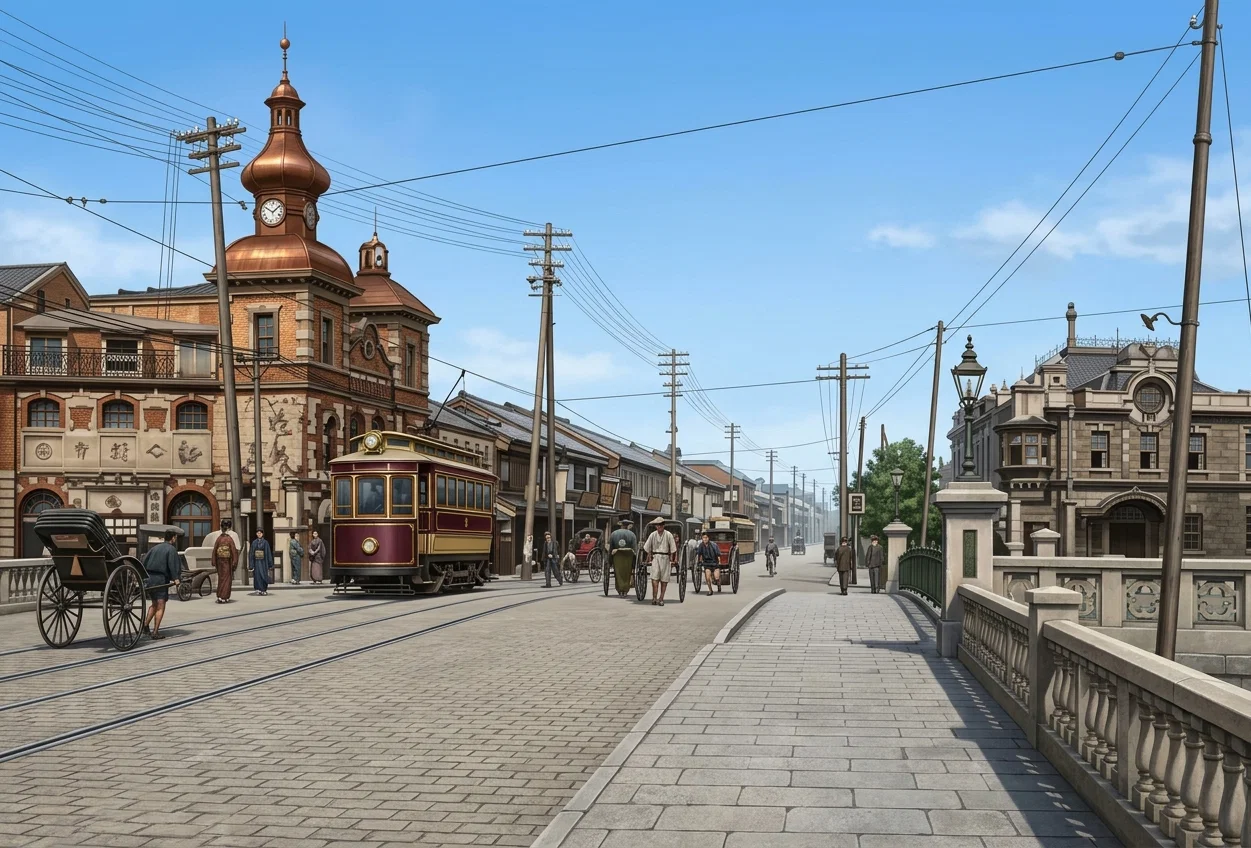
Main Business Street of Tokyo
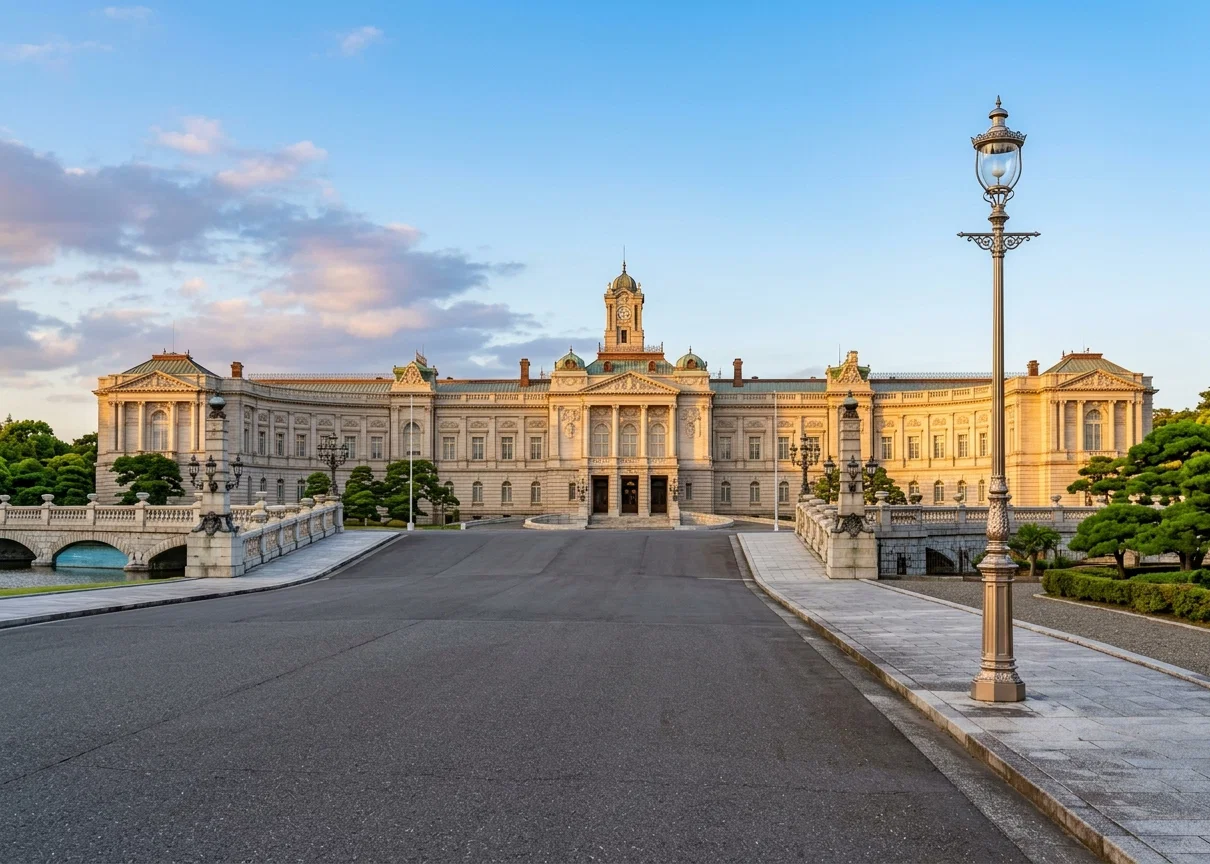
The New Palace of the Crown Prince
But about six or possibly seven years ago, the old horse-car line was replaced by an up-to-date trolley system. That was the beginning, and the end is not yet. In course of time two more electric street-car companies were organized; and all three prosecuted their work with vigor, till to-day Tokyo has fully one hundred miles of electric street-car lines, and projected lines will swell this to 140 miles. About two years ago the three companies were united; and now you can ride from one end of the city to the other, with transfers to any line, for just half the ordinary fare in America. And morning and evening, during certain hours, a reduction of one half is made as a concession to the laboring classes who patronize the cars. During these hours the cars are crowded to their utmost capacity, till there is often not even standing room. Of course thousands of jinrikisha men have had to throw up their jobs since the coming of the trolley-cars. But “the greatest good to the greatest number” seems to be the motto of modern civilization; so the car of progress rolls on, even tho some are crushed beneath its wheels.
With the coming of the electric cars came also the work of widening the streets. Many busy streets were too narrow to allow a double line of tracks to be laid. On some streets only a single line was laid, with switches at intervals where the cars could pass. But in nearly all these cases the streets have been widened to allow for room for two tracks. And even where no car lines are projected, quite a number of streets have been widened to allow more room for the ever increasing traffic. The view here given is of the principal business street of the city. A little farther north this street was considerably narrower; but recently it has been widened to equal the width here shown. For a distance of about three miles all the buildings on the west side of the street were torn down or removed, and replaced by new ones set farther back. And a fine new bridge across one of the canals is now being built. This is called Nihombashi—Japan Bridge—and is the place from which all distances from Yedo were measured, in the olden days.
Recent years have seen some fine new buildings erected in Tokyo. Among these may be mentioned the Department of Communications building, near the terminal railway station; a new building for the metropolitan police headquarters; and the Imperial Theater. Last but by no means least must be mentioned the magnificent palace of the crown prince, who plainly shows, in many ways, his liking for things and ways modern.
What bearing have these changes upon missionary work in Tokyo? The improved facilities for travel have quite a direct bearing. By being able to get about more rapidly we are able to accomplish more. Besides this, it has become possible for the people to assemble from all parts of the city to hear the Gospel preached. And so, if we had a neat church building in a central location, near some one or more of the main car lines, it would provide one very important means for presenting the closing Gospel messages to the people of this great city. We have found a very suitable location, near two of the main street-car lines, and but a little farther from a much-used suburban line. Further, it is directly in front of the Government Military Academy, and hence easily found. We have already bargained for this land, and have the money to pay for it. But that is about all we do have. The Lord’s business requires haste in these days. But if we are left entirely to ourselves to erect the church building we ought to have on this ground, the work will be delayed. We trust that this statement of our need will appeal to the liberal hearted.