Shiloh: the Man of Sorrows

4%

Pacific Press Publishing Association · Mountain View, California · May 17, 1910

FromSigns of the Times, Vol. 37, No. 19.

Read the full edition

Shiloh: the Man of Sorrows

By Mrs. L. D. Avery-Stuttle
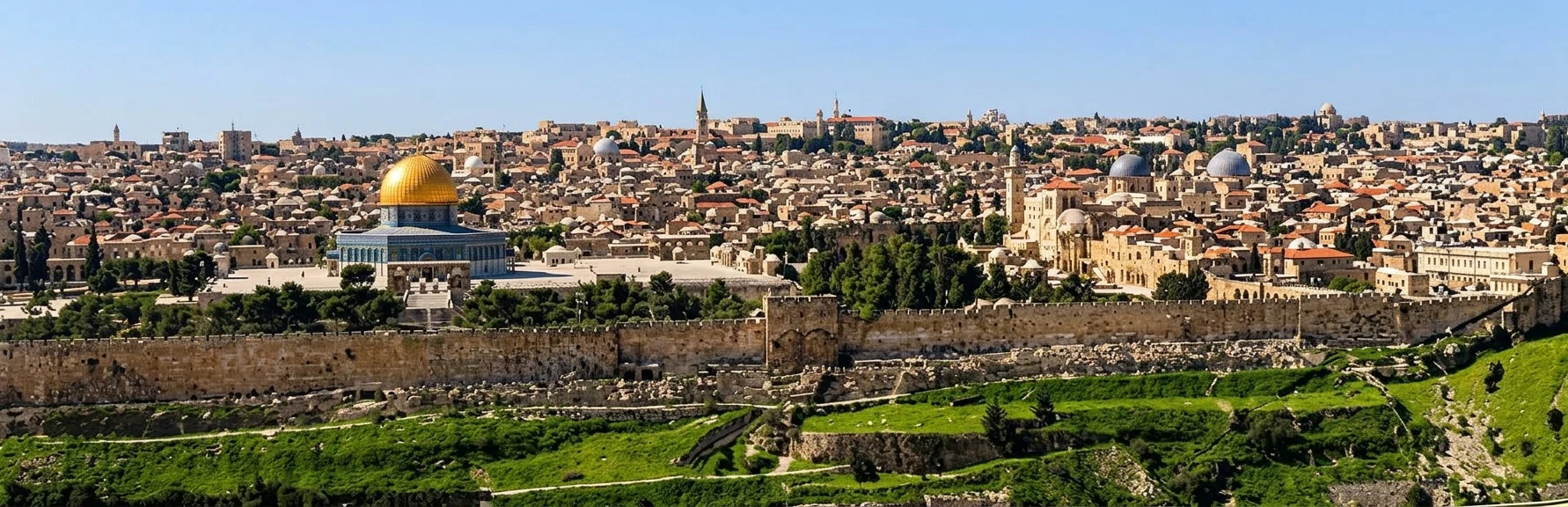
Modern Jerusalem. The large dome in the foreground is the Mosque of Omar, which occupies the ground of the ancient temple.

Chapter XI.—Searching for the Child

THE entire encampment was early astir the next morning. One by one the white tents at Beeroth, the “city of wells,” had disappeared; and by the time the April sun gilded the crests of the eastern hills, the cavalcade was again in the line of march southward.
It was yet early morning when the northern walls of the holy city became discernible, while, towering far above them, like a glistening chrysolite, gleamed the yellow dome of the temple. The fairy fingers of the morning rested upon it with gentle touch. A few fleecy clouds floated lightly above the summit of Olivet, which was already blushing rosy red, kissed by the sun.
As the vast multitude catch the first glimpse of the city, a joyous shout of thanksgiving rises from thousands of lips, and up from the mighty throng peals the glad notes of the psalm of David. The shout is borne from peak to peak, and echoed from valley to valley:
“Our feet shall stand within thy gates, O Jerusalem. . . . Peace be within thy walls, and prosperity within thy palaces.”
Our cavalcade enters the city of David through the Damascus gate. Crowds of people throng the streets. From Antioch and Damascus on the north to Havilah and Ophir in the far south, and from Mesopotamia and Chaldea in the east to Egypt and even the far-away isles of the Great Sea come the seed of Abraham from the many lands whither they have been scattered, to keep the Passover at Jerusalem. The rich and the poor, the servant and his master, the borrower and the lender, the devout and the frivolous, the high-born Sadducee and the despised publican,—all classes and all conditions meet at the Passover.
With the others comes the Jewish proselyte—Herod Antipas—from his fair palace, and his lordly mansion at Jerusalem is thrown open and crowded with distinguished guests. Everywhere on the hillsides and in the valleys round about the regal city, are sprinkled the white tents of the pilgrims,—and right royally are they entertained; for Eastern hospitality prevails everywhere at the time of the Passover.
One by one the days of the sojourn in Jerusalem pass by,—each one pregnant with a new and vast significance to the heart of a Lad passing in and out of the temple amid the throng of worshipers. The eating of the paschal lamb, the solemn sprinkling of the blood, the ascending clouds of incense, the absolute perfection required in every type, the complete banishment of every crumb of leaven from every house, the wonderful and significant services of the temple,—these things impress the soul of the youthful Son of the carpenter with growing certainty that in some mysterious manner He is connected with all this grand array of rites and ceremonies. Every moment the impression deepens. Every moment the Spirit of the Almighty is whispering to His soul those lessons of tremendous import, upon the receiving and carrying out of which by this simple and unassuming Child, hangs the destiny of earth!
The last day of the Passover comes and goes, and the succeeding evening, at set of sun, the northern-bound pilgrims again encamp at Beeroth.
Let us visit yonder tent, pitched hard by one of the springs of Beeroth. Everything is in a bustle of excitement and anxiety. A spirit of distress and unrest has fallen upon the camp of the carpenter of Galilee. In the door of the tent stands a man long past the prime of life: to this fact the fast whitening locks upon the noble head testify. The eyes are dark, and mild and gentle as a woman’s, and just now are filled with an expression of deep anxiety. He is gazing fixedly at a woman who is hastening toward him from the farther side of the encampment. Her lustrous waving hair hangs unconfined over her shoulders, and the last rays of the setting sun have turned it into shining threads of spun gold. In her still youthful eyes, deep and blue as the sky above her, lurks the shadow of an awful fear.
“Ho, my Mary! hast thou news of Him—of the Child?”
“Nay, nay, O my husband; and verily I have sought Him among all our kinsfolk and acquaintance. And now the night falleth; already the road toward Jerusalem is wrapped in shadows. O my Child! my Child! whither hast Thou gone?” And the half distracted woman pauses a moment by the side of her husband, wringing her hands in distress.
“Pray what can have caused this so great anxiety to the wife of the carpenter?” questions a glib voice close at hand,—a voice full of sarcasm and bitterness. It is the voice of Rabbi Shaphan.
“Peace be to thee, O rabbi! but of a truth I am in deep perplexity,—and stay; mayhap thou hast seen Him,—the Lad, my young Son!”
“But He hath again escaped thy watchful care? Dost thou remember how I charged thee even a few days ago, saying, ‘Beware lest evil come to thee through this thy Son’? Behold, even now He followeth after His ungodly companions. Go, woman, find the robber Barabbas; when thou hast found him, thy Son will not be far distant.”
With a groan of agony, the mother turns her white face toward Jerusalem, and quickly disappears among the shadows of the valley. Dazed and confounded, the carpenter stands for a moment in the door of the tent, and then, as if awakening from a horrid dream, follows after her with long strides.
The yellow moon hangs low over the summit of Olivet, and the shrill voice of the cock tells that it is at least the third hour of the night, when the travelers, weary and sick at heart, near the walls of the city. Forgetting that the massive gates are closed on this night, because the Passover is ended, they had hoped to find entrance, and rest until the morning. So, weary and discouraged, they await the tardy breaking of the day, outside the walls of the city.
At sunrise, the great gates are thrown wide open; while up and down the streets, already crowded and noisy, wander the carpenter of Nazareth and his young wife. The birds sing cheerily; the flowers open their beautiful eyes to the spring sunshine; the streets and market-places are thronged with a motley crowd bent upon business or pleasure, for the visitors at the Passover have not all departed; the sun shines brightly in the heavens; but in the hearts of these two, the awful gloom of night is still abiding.
At last the day is spent, and the shades of evening again wrap the hills of Benjamin with a gray mantle. The second day passes like the first, in unavailing search and bitter tears. At the dawning of the third day, misery and hopeless despair envelop them as with a robe of darkness. Not a street nor a lane but has been thoroly explored. Not a friend nor even a casual acquaintance but has been questioned with wildly beating hearts. In vain.
“See; it is nearing the eleventh hour of the day, mine husband, and the Child cometh not. How can I lay me down to rest again this night also! Look! yonder is the dark tower of Antonia. I can scarce keep back the fear that my Son, it may be, hath been placed within its gloomy walls. Hark! is not that the voice of the Lad?” and the speaker hurries forward until she stands beneath the grim structure.
“No; it is only the sighing of the breeze, or it may be the low cooing of the doves. O why was I thus unmindful of my sacred trust!” continues the woman, sinking upon her knees in the shadow. “Verily, O God, Thou hast bestowed great honor upon thine handmaid, and didst not consider her lowly estate. Yet have I forgotten the charge Thou gavest me.”
“Thinkest thou,” asks the carpenter, desperately, “that Herod Antipas, remembering that it was the unholy will of his father to destroy the Babe, hath set spies to discover the Lad, and perchance venture to do Him harm?”
“I know not; it may be so. I only know that already the Child hath enemies who are strong and powerful. As for myself, I can not but fear the treachery of Rabbi Shaphan, as well as that of others whom his influence affects. Verily, we have guarded the secret of His birth. Yet often, when the priests and rabbis have demanded that I rebuke Him because He refuseth to be led to them, I have felt a premonition of coming evil. O my husband! woe be unto me; for the prophecy of Simeon already proveth itself true; for behold I feel this day the piercings of the sword in mine own heart.”
(To be continued)