Out of Babylon to Zion

7%

Pacific Press Publishing Association · Mountain View, California · Jun 7, 1910

FromSigns of the Times, Vol. 37, No. 22.

Read the full edition

Out of Babylon to Zion

By Prof. Lucas J. Reed
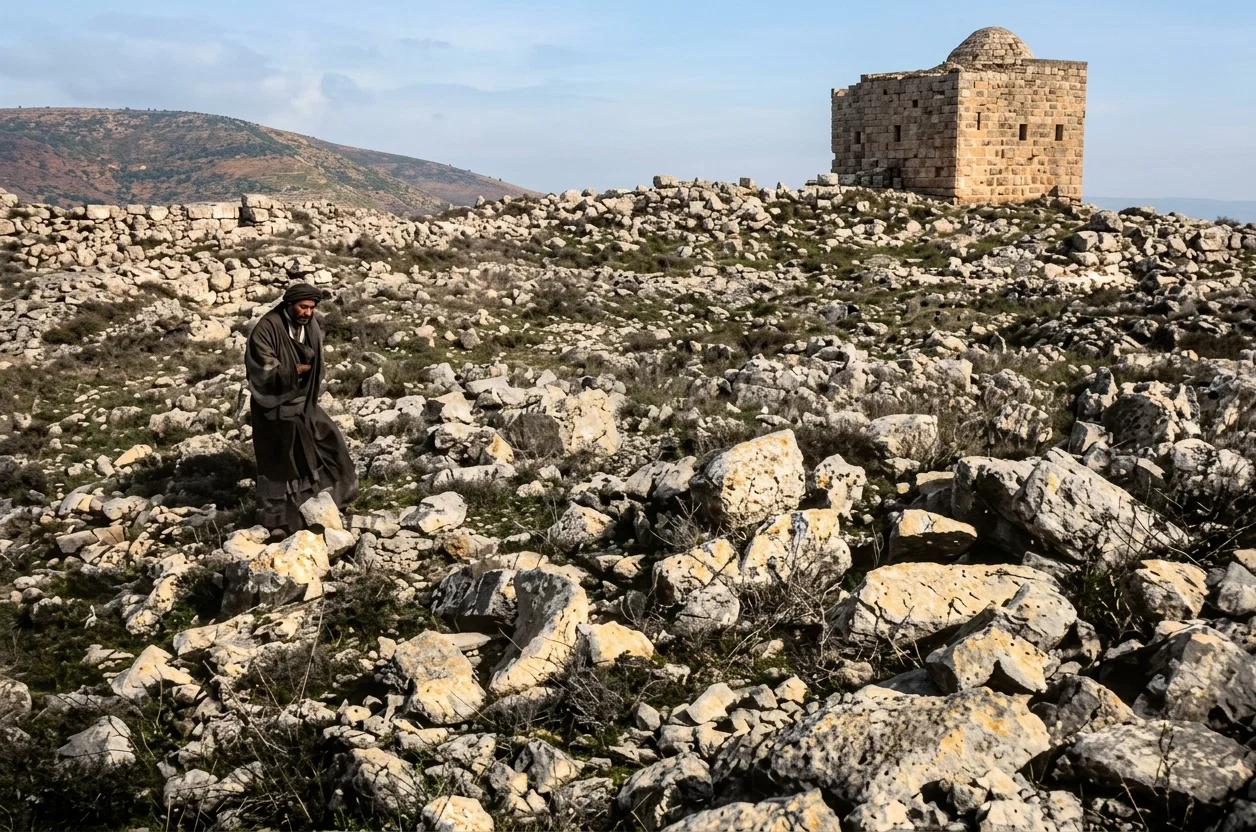
Place of Sacrifice by Samaritans on Mt. Gerizim

IV. Cambyses and the Pseudo-Smerdis

Before Cyrus the Persian died, he arranged that his son Cambyses should succeed him in the kingdom. He also arranged that a second son Smerdis should have certain dominions. As soon as Cambyses began to rule after his father's death, he was jealous of his brother Smerdis and had him secretly put to death — so secretly that very few in the nation knew anything about it. This very crime was to be the means of the undoing of Cambyses eventually, for crime has a strange power often of punishing the perpetrator.
Cambyses had an ambition to acquire fame as a conqueror, like his father; and being master of the three richest capitals in the world, he had ample resources with which to meet the expense of almost anything he was of a mind to undertake.
Hatching up a pretext for invasion, he marched against Egypt. He seems to have been a very cruel king in his conquests. He outraged the mummied corpse of the previous Pharaoh, on account of his having insulted the Persian monarchy. The fragments of the mummy were thrown into the fire. This act offended both Persians and Egyptians. The Persians thought that, fire being the purest of the elements, and an express symbol of Deity, it was unpardonably wicked to feed it with any dead, especially a corpse; and the Egyptians, on account of their idea of the resurrection, when the soul was to come back to the body, made it an article of faith to preserve every human body with the greatest care. This is an example of a great many of his fits of anger and unwise conduct.
Finally Cambyses received word that his brother Smerdis had seized the crown, and that all Persia had acknowledged him. Cambyses knew that this must be a usurper, since the real Smerdis he had already secretly put to death; and so in hot haste and indignation he left Egypt to return to the seat of insurrection. On mounting his horse, he wounded himself seriously with his sword, but refused to rest. He insisted on being carried in a litter; and the fatigue of such a journey increased his illness, and the tyrant found a premature and unhappy death in a poor Syrian village, where he apparently put an end to himself. By a conspiracy, the details of which we do not need to go into, a man by the name of Gomates, who resembled Smerdis, had taken advantage of the absence of Cambyses, to assume the crown under the name of “Smerdis, son of Cyrus.” When Cambyses first heard that Smerdis had seized the government, he questioned whether his brother was really alive, or whether another had assumed his character. It happened, however, that Prexaspes, the Persian nobleman to whom the assassination had been entrusted years before, was with the army; and by him the king was reassured that the perfidious deed had really been accomplished. He who now impersonated him must be an impostor; but notice the peculiar position in which this crime places Cambyses.
If he now denounced Smerdis as a usurper, he would have to betray his own crime, for no one knew that his brother Smerdis had been slain. Even if Cambyses should proclaim the truth, he would not be believed; his assertion would be accepted as fiction, and a lie of a failing power. Prexaspes suggested that the impostor was probably Gomates, to whose brother Cambyses had committed the government of his palace; and this conjecture proved to be correct, but it helped nothing in the present situation for Cambyses. It was probably this desperate state of affairs for himself, and the belief that the Persians were forsaking him for the man they supposed to be his brother, that brought him to the despaired place where he committed suicide.
When Cambyses died, and Smerdis had undisputed sway, as we have already said, the Samaritans at once sent word to this new king of Persia, asking him to stop the work at Jerusalem. In Ezra 4:7-24 we have a record of the accusation which the Samaritans made, and of the success that it met. In this letter which the Samaritans sent to Gomates — or Artaxerxes, as Ezra calls him — they told the king of Persia that the Jews were building the city of Jerusalem, the rebellious and the bad city, and that they had set up the walls and had joined the foundations. They said that if the Jews were successful in building the city and setting up the walls, they would cease to pay toll and tribute and custom to the Persians, and so the revenue of the king would be endamaged. They give two reasons for wishing to see the revenue of the king unmolested:
“Now because we have maintenance from the king’s palace, and it was not meet for us to see the king’s dishonor, therefore have we sent and certified the king.” Ezra 4:14.
So they asked the king to search in the book of the records of his father and he would find that the city of Jerusalem had been a rebellious city, and hurtful to kings and provinces, and that they had moved sedition in the old time, and on that account the city was destroyed. And now they say, If this city is rebuilt, you will have no portion further on this side the river.
This accusation and charge had its effect. At once Gomates sent a decree stating that he had hunted up the records, and had found that Jerusalem, just as they said, had made insurrection against kings, and that rebellion and sedition had been met therein; and moreover he found that there had been mighty kings also over Jerusalem, who had ruled over all the countries beyond the river, and that toll, tribute, and custom were paid to them. So he gave commandment to cause the men to cease, and that the city be not built. And they were warned especially to see that the work was stopped.
Armed with this letter from the royal court of Persia, Rehum and Shimshai and their companions and the adversaries of the Jews, went up in haste to Jerusalem to the Jews, and made them to cease by force and power. And so the work of the house of God ceased to the second year of the reign of Darius king of Persia.