The Balkan War

10%

Pacific Press Publishing Association · Mountain View, California · Jan 14, 1913

FromSigns of the Times, Vol. 40, No. 2.

Read the full edition

The Balkan War

From Our Own Correspondent
A TERRIBLE war is reaping a bloody harvest in the Macedonian fields. The lamentations of the torn sacrifices of deluded human hopes for greatness and happiness, ring out into the dead silence of the cold winter nights. The tragedy of the dissolution of the mighty Turkish Empire, which has been in existence for nearly a century, is now being enlarged by a new chapter, and a new page in the history of mankind is being covered with reports of battles,—dead and wounded.
It is possible that Macedonia will be divided between the Balkan kingdoms of Bulgaria, Greece, Servia, and Montenegro, after peace has been signed.
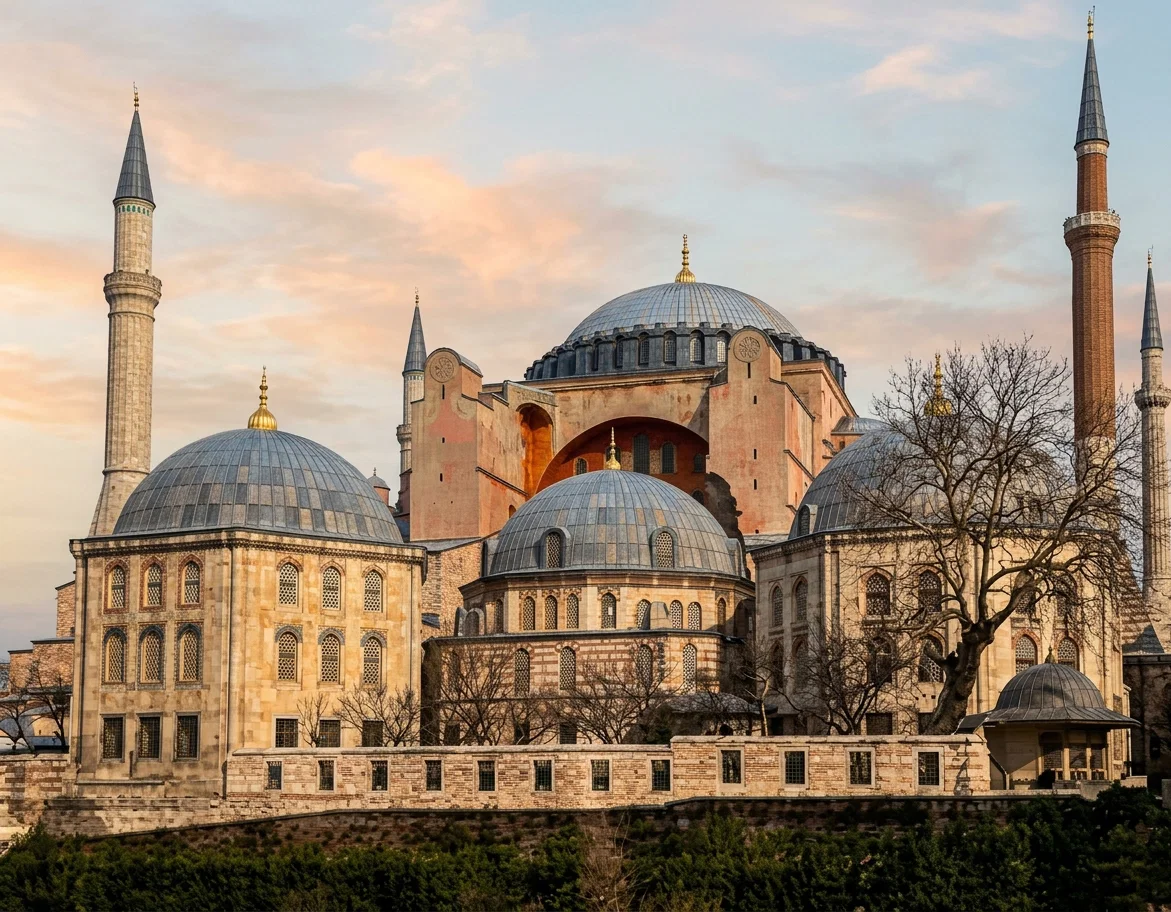
Mosque of St. Sophia — Constantinople — the central religious object of the city
The development of these countries, especially of the first-named three, during the last ten years, seems to show that they could use the rich treasures of European Turkish soil to better advantage than it has been used heretofore. Without doubt, as far as management is concerned, the lot of the Balkan peoples, as independent peoples, would be better than under Turkish rule, altho one must acknowledge that the Turkish government has tried to do what it could in this respect with its limited means during the past few years. One hindrance has been the continual need of money, since Turkey used most of its means for the equipment of its military and naval forces. Another was the inability of many of the lower officials, and a certain irregularity in promises and measures taken by leading individuals.
This war has been called a crusade in the declarations made by the four combined kingdoms, or a continuation of the middle-age campaigns of Occidental knights toward the East to establish Christian kingdoms in the lands where Christianity was first known. As a support of these campaigns, however, there was the same power which proclaimed the crusades against the “heretics,” such as the Waldenses, Albigenses, etc.; namely, the Papacy. The antichristlike trait showed itself then, in the endeavor to spread Christianity by means of fire and the sword. The Saviour also taught His disciples quite clearly: “Put up again thy sword into his place: for all they that take the sword shall perish with the sword.” Paul says: “Take the . . . sword of the Spirit, which is the word of God.” “For the word of God is quick, and powerful, and sharper than any two-edged sword.” To use the power of Christianity for a warlike purpose, is a derogation of religion. But of course, it must be acknowledged that the religious views of the Balkan peoples in these struggles are to a great extent mixed with politics.
The conflict still rages, and it is doubtful whether or not the Turkish army will be entirely routed by the combined forces of the enemy. The Turkish people know little or nothing concerning the war and its progress, as the spreading of unfavorable news would be likely to cause local disturbances. Even the Turkish capital is in the dark concerning the condition of things.
It is rather difficult to say what influence this war is likely to have upon the work of God, and the progress of the last message of grace. At present, the whole work is practically at a standstill, since there are no means of traffic or communication; and in many places the sieges are in progress, and all the young men have been called to arms. Flight into other countries seems to be general, especially in the case of promising youth. In Macedonia itself the work had only been commenced but a short time ago. The future will teach whether it is easier to labor under Turkish government which does not trouble about the different denominations, or under the rule of the orthodox Balkan States, one of whose chief supporters is the fanatical clergy of the Oriental confession. C. Vogt.
Constantinople, November 10, 1912.