European Letter

3%

Pacific Press Publishing Association · Mountain View, California · Jul 14, 1909

FromSigns of the Times, Vol. 36, No. 27.

Read the full edition

European Letter

  • (From Our Own Correspondent)*
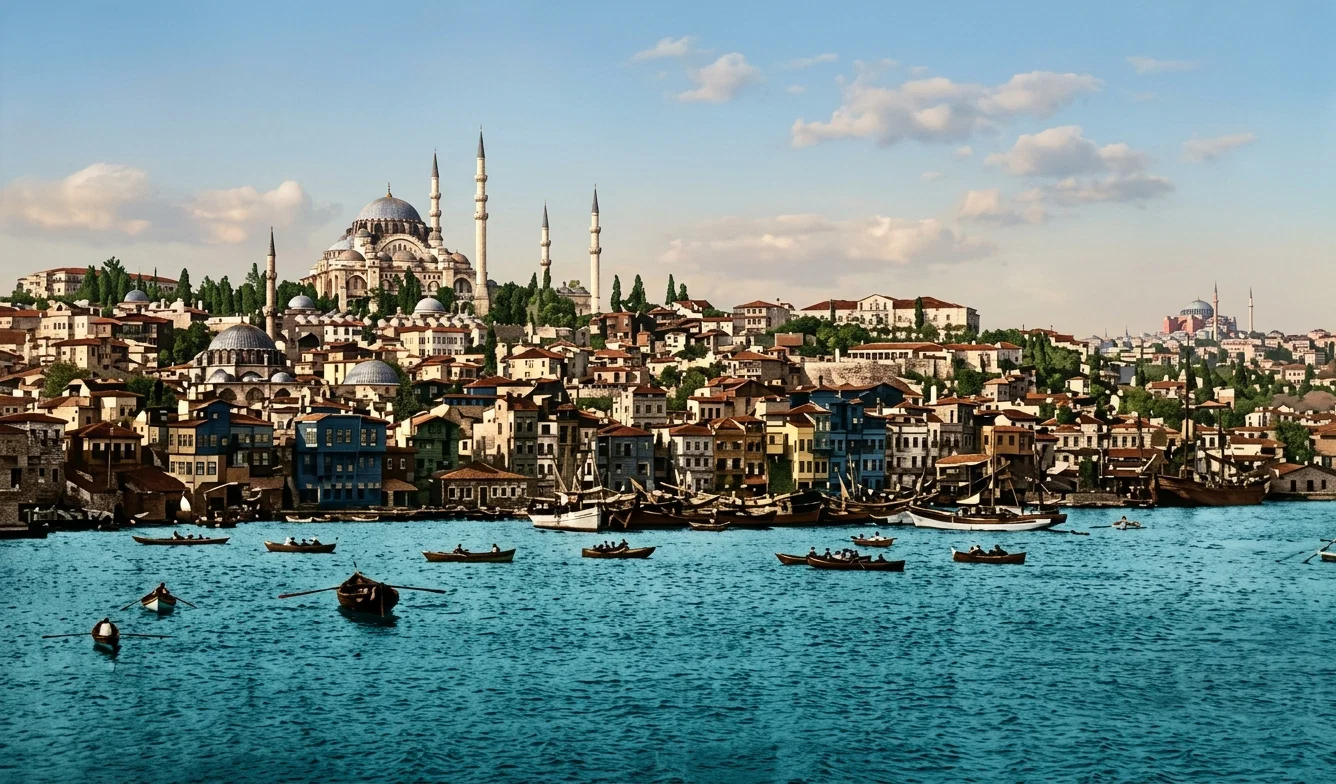
Constantinople
Constantinople
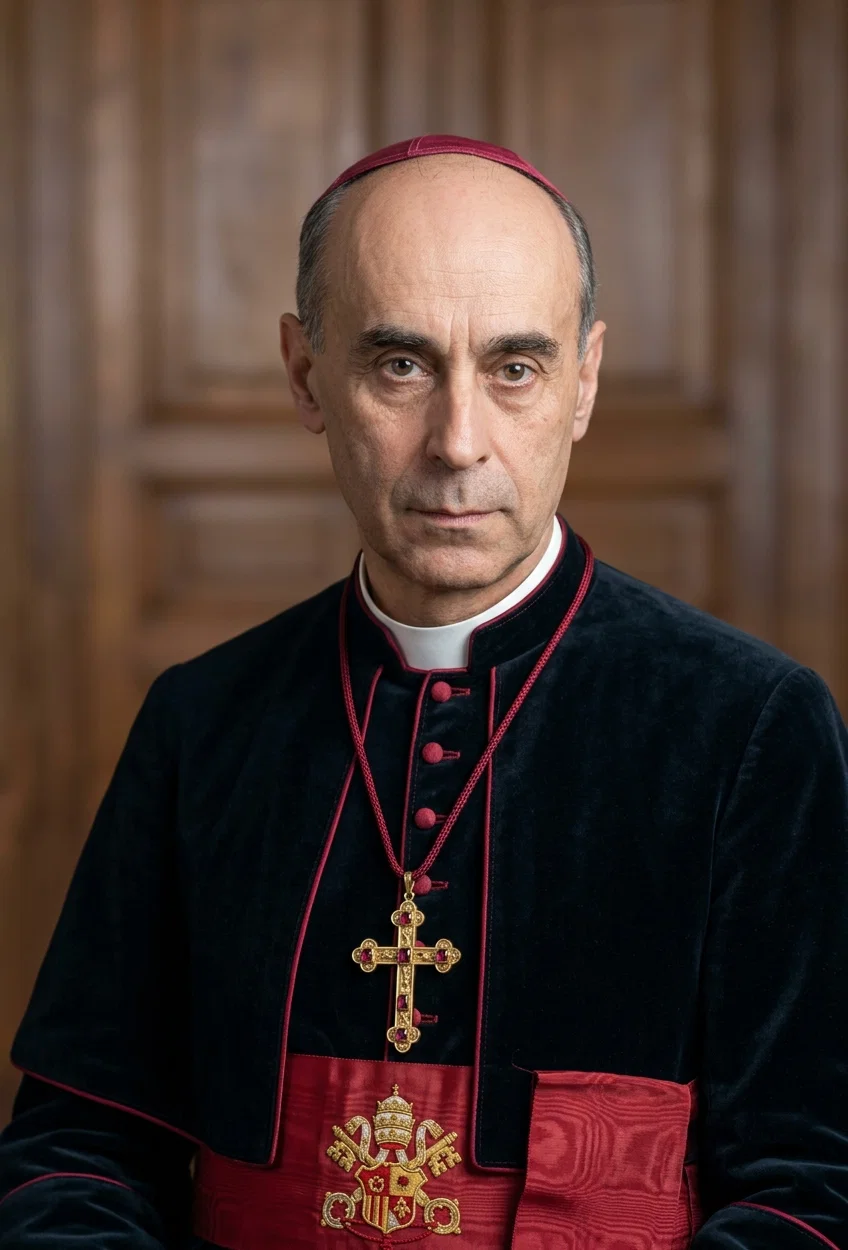
His Eminence Cardinal Merry Raphael de Val, the Papal Secretary of State.
In Turkey — Peace and War — Germany and England — Germany and Russia — Protestantism.
[NOTE.—The publication of this article has been delayed, but the great facts it presents are of vital interest and more than compensate for this late presentation.—EDITOR.]
At the present writing all is upside-down in Turkey. A new revolution of the Young-Turk party has broken out; an army of 18,000 men is ready to enter Constantinople; the Sultan has been asked to abdicate, while his successor has been elected. The Paris “Matin” calls this in big letters: “THE BEGINNING OF THE END.”
All Europe is watching with bated breath to see what the outcome will be. In political circles, as well as among the masses, the anxiety is intense, for every one feels that in Turkey is to be decided the destiny of the world; that with the fate of that tottering empire is connected the fate of all nations. And when I write this, I am simply repeating from memory the words used by the dean of European political writers in a recent article quoted by this journal. Students of prophecy have more than FEELINGS to depend upon in viewing matters in this light. They have the “sure word of prophecy.” But our province is not to deal with that side of the subject; our task is briefly to record current events. So we come back to European politics at the very moment when this sudden and unexpected revolution broke out.
Austria, who had, with the connivance of Europe, seized her opportunity in asserting her dominion over two of the small Balkan states, found herself disturbed by a third one, Servia, who cried out violently against her injustice. Servia saw her fate in her two neighbors’ fate. She remembered how her big neighbor had been and is sapping her vitality and paralyzing her development. She thought that Europe would surely sustain her protest, and was already preparing to pay a sacrifice for liberty. War was threatening on the Balkans.

Impotence of the Hague Court

“Before this conflict between the weak and the strong,” says the “Bibliothèque Universelle,” “no one speaks of arbitration. People scarcely remember that there is a court at The Hague, the usefulness of which ought to show itself in just such cases.”
“Servia is not worth a war,” remarked the Paris “Europe,” “this war might become general; no government wants it; and it would be criminal to unloose it. . . . One must choose between the extension of the Servian frontiers and the upheaval of Europe.”
“This shows for the hundredth time within a few months that the slightest friction among the powers over their interests in the East will be the match which will set the world ablaze!”
Yet diplomats and rulers seem unconcerned. What affects them most is the success or defeat of the hour on the big chessboard of world politics. For the moment Austria, and behind her Germany, is exulting, while France and England look on with chagrin.
Says the “Revue Politique et Littéraire” of April 10: “The European concert is at the present time abandoning its right to interfere before this Austro-German imperialistic alliance.” And this journal quotes the German press showing the joy “of the whole nation” at this “march of the Deutschtum toward the southeast.”

What of Reduction of Armaments?

What can be expected under the circumstances, about the reduction of armaments? Did King Edward VII and his nephew Emperor William II, who, by the way, have so much to say about “peace,” see their way clear, at their last interview, to reach some happy solution of the problem? It appears not, when we read what on the selfsame day of last month Herr von Bülow and Sir Ed. Grey explained on this matter before their respective parliaments. Their explanations amount clearly to this: a limitation of naval armaments is impossible; the recent diplomatic consultation on the subject was bound to fail; Germany considers it absolutely necessary for her safety to complete her naval program; while Great Britain means to maintain at any cost her supremacy over the oceans.

British Supremacy Threatened

But more was coming: On the 16th of March, the prime minister of England and the first lord of the admiralty recognized before the House of Commons that this supremacy was seriously threatened; that Germany would soon have at sea as many or more battleships of the “Dreadnought” type as England herself; and that her works at Kiel and elsewhere were so well fitted up that they could rival those of Great Britain. Of course such declarations would move the whole nation with fear, and obtain her immediate consent to greater expenses still for naval armaments!

A Russian View

Are these enough “rumors of war” from Europe at this time? Not yet. Listen to this: A Russian correspondent writes to a respectable continental monthly quoting the noted St. Petersburg organ, the “Novoie Vremia,” to the intent that Germany “thinks much more seriously of engaging in war with Russia than with England. . . . The Germans will not be any more courteous than the Japanese, and will not announce their visit. The whole operation will be done mysteriously . It is even probable that a part of the mobilization has been all ready for some time, and that the German fleet and troops will enter Russia even before the news has reached St. Petersburg.”
The same correspondent makes a sad description of the moral, political, and intellectual condition of his country. “In 1905,” he says, “before the Czar granted the constitution, the daily average of prisoners was 85,000; this year, it reaches 170,000, not counting 30,000 people on their way to the jails.”
. . . The demoralization of all classes of society is marching rapidly onward. . . . In Russia, the number of school children is 3.8 per cent of the population; in the Transvaal, 9.6 per cent, in Australia, 19.3 per cent. Even in Chile and Uruguay, the number of students is greater than in Russia.”
Where are the recognized religious teachers of the world? Are they not able to turn this mighty and terrible current which threatens the nations? In his Encyclical “against the Modernists” or Catholic higher critics, Pope Pius X says some good things about faith, religion versus science, and the inspiration of the Bible. But this is drowned as it were in a mass of words, and sadly counteracted by advocating the authority of the “fathers” and the ecumenical councils; by maintaining the necessity for the church to be united with the state; by rejecting the idea of returning to “ancient humility and poverty;” by upholding the traditions of the Catholic Church, and the veneration of relics, and by counseling, as principal remedy against the encroachments of enemies of the church—the study of scholastic philosophy such as taught by Saint Thomas of Aquin! How sad this turning away from the pure word of God to the fetid waters of medieval rantings!

Protestantism

Has, perchance, the Protestant Rome—Geneva—some comfort, some good and timely advice to offer to this sick and tired humanity? As some of my readers will remember, a popular vote taken about two years ago, pronounced the separation from the state of the old national church founded by Calvin in 1536. This vote was to go into effect Jan. 1, 1909. The year 1908 was busily employed by the Geneva church in preparing for her new conditions. The work was prepared by a committee of nineteen members, and thentaken up and decided by a constituent assembly of sixty to seventy members. Two leading questions were bound to come before this body to be incorporated in the new constitution of the church of Geneva: its belief and its membership. The discussion of these two questions laid bare the lamentable situation of the once flourishing and faithful church of Calvin.
On the first point, the Bible was declared to be the basis of religious teaching, but the Bible as freely interpreted in the light of human conscience and modern science. This means that in 1909 and onward, as before, pastors will be perfectly free to teach what they believe, from the rankest rationalism, deism, and agnosticism, to the old orthodox belief. In fact, a watchword given by the leading pastors of all the parties among which the Geneva church is theologically divided, was the significant phrase of “NO SCHISM!” With this watchword, no one in the constituent assembly dared to dissent. The Geneva national church, tho severed from the state, must remain externally entire and undivided, no matter how inimical and contradictory the religions sheltered under its roof!
Another declaration made in the opening of the new constitution is that “Jesus Christ is the Saviour of men.” This was allowed to pass only with the understanding that, on the part of the liberal and rationalist party, this could only mean a political, a historical, a worldly salvation, and never a personal, a future, an everlasting salvation!
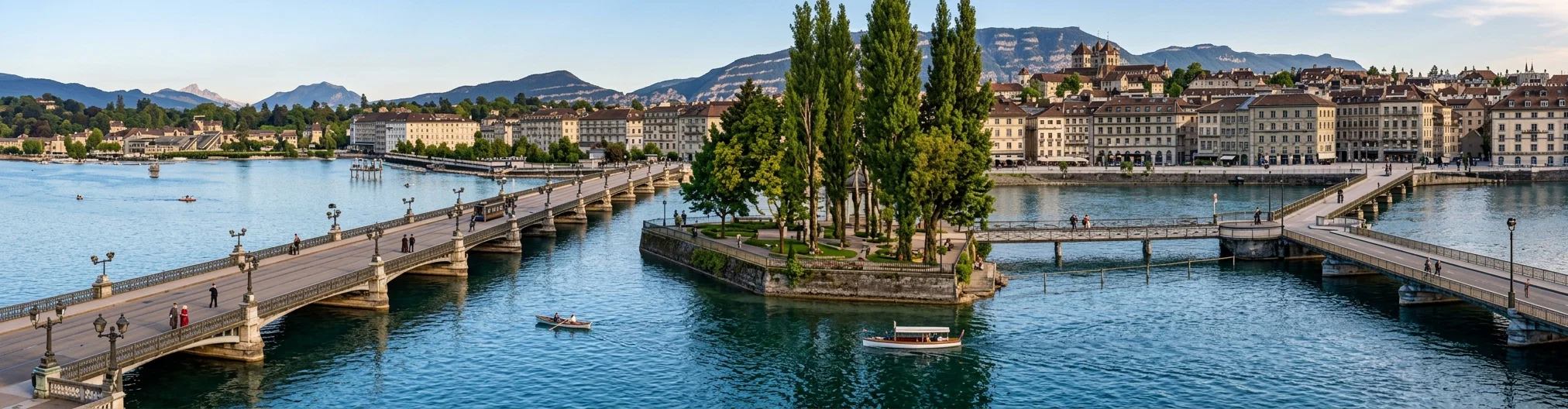
The City of Geneva
The City of Geneva
On the point of membership, a strong current was against taking in as members foreigners to the Geneva Republic, be they from other cantons of Switzerland or from other countries. This the committee of nineteen called a religious scandal. But the idea was carried. The majority wanted a national, a Geneva establishment, with Geneva traditions and Geneva people. The idea of conversion of character was entirely left out and spurned. The old doctrine of Cyprian that one is not BORN a Christian but has to BECOME one was changed into: one born in Geneva and of Geneva stock IS a Christian!
And in the face of all this, Geneva is preparing to celebrate with great pomp, between July 2 and 10, the four hundredth anniversary of Calvin’s birth! It is easy for any one who has read a few pages of Calvin’s great work, “The Institution of the Christian Religion,” or one of his 2,000 sermons, to tell what the great reformer would say to those who are claiming to honor him while destroying almost every principle and every truth that he worked so hard to uphold. He would extend his bony hands, his face would light up with a solemn and horrified expression, and he would exclaim, as he did more than once when fighting for a pure Gospel: “You may cut these hands, and you may take this life, rather than to get my consent to connect my name with such a damnable apostasy!”
JEAN VUILLEUMIER.
Paris, France, April 22, 1909.