The Chinese Mandarin Bible and Natural Immortality
By Percival J. Laird
By Percival J. Laird
Hotel de Ville, Paris
IN view of the final revision of the Mandarin New Testament, quite a little correspondence is springing up on the question of terms. It will help us to appreciate this better, and call forth sympathy for translators on account of the many difficulties that confront them, to know that at present the American Bible Society has to print no less than three Mandarin Bibles, each with its distinct and special term for “God.”
A writer in “Chinese Recorder,” January, 1909, says: “I have read that Chinese students mock about Christianity because of our indorsement of the Buddhist term diyu (hell). . . . This stumbling-block debars some from Christ. Wang, in his excellent criticism of Confucianism, is also puzzled by it, and even maintains that the Buddhists borrowed the idea from Christianity. Let us beware we do not MISREPRESENT Christianity by using any longer such a term.” After a long interview with a Chinese scholar of eminent ability, who called to inquire if we preached these things, the writer is inclined to agree with the thought expressed above.
But the trouble is that men have been led astray by Satan to set up their own vain imaginations, occult science, mysticism or esoteric philosophy, as to man’s natural immortality. Hence when “man goeth to his long home,” this supposedly immortal “precipient entity” must have a like habitation. In dealing with this subject, it is comparatively easy to harmonize many texts often misquoted from the English Bible, but the task is difficult when handling the Mandarin Bible.
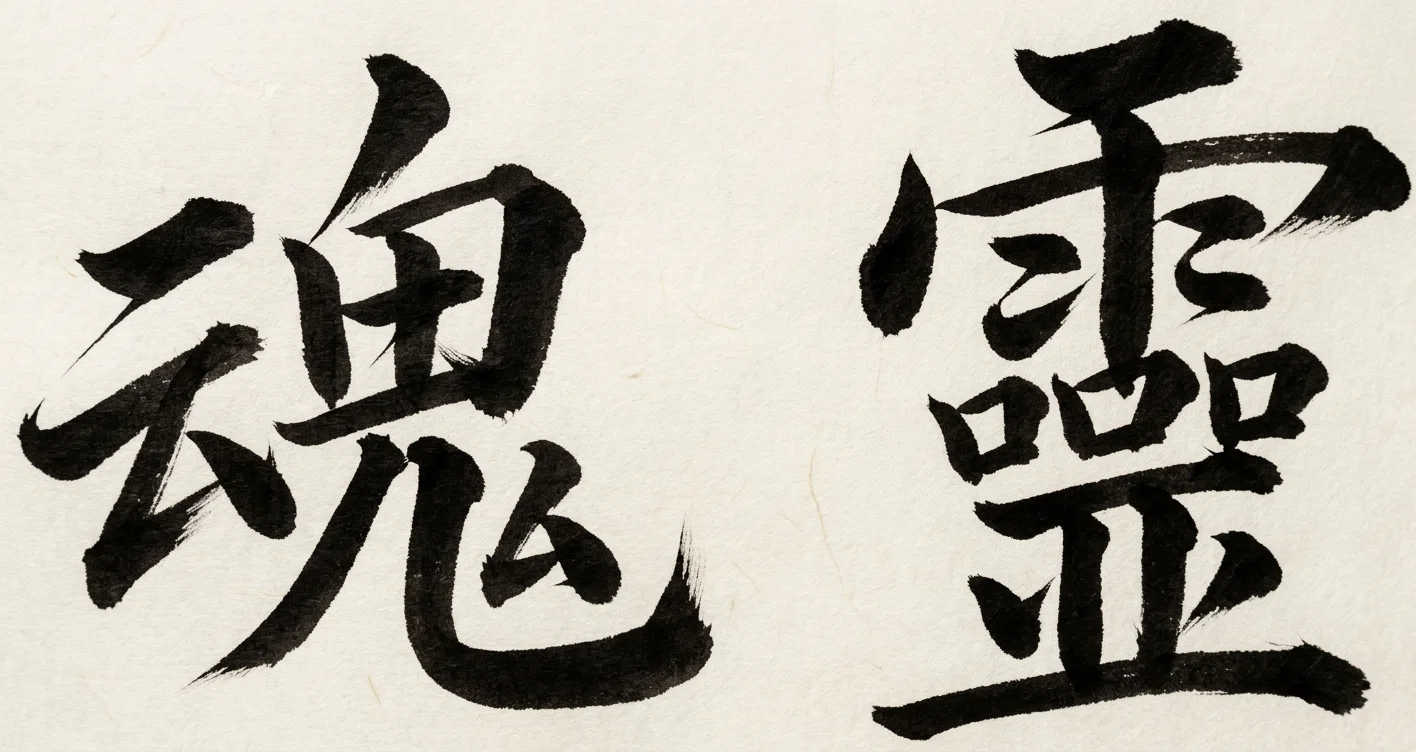
Let us examine just a few texts together, and as there are but two delinquent characters, as illustrated, in the Chinese, the argument should be quite clear with your Bibles open before you. Turning to Eccl. 3: 21, we read, “Who knoweth the SPIRIT [ling] of man, . . . the SPIRIT [huen] of beasts?” also 1 Thess. 5: 23: “May your SPIRIT [ling] and SOUL [huen] . . . be preserved blameless.” Please note the two distinct terms used in Chinese. Then compare Luke 23: 46: “Into Thy hands I commend My SPIRIT” (ling and huen); Acts 7: 59: “Receive My SPIRIT” [ling and huen]; Eccl. 12: 7, “The SPIRIT [ling and huen] shall return to God.” Here it will be seen that, in contradistinction to the Greek, Hebrew, and English renderings of these passages which speak of “the spirit” only leaving the body at death, the Chinese suggests that soul AND body take their flight at that time. But that which proves too much proves nothing clearly. Moreover it sounds too much like Chinese superstition which endows a man with three huen.
Again, inasmuch as Eccl. 12: 7 draws no distinction between classes of men absolutely, then as every man alike must possess this ling (spirit) and huen (soul), so these parts of both righteous and unrighteous men “return to God,” in heaven, being understood; and accordingly, Chinese might reason, “No matter how wicked you are; no matter whether you believe or disbelieve in God or the Bible; live as you please, heaven is your home.”
But we know that such doctrine can not be of God, for it fails to differentiate between the precious and vile, and such teaching places the notorious infidel or sinner in heaven, along with the good and holy.
There is, however, another serious problem to be solved if we accept the fact that Christ’s ling and His huen left His body at death; because one third, or the body only, of Christ could hardly make atonement for the sins of the world. This gives credence to the Roman Catholic sacrifice of the mass, and countenances the theory of the Mohammedan who avers Jesus only swooned at the cross, but did not die.
Peter answered the Lord, “To whom shall we go? Thou hast the words of ETERNAL LIFE.” John 6: 68. O that men would believe when God says so plainly, “The DEAD KNOW NOT ANYTHING.” Eccl. 9: 5. To believe Satan’s lie, “Ye shall not surely die,” is to open the flood-gate for Spiritualism.