The Bible in Greece

3%

Pacific Press Publishing Association · Mountain View, California · May 19, 1909

FromSigns of the Times, Vol. 36, No. 20.

Read the full edition

The Bible in Greece

(From Our Own Correspondent)
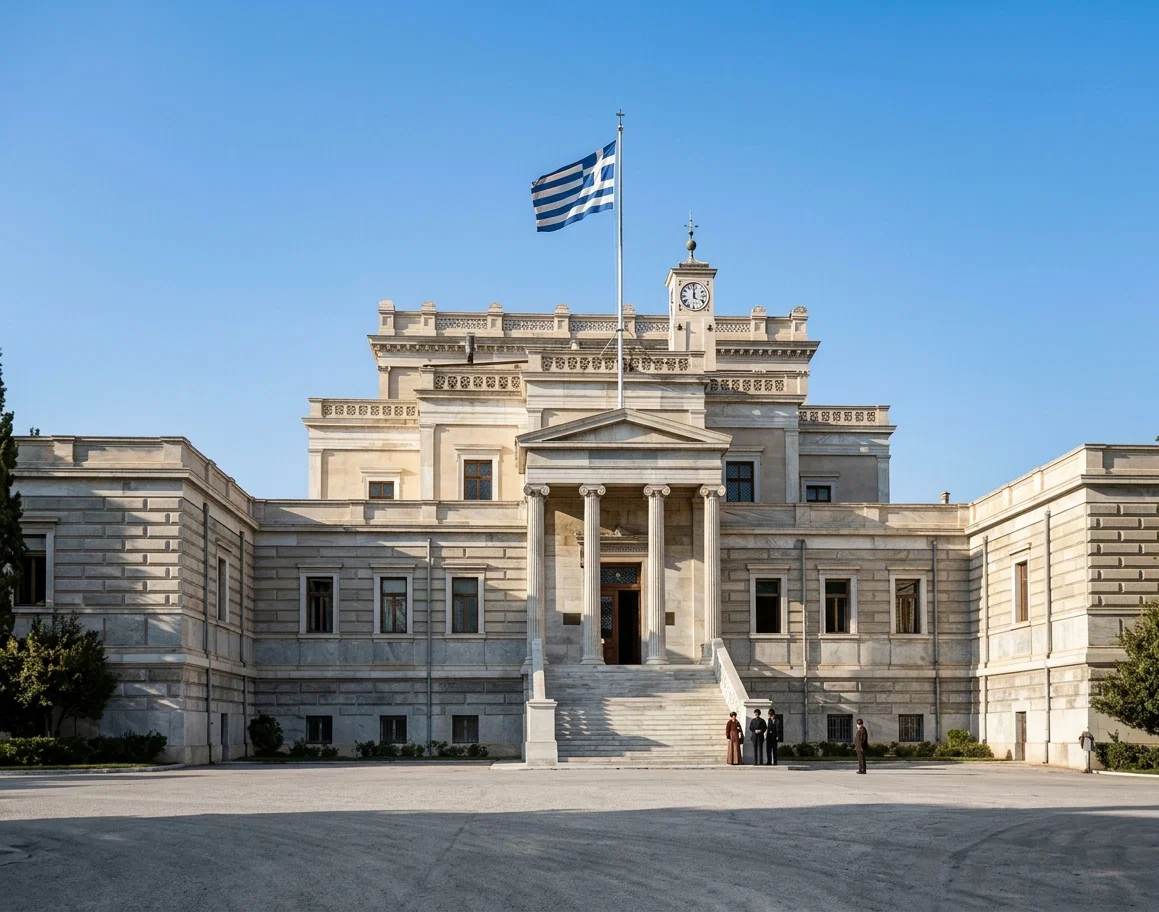
Parliament House in Athens. Here stormy sessions were held in 1901 on the question of translating the Bible and on the political complications resulting from the riot.
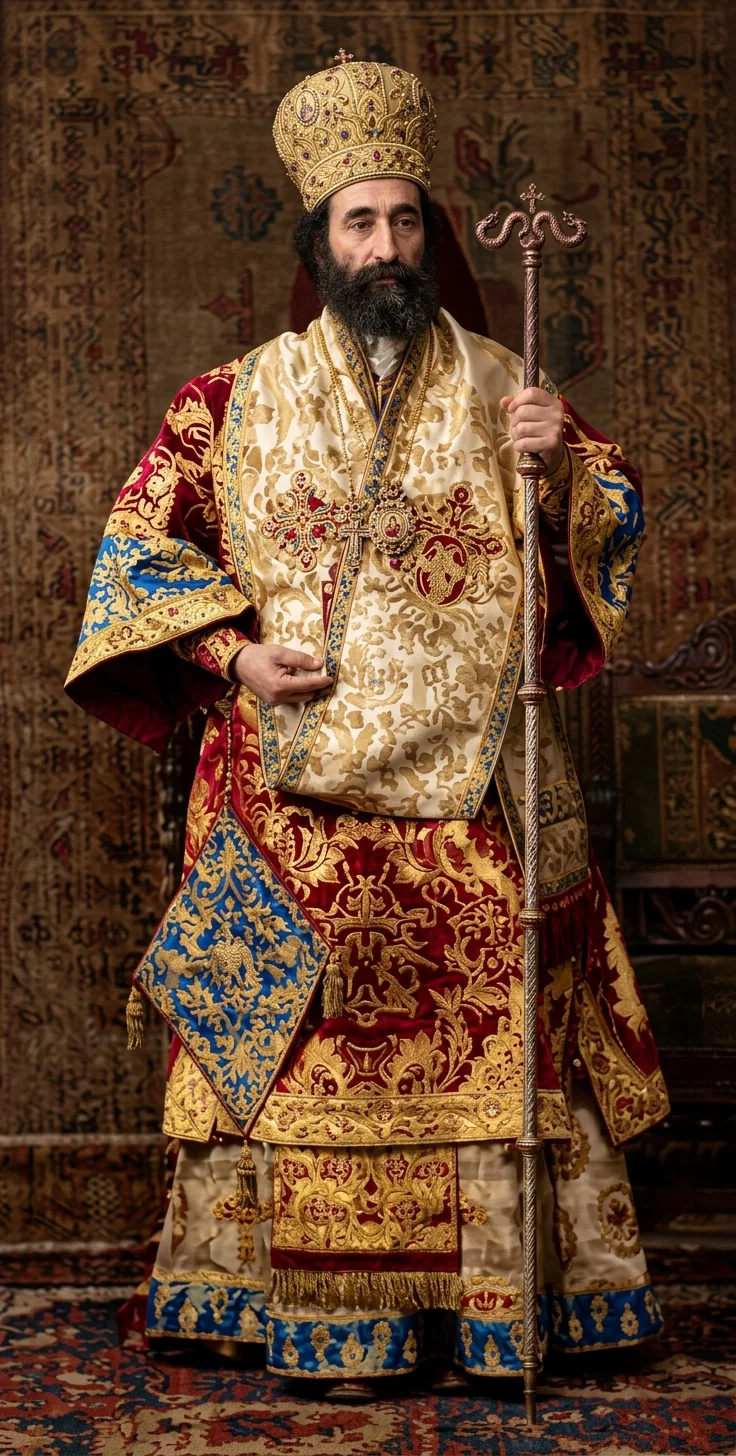
Ecumenical Patriarch of the Orthodox Church of the East. Also political representative at the Sublime Porte, of the seven or eight million Greeks in the Ottoman Empire.
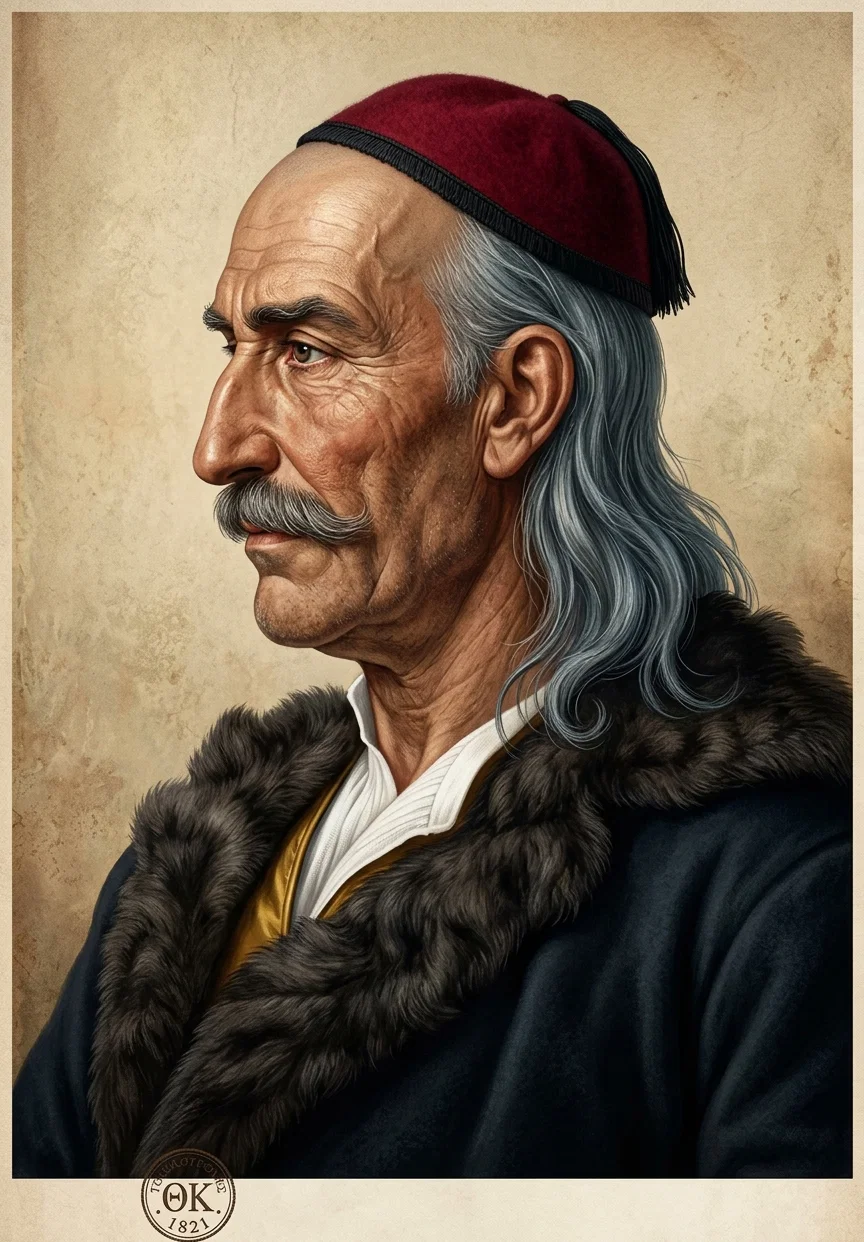
General Kolokotronēs, chief commander of the Greeks in the War of Independence (1821-29).

III. The Episode of 1901

If there existed a Holy Synod in the sense in which it ought to exist in Greece, there would not have occurred the regrettable scenes which occurred yesterday at the offices of our colleagues.
These are the opening words of the leading editorial in the Greek daily newspaper that has the largest circulation in Greece, the “Onward” by name. The “regrettable scenes” referred to grew out of a demonstration by university students before and in the offices of the daily newspaper, the “Acropolis,” during which they pulled down the sign above the entrance, broke it to pieces in the street, tramped upon and burned copies of the newspaper, and forced an entrance into its offices to demand the cessation of its printing in its columns by instalments a translation of the New Testament from the original Greek into the language of the common people.
These acts of violence were accompanied by frequent shouts of “Long live the Gospel [in the original Greek]! Long live [Greek] Orthodoxy! Down with the Translation! Down with the Sacrilege! We want our Language and our Religion! We want the Translation to stop at once! Down! Down! Down!” These “demoniacal cries,” as the “Onward” itself styles them, were attended by frantic gesticulations, the brandishing of canes and umbrellas, and the showing of fists as well as by conflict with the police who sought in vain to quell the excitement and violence without resort to force.
In a further description of this history-making episode I wish to use as far as possible a close translation of the language used by student leaders, university professors, government officials, ecclesiastics, and editors, who participated in one way or another in these “regrettable scenes.” This course will leave the reader free to judge for himself the real animus of the movement in those days, which will also give him the key to the present situation in Greece. My chief authority is the newspaper of first-class standing hereinbefore cited, the “Onward,” months of October and November, volume of 1901, on file in the Parliament Library in Athens. I have also gathered information of value from well-informed Greeks who were eye-witnesses.

Greek Language and Religion

For a better understanding of what follows, it ought to be said first that the Greek regards his religion and his language as his two most sacred legacies from his forefathers. His religion forms the connecting link between his race and early Christianity in the East, remaining intact even through four hundred years’ bondage of the Greek race to the Turks. His language serves as a strong factor in identifying his race as the true descendants of the illustrious ancient Greeks. Very naturally, during centuries of Greek subjection to the Venetians and the Turks, the Greek language became corrupted by the absorption of Italian and Turkish elements. Since Greece obtained her independence in 1829, there has been a sharp controversy among the Greeks, growing more acute with the passing of time, concerning the status of their language. The purist party, with a preponderance of influence and numbers, holds that the language should be purged of all its foreign elements and restored as nearly as possible to its former purity, thus constituting one incontrovertible evidence of the identity of the modern with the ancient Greek race, and so reinforcing the inherent right of the Greek people to national existence.
The purists hold also that the Greek Church, having used in its liturgy the original language of the New Testament without interruption from the beginning, has thus done more than anything else to preserve the integrity and identity of the race; and that therefore the nation owes its existence largely to its religion. And further that, should a translation of the New Testament be made into Modern Greek and that translation be used in church service, that standing evidence of the existence of the race would to this extent cease to exist, and so the right of the race to national existence be so much the more in question. This is one of the chief POLITICAL reasons for opposing the translation and use of the Bible in Modern Greek.
The RELIGIOUS reasons are clearly stated by the Paris “Figaro,” commenting on the anomalous situation in Greece: “The Orthodox Church, like the Roman, fears that if the text of the New Testament, without approved interpretation, be made accessible to the common people, it would afford occasion for individual interpretation unnecessarily free and unusually heretical. Hence proceeded on the part of Protestants those innumerable heresies, the multitude of which militates strongly against the unity of the church.” Add to this the following Greek editorial: “A translation would be harmful because many doctrines of our church could be misinterpreted. We have as an example the Protestant church which has been divided into many sects because they have misconstrued in various ways certain passages of Scripture. A sufficient understanding of the Scripture can be had through hermeneutical exegesis. [sic].”

Church Organization

The recognized head of the Orthodox Church of the East is the Ecumenical Patriarch, who resides in Constantinople. There are four other patriarchs, residing at Jerusalem, Antioch, Alexandria, and Moscow. Each patriarch has associated with him a body of advisers called the Holy Synod, of which he is president. Every large city where no patriarch resides, has a metropolitan, also with his body of advisers, or synod. The general administration of the Ecumenical Patriarch is moral or advisory rather than absolute. The patriarchs and metropolitans refer to him questions of importance, but are not obliged to follow his advice. Greece, being now an independent nation, has the right to elect her own metropolitan, who was formerly appointed by the Ecumenical Patriarch. Thus the metropolitan of Athens is all but a patriarch.
In the following account, I shall use the word Gospel, as the Greeks familiarly do, to mean the New Testament.

The Holy Synod

Continuing the quotation at the head of this article: “The Holy Synod busies itself about many things foreign to its duty, but where it ought to express its opinion first and put an end to discussion, it comes last, limping and fainting by the way. At last, after so much delay, it met yesterday to read the memorial addressed to it by the Theological School [of the university] on this question [of the translation], and broke off the reading at the sixth page, deferring its continuance till the next sitting because, we do not know who grew tired of listening. While in all other countries the priests and other ecclesiastics are condemned for their wild fanaticism, in Greece, where the faith and the forms of the church are bound so closely with the nation, the holy fathers, or part of them, or the leaders of them, are distinguished by their inexplicable indifference.”
The theological students, with the cooperation of their instructors, had addressed to the Holy Synod of Athens a protest against the translation of the Gospel into the common language. Impatient at the delay of the synod in acting on the protest, they enacted the “regrettable scenes” at the newspaper office.
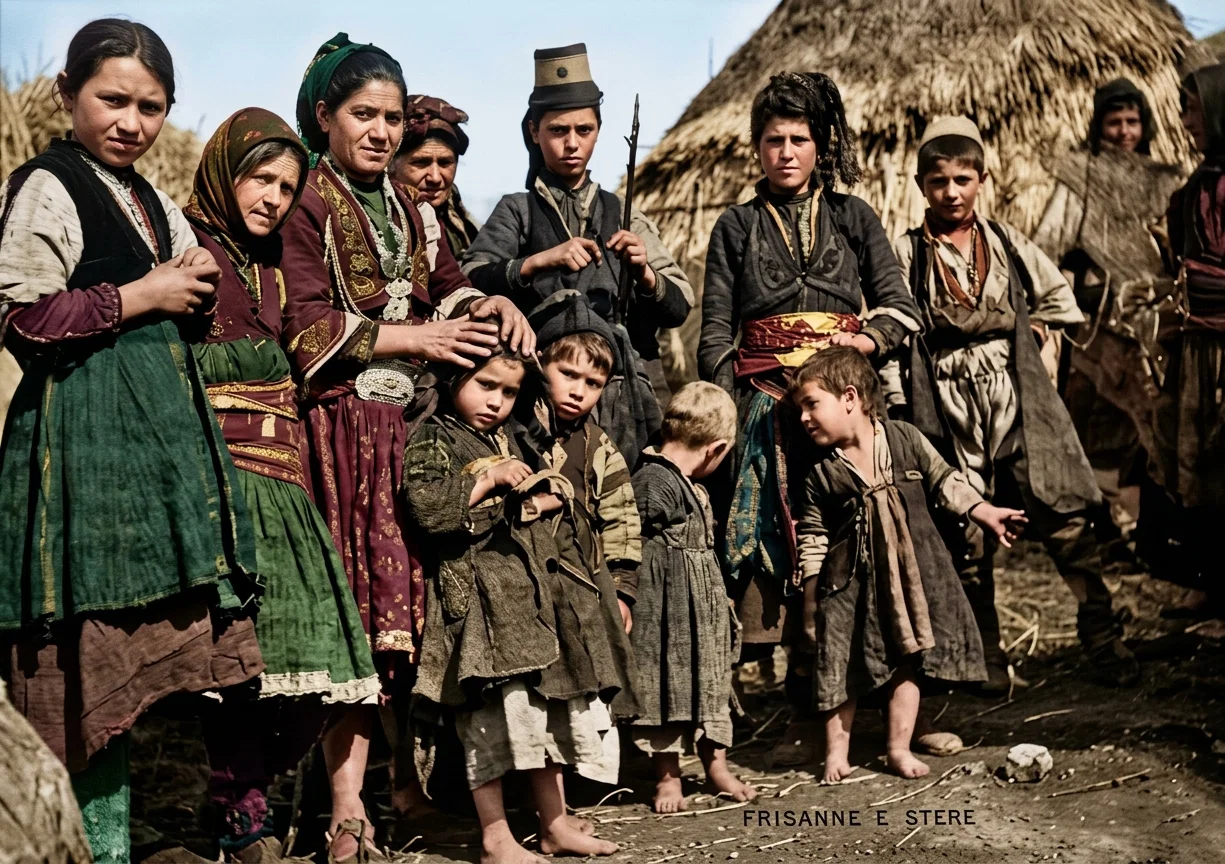
A group of Albanian villagers waiting for the Gospel in simple Greek.

“Let Us Alone”

The editorial continues: “It is singular that for two years the most energetic efforts have been put forth to make a translation of the Gospel. At first an attempt was made to impose it upon us through the Holy Synod [by the queen]. When the synod opposed it, an unofficial translation was made and circulated, as we believe, gratuitously. After this one came that of Palles [a wealthy Greek merchant of London, whose translation was being published in the Acropolis of Athens]. To-morrow we shall see some other, perhaps by ——. The next day another by ——. Each of these will be ambitious to present us his translation, and when the undertaking succeeds, we shall see a new contest for introducing it into the church. All those who have been seeking to impose their [vernacular] language upon us through their other writings, are now seeking to accomplish it through the Holy Scripture. In vain the Greek people say to them, ‘Gentlemen, let us alone. We understand the Gospel well enough—much better indeed than our parents, who were more pious than we.’”
“Yet in the face of these sentiments on the part of the people, those who are seeking to impose their translations upon us, every time they fail in their purpose, renew their efforts more boldly than ever. Why do you insist, gentlemen? Leave us alone in the dark. Have you comments? interpretations? explanations? These we will accept, but translations we shall make you a present of. If you do not yet understand the national and religious reasons that prohibit translations, we can not even discuss them with you.
“We do not approve in principle any limitation upon the freedom of speech or thought, however greatly it may be abused under ordinary conditions. But when its abuse inflicts a mortal wound upon the soul of the nation, we regard it necessary to use every honorable and manly means of placing a restraint upon it. This insistence on imposing a translation of the Gospel upon us, has become an abuse. If the prime movers in this bold innovation do not refrain from further action, we shall support from these columns every violent movement against them, whether it proceed from the students of the university or from the community, whether directed against our colleagues or any other person whatsoever.”

The National Spirit

Another editorial says: “Whether it was an uprising in behalf of the faith, or an expression of indignation against the profaners of the Gospel, the demonstrations of the students yesterday and the day before constitute an encouraging omen for the ideal and ambition of the nation. For that multitude which called out the horses and horsemen, guards and police, but which did not give way before the sword and the revolver of authority, crying more loudly, ‘Down with the profaners of the Gospel!’ was actuated by the national spirit, generated by the most noble instincts. That which did not stir the government to action, nor arouse His Holiness the Metropolitan—the only proper ones to have put an end to this wretched comedy long ago—the students of the university have now undertaken with their canes and their hands and their fists. This step signifies that in the future every attack upon our religion and our language will be warded off with the club.”
“Of course the Constitution does not limit the freedom of the press or speech, but when these wound the church in her vitals, what else can be done? If we translate the Gospel for those who do not understand the language, then we must translate it into Albanian for the Albanian villagers, and into Bulgarian for the Bulgarian-speaking Greeks in the villages of Macedonia. Upon what would then rest the lauded unity of the religion and the language which constitute the basis of our national existence?”
“It is a curious thing that the leaders in this movement for the translation of the Gospel will not accept any of the arguments brought forth against it. The people throw in their faces words of suspicion and betrayal which would restrain any honorable man from this anti-national course. But they have neither dignity that can be insulted nor resentment that can be stirred by suspicion. Having decided once for all to save the Greek nation through the translation of the Gospel, they are willing to be grossly affronted and even crucified, but they are not willing to abandon their undertaking. They never go to church. They never listen to the Gospel. But they purpose to save the Greek people by force. They plan to distribute copies of their translation gratuitously to philanthropic institutions and in the schools. Money is not a consideration in the realization of their purposes.
“But, O ye apostles of translation, leave us in the dark. We do not wish to be saved by such means.”
“What do you think was the chief cause of the downfall and decay of Byzantium?—Incessant heresies and religious strifes. If there had been an emperor willing to go down in history as a murderer, an emperor capable of ordering some night a St. Bartholomew’s massacre and wipe out of existence the leaders of heresy and the heretics, who were ruining Byzantium, that empire would exist to-day. The times do not permit such measures now, but we can proclaim in Athens some night or day a St. Bartholomew, and instead of cutting off heads, shave off the hair of strength from all those who debase our language by their heresy, among whom are the translators of the Gospel. Thenceforth there would not be any fear that there are Greeks to be found in Greece who do not understand the Gospel.”
In our next we shall tell of Student Movements, The Queen Suspected, Demonstration at the Palace, A Professor of Theology to the Rescue, Decision of the Holy Synod, Excommunication Demanded, Trades Unions Take Action. W. E. HOWELL.