The Bible in Greece

4%

Pacific Press Publishing Association · Mountain View, California · May 5, 1909

FromSigns of the Times, Vol. 36, No. 18.

Read the full edition

The Bible in Greece

By Prof. W. E. Howell
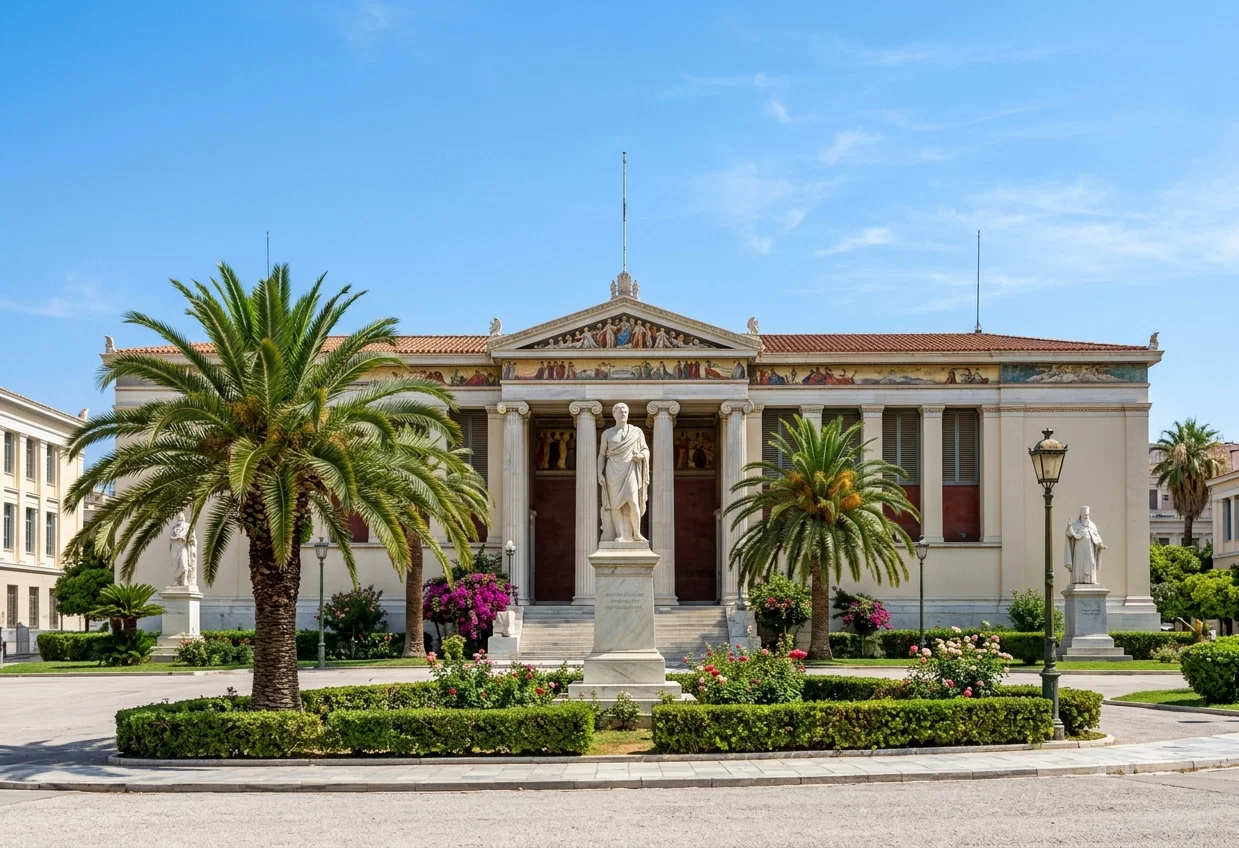
UNIVERSITY OF ATHENS.
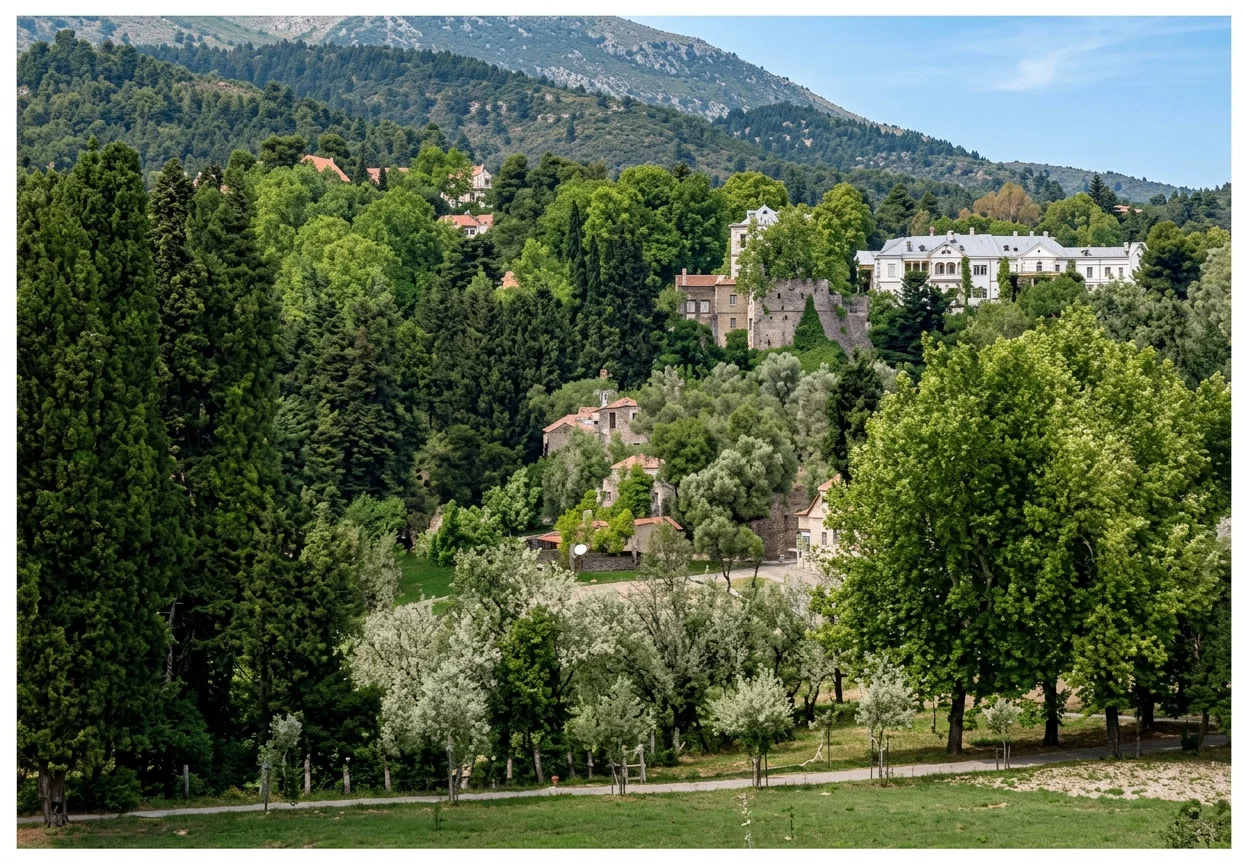
ROYAL SUMMER PALACE AT TATOL.

I. Some Greek Anomalies

IN this enlightened age of progress and liberty it falls upon the ear like an echo from the Middle Ages to hear it made a matter of common remark, as well as official declaration, that it is not permitted to print and distribute the Bible in the language of the common people. But we are obliged to acknowledge that such in truth is the present situation in “Free Greece,” as the Greek press and the Greek people proudly delight in designating their country.

Strange Incongruities

Once in the acme of intellectual development and creative art, unsurpassed, doubtless, in any succeeding generation, and once also at the zenith of political glory and strength under the leadership of the intrepid Alexander, the Greek race to-day is a disappointment when we look into the form of Christianity which they profess and practise. They have not advanced as far as we have a right to expect beyond the superstition and bigotry which put Socrates to death on the charge of bringing in new gods and corrupting the youth of Athens, because he taught a higher, purer conception of right living than was tasteful to the heathen palate, and because in so doing he ignored the image that Nebuchadnezzar the king had set up in the plain of Dura.
How strange a religion that seems which idolizes the symbol of the Cross in gold or marble or wood or painting, while concealing in an antiquated tongue the words of Him who poured out His life upon that cross, that all men might be saved; a religion that will fight against the desecration of the material, visible sign, and yet withholds from the people the teaching of Him who spake as never man spake, lest they learn the full meaning of Gethsemane and apply the remedy for sin according to their individual convictions and understanding of the word of God.

A Personal Incident

To one who has never before visited a land of such spiritual incongruities, the first impressions of so strange a situation are exceedingly impressive. Some time after arriving in Greece, there was providentially placed in my hands by a Greek neighbor, an ex-banker of Byzantine extraction, a copy of the New Testament translated into the Greek vernacular. It is one of a few surviving copies concealed here and there in Greek homes as a relic. It is printed and bound in about the same style as the American Tract Society Bibles we used to have in Sunday-schools for seat use and for handing to visitors. This particular copy had all the fly-leaves removed, as well as all printers’ or individual signatures, leaving only the bare text. The original and the translation are arranged in parallel columns. The language of the translation is approximately that of the “Twentieth Century Testament” issued some time ago in the United States. Doubtless the poorest peasant in Greece could understand its wording.
Unfortunately, however, the ignorant populace are so influenced by tradition and superstition, taught as they are to regard the letter of the original New Testament as sacred and not to be altered in any degree except by authority of the Holy Synod, that they did not hail with joy the advent of the Gospel in terms of their own understanding. With one accord they set about to destroy every copy they could find, not sparing doors, windows, or other forms of violence to gain possession of them.
When my neighbor learned, therefore, that I am specially interested in the Bible, he ventured to loan me his copy, “on condition,” he said, “that you let absolutely no one outside your family see it, not even a servant or caller of any kind, that you will not tell any one that you have it in your possession or that it belongs to me, and that when you are not actually using it you will keep it under lock and key.”
“But why these severe restrictions?” I inquired.
“Because,” he continued, “if the people find out that I have this Bible in my house, they will break my doors and windows, and not spare me nor my property till they get possession of the book and destroy it.”
On the giving of my word, he handed me this Bible carefully wrapped and tied, and I walked home with new sensations. “Where am I? in the twentieth century? or are the sands of time running backward? Am I in ‘Free Greece,’ or in the Waldensian valleys of the fourteenth century?”
Late that evening, after the outside world was quiet and the rest of the family had retired, I took out the precious treasure, and with the windows closed, lost myself till the early morning hours in the contemplation of both the theme and the language in the light of the day’s revelations. Vividly before my mind’s eye arose that familiar painting, a copy of which I saw on sale in Athens the other day, of the Waldensian grandfather and grandchild reading the precious word with mingled feelings of eagerness to learn better the way of salvation, and of fear lest they be discovered by enemies of that word and it be taken from them. I think I really sensed for the first time something of what those feelings might be. And I prayed to God more fervently that if His providence had led me to this difficult field, He would supply me with needed discretion, courage, and consecration to fulfil my mission.

The Bible Society in Greece

Some years ago the British and Foreign Bible Society issued a translation of the entire Bible in modern Greek—the modern purged, or literary, Greek, however, not the vernacular. The principal agency of that society in the Levant is in Constantinople. It established a branch in Athens, with a Greek converted from the Orthodox faith to Protestantism, in charge. The circulation of this Bible was not forbidden for a time, but later, by a combination of religious bigotry and political intrigue, to be described in another article, the government passed an act prohibiting the circulation of any translation or paraphrase whatever of the original Greek text.
The Bible Society still has a score or two of these Bibles in their Athens depository, tho not permitted to sell them. I was fortunate enough, however, to procure a copy. The translation is said by competent judges to be unsatisfactory and to need revision, but it is invaluable as an aid in acquiring a Gospel vocabulary in a country whose religiondeals principally with ritualistic, technical, ancient terms, with very little bearing on practical godliness, and whose general literature is almost destitute of treatises on practical Gospel themes.

Education and the Bible

The Bible Society must now content itself with selling New Testaments in the original Greek and parts of the Old Testament in the Septuagint Greek. One of their canvassers may frequently be seen on the streets of Athens with a small supply of these, seeking to interest the people to buy and read. Of course, only the educated can read and understand, and this is the very class that as a rule has the least interest to study the Bible. They feed upon ancient philosophy and classical lore, and upon modern skepticism, evolution, and fiction. Many of them read French and some of them German, and the bookstores of Athens are filled with such works as “The Descent of Man,” “Hypnotism,” “Free Thought,” “Spiritualism,” and every kind of fiction, in French and German, to say nothing of the numerous translations into Greek of this class of books. The University of Athens is sowing in the hearts of the youth the seeds of science falsely so called, and the inevitable crop of skeptics is fast ripening.
It need hardly be added, therefore, that our seller of Bibles finds but a slight interest in the word of truth. The Athens agent of the Bible Society sets hope upon the education of the masses, by the multiplying and improvement of schools by the government, to the extent that they can read the Bible in ancient Greek. But many of the teachers are graduates of the university, and practically all the school text-books are prepared by the same class; so that, even if a knowledge of ancient Greek should become wide-spread, the tastes and desires of the people would call for almost any other book than the Bible.
Shall we not hope, rather, that as in nearly every other country on the globe there may also in Greece be a providential breaking down of the barriers against introducing the word in the modern tongue, that the people of “Free Greece” may see the true light that lighteth every man that cometh into the world, and walk in that light before eternal darkness come upon them?
In our next, we shall tell of a recent effort of the queen to render the New Testament into the language of the people.